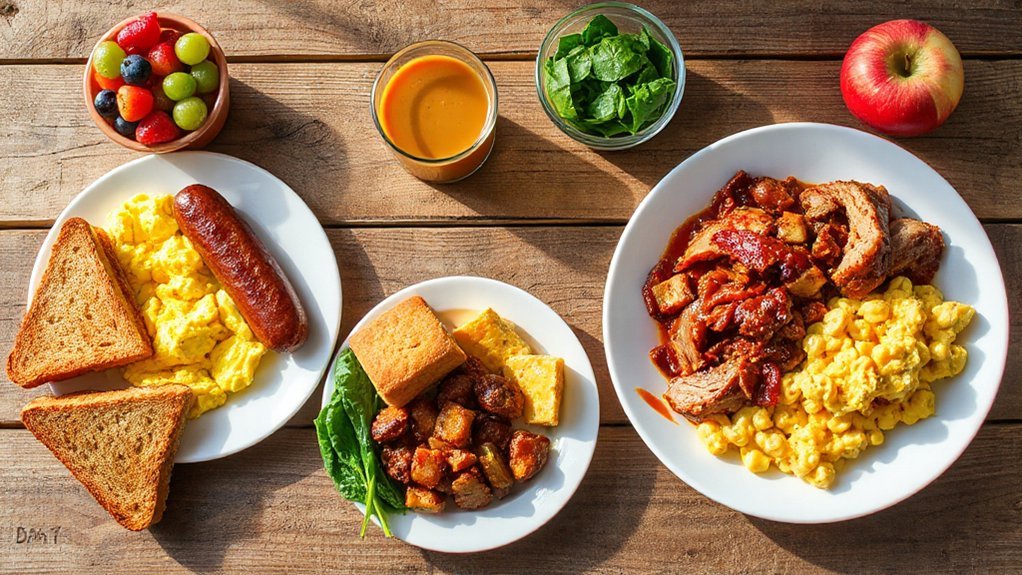

You’ll get a Chapel Hill–style 7-day meal plan with a shopper’s list and campus-friendly recipes that balance Carolina flavors and simple prep. You’ll start Day 1 with scrambled eggs, turkey sausage, whole wheat toast and a fruit cup, then move through lunches, dinners, snacks and batch-cook tips. Keep going to see how it fits your week.
Meal Plan Overview and How to Use It
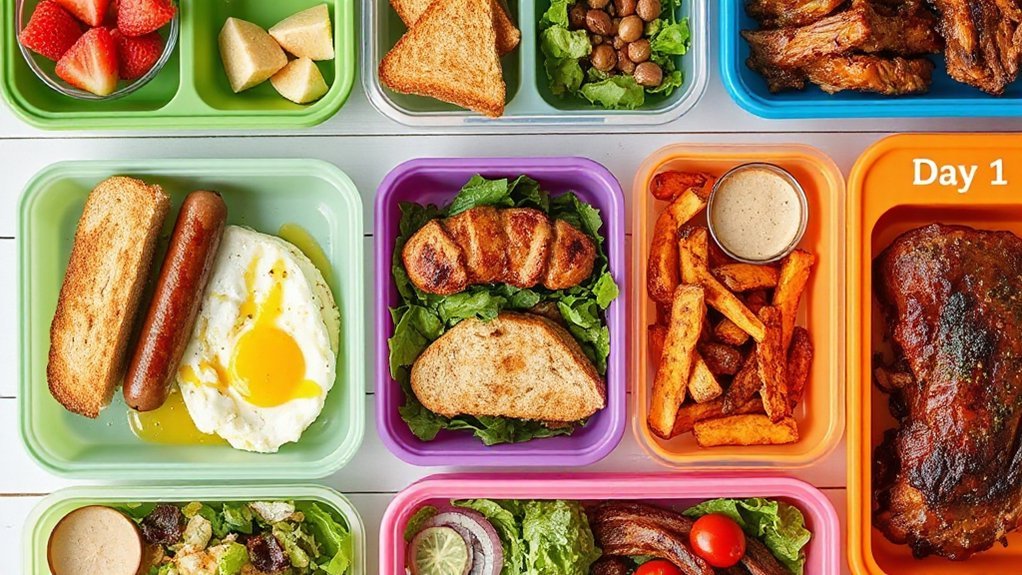
While this 7-day meal plan gives a clear structure, you can adapt it to fit your schedule and tastes.
You’ll find breakfast, lunch, dinner, and snacks organized for balance, convenience, and campus living. Use the plan as a template: swap meals, double recipes for leftovers, or shift servings to match your appetite. Follow portion cues and combine proteins, carbs, and vegetables each day.
Batch-cook staples, pack meals in reusable containers, and schedule quick reheats between classes. Use the included shopping list to buy efficiently and batch items by store section.
If you have allergies or preferences, substitute ingredients while keeping macronutrient balance. Track what works, tweak portions, and repeat successful combinations to simplify future weeks.
You’ll save time and eat better with minor planning.
Daily Menus: Days 1–7
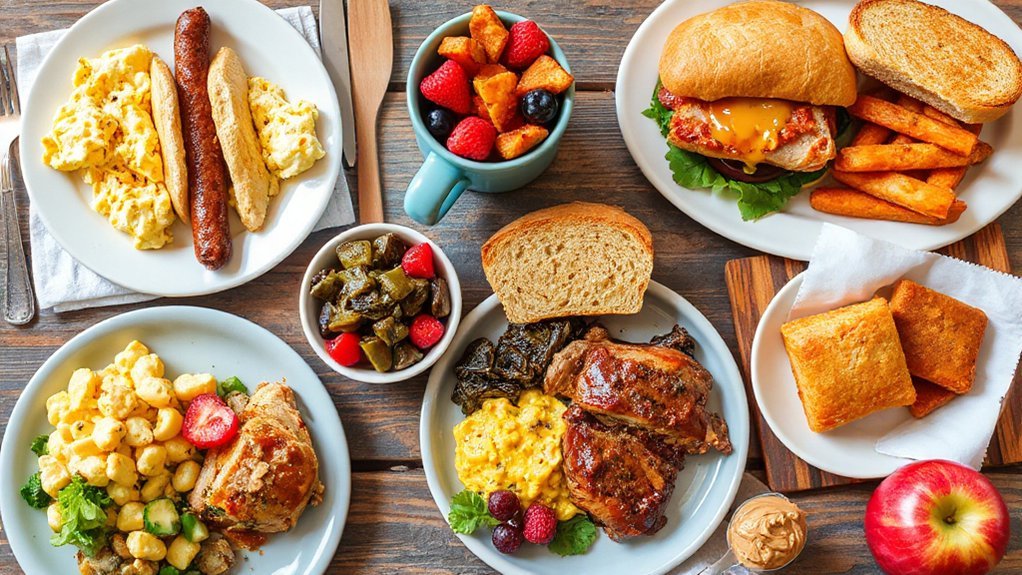
Seven daily menus give you a clear, ready-to-follow plan for breakfast, lunch, dinner and snacks so you can shop, cook and eat with less stress.
Each day pairs a balanced breakfast (eggs, whole grains, fruit), a campus-friendly lunch (grilled chicken sandwich, salad or BBQ pulled pork option), a hearty dinner (Carolina-inspired mains like pulled pork, mac and cheese, collard greens) and two simple snacks.
You’ll get variety across the week: lean proteins, roasted vegetables, Southern sides, and vegetarian swaps.
Portions suit one to two people and are easy to scale.
Prep tips and timing help you batch cook and repurpose leftovers into new meals.
Follow the daily rhythm to save time, reduce food waste, and enjoy familiar Carolina flavors every day throughout the week.
Shopping List and Pantry Staples
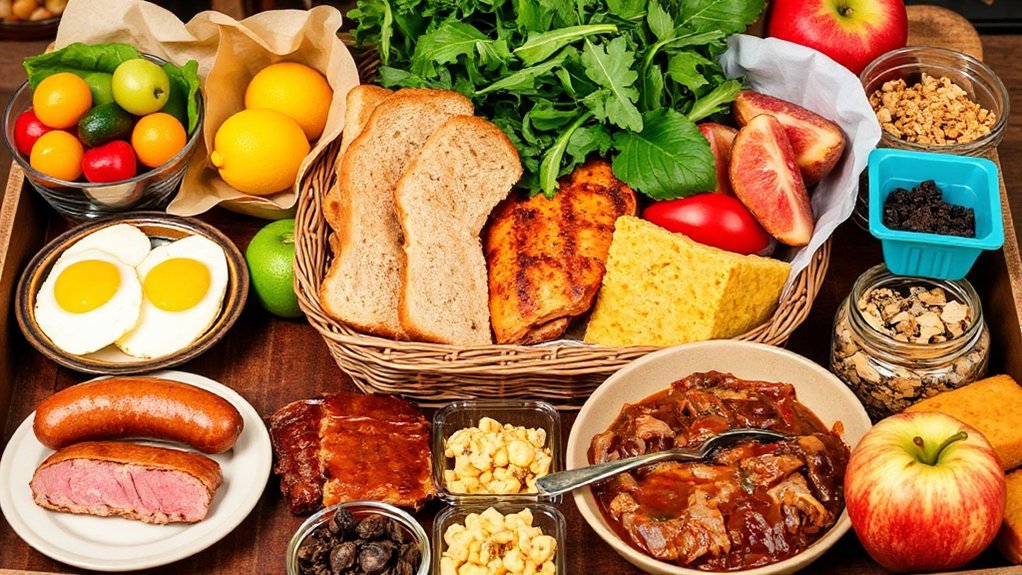
Now that you have the daily menus mapped out, you’ll want a compact shopping list and pantry staples to make weeknight cooking fast and flexible.
Buy proteins: chicken breasts, ground turkey, turkey sausage, canned pulled pork or slow-cook-ready pork shoulder.
Stock whole grains and breads: whole wheat bread, buns, brown rice, quick oats.
Pantry essentials: canned beans, diced tomatoes, BBQ sauce, chicken broth, olive oil, apple cider vinegar, Dijon mustard, honey.
Spices: salt, pepper, smoked paprika, garlic powder, chili powder.
Produce: sweet potatoes, collard greens, salad greens, apples, lemons, onions, garlic.
Dairy and refrigerated: eggs, shredded cheddar, milk, Greek yogurt.
Snacks and extras: cornbread mix, peanuts, raisins for Carolina trail mix.
Keep quantities modest for dorm-friendly storage. Replenish basics midweek to avoid last-minute runs weekly.
Batch Cooking and Campus-Friendly Meal Prep Tips
Batch-cook once or twice a week to save time: roast a tray of chicken or pork, simmer a pot of beans, and cook a big batch of rice or oats so you can mix-and-match meals all week.
Pack portions into microwave-safe containers, label with date and contents, and portion for single meals to avoid waste. Use airtight containers and freezer bags to extend freshness; cool foods before freezing and thaw in the fridge overnight.
Keep a small set of reusable utensils, a jar of dressing, and snack-size containers for trail mix and fruit.
Plan two versatile proteins and three sides to rotate, shop with a checklist, and schedule a 90–120 minute prep block.
Clean as you go so you won’t face a sink pile.
Recipes and Quick Assembly Instructions
Pick three versatile recipes—one protein, one grain, one veg—that you’ll use as building blocks, and keep assembly steps to four moves or fewer.
Choose shredded BBQ chicken (slow-cook, shred, sauce), quinoa pilaf (cook, fluff, season), and roasted collards (toss, roast, squeeze lemon).
Label containers for mix-and-match meals.
For a bowl: reheat protein, spoon grain, top with veg, drizzle dressing.
For a sandwich: layer protein, add greens, toast if desired.
For a quick side: heat veg, sprinkle spices.
Prep simple dressings and sauces in jars: olive oil, vinegar, mustard, honey.
Pack utensils and napkins for campus days.
Keep recipes adaptable—swap spices or swap proteins—to stretch ingredients and save time.
Freeze portions you won’t use within three days to preserve flavor and reduce last-minute cooking stress.
Nutrition Notes and Portioning Advice
Because balanced meals keep your energy steady, aim to include protein, a whole grain, and a vegetable at each serving and portion them deliberately.
For protein, target about 3–4 ounces cooked (roughly the size of your palm) or ½–¾ cup plant protein. For whole grains, serve ½ to 1 cup cooked; for starchy sides like sweet potato fries, keep to ½ cup.
Fill half your plate with nonstarchy vegetables (about 1 to 2 cups). Limit added fats to 1 tablespoon oils or nut butters per meal, and choose vinaigrette sparingly.
Make snacks 150–250 calories: a piece of fruit with 1 tablespoon nut butter or ¼ cup trail mix.
Drink water, listen to hunger cues, and you’ll adjust portions. Use measuring cups when uncertain daily.
Conclusion
You’ve got a flexible, flavorful week that makes campus life easier and keeps Carolina tastes front and center. Use the shopping list and prep tips to batch-cook staples, so you’ll grab balanced meals between classes. Mix and match lunches and snacks to fit your schedule, and portion dinners for quick reheating. You’ll save time, eat well, and enjoy Southern-inspired meals without stress all week. Stick with spices and versatile proteins to streamline shopping today, too.