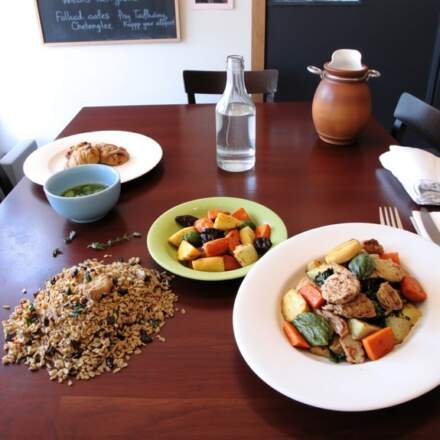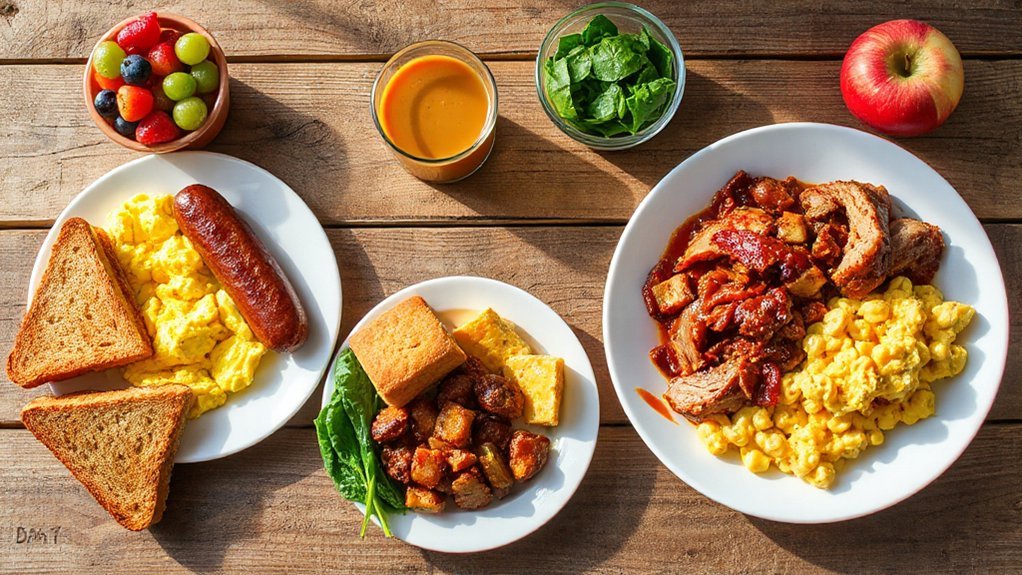
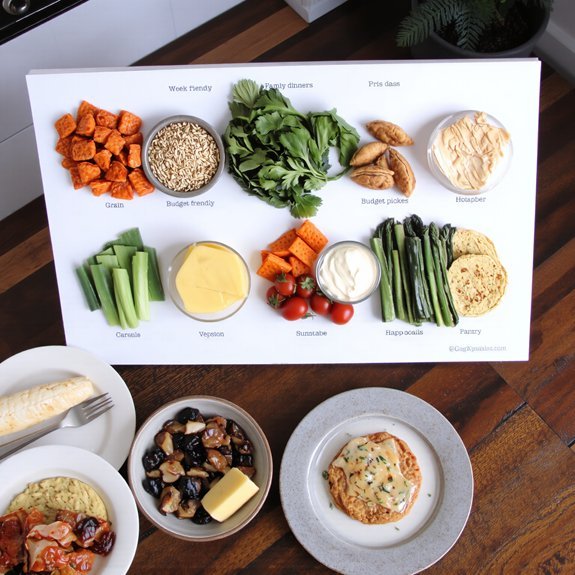

You’ll get a simple weekly plan for budget-friendly family dinners that uses theme nights, pantry staples, and batch-cooking. It keeps meals varied, healthy, and easy to prep. You’ll save money, cut waste, and double dinners into lunches. Keep going to see the week, a short shopping list, and practical steps to make it work.
Key Takeaways
- Plan seven dinners plus one flex night, reuse proteins across meals to reduce waste and simplify shopping.
- Build meals from a protein, grain, vegetable, and versatile sauce to mix-and-match leftovers into new dishes.
- Buy seasonal produce, store-brand staples, and bulk grains/beans to lower costs and cut grocery trips.
- Batch-cook and freeze portions, label them, and time-block a weekly prep day to streamline weeknight cooking.
- Use leftover-remix tactics (stir-fry → fried rice, roast chicken → tacos) and quick acid/herb dressings to refresh meals.
Weekly Meal Overview
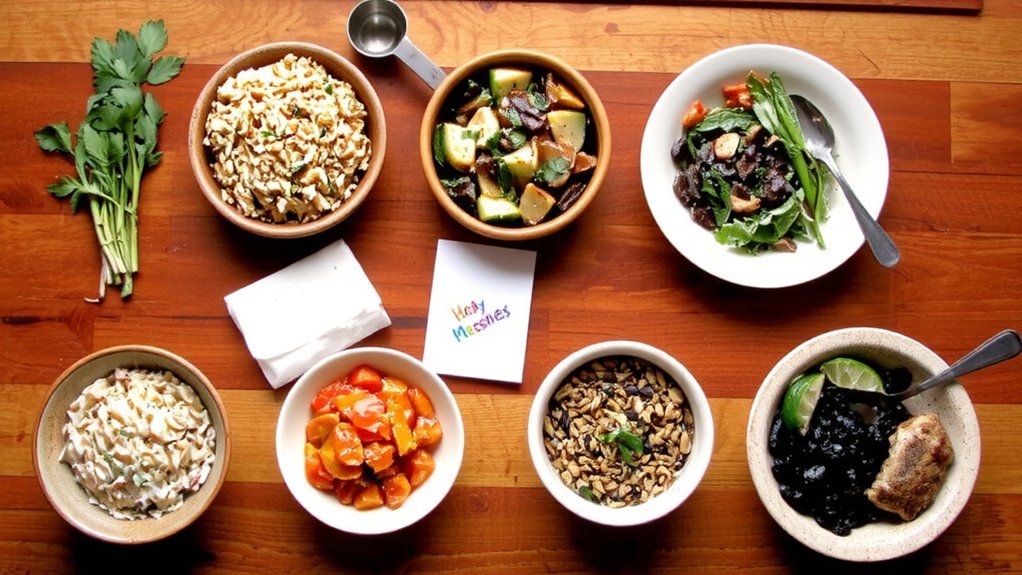
Starting with a simple rotation, you’ll get a week of dinners plus flexible breakfast and lunch ideas that stretch ingredients, cut prep time, and keep costs low.
You plan meals around proteins, grains, vegetables and a few versatile sauces so you maintain nutritional balance without buying exotic items.
You reuse components—roasted chicken becomes soup, grain bowls, and tacos—so cooking stays efficient.
Family-friendly portions and predictable prep let you keep evening mealtime rituals consistent, reducing stress and dinnertime delays.
You slot a leftover night and one flexible “pantry rescue” meal to absorb schedule changes.
Each day lists a main plus two quick sides, letting you swap ingredients by preference while keeping calories and nutrients steady across the week.
You’ll tweak servings to match family appetite.
Smart Grocery Strategies
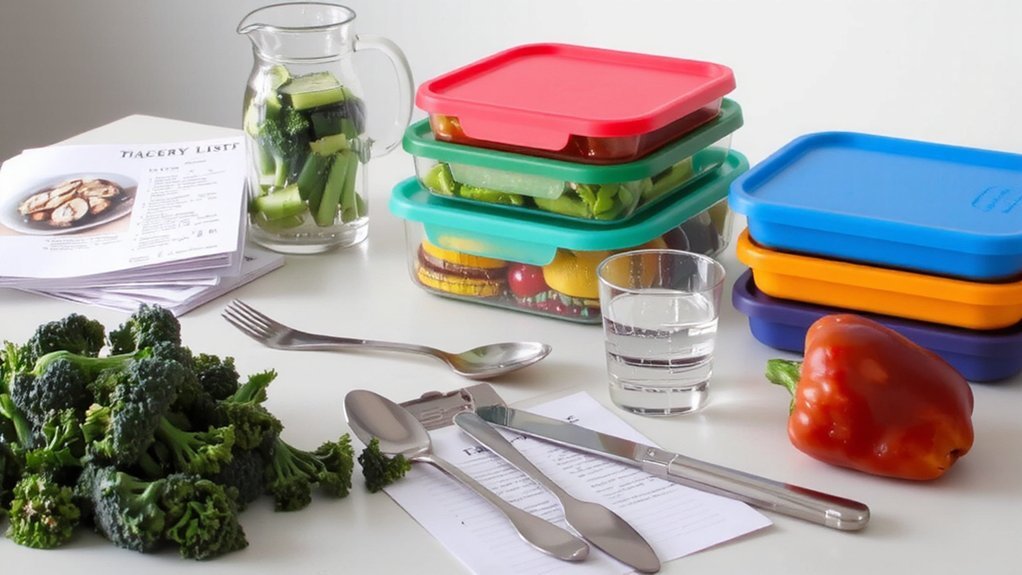
When you plan your list around the week’s meals and check store flyers, you’ll buy only what you need and catch the best deals. Use a category-based list to speed shopping, stick to core versatile ingredients, and compare unit prices.
Try coupon stacking with store apps and manufacturer coupons to cut costs; combine sales for bigger savings. Practice aisle navigation: hit perimeter for fresh produce and proteins, then sweep inner aisles for pantry staples.
Bring reusable bags and a cooler for perishables. Buy seasonal produce and store-brand basics. Adjust quantities to avoid waste and buy extras only for planned leftovers.
- Group items by category
- Use coupon stacking when possible
- Follow smart aisle navigation
- Choose seasonal, store-brand staples and save today
Batch-Cooking and Prep Day Plan
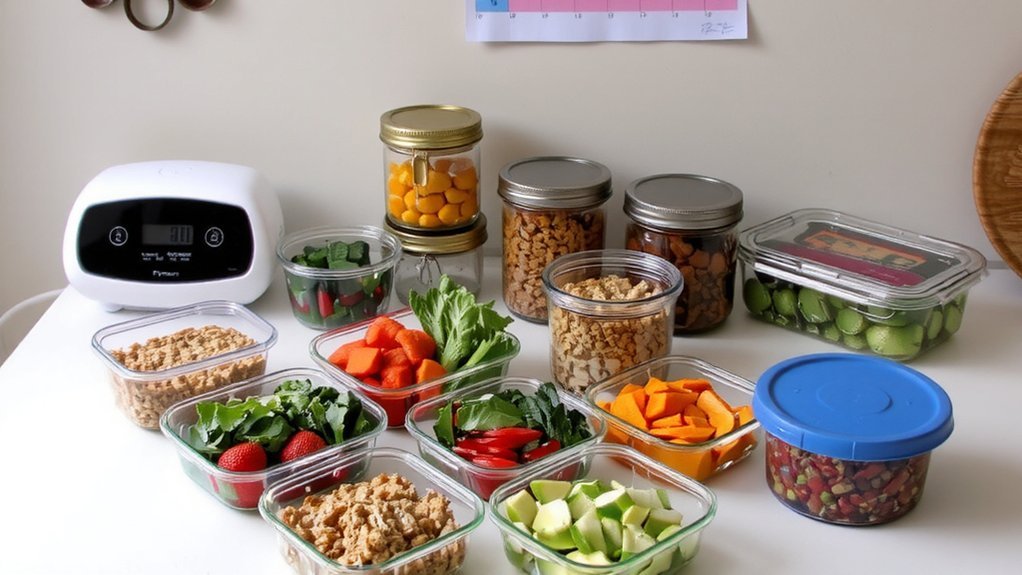
Start by choosing a few versatile recipes you’ll use all week that share ingredients and freeze or refrigerate well.
Set a batch-cooking schedule—pick one prep day, group tasks by oven and stovetop timing, and double or triple portions you’ll need.
Label containers with contents and reheating instructions so you and your family can grab, reheat, and eat quickly.
Choose Your Recipes
Which recipes deliver big yields, cross-used ingredients, and easy reheats?
You pick crowd-pleasers with clear recipe origins and simple plating ideas so leftovers still feel special.
Focus on hearty bases (grains, roasted veggies) plus a versatile protein, and choose sauces that transform repeats.
- Big-batch chili that freezes and rewarms well
- Versatile roast chicken used in soups, tacos, salads
- One-pot grain bowls with mix-and-match toppings
- Saucy pasta that stretches with added vegetables
You’ll label containers, note reheating tips, and plan for quick finishes (fresh herbs, citrus).
This keeps dinners varied, reduces waste, and saves you time and money.
Swap ingredients seasonally, double sauces, and use affordable pantry staples; you’ll get variety without extra shopping trips and maintain nutritional balance for the family every single week.
Batch Cooking Schedule
You’ve picked recipes that multiply into lunches, dinners, and quick finishes—now map the work into a single, efficient batch-cooking schedule so you’ll spend a few focused hours instead of several scattered ones. Use time blocking for prep, cook, and cool phases, and assign family members with shift coordination so tasks overlap cleanly. Start with items that take longest, batch-sauté and roast together, and finish quick proteins last. Keep a visible checklist and timer.
| Task | Time Block | Who |
|---|---|---|
| Roast veg | 0:00–0:45 | You |
| Rice/Grains | 0:15–0:40 | Partner |
| Sauce & beans | 0:30–1:00 | Teen |
| Pack & label | 1:00–1:20 | You |
Review results next prep day, tweak time blocking windows, swap roles for balance, and note speed improvements for future weeks. Celebrate small wins.
Storage and Reheating
Cooling food quickly prevents bacterial growth and keeps flavor intact, so move hot batches to shallow containers and refrigerate within two hours (one hour for very hot kitchens).
When you batch-cook, freeze extras promptly.
- Label with date and portion
- Follow Microwave Guidelines: stir and cover
- Reheat to 165°F/74°C
- Thaw in fridge or cold water
Prioritize Food Safety—reheat to steaming hot and discard after four days.
Use airtight containers to prevent freezer burn. If thawing, do it in the fridge, not on the counter. Reheat once; don’t refreeze after reheating. Plan portions realistically, label clearly, and arrange meals by use-by date so you grab the oldest first to reduce waste and save money on busy weeknights. Keep a quick thermometer handy for daily checks regularly.
Budget-Friendly Pantry Staples
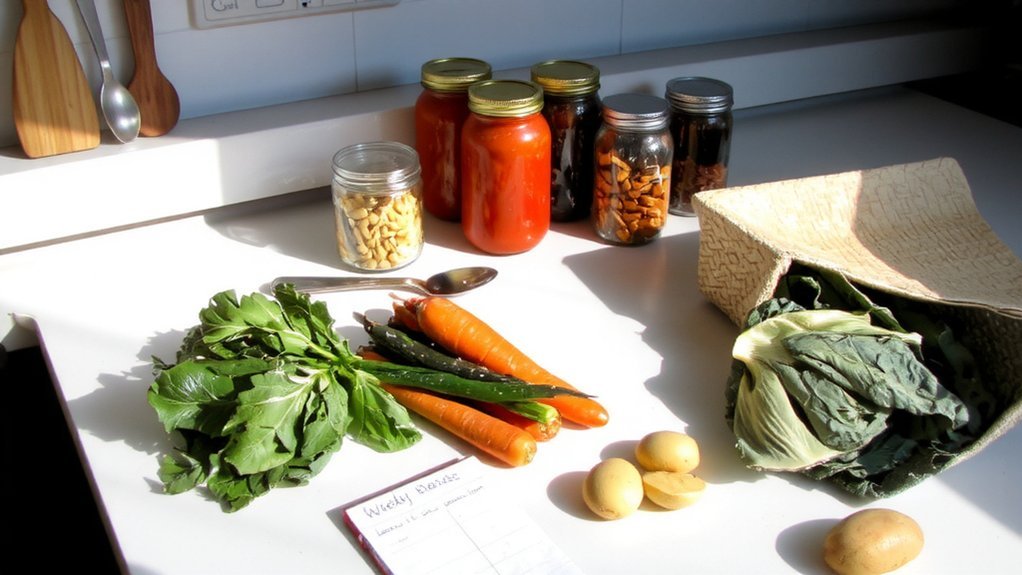
Stocking affordable pantry essentials like rice, beans, canned tomatoes, and pasta lets you cook filling meals without breaking the bank.
You’ll save more when you buy staples in bulk and portion them for long-term use.
A few key spices — cumin, paprika, garlic powder, and dried oregano — will elevate those basics into tasty family favorites.
Affordable Pantry Essentials
A well-chosen set of pantry staples makes affordable meals easy. You’ll stock versatile dry goods—rice, pasta, canned tomatoes, and beans—that stretch across recipes and save time.
Prioritize items with clear labels, ethical sourcing, and brand transparency so you’re sure what you’re feeding your family. Rotate staples to avoid waste, label dates, and keep a simple list for quick shopping. Use spices, oil, and a long-lasting grain to build flavor without expense.
- Rice (white or brown)
- Dried beans or canned beans
- Canned tomatoes or tomato paste
- Olive or vegetable oil and basic spices
This focused selection keeps meals flexible, minimizes waste, and helps you cook healthy dinners on a tight budget. Swap items seasonally to match deals and family preferences easily.
Bulk Buying Benefits
When you buy pantry staples in bulk, you’ll lower the cost per unit, reduce packaging waste, and make fewer trips to the store — all of which stretch your food budget.
| Item | Benefit |
|---|---|
| Rice, Beans | Cost savings, long shelf life |
| Oats, Canned Tomatoes | Travel reduction, versatile uses |
You can capitalize on cost savings by choosing durable basics. Store portions in airtight containers, label with dates, and rotate stock so nothing spoils. Bulk buying gives travel reduction benefits; fewer store runs free up time and cut incidental purchases. Track unit prices, compare sizes, and buy only what you’ll use within shelf life. Use your freezer for extra dry goods or opened bags. That practical approach keeps meals reliable, cheaper, and less wasteful and nutritionally sound.
Spices to Elevate Meals
Adding a few versatile spices doesn’t take much money but lets you turn simple, inexpensive ingredients into flavorful family meals without breaking the bank.
- Cumin
- Paprika
- Chili flakes
- Dried herbs
Use toasting techniques to deepen flavor—toast whole spices briefly in a dry pan, then grind.
Practice aroma layering: add spices at different stages—seed, mid-cook, finish—to create depth without extra cost.
Store spices in airtight containers away from heat and light to keep potency.
Rotate and buy small amounts of whole spices when on sale.
With intentional choices and simple methods, you’ll stretch staples into diverse, satisfying, dinners your family will actually enjoy.
Try mixes and label jars for quick, consistent seasoning every week.
Experiment with small batches to find favorites that save time too.
Seven Dinners + One Flex Night
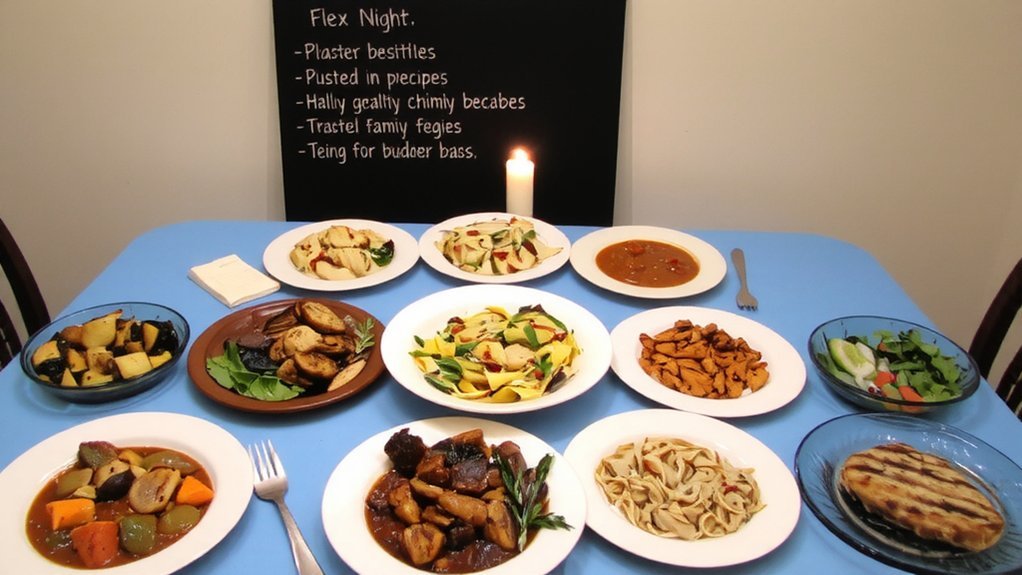
Plan seven dinners and keep one flex night for leftovers, takeout, or a pantry rescue so you won’t scramble if plans change and you can cut waste and save money. You map meals across nights, use theme nights to simplify choices, and schedule bulk-cook nights to fuel lunches. Encourage kid involvement with simple tasks—setting the table, stirring, or choosing a vegetable—to build buy-in and reduce dinner battles. Track proteins, veggies, and carb bases in a compact plan:
| Night | Main idea | Tip |
|---|---|---|
| Mon | Pasta | Double sauce |
| Tue | Taco night | Prep toppings |
| Wed | Casserole | Use frozen veg |
| Thu | Stir-fry | Cook extra |
Rotate leftovers into flex night and adjust based on schedules. You save time, money, and stress while feeding your family well daily.
Quick Recipes for Busy Weeknights
You’ve set up seven dinners plus a flex night to cut waste and stress, and now you need recipes that fit that rhythm. Choose fast mains—stir-fries, sheet-pan chicken, tacos, skillet pastas—that come together in 20–30 minutes.
Use Kid friendly hacks like pre-cut veggies, mix-and-match toppings, and a reward for trying new bites. Rely on Time saving gadgets: pressure cooker for beans, mandoline for even slices, and a food processor for quick sauces.
Plan one-pot meals and double sauces for lunches. Keep a short staples list and frozen veggies on hand so you’ll finish evenings with minimal cleanup.
- 20-minute stir-fry with frozen veg and rice
- Sheet-pan sausage and potatoes, toss-and-bake
- Black bean tacos with quick slaw and salsa
- Skillet mac and cheese with steamed broccoli
Leftover Remix Ideas
Transforming leftovers into fresh meals saves time and cuts waste: take last night’s stir‑fry and fold it into fried rice, shred leftover roast chicken for tacos or quesadillas, and toss cooled sheet‑pan veggies into a quick pasta with a jarred sauce.
You can mix grains, proteins, and sauces to create Creative Pairings that feel intentional—try curry yogurt on roasted vegetables, or salsa and beans with rice for stuffed peppers.
For Texture balance, crisp bits in a skillet before combining. Emphasize Flavor Transformations by adding acid, herbs, or a quick dressing to revive dishes.
Pack lunches with repurposed soups or salads, and label portions to rotate through the week. With a few staples and simple steps, you’ll stretch groceries without repeating meals or different proteins.
Seasonal Produce and Swaps
When you choose fruits and vegetables that are in season, you get better flavor and lower prices; swap in comparable items—like zucchini for summer squash, pears for apples in baking, or canned tomatoes for fresh in winter—to keep recipes vibrant, reduce waste, and stretch your grocery budget.
Shop your farmers market for deals, taste heirloom varieties when available, and plan meals around what’s abundant.
You’ll preserve excess by freezing, pickling, or making sauces, and you’ll swap confidently when a recipe calls for out-of-season produce.
Keep a short list of reliable substitutions and teach your family to embrace variety so meals stay exciting without costing more.
- Buy bulk and freeze extras
- Roast mixed root vegetables
- Use canned or frozen tomatoes
- Try heirloom varieties when affordable
Conclusion
You can keep family dinners varied, healthy, and cheap without extra stress. Follow theme nights, double recipes, batch sauces, and freeze extras so you’ll have quick lunches and rescue meals. Shop store brands, compare unit prices, and stick to a short list to cut waste and time. Prep once, cook smart, and swap seasonal veggies. You’ll save money, eat better, and still enjoy friendly, tasty meals all week with family around the table every night.