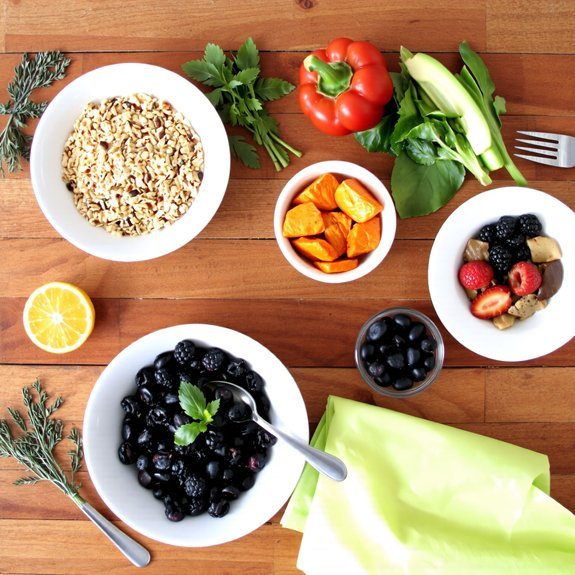
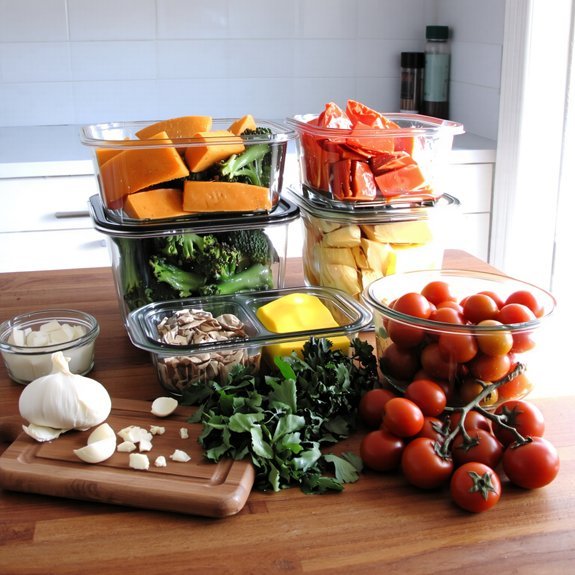

You’ll save time and cut stress by batching two proteins, one grain, and a few versatile veggies in a single session. Start small, use stackable containers, and learn simple labeling and reheating tricks. I’ll give an easy week‑one plan, three batch recipes, and quick diet swaps—ready to get started?
Key Takeaways
- Start small: choose two recipes and prep once or twice weekly to build momentum and reduce decision fatigue.
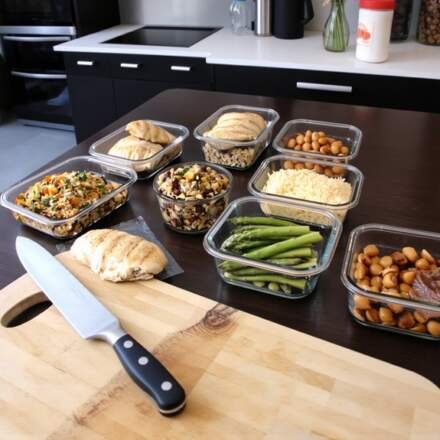
- Use uniform, stackable containers, shallow cooling dishes, and labels for organized storage and fast reheating.
- Shop core staples: proteins (chicken, tofu, beans), grains (rice, quinoa), frozen veg, olive oil, vinegar, and versatile spices.
- Batch-cook one session: two proteins, one grain, and two–three vegetables for mix-and-match bowls across the week.
- Cool quickly, chill within two hours, freeze extras, and reheat to 165°F (74°C) adding sauce or water for freshness.
Why Meal Prep Matters
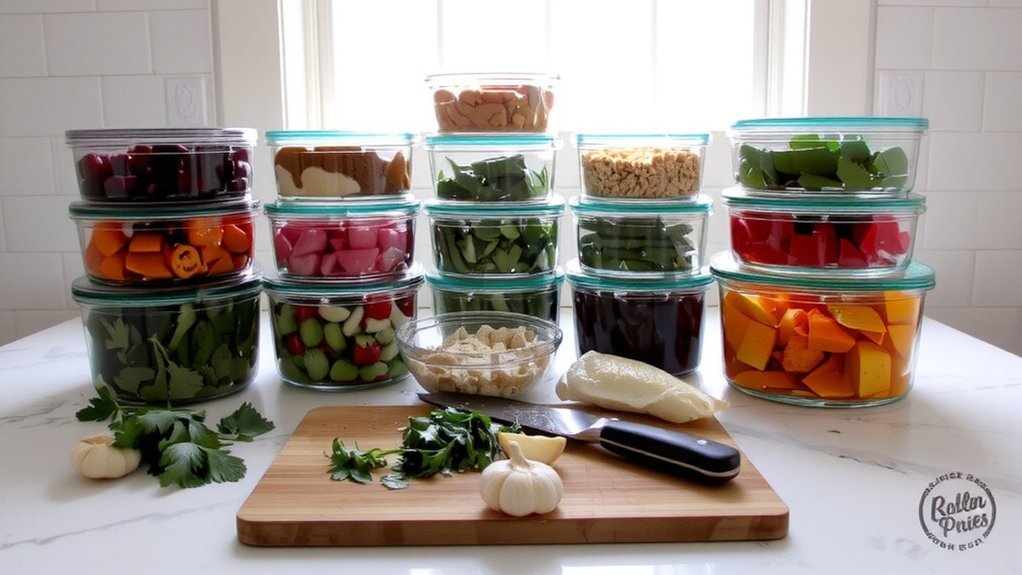
Saving time and cutting stress, meal prep helps you eat better without daily decision fatigue. When you plan meals, you control portions, reduce impulse buys, and realize financial savings by buying in bulk and minimizing takeout.
You’ll eat more consistently, because routine simplifies choices and supports habit formation that sticks. Prep turns vague intentions into concrete actions: chopping veggies, cooking proteins, and portioning servings in advance so you grab healthy options fast.
You’ll also cut food waste and see clearer grocery budgets, which frees money for other goals. Start small—pick two recipes and prep components once or twice weekly—so you build confidence without overwhelming your routine, then expand as you gain momentum. Stick with it; benefits compound quickly and simplify your life considerably daily.
Essential Gear and Containers
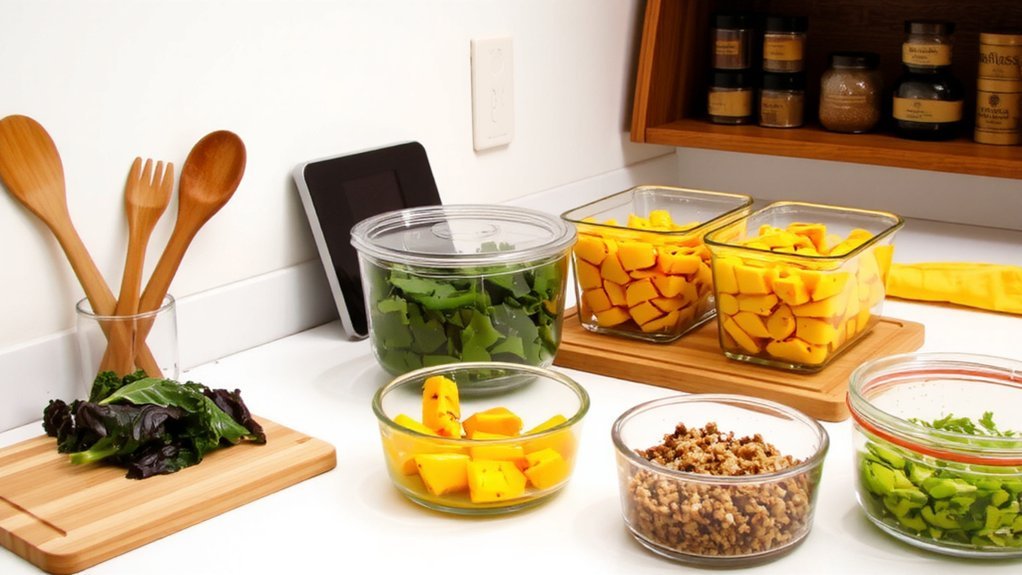
| Item | Use | Tip |
|---|---|---|
| Containers | Storage & reheating | Uniform sizes stack |
| Mats/Boards | Baking & prep | Wash and replace as needed |
No-Fuss Shopping List
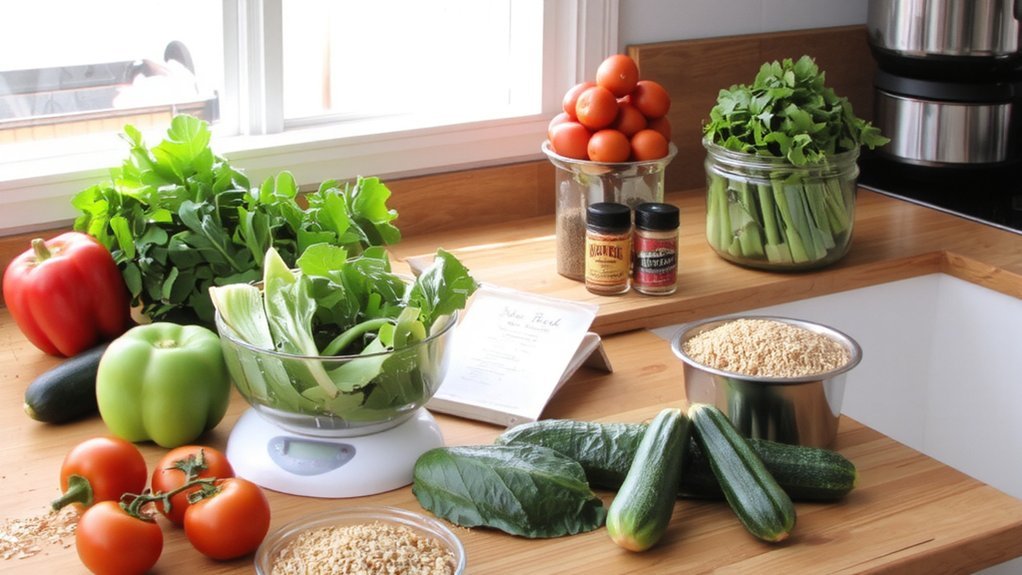
With your containers and mats ready, you’ve got the foundation—now plan a shopping list that keeps meal prep simple and flexible.
Focus on a short core list: proteins, grains, quick veggies, and staples like olive oil, spices, and sauces. Choose versatile items you’ll reuse across meals and note budget substitutions (canned beans, frozen fish) and seasonal swaps to keep costs low and flavors fresh.
Buy small amounts of perishable herbs and larger portions of pantry items. Pack a cart with these four essentials:
- Proteins (chicken, tofu, canned tuna)
- Grains & starches (rice, pasta, potatoes)
- Veggies & fruit (frozen mixed veg, seasonal produce)
- Staples & flavorings (olive oil, vinegar, spices)
Stick to the list to save time, money, and energy daily.
A Simple Meal-Prep Plan for Week One
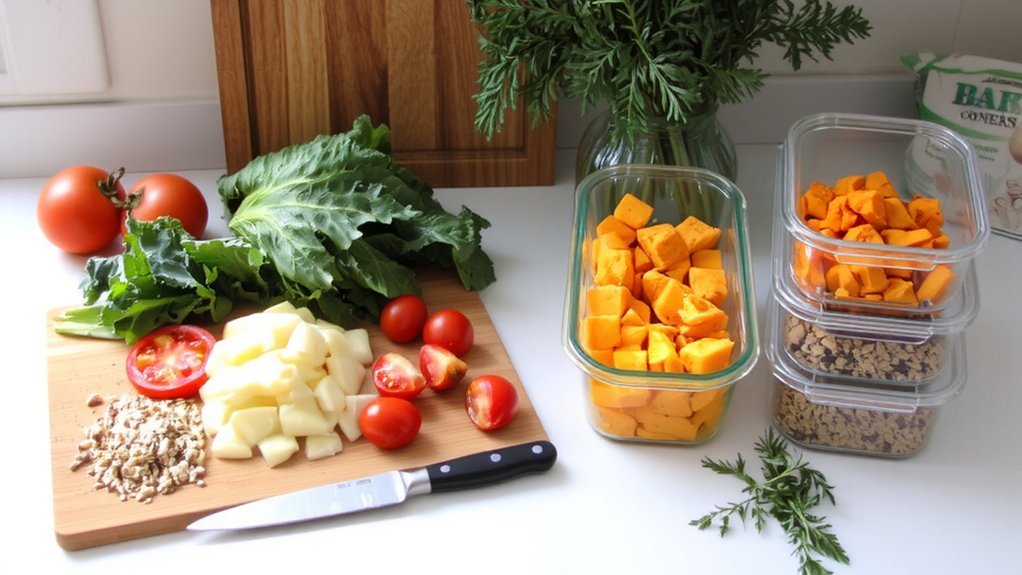
Once you’ve got your shopping list and containers sorted, spend one prep session cooking two proteins (e.g., chicken and tofu), one grain (rice or pasta), and two to three vegetables so you can mix-and-match meals all week.
Plan weekday themes—Mexican Monday, Salad Tuesday, Stir-fry Wednesday—to reduce decision fatigue and streamline seasoning choices.
Portion bowls and lunches for grab-and-go, labeling containers with day and intended meal to keep variety intentional.
Use energy pacing: heavier meals earlier in the day or on workout days, lighter ones when you expect low activity.
Rotate sauces and dressings to change flavors without extra cooking.
Reheat smartly to preserve texture, and note what combinations you liked so next week’s plan gets even simpler.
You’ll save time and stress every week.
Three Easy Batch-Cook Recipes
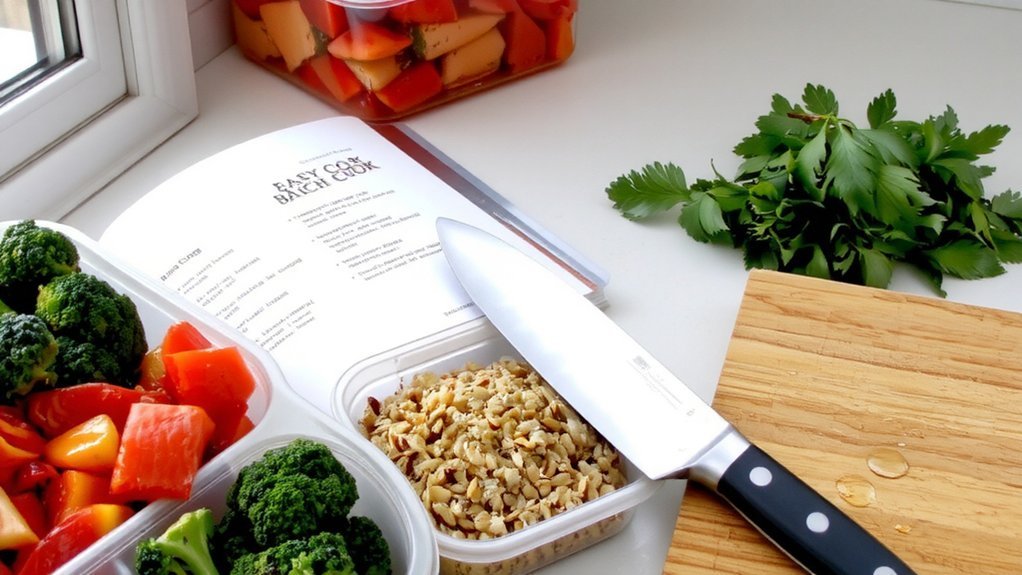
Start with two fail-safe batch recipes: one-pan chicken and veg, and make-ahead grain bowls.
You’ll roast protein and veggies on a sheet pan for quick dinners and assemble versatile grain bowls for lunches.
Both scale easily, store well, and let you mix sauces and toppings to keep meals interesting.
One-Pan Chicken and Veg
Roast chicken and veggies together on a single sheet pan to save time and cut cleanup—these three batch-cook recipes let you mix flavors, portion for the week, and reheat without fuss.
You’ll prep three variations: lemon-garlic, Mediterranean, and spicy-sriracha. Each uses bone-in or boneless chicken, sturdy vegetables, and a simple oil-and-spice rub.
Finish bright with citrus finishing and scatter an herb chiffonade before storing. Bake at 425°F until juices run clear, then cool quickly and divide into containers.
- Lemon-garlic: potatoes, broccoli, thyme.
- Mediterranean: tomatoes, olives, oregano.
- Spicy-sriracha: sweet potato, bell pepper, scallions.
- Simple—salt, pepper, olive oil.
Reheat in oven or microwave, and enjoy a no-fuss protein-and-veg meal all week. Label dates on containers so you eat fresher meals first today.
Make-Ahead Grain Bowls
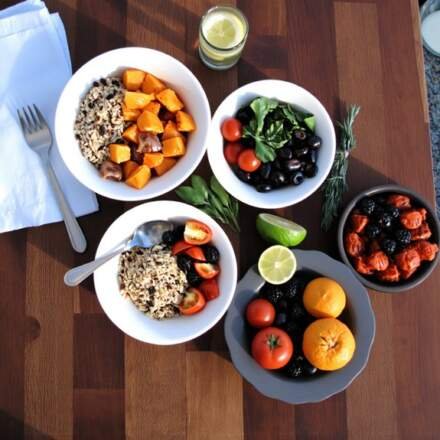
Building versatile grain bowls ahead saves weekday decision‑making and gives you balanced, reheat‑friendly meals. You’ll cook Seasonal Grains in batches—farro, barley, or brown rice—then mix three easy bases: roasted vegetables, a protein, and a bright dressing. Focus on Texture Balancing: pair chewy grains with crisp veggies and creamy toppings so nothing feels boring. Prep three recipes: Mediterranean chickpea, Korean beef with kimchi, and lemon-tahini roasted cauliflower. Store components separately in clear containers, label dates, and assemble in minutes. Heat or enjoy cold; add fresh herbs for lift. The table below captures how these bowls feel when you eat them.
| Comfort | Brightness |
|---|---|
| Warm and cozy | Zesty and alive |
| Filling satisfaction | Crisp renewal |
You’ll feel nourished, energized, and ready for your week —simple, steady, reliable fuel.
Storage, Labeling, and Reheating Tips
When you prep meals for the week, proper storage, clear labeling, and safe reheating keep food fresh and cut waste.
Follow these basics:
- Cool quickly in shallow containers.
- Label with contents, date, and reheating note.
- Store sauces separately; freeze extras.
- Rotate oldest meals first.
You should chill within two hours to maintain Leftover Safety.
Note reheating instructions for Flavor Revival — add a splash of water or sauce before heating.
Reheat to steaming hot (165°F/74°C), stirring midway; use oven for crispy textures.
If microwaving, vent the lid.
Discard items with off smells or textures.
Keep a short inventory so you eat meals before they spoil.
Freeze portions you won’t eat within three days, then thaw safely in the fridge overnight before reheating and enjoy.
Tweaks for Vegetarian, Gluten-Free, and High-Protein Needs
If you’re tailoring meal prep for vegetarian, gluten-free, or high‑protein needs, focus on ingredient swaps, portion tweaks, and cross‑contamination controls so every meal stays safe and satisfying.
Swap beans, lentils, tempeh, and tofu, (or soy free options like chickpea tofu, seitan alternatives where tolerated, or extra legumes) to hit protein goals; add Greek yogurt, cottage cheese, eggs, or plant-based protein powders for high-protein days.
For gluten-free, use quinoa, rice, buckwheat, and certified oats. Control cross-contact by cleaning surfaces, using separate containers and utensils, and labeling.
Employ texture hacks—roasting, smashing, or crisping—to make plant proteins more appealing. Portion proteins and carbs to match your targets, plan varied flavors, and prep simple dressings to keep meals interesting all week and regularly rotate menus to avoid boredom.
Best Apps and Tools to Streamline Your Routine
How can you save time and mental energy on meal prep?
Use apps and tools that automate planning, shopping, and timing.
Choose a meal-planning app with calendar integration so your plan syncs with workouts and work, and pick a grocery app that converts recipes into organized lists.
Smart timers and multi-step timers keep hands-free cooking precise.
Use a grocery-delivery service when short on time.
- Meal planner with calendar integration
- Grocery list app with recipe import
- Smart timers and oven-to-phone alerts
- Batch-cooking templates and shopping sync
You’ll reduce decision fatigue, avoid wasted food, and finish prep faster by combining these tools into one simple routine.
Start small: test one app for a week, then add features as you see real time savings and less stress.
Conclusion
You’ve set up a simple, sustainable routine that cuts stress, saves money, and keeps dinner predictable. Stick to two proteins, one grain, and a few veggies per session, use stackable containers, and label portions so you’ll grab meals fast. Start small, theme weekdays, and freeze extras. With these habits, you’ll chill within two hours and reheat safely, build consistency, eat better, and free up time for what really matters without sacrificing flavor or variety daily.