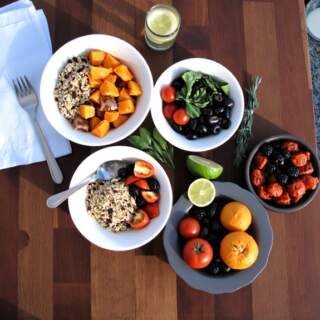
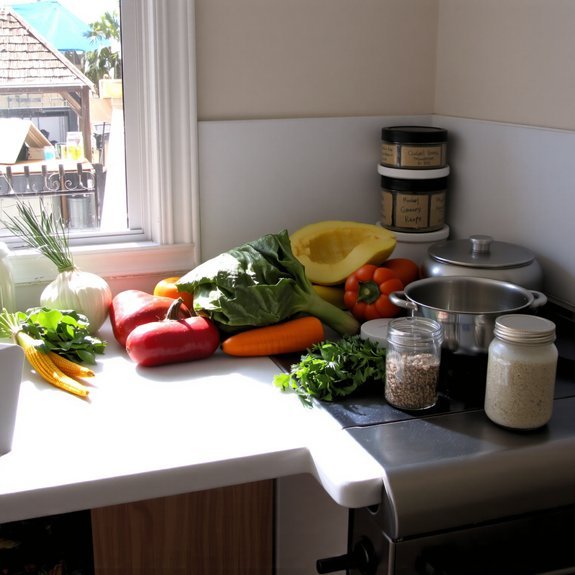

You can turn two focused hours into five weeknight dinners with a little planning and smart batching. You’ll plan a compact menu, run a fast grocery list, roast proteins and veggies together, simmer a legume, and portion meals for easy reheating. You’ll save time, reduce waste, and handle swaps for allergies — here’s how it all comes together…
Key Takeaways
- Spend 10 minutes planning five simple dinners with overlapping ingredients, prioritizing proteins, produce, and staples to minimize shopping time.
- Shop in 20 minutes using a single-sheet, store-layout–grouped list and a timed route to grab essentials before extras.
- Batch-cook fundamentals: roast multiple trays, boil grains/legumes, and simmer a one-pot sauce to maximize oven and stove efficiency.
- Sequence tasks by station (prep → oven → stove → cooling), delegate, and use a running checklist to finish within two hours.
- Portion, label with contents and date, cool within two hours, and store/freezer for safe reheating at 165°F (74°C).
Plan and Shop in 30 Minutes
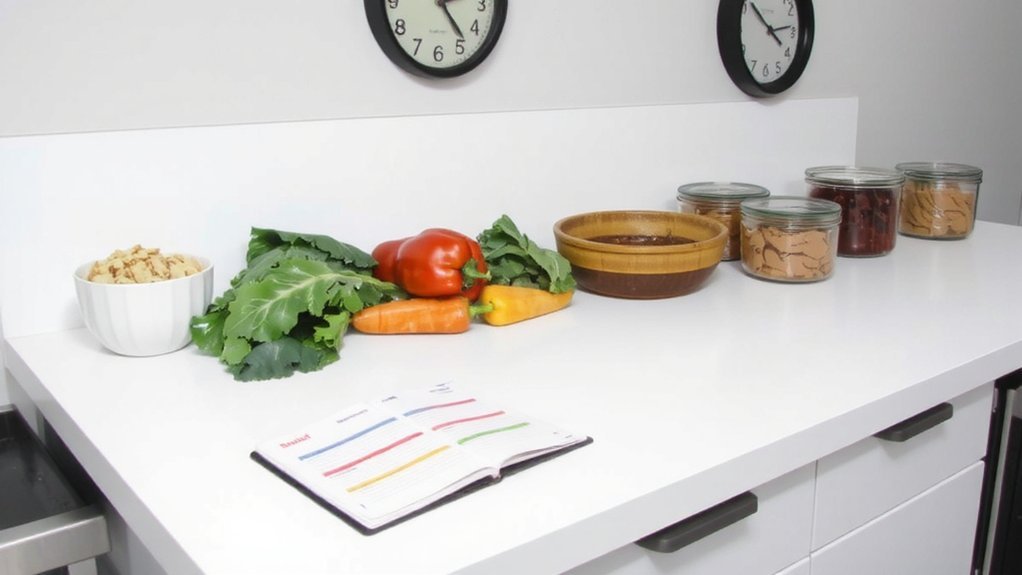
How can you plan and shop for a week’s meals in just 30 minutes? You pick five simple dinners, check your pantry, and note staples to reuse across meals.
Prioritize high-impact items first: proteins, produce, and staples; use list prioritization so you grab essentials before extras.
Group items by store layout and set a logical grocery route on your phone or mental map, avoiding backtracking.
Stick to time limits: ten minutes planning, twenty for shopping.
Choose recipes with overlapping ingredients and flexible components, and swap items to stay within budget.
Use a single-sheet shopping list and a timer, and don’t impulse-buy. You’ll finish fast, save money, and have clear dinners ready for weekend prep.
Repeat weekly to refine choices and speed up the process.
Efficient Batch-Cooking Workflow
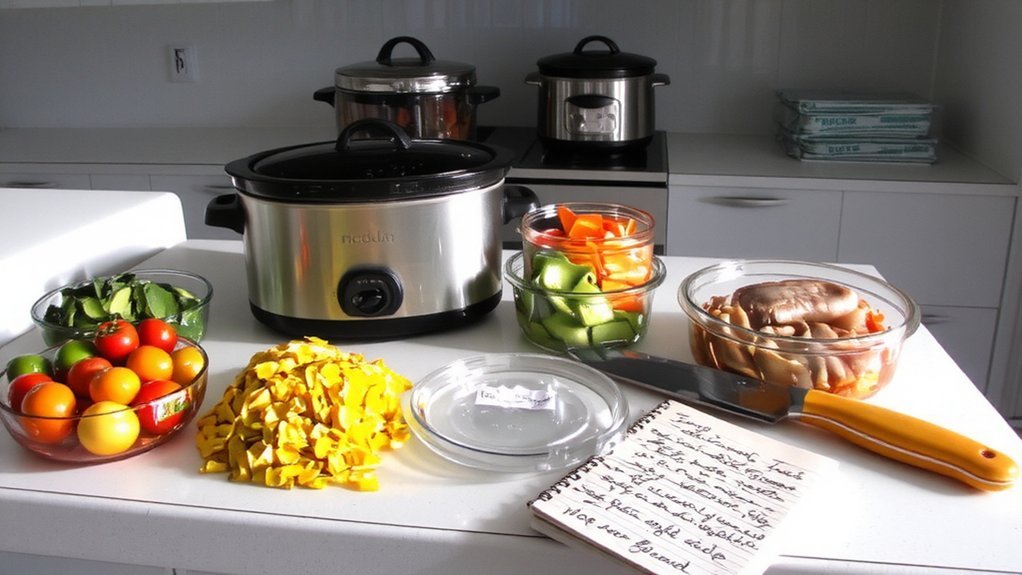
When you set up a deliberate batch-cooking workflow, you cut weekday stress and make the most of a single cooking session. You begin by mapping tasks by equipment and timing: chopping, roasting, simmering, and cooling.
Station sequencing keeps work flowing—prep at the counter, bake in the oven, simmer on the stove, and cool on racks—so ingredients move without backtracking. Use simple labels and trays to group meals by finish time.
Task delegation speeds things up: assign chopping, seasoning, and cleanup to household helpers or rotate duties by week. Keep a running checklist and a clear timeline so everyone knows their role.
When you finish, portion and refrigerate promptly to preserve quality and minimize weekday effort. Build this routine and reclaim your weeknights efficiently today.
Five Dinner Recipes and Time-Saving Shortcuts
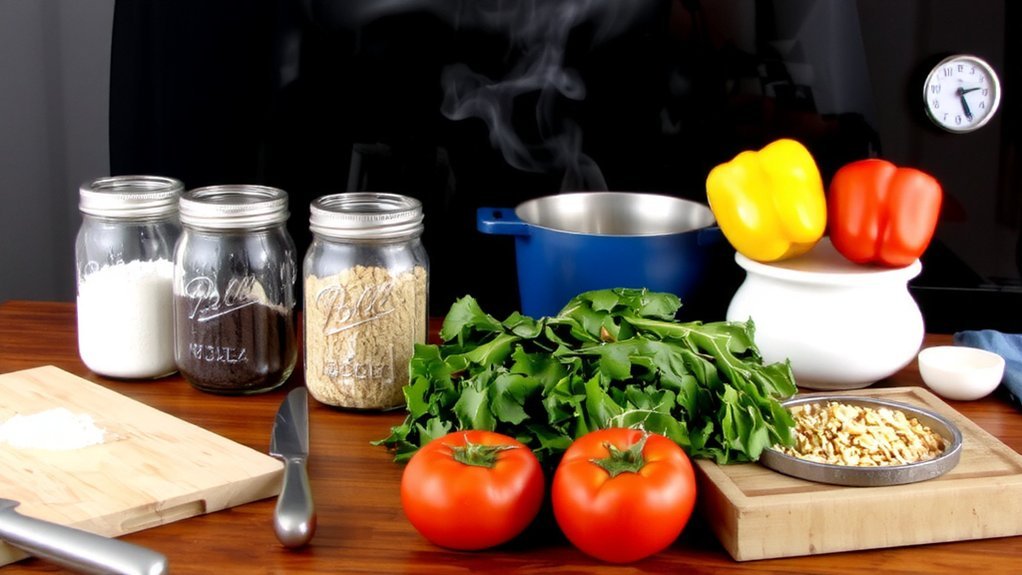
Starting with five versatile dinner recipes—sheet-pan chicken and veggies, one-pot lentil curry, baked salmon with quinoa, tofu-and-veggie stir-fry, and quick sausage-and-spinach pasta.
You’ll cut prep and cook time by leaning on batch-cooked staples, smart swaps (pre-chopped produce, canned beans, frozen grains), and a few hands-off techniques like oven-roasting and one-pot simmering. Use these shortcuts to streamline dinners:
- Batch basics: cook grains, roast multiple trays, and make a big pot of legumes.
- One Pot dinners: combine aromatics, protein, veggies, and broth for fast cleanup.
- Shortcut Sauces: jarred tomato, tahini mixes, or miso dressings transform meals quickly.
You’ll mix, portion, and finish dinners in minutes during the week.
You’ll also swap proteins through the week so meals stay varied without extra effort daily.
Smart Storage, Labeling, and Reheating Tips
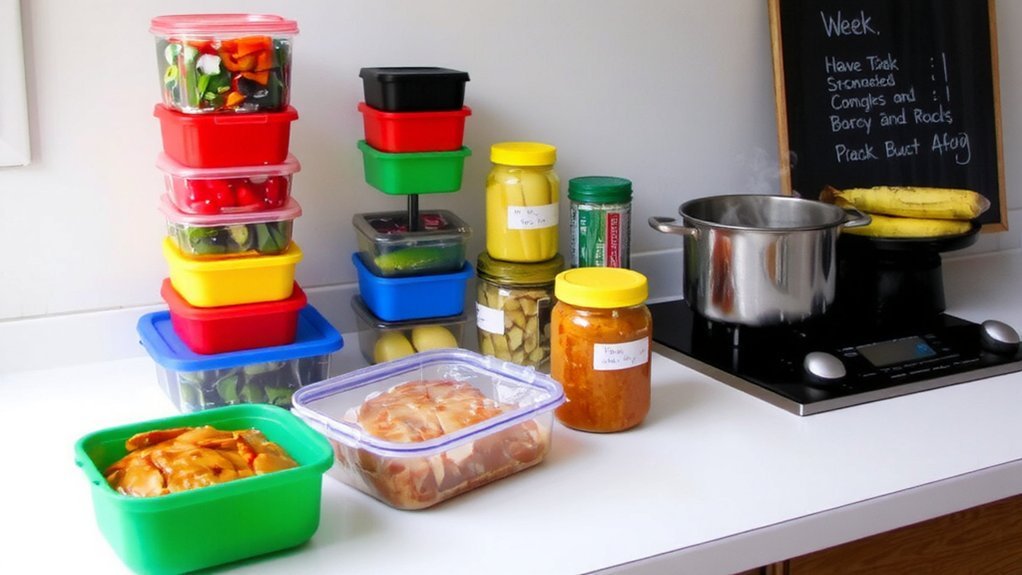
After batch-cooking and swapping proteins through the week, you’ll want simple storage, labeling, and reheating habits to keep meals safe and tasty.
Use airtight containers and pick appropriate container materials—glass for oven/microwave and BPA-free plastic for fridge/freezer—to preserve texture and avoid odors.
Cool food within two hours, portion into meal-sized servings, and leave a little headspace for expansion when freezing.
Label each container with contents and date; include reheating instructions when helpful.
Follow Temperature guidelines: refrigerate below 40°F (4°C) and freeze at 0°F (-18°C).
Reheat leftovers to an internal 165°F (74°C), stirring for even heat.
Thaw in the fridge or under cold running water, not at room temperature.
Rotate stock using oldest-first to reduce waste.
Store sauces separately to keep textures bright and fresh.
Simple Swaps for Allergies and Dietary Preferences
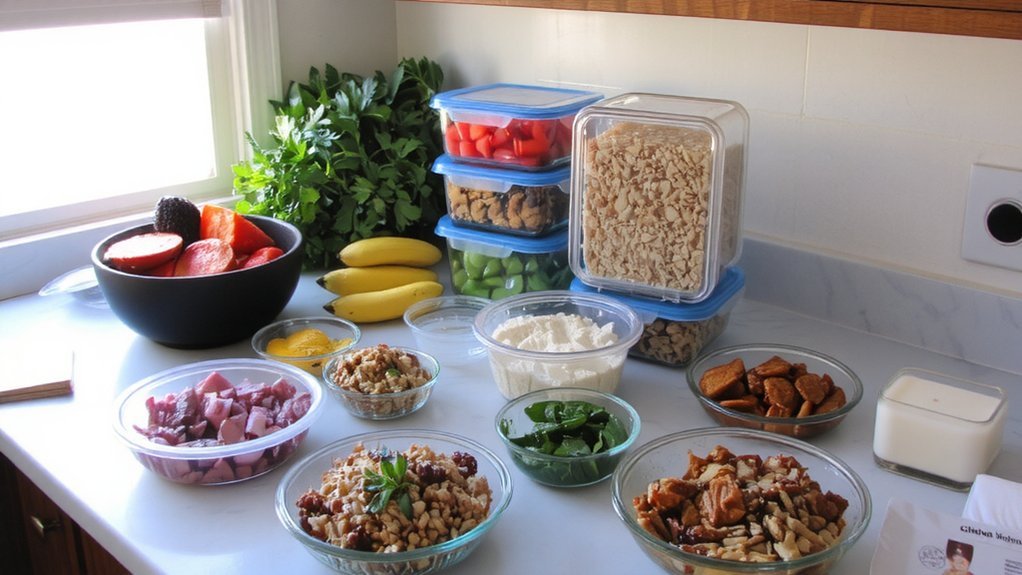
If you need to accommodate allergies or dietary preferences, simple swaps let you keep flavors and textures without extra fuss.
You can plan dinners and desserts that everyone enjoys by choosing straightforward replacements.
- Swap dairy with oat or almond-free milks (try oat or rice milk) to suit lactose intolerance.
- Replace wheat with gluten-free flours like brown rice or oat flour for hearty breads and coatings.
- Use seed butters, coconut, or allergy-friendly chocolates to create nut free desserts, and pick labeled soy alternatives such as pea or chickpea-based products when avoiding soy.
Label each container with the swap used so you’re not guessing later.
These small changes save time and keep your weekend prep inclusive.
Prep notes help repeat success next weekend.
Conclusion
You’ve just turned two hours into five weeknight dinners by planning fast, shopping smart, and batch-cooking efficiently. Roast proteins and veggies, simmer a one‑pot legume, and cook grains while you make sauces—then portion, label, and chill. Use simple swaps for allergies and reuse overlap ingredients to cut waste and stress. Reheat what you need, when you need, and enjoy easier evenings, healthier meals, and more free time all week without spending extra weekend hours now.