
You’ll find 20 reliable make-ahead dinners that cut prep time and reduce waste. You can batch-assemble casseroles, enchiladas, curries, and protein bakes that freeze and reheat well. Portions and storage guidelines save fridge space and stress. Keep going — practical steps, labeling tips, and a few tricks you’ll want to try next…
Key Takeaways
- Build a 20-meal plan mixing casseroles, stuffed dishes, bakes, and pulled-meat mains for balanced variety and easy weekly rotation.
- Cool foods completely, flash-freeze flat in shallow pans, then double-wrap or vacuum-seal to prevent freezer burn and save space.
- Label packages with contents, date, portion size, and clear thaw/reheat instructions; follow FIFO rotation to use oldest first.
- Reheat covered at 325–350°F until 165°F internal, uncover briefly to brown, and rest five minutes before serving.
- Par-cook components (rice, pasta, mashed potatoes) and assemble chilled to avoid sogginess and ensure consistent texture after reheating.
Cheesy Chicken and Rice Casserole
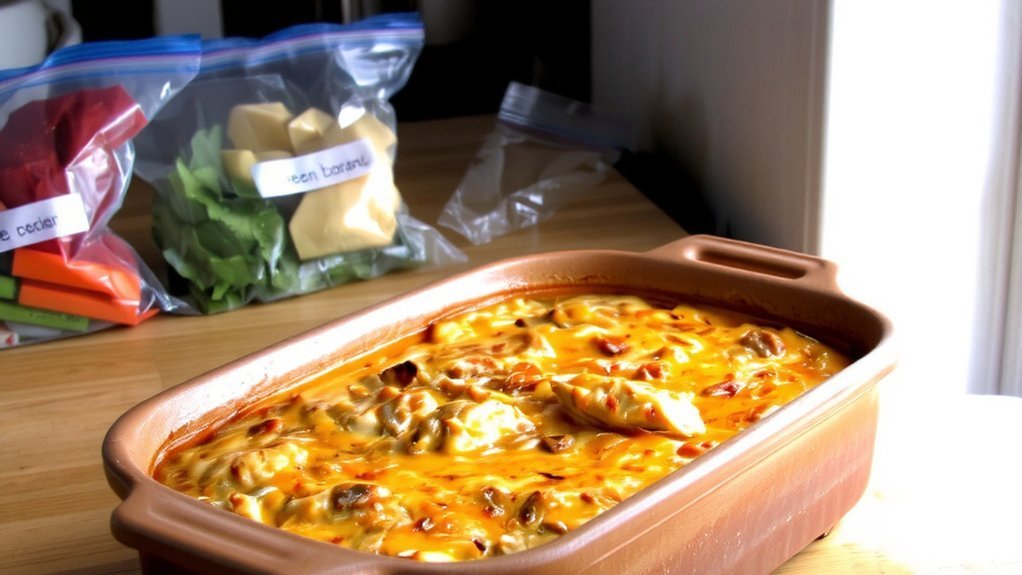
Assembling this Cheesy Chicken and Rice Casserole gives you a reliable, freezer-friendly meal that reheats well and pleases picky eaters. You’ll portion cooked rice, shredded chicken, a light cheese sauce, and steamed vegetables into airtight containers for freezing. Use low sodium broth and cheeses to control salt, and cool components before sealing to avoid ice crystals.
Label each container with contents and reheating instructions, then stack flat in the freezer to save space. For a baked finish, thaw overnight and sprinkle a breadcrumb-based crisp topping before baking until golden.
Reheat covered to retain moisture, then uncover briefly to restore texture. This approach speeds weeknight dinners and reduces waste while keeping flavors consistent. You’ll find portioning saves time and keeps family meals simple every week.
Beef and Vegetable Shepherd’s Pie
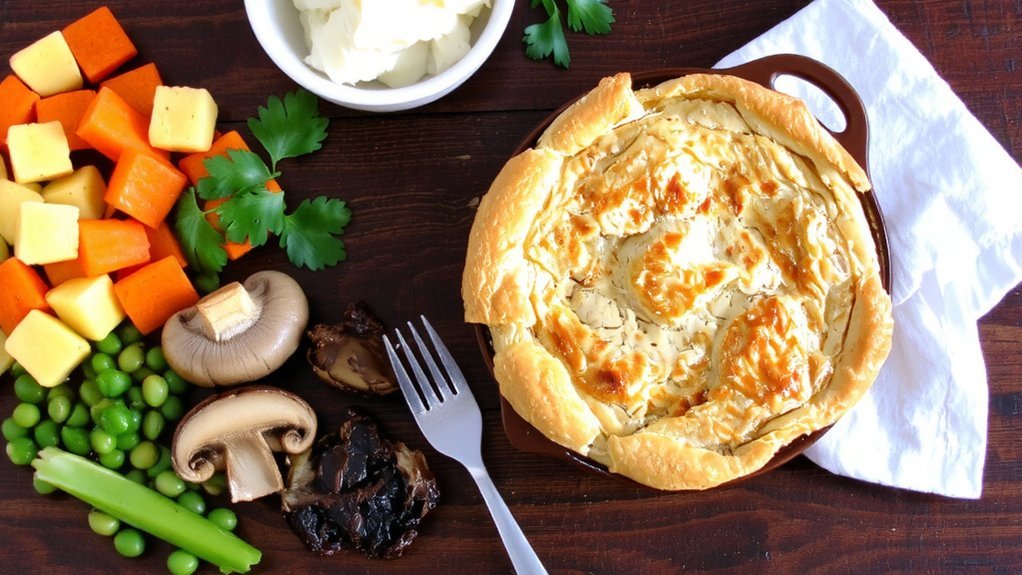
When you prep Beef and Vegetable Shepherd’s Pie for the freezer, brown seasoned ground beef with onions and mixed vegetables, thicken the gravy, and spread it into shallow, freezer-safe dishes before topping with cooled mashed potatoes; cool completely, seal, label with date and reheating instructions, and stack flat to save space.
You’ll portion single-serve trays or family pans, note historic origins and regional variations, and freeze to preserve flavor.
- Brown beef
- Sauté onions
- Stir in veg
- Top with mash
Thaw overnight, bake until hot, then broil for a browned crust.
Label each pan with contents and date, include reheating instructions, and stack flat for efficient freezing and quick weeknight dinners. You’ll thank yourself on busy nights and guests will too.
Spinach and Feta Stuffed Shells
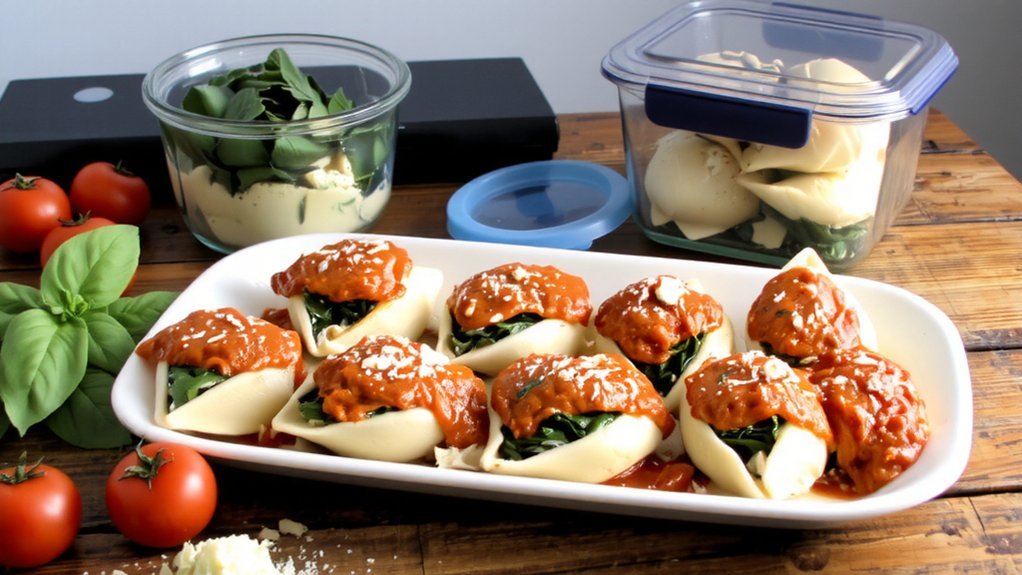
Once you’ve cooked the jumbo shells al dente and sautéed spinach with garlic, mix it with ricotta and crumbled feta, stuff each shell, arrange them snugly in a shallow, freezer-safe pan, spoon marinara over the tops, sprinkle with mozzarella, cool completely, then seal, label with date and reheating instructions, and freeze flat.
When you bake from frozen, cover with foil and add 15 to 20 minutes to the recommended time, then uncover to brown; let rest five minutes before serving.
These stuffed shells showcase Greek influences through feta and lemon zest, so add a sprinkle of oregano and black pepper for brightness.
For Wine pairings, choose a crisp Sauvignon Blanc or a light-bodied Pinot Noir to complement the tangy cheese and tomato and herbs.
Turkey and Sweet Potato Enchiladas
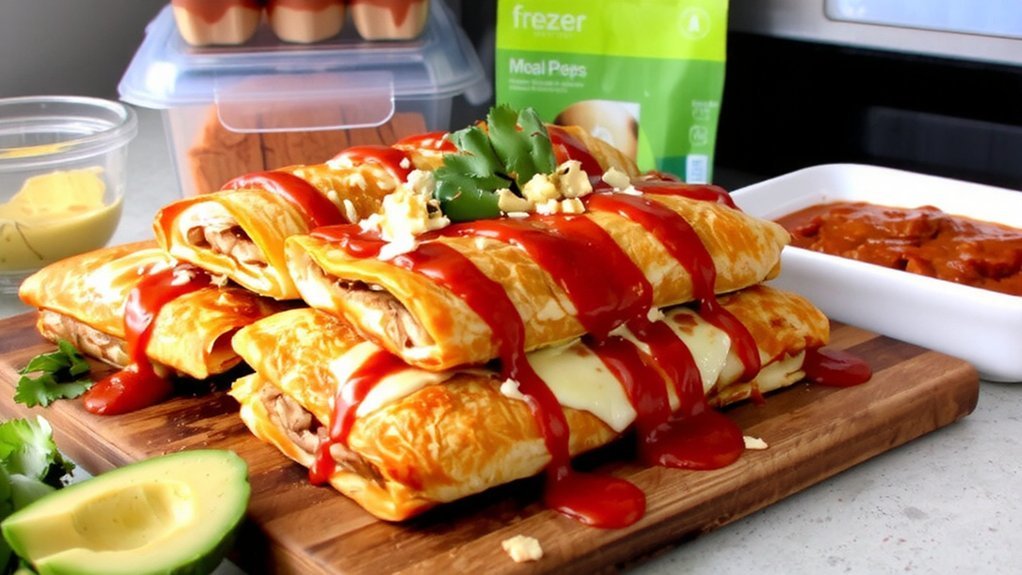
You’ll brown the turkey, roast and mash the sweet potatoes, and cool the filling completely before assembling to prevent sogginess.
Pack the enchiladas tightly in a freezer-safe dish, label with the date, and they’ll keep well for up to 3 months.
For serving, thaw overnight and reheat covered at 350°F until bubbly, or bake from frozen—adding time and tenting with foil—to heat through.
Prep and Freezing Tips
If you’re prepping turkey and sweet potato enchiladas for the freezer, cook and cool the filling completely so it doesn’t raise temperatures in the dish or make tortillas soggy. Work quickly but carefully: assemble cooled filling, warm tortillas briefly to prevent cracking, and use a shallow, freezer-safe pan so layers freeze evenly.
Use a clear Labeling system and include date, contents, and Thawing safety notes. Wrap tightly with foil and plastic to prevent freezer burn.
- Cool filling on a tray.
- Warm tortillas for pliability.
- Pack snugly to avoid air pockets.
- Double-wrap and label clearly.
Freeze flat if possible; store upright for easy retrieval. Rotate stock so oldest gets used first. Check seals periodically and toss if heavy ice buildup appears.
Serving and Reheating Notes
When you’re ready to serve, thaw the enchiladas overnight in the fridge, then reheat them covered in a 350°F oven until they reach an internal temperature of 165°F (about 25–35 minutes for a shallow dish), uncovering for the last 5 minutes to brown the top; you can reheat individual portions in the microwave on medium in short bursts, but that may make tortillas soggy.
Let enchiladas rest five minutes before slicing so fillings set.
For plating aesthetics, wipe edges, add a dollop of crema, chopped cilantro, and lime wedges for color.
If you want crisp edges, finish under the broiler briefly.
Plan meal timing so sides are warm — start rice or salad during the last 10 minutes of reheating to serve everything together.
Creamy Mushroom and Herb Pasta Bake
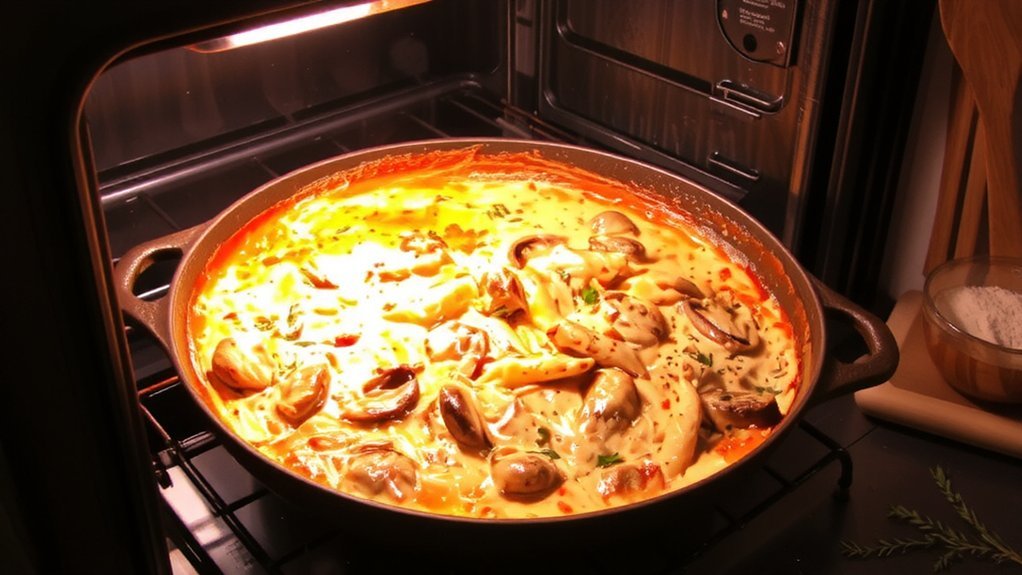
Although it sounds indulgent, this creamy mushroom and herb pasta bake freezes and reheats beautifully, making it a perfect make-ahead dinner. You’ll sauté umami mushrooms, toss al dente pasta in a silky sauce, and add a focused herb pairing—thyme and parsley—before topping with cheese and breadcrumbs.
Freeze in portions or a family pan; thaw overnight. When reheating, cover and warm until bubbling.
- Golden sautéed mushrooms
- Velvety cream sauce clinging to pasta
- Fresh herb notes brightening each bite
- Crispy breadcrumb topping for contrast
You can prep fully or assemble raw components, label with date, and freeze for up to three months for quick, comforting meals. Reheat individual servings in the oven or microwave, checking temperature and restoring crispness under the broiler.
Pulled Pork BBQ Sliders
You’ll make tender slow-cooker pulled pork with a simple spice rub and long, low cooking.
For freezer prep, portion the pork and sauce into airtight containers or vacuum bags and label with dates.
When you’re ready, thaw overnight, reheat gently in a skillet or oven, pile onto slider buns, and add extra BBQ sauce and pickles to serve.
Slow-Cooker Pulled Pork
Slow-cooking pork shoulder turns tough meat into tender, shreddable pork that soaks up barbecue sauce.
You’ll brown the roast, set the slow cooker, and let low heat do the work so you can focus on sides.
Think about regional variations and flavor layering: sweet molasses for Kansas City, vinegar tang for Carolina, smoky Texas rub, or spicy Memphis sauce.
When it’s done, shred and dress with sauce, then serve on slider buns for an easy meal.
Visualize the steps:
- Sear the pork to lock flavor.
- Add aromatics and a bold sauce.
- Cook low and slow for 8–10 hours.
- Shred, mix, and toast buns.
This method gives consistent, juicy results you’ll rely on for weeknight dinners and family gatherings, too, often.
Freezer Prep Tips
After shredding and dressing the pork, portion it specifically for sliders so reheating is fast and waste is minimal.
Label each bag with date, portion size, and any sauce level, then arrange them flat for quick thawing.
Use an Inventory System: track quantities and rotation on a simple spreadsheet or whiteboard so you use oldest packs first.
For packaging, double-seal with vacuum or freezer-grade zip bags, pressing out air to prevent freezer burn.
For Odor Control, wrap buns and toppings separately and add a baking soda packet to the storage bin to absorb smells.
Freeze in meal-ready kits combining meat and sauce only — keep wet and dry components apart.
You can prep a salad kit separately and label it for quick assembly later.
Reheat and Serve
When you’re ready to serve, thaw pulled pork packs in the fridge overnight or use the microwave defrost for a quick turnaround, then reheat gently so the meat stays moist and the sauce doesn’t scorch.
Reheat in a covered skillet with a splash of stock or water, or in a low oven until steaming.
For sliders, toast buns separately to get crisp restoration and warm the sauce for Sauce revival before tossing.
Assemble just before serving so buns stay tender and the pork is juicy.
- Golden toasted buns, buttered
- Steaming shredded pork, glossy sauce
- Cool slaw for contrast and crunch
- Pickles for bright acidity
Serve immediately and offer extra BBQ sauce and napkins for a relaxed, easy meal. Enjoy seconds.
Lentil and Root Vegetable Stew
If you want a hearty, make-ahead dinner that freezes and reheats well, lentil and root-vegetable stew is a smart choice. You’ll prep carrots, parsnips, potatoes and lentils, sauté aromatics, add broth and simmer until tender. The result offers hearty textures and earthy flavors that hold up after freezing. Portion into meal-size containers, cool fully, label with date and reheat gently to avoid overcooking. Use herbs, a splash of vinegar or a dollop of yogurt at serving to brighten the stew. Below is a quick planning grid.
| Component | Prep | Freezing Tip |
|---|---|---|
| Roots and lentils | Chop, rinse | Freeze flat in bags |
| Broth and aromatics | Simmer, cool | Store sealed, label |
When reheating, stir occasionally and taste for seasoning so your dinner stays balanced and satisfying every time.
Salmon and Broccoli Quinoa Bake
Assemble a balanced, freezer-friendly casserole that gives you flaky salmon, tender broccoli and fluffy quinoa in one easy bake.
You’ll prep, portion and freeze pans.
- flaky salmon
- tender broccoli
- fluffy quinoa
- golden topping
Focus on Flavor pairings like lemon, dill and a touch of garlic to brighten the fish without overpowering the grains.
For meal prep, layer cooked quinoa, blanched broccoli and seasoned salmon, then top with yogurt-parmesan to protect texture.
Consider the Nutrition profile—omega-3s, fiber, and protein make each serving satisfying and well-rounded.
When you reheat, thaw in the fridge, bake until just cooked through, and garnish with fresh herbs.
Store labels with date and portion size for simple rotation.
Freeze up to three months for peak quality safely.
Chicken Tikka Masala With Basmati
You can make the tikka marinade up to 24 hours ahead to let the flavors penetrate and freeze it with the chicken for an easy grab-and-cook meal.
When reheating, simmer the sauce gently so it stays silky and the chicken stays tender.
Serve with fluffy basmati—rinse the rice before cooking and use about 1:1.5 rice-to-water for perfect grains.
Make-Ahead Marinade
Marinating the chicken ahead saves time and deepens flavor: mix plain yogurt with garlic, grated ginger, lemon juice, garam masala, cumin, paprika, salt, and a little oil, then toss diced or sliced chicken until it’s well coated.
You’ll want an Acid balance so the lemon brightens without overtenderizing; taste the mix and adjust.
Add a fresh Herb infusion—cilantro or fenugreek—for aroma.
Freeze portions flat in labeled bags for up to three months, or refrigerate for a day before cooking.
When thawing, keep the marinade with the chicken to maintain moisture.
Visualize the result:
- Juicy, spice-kissed pieces
- Creamy, tangy coating
- Flecks of green herbs
- Evenly colored, ready-to-cook chicken
Handle safely and cook thoroughly.
You’ll get big, restaurant-quality flavor every single time.
Basmati Serving Tips
When rinsed and soaked briefly, basmati cooks up fluffy and separate so it soaks up tikka masala instead of turning gluey. You’ll rinse and soak, then use 1:1.5 grain proportions (rice:water) for stovetop or 1:1 for sticky rice cooker results; adjust for altitude. After cooking, let rice rest five minutes, then employ a gentle fluffing technique with a fork to separate grains and release steam. Serve immediately under simmering chicken tikka masala so sauces cling. For freezing, cool fully, portion, and press flat in freezer bags. Reheat covered with a splash of water to refresh texture before fluffing. Small tips below paint picture.
| Step | Imagery |
|---|---|
| Rinse & Soak | Clean grains, cool water |
| Cook | Steam rising, separate kernels |
| Fluff & Serve | Fork clouds, saucy pools |
Black Bean and Butternut Squash Burritos
Roll up roasted butternut squash, seasoned black beans, sautéed onion, and melty cheese in whole-wheat tortillas for a hearty, freezer-friendly burrito that reheats in minutes.
You’ll assemble fillings that freeze well and reheat without losing texture.
Think spice pairings like cumin, smoked paprika, coriander, and a pinch of chili to deepen flavor.
Choose tortilla varieties—whole-wheat, spinach, or corn—for different textures.
Wrap tightly, foil individually, and label with date and reheating instructions.
- Golden cubes of squash
- Glossy black beans seasoned
- Caramelized onion strings
- Stretchy melted cheese
When reheating, unwrap from foil, microwave or oven until steaming.
Add salsa, lime, or avocado for brightness before you dig in.
Store up to three months; thaw overnight in fridge for best results before serving.
Thai Red Curry With Tofu and Veggies
You’ll prep the curry to freeze flat in portion-sized bags, pressing out air and keeping tofu firm and veggies slightly blanched so they hold texture.
When reheating, thaw overnight or warm from frozen in a saucepan, stirring until it simmers and the tofu’s heated through.
Serve over freshly cooked rice or noodles and finish with lime, cilantro, and crushed peanuts for brightness.
Freezer-Friendly Prep
If you want the curry to reheat like it’s freshly made, prep components separately and freeze them flat in portion-size bags.
You’ll package tofu, sauce, vegetables, and aromatics apart so textures stay right and you can follow inventory rotation and safety standards easily.
Label each bag with date and contents, squeeze air out, and lay flat to freeze for space-saving stacks.
Visualize portions when prepping:
- A square of pressed tofu in its own bag.
- A ladle of silky red curry sauce.
- A mix of snap peas, bell pepper strips, and carrots.
- A small herb-and-galangal packet.
Freeze on trays until firm, then stack.
Keep a log so nothing gets forgotten or kept beyond safe timeframes.
Rotate older bags to front weekly.
Reheating & Serving
After freezing, when you’re ready to eat, pull one flat package of each component and thaw them in the fridge overnight or in a cold-water bath for 30–60 minutes.
Reheat the curry sauce gently in a saucepan over medium-low heat until steaming, then add tofu and veggies to warm through; simmer only briefly to avoid toughening the tofu. Microwave: transfer to a shallow, vented dish, stir every 60 seconds until hot.
Reheat rice covered with a damp towel for even moisture. Use portion labeling to track servings and reheating instructions.
For serving, plate rice then ladle curry, and choose a garnish pairing such as fresh cilantro, lime wedges, and toasted peanuts. Refrigerate any leftovers promptly and eat within two days. Serve immediately for flavor.
Italian Sausage and Peppers Ragù
Simmering Italian sausage with bell peppers, onions, tomatoes, and herbs creates a rich ragù that’s ideal for freezing and quick reheating. You’ll brown sausage, sweat peppers and onions, deglaze with a splash of wine, then simmer until flavors meld.
Portion into freezer-safe containers; thaw overnight in the fridge before reheating gently.
Consider Regional variations: add fennel for a Roman touch or crushed chilies for southern heat.
Serve by pairing ragù with:
- steaming pasta
- creamy polenta
- toasted ciabatta
- baked potato
Think about Wine pairings—Chianti or a bold Nero d’Avola complements the sausage’s spice.
Store up to three months, label with date and reheating instructions so you’ll always have a fast, satisfying meal. Freeze flat for quicker thawing and stack to maximize freezer space; safely stored.
Veggie-Loaded Lasagna With Zucchini Ribbons
Swap the meaty ragù for a lighter, vegetable-forward lasagna that still freezes beautifully: thin zucchini ribbons replace some or all of the noodles, layered with roasted eggplant, spinach, a tangy ricotta-bechamel, and plenty of mozzarella for a creamy, satisfying bake.
You’ll prep zucchini using quick Zucchini Techniques: soak slices in salt to draw moisture, pat dry, and grill briefly to concentrate flavor.
Assemble in a shallow pan, alternating ribbons, vegetables, sauce, and a seasoned ricotta mix.
For reliable reheating and portioning, flash-freeze squares before wrapping.
Focus on Cheese Balancing: use part-milk ricotta, a mix of mozzarella and sharper pecorino, plus a thin bechamel to prevent greasiness.
Label with date and reheating instructions; it defrosts and warms evenly for effortless weeknight dinners and busy schedules.
Moroccan Chickpea and Carrot Tagine
Bringing together cumin, coriander, cinnamon, and preserved-lemon brightness, this Moroccan chickpea and carrot tagine gives you a cozy, vegetarian main that freezes and reheats beautifully.
You’ll appreciate how the Tagine history informs slow-simmered layering: aromatics, spices, legumes, vegetables.
Make a large batch, portion into freezer-ready containers, and thaw overnight.
Reheat gently to preserve texture.
- Orange carrots softened to sweet tenderness.
- Plump chickpeas soaking up a warm Spice blend.
- Fragrant preserved lemon threads brightening each bite.
- Cilantro and toasted almonds for fresh crunch.
You can serve over couscous or rice; it’s forgiving, transportable, and perfect for weeknights.
Freeze up to three months, label with date, and you’ll always have a spiced, comforting meal ready when hunger hits.
Beef Chili With Three Beans
A hefty pot of beef chili with three beans gives you a reliable, freezer-friendly dinner that reheats without losing its rich, savory depth. You’ll brown lean beef, sweat aromatics, add tomatoes, broth and three beans for texture; then simmer until flavors meld. Pack in meal-sized portions, label with date and quick reheating instructions. Note regional variations—swap chipotle for ancho, add cocoa or beer—to suit taste. For weekly planning, this meal stretches well and freezes flat for faster thawing. Include a simple nutrition breakdown on the label: calories, protein, fiber, sodium per serving. When reheating, stir gently and check temperature. You’ll find this chili forgiving, economical, and satisfying on busy evenings.
| Feature | Tip | Time |
|---|---|---|
| Beans | Rinse | 5 min |
| Freeze | Flat | 30 min |
Enjoy every bowl.
Lemon-Garlic Shrimp and Orzo
Tossing plump shrimp with lemon, garlic, and tender orzo creates a bright, freezer-friendly weeknight meal you’ll reheat in minutes. You’ll portion cooked orzo and seared shrimp with a light lemon-garlic sauce so meals thaw quickly and stay juicy.
Freeze flat in meal bags to save space and preserve texture contrasts; you can reheat in a skillet or microwave, adding a splash of broth for shine.
- al dente orzo
- springy shrimp
- crisp capers or parsley
- lemon
Finish with bright Herb finishes—chopped parsley, dill, or basil—before serving to revive freshness. Pack instructions on each bag so you can grab, reheat, and eat without fuss. Label with date and brief reheating times to keep meals reliable and your weeknight routine effortless every time for added lemon zing
BBQ Chicken and Cornbread Skillet
When you’re short on time, sear shredded BBQ chicken with sautéed onions and peppers, spoon a quick cornbread batter over top, then cool and freeze in skillet-sized portions so you can reheat straight to a skillet or microwave for a crunchy-topped, saucy weeknight meal.
You’ll love how the cornbread bakes into pockets of sweet cornmeal texture that resist sogginess, and you can tweak sauce heat or smoke level for different Smoky Variations.
Label portions with date and oven or microwave instructions, and thaw in the fridge overnight for faster reheating.
For best results, crisp the top under a broiler or in a hot skillet after warming. This method saves time without skimping on comfort or flavor. You’ll thank yourself on rainy, busy weeknights always.
Mediterranean Baked Falafel Bowls
If you liked the cornbread skillet’s make-ahead convenience, you’ll appreciate these Mediterranean baked falafel bowls that freeze and reheat just as simply.
You make falafel from chickpeas, herbs, and spices, bake until crisp, then portion for the freezer.
When reheating, assemble bowls with vibrant sides so leftovers feel fresh.
- Golden falafel
- Lemony couscous
- Cucumber-tomato salad
- Pickled onions
Pack sauces separately — explore Tahini Variations from classic to lemon-garlic or yogurt-tahini blends.
For quick lunches, toast pita or try creative Pita Pairings like warm pockets or grilled wedges.
Label containers with reheating instructions and sauce choice.
You’ll rely on these bowls for easy, balanced meals that come together faster than ordering takeout.
Freeze portions for weeks; thaw overnight for dinner-ready bowls regularly.
Pork and Apple Casserole With Sage
You’ll trim and cube the pork, core and slice the apples, and keep sage either fresh for bright flavor or dried for longer storage.
Brown the pork and let everything cool completely before assembling to avoid soggy layers when frozen.
Label portions with thawing and reheating steps—thaw overnight in the fridge and reheat covered at 350°F until the center reaches 165°F.
Ingredient Prep Tips
Trimming, cubing, peeling, and chopping thoughtfully will speed assembly and keep flavors balanced.
For Pork and Apple Casserole with Sage, trim fat from pork, cube evenly, core and peel apples, and mince sage so it distributes.
Use herb storage tips: dry or freeze chopped sage in small portions to keep aroma ready.
Par-cook onions until translucent to concentrate sweetness.
Consider bulk blanching apples briefly to preserve color if you plan long prep sessions.
Portion ingredients into labeled containers so you grab exactly what you need.
Visualize the mise en place:
- Even pork cubes, lined up.
- Apples peeled, stacked.
- Minced sage in small jars.
- Onions softened, cooled.
These steps cut assembly time and keep textures consistent.
You’ll thank yourself during dinner.
Freezing and Reheating
Cooling the casserole to room temperature, then flash-chilling it in the fridge, will keep textures intact and prevent freezer burn.
| Step | Pack | Result |
|---|---|---|
| Cool | Seal | Firm |
| Portion | Vacuum | No-crystals |
| Label | Date | Easy-reheat |
| Thaw | Low-temp | Juicy |
When you freeze Pork and Apple Casserole with Sage, portion it into single-meal containers; that helps texture preservation and speeds reheating. packaging innovations help. Label with date and reheating instructions. Thaw overnight in the fridge for best results, or reheat from frozen at 325°F covered for longer, then uncover to brown. Use an instant-read thermometer; internal temperature should reach 165°F. Rest five minutes before serving so juices redistribute and the crust firms. You’ll enjoy even reheated slices that taste fresh and hold their shape and preserve savory sage notes.
Cauliflower and Cheddar Macaroni Bake
When you want a freezer-friendly comfort dish, this Cauliflower and Cheddar Macaroni Bake combines tender cauliflower, sharp cheddar, and pasta in a creamy, make-ahead casserole that reheats beautifully.
You’ll prep, freeze, and bake later without losing flavor.
Note cauliflower nutrition and texture tips: blanch florets briefly so they stay tender but not mushy.
Use a sturdy pasta and reserve sauce thickness to prevent sogginess.
- golden baked top
- gooey cheddar pull
- fork-tender cauliflower
- creamy, saucy pasta
When reheating from frozen, thaw overnight or bake covered at 350°F until heated through, then uncover to crisp the top.
You’ll slice and serve a comforting, freezer-ready meal.
Freeze portions in airtight containers labeled with date and reheating instructions for easy weeknight dinners and storage.
Conclusion
You’re set: with these 20 freezer-friendly dinners, you’ll breeze through hectic evenings and cut food waste while keeping variety on the table. Assemble, flash-freeze, and label batches on a calm day, then pull favorites from the freezer for quick, satisfying meals. You’ll reheat confidently knowing textures and flavors were preserved, and you’ll appreciate extra time for family, hobbies, or rest. Make a plan, prep once, and enjoy ready-to-serve dinners all season without stress or fuss.