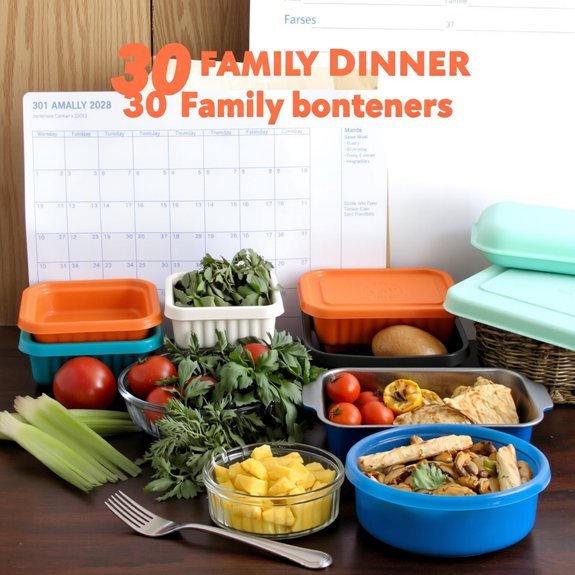
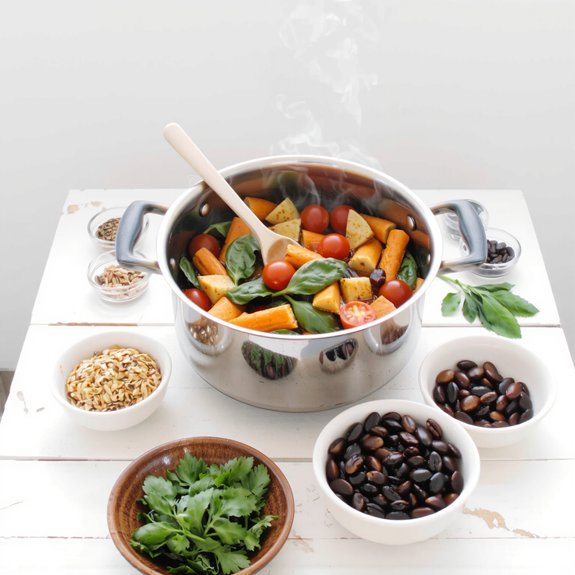

You want dinners that cut cleanup, save time, and still feed your family or your weeknight self. This one-pot meal plan gives themed nights, pantry-first recipes, seasonal swaps and reusable shortcuts for the whole year. You’ll get 52 templates, smart shopping lists and batch tips to streamline prep—start with the core week and…
Key Takeaways
- Use weekday themes (Meatless Monday, Taco Tuesday, Warming Wednesday) and rotate core one-pot recipes every three weeks to reduce decision fatigue.
- Structure meals: two quick stovetop nights, two baked/slow-simmered dishes, one flexible leftover or sheet-pan evening for variety and minimal cleanup.
- Stock a one-pot pantry: dried legumes, quick grains, canned tomatoes, coconut milk, aromatics, and compact spices for fast, flavorful meals.
- Prep smart: batch-cook grains/sauces, stack-chop vegetables, portion proteins, and label containers to speed assembly and simplify reheating.
- Prioritize a programmable multi-cooker, good chef’s knife, nesting measuring tools, and strict allergen labeling to reduce waste and cross-contact.
Weekly Meal Plan Structure
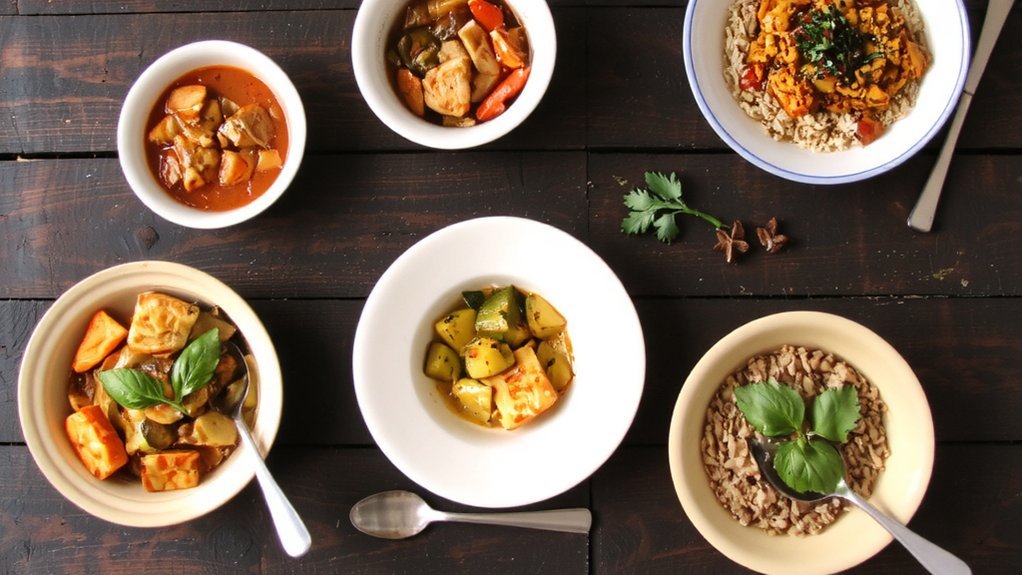
Every week you’ll map out a simple framework that balances variety, efficiency, and repeatable ingredients.
Begin by assigning weekday themes — like Meatless Monday, Taco Tuesday, Warming Wednesday — to reduce decision fatigue and speed prep.
Set a clear meal cadence: two quick stovetop dinners, two baked or slow-simmered meals, and one flexible leftover or sheet-pan night.
Rotate core recipes every three weeks to keep flavors fresh while reusing techniques and sauces.
Build each night around one pot, limiting prep and cleanup.
Plan protein, veg, and a grain or starch each evening so portions stay balanced.
Leave one evening open for improvisation or dining out.
Check timing weekly and adjust recipes for smoother evenings.
Pantry Staples & Smart Shopping
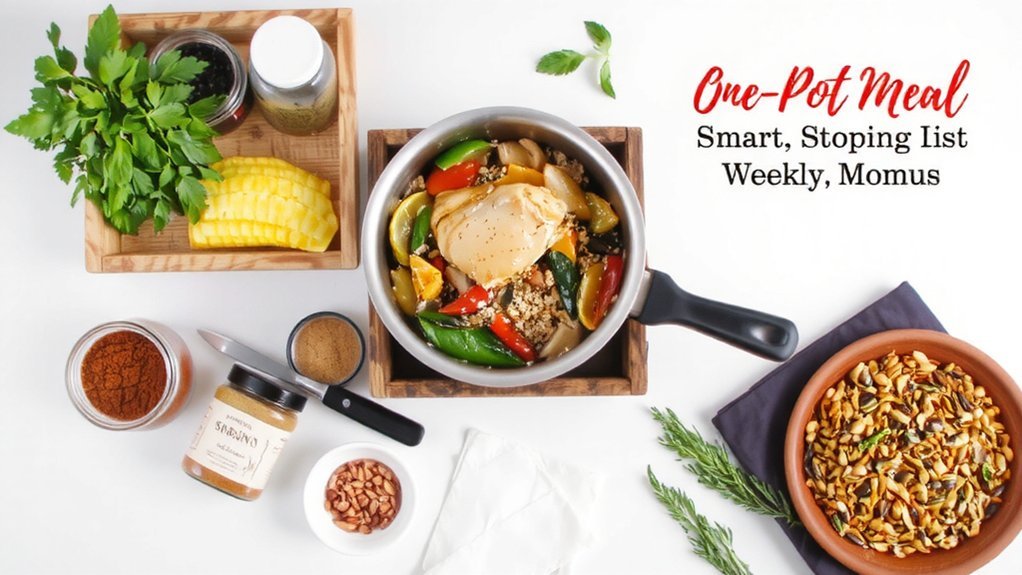
You’ll stock a one-pot pantry with versatile staples like grains, canned beans, oils, aromatics, and long-lasting vegetables.
Buy shelf-stable basics in bulk, rotate stock, and portion items to cut waste and save money.
You’ll also learn simple spice blends and easy swaps to change flavors without extra purchases.
Core Pantry Staples
A handful of versatile staples will let you pull together satisfying one-pot meals without a last-minute grocery run. Stock dried beans, lentils, and quick-cooking grains like rice and couscous for base meals. Keep canned tomatoes, coconut milk, and broths to build sauces and add depth.
Store aromatics—onions, garlic, ginger—and a compact spice set: cumin, smoked paprika, chili flakes, salt, pepper. Freeze portions of proteins such as diced chicken or tofu to add later. Include Emergency Staples like canned tuna, shelf-stable milk, and a jar of peanut butter for instant calories.
Prioritize Nutrition Essentials: shelf-stable legumes, fortified grains, nuts, and seeds to maintain balanced meals. Rotate inventory, label dates, and plan recipes around what you already have. You’ll save time and waste food, consistently.
Smart Bulk-Buying Tips
When you buy in bulk strategically, you cut costs and reduce trips while keeping your pantry stocked with versatile staples like dried beans, rice, canned tomatoes, and oils. You should prioritize shelf-stable items, check unit prices, and rotate stock so nothing spoils. Use group purchasing to access lower rates and split large quantities with friends or neighbors. Don’t ignore supplier terms; smart contract negotiation can secure delivery schedules and price breaks.
| Benefit | Action |
|---|---|
| Save money | Compare unit costs |
| Reduce waste | Rotate and share |
Plan storage, label dates, and set simple menus that use bulk items so your one-pot meals stay economical and efficient. Track usage monthly and adjust purchases to match real consumption patterns and seasonal deals regularly.
Spice Blends and Swaps
How can you stretch pantry flavor without buying dozens of jars? Focus on versatile mixes and smart swaps.
Keep a core set—salt, black pepper, smoked paprika, cumin, garlic powder, onion powder, dried oregano—and build regional blends like Mexican (cumin+smoked paprika+oregano), Mediterranean (oregano+garlic+lemon zest), and curry-style (turmeric+cumin+fenugreek).
Learn flavor pairing: citrus brightens, acids balance fat, and heat complements sweetness.
Use single spices to echo blend profiles when you run low: paprika plus oregano approximates za’atar’s earthiness if you add sesame.
Toast whole spices to boost aroma, then grind small batches.
Label jars with ratios, rotate stock to avoid staleness, and swap freely—one-pot recipes forgive improvisation, so experiment until blends match your taste.
Store airtight, keep quantities small, and note favorite combinations for repeat meals regularly.
Seasonal Produce Calendar
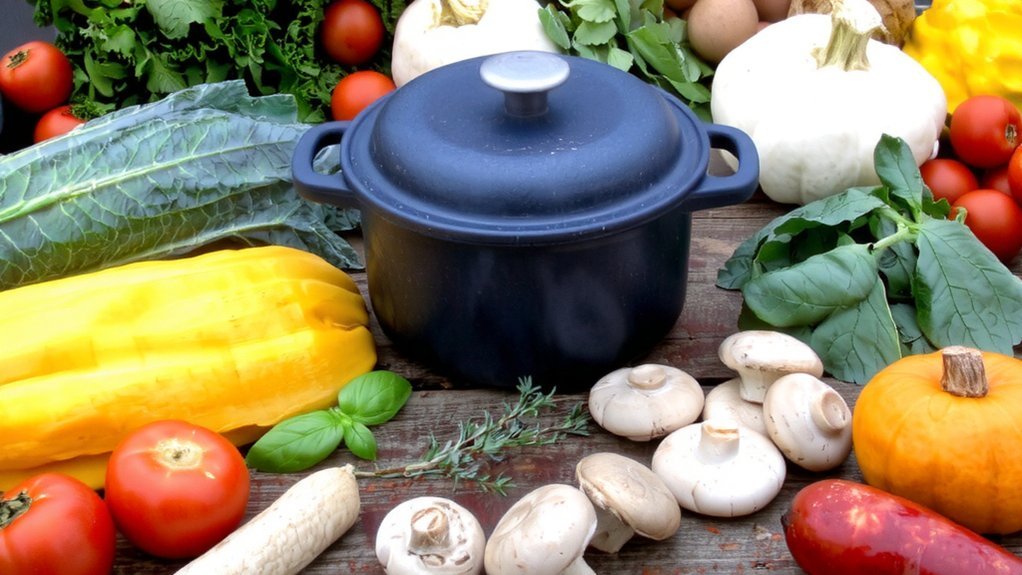
Where you shop and when you cook matter: buying seasonal produce gives you better flavor, lower cost, and peak nutrition. Use a simple seasonal produce calendar to track harvest windows for fruits and vegetables in your region.
You’ll plan one-pot meals around what’s freshest, reducing waste and trips to the store. Check farmers’ markets, CSA lists, and grocery tags to spot what’s in season and at peak ripeness.
Rotate staples—root vegetables in winter, brassicas in late fall, stone fruit in summer—so you cook what’s abundant. Keep a small reference chart on your phone or fridge, and update it yearly.
That small habit makes weekly menus simpler, tastier, and kinder to your budget. You’ll save money and time when you follow local seasonal patterns consistently.
52 One-Pot Recipe Templates
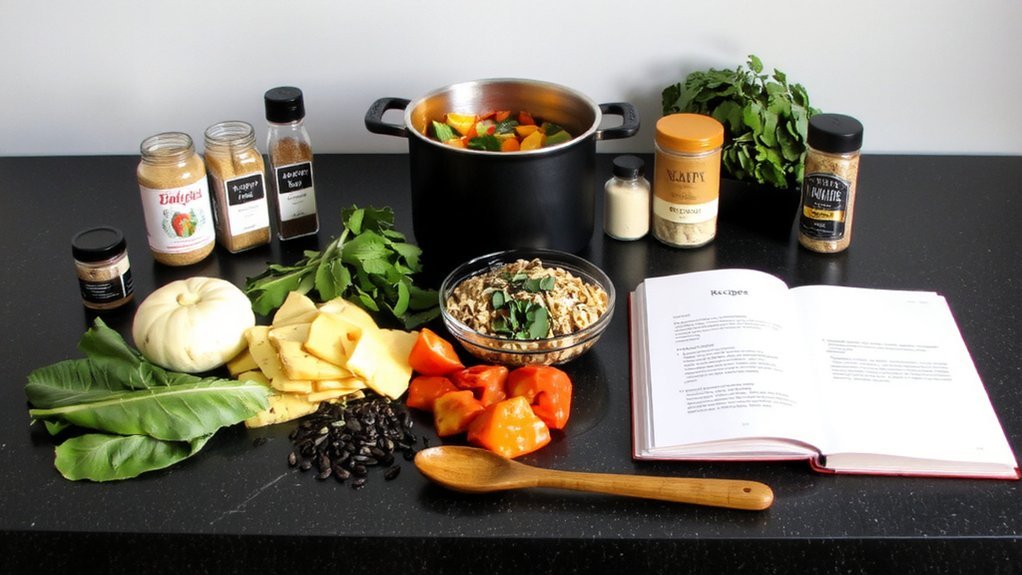
Building a one-pot template lets you swap ingredients quickly to match what’s in season and cut prep time. You’ll use a core formula—aromatics, protein, starch, vegetable, and liquid—and adjust seasonings.
Create regional templates: Mediterranean with tomatoes, olives, and oregano; Asian with ginger, soy, and bok choy; Latin with cumin, cilantro, and corn.
For consistency, note liquid ratios for each starch: rice 2:1, quinoa 1.5:1, pasta about 4 cups per pound depending on sauce thickness.
Keep cooking times grouped so ingredients finish together; add quick-cooking items later.
Write down modifications for dietary needs and swap proteins or vegetables without changing the template’s structure.
That way you’ll adapt menus fast while maintaining reliable results. Catalog tested templates so shopping, seasoning, and timing are predictable and stress-free daily.
Quick Prep & Batch Techniques
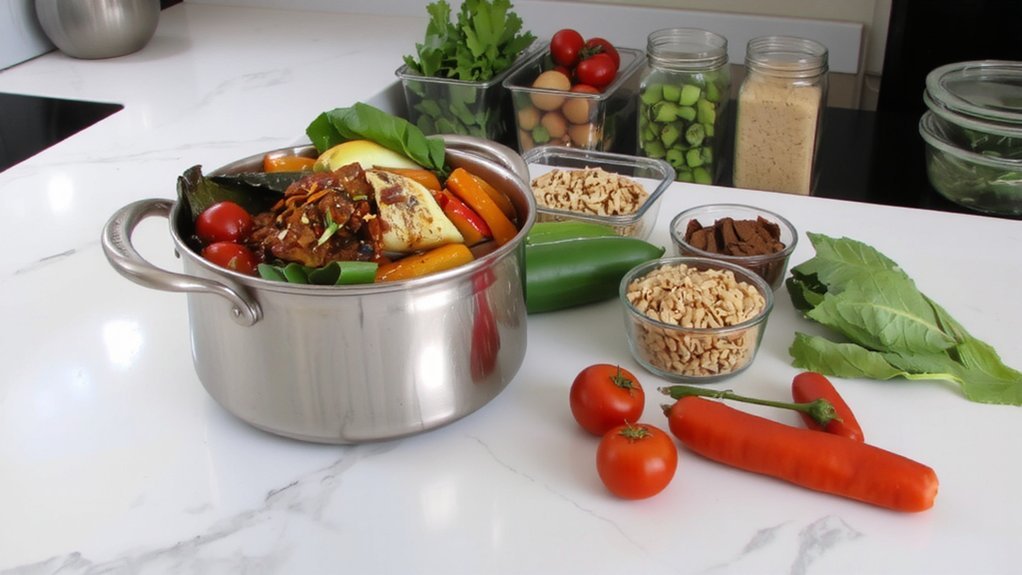
You’ll speed up cooking by using quick prep tricks—batch chopping, frozen vegetables, and pre-measured spice mixes.
Batch-cook staples like grains, beans, and a basic tomato or stock-based sauce so you can plug them into one-pot recipes.
With these habits you’ll cut hands-on time and keep dinners varied all week.
Speedy Ingredient Prep
Because prep sets the tone for a fast one-pot meal, focus on quick chopping techniques, batch-cooking proteins and grains, and a simple mise en place so you cut hands-on time and keep flavors consistent.
Use kitchen ergonomics to position tools and reduce motion; that small change equals big stress reduction while you move through tasks.
You’ll work faster, safer, and with steadier flavor control.
- Trim and stack veggies for single-pass slicing.
- Pat proteins dry and portion before seasoning.
- Measure spices into small ramekins.
- Pre-rinse grains to speed cooking and avoid clumps.
Rotate tasks by energy level to stay efficient and calm.
Label containers with cook times and dates, and clean as you go to preserve momentum and shorten post-meal cleanup for next-week meals ahead.
Batch Cooking Staples
When you batch-cook staples—grains, proteins, roasted veggies, and a couple of versatile sauces—you’ll cut weekday assembly to minutes and keep flavors consistent.
You’ll pick a day, set simple Cooking Rituals (timed pans, labeled containers, cooling racks), and treat it like short, efficient work.
Cook multiple grains in a rice cooker or oven, roast trays of vegetables at varied temperatures, and braise or grill proteins that reheat well.
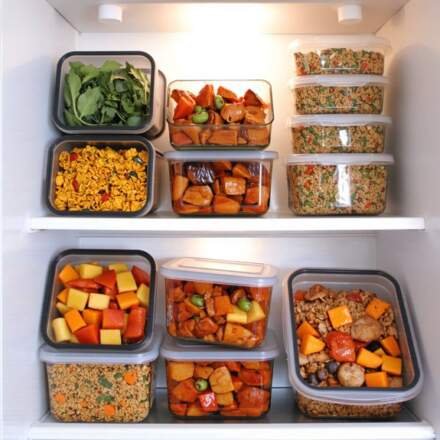
Portion into meal-sized containers, mix sauces separately, and freeze or refrigerate with dates.
Use Community Swaps to trade extras, preventing waste and expanding variety.
Reheat gently, combine components into one-pot dinners, and rotate staples weekly so meals stay interesting without extra dishes or planning.
Label, date, and note flavors so you can rebuild meals fast each day.
Time-Saving Appliances & Tools
While a few well-chosen tools won’t replace technique, they’ll shave prep and hands-on time so you can get more one-pot dinners on the table.
You’ll want a Countertop Dishwasher to cut cleanup, and you should prioritize Appliance Ergonomics—easy-to-grip handles, simple controls, and accessible lids—so your flow stays smooth. Choose multi-tasking gear that reduces steps and storage clutter.
- A programmable multi-cooker for sauté-to-simmer convenience.
- A compact blender that chops and purees without extra bowls.
- A good chef’s knife and ergonomic peelers for fast prep.
- Nesting measuring cups and spoons to minimize washes.
With these choices you’ll cook faster, clean less, and enjoy weeknight dinners more. Invest in durable, easy-clean finishes and compact storage to keep your kitchen efficient and clutter-free. Small upgrades pay off big.
Dietary Swaps & Allergy-Friendly Options
If you need to accommodate allergies or preferences, smart swaps keep one-pot meals simple and satisfying.
You can substitute proteins (tofu, tempeh, lentils) for meat and use gluten-free grains or pasta without changing cook times much.
Swap dairy with coconut or almond yogurt and nut-free seed butters when needed.
Practice clear label reading strategies: check allergen statements, ingredient order, and manufacturing notes before buying packaged items.
Prevent exposures by setting up dedicated utensils and cookware, cleaning surfaces between recipes, and following strict cross contact protocols when handling allergens.
Plan seasoning blends that work with multiple bases so you won’t need separate sauces.
Test small batches before serving guests with severe allergies, and always communicate ingredients clearly.
Keep emergency allergy plans and medication nearby always.
Waste-Reducing Storage & Leftover Ideas
You can carry the same careful handling you use for allergens into storage and leftovers to cut food waste and keep everyone safe.
Store meals in portioned airtight containers, chill within two hours, and use a clear Labeling System with date and contents.
Rotate fridge stock, freeze extra portions, and plan lunches from dinner scraps.
Use Compost Strategies for peels and coffee grounds, bag wet waste separately, and refresh your bins weekly.
- Portion into single-meal containers for easy reheating.
- Label containers with date, contents, and reheating notes.
- Freeze extras flat to stack and thaw faster.
- Compost vegetable scraps; keep bins tidy and accessible.
You’ll save money, reduce odors, and make weeknight meals faster by treating storage as part of your cooking routine and habits.
Conclusion
You’ll cut nightly stress and cleanup with this one‑pot plan, so you can cook fast, eat well, and clear up even on busy weeknights. Stick to the pantry staples, seasonal swaps, batch bases and simple spice blends we outlined, and you’ll rotate favorites without wasting food. Use the appliance tips and labeled portions to save time. Adapt recipes for allergies, and enjoy balanced, varied dinners that keep life simpler all year and reduce mental load.