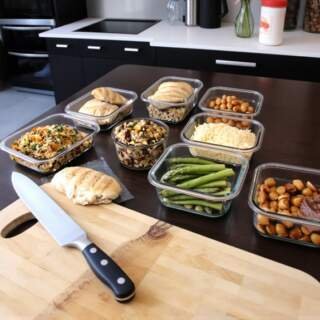
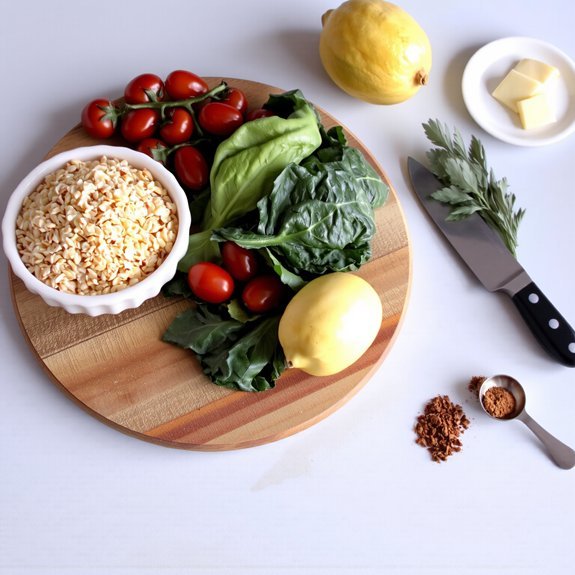

You’ll find practical, no-frills meal plans that help you cut costs, save time, and avoid waste without sacrificing flavor. Each plan leans on pantry staples, bulk buys, and simple batch-cooking so you can feed a family or stretch a single paycheck. Want easy swaps and fast recipes that actually satisfy…
Key Takeaways
- Focus titles on clear themes (one-pot, freezer-friendly, vegetarian, family, student) so readers immediately know the plan’s benefit.
- Highlight time and cost savings in titles using words like “budget,” “quick,” “meal-prep,” “bulk,” or “5-ingredient.”
- Include format cues (weekly, 10-meal, 7-day, pantry-first, slow-cooker) to set expectations for length and method.
- Signal protein strategy or dietary focus (bean-based, chicken-thighs, eggs, tofu, pescatarian) to attract target audiences.
- Use action words and numbers (e.g., “10 Cheap Dinners,” “Weekly $50 Plan”) to convey concreteness and value.
Frugal One-Pot Weeknight Meals
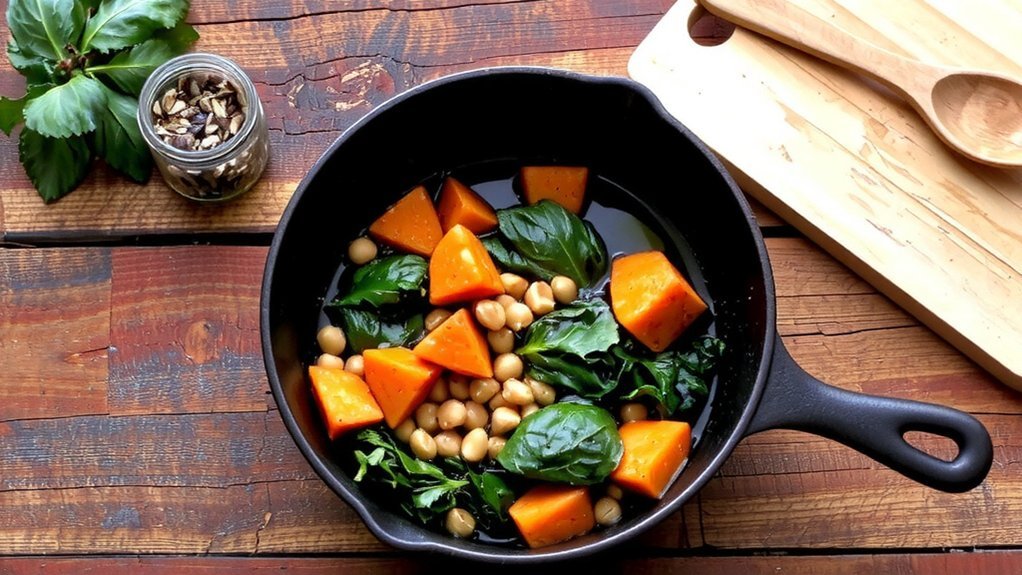
Cutting costs and cleanup, one-pot weeknight meals give you hearty dinners with minimal fuss. You’ll use affordable staples like rice, pasta, canned tomatoes, seasonal veggies, and modest proteins in a single pan, stretching servings without losing flavor. Add simple Flavor Boosters—garlic, stock, lemon, and dried herbs—to deepen taste.
Lean into Weeknight Classics: skillet chicken with rice, beef and vegetable stew, or shrimp pasta for familiar, quick options. You’ll batch-cook components, freeze portions, and repurpose leftovers into lunches.
Smart swaps and portioning will trim bills while keeping variety. With basic planning and pantry staples, you’ll serve satisfying, low-effort dinners every evening.
You’ll learn timing tricks, like deglazing to lift fond and stirring midway to prevent sticking, so each meal feels restaurant-quality and saves you time.
Budget-Friendly Meatless Meal Plan
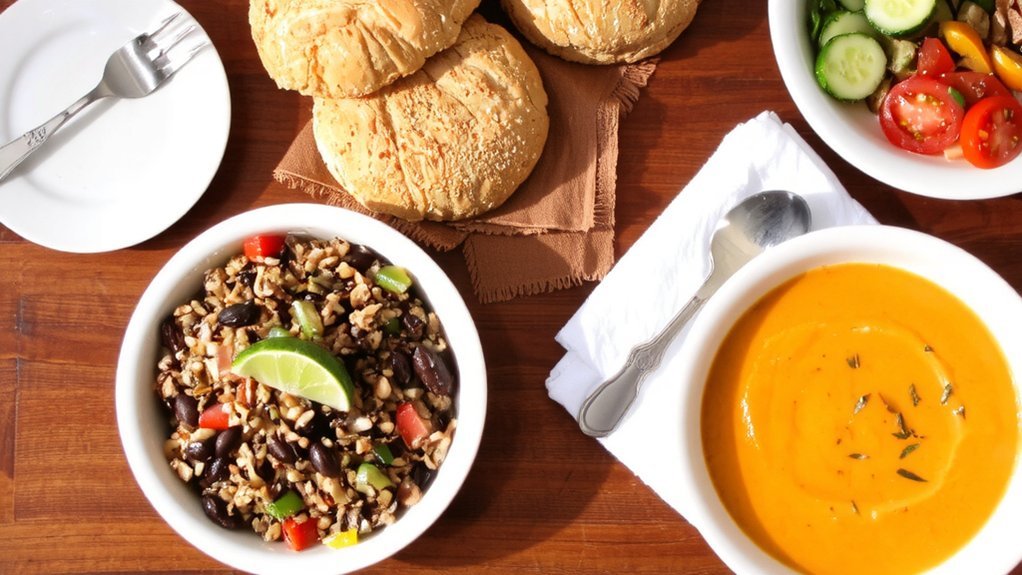
You can build a meatless meal plan around cheap protein sources like beans, lentils, tofu, and eggs.
Batch-cook grains and legumes so you’ll save time and stretch ingredients across meals.
Use smart grocery strategies—buy seasonal produce, shop sales, and buy staples in bulk—to keep costs down.
Cheap Protein Sources
How can you get the protein you need without meat or a big grocery bill? You can rely on beans, lentils, chickpeas, tofu, tempeh, eggs, cottage cheese, and canned fish if you include low-cost animal options; combine grains with legumes for complete amino acids.
Watch portion sizes and micronutrients—iron, B12, and zinc need attention—those Nutritional Tradeoffs matter. Use frozen peas and edamame for quick boosts.
Buy dry legumes and plain yogurt in bulk to cut costs. You’ll save money and reduce Environmental Impact compared with heavy meat consumption.
Prepare simple stir-fries, soups, and salads that center these proteins, and rotate choices weekly to keep meals varied and affordable while meeting protein targets without breaking your budget. Adjust portions based on activity and goals regularly.
Batch Cooking Tips
Having affordable proteins on hand makes batch cooking a force multiplier for both time and money.
You’ll prep large batches of beans, tofu, grains, and sauces, then mix and match components across meals.
Use Kitchen zoning to streamline tasks: designate prep, cook, and pack areas so you move once.
Implement Labeling systems for dates, contents, and reheating instructions to avoid waste and speed choices.
Rotate flavors weekly to prevent boredom.
- Cook staples on one day
- Portion into meal-sized containers
- Freeze extras for later
- Label clearly with dates and contents
- Reheat safely following notes
You’ll save time, reduce waste, and eat varied, meatless meals without extra expense.
Plan simple swaps and spices so you’ll transform basics into satisfying dinners while keeping costs reliably low week.
Smart Grocery Strategies
Where you shop and what you pick will decide most of your grocery budget—plan meals, make a tight list, and stick to it.
You can save on a meatless plan by buying in-season produce, bulk grains, and legumes, and by favoring frozen vegetables.
Use coupon stacking when stores allow manufacturer and store coupons together; combine digital app deals for extra cuts.
Shop with unit prices in mind, and avoid impulse buys by sticking to aisle limits.
Cook versatile recipes that reuse ingredients across meals.
Track spending with a simple receipt tracking habit: keep receipts, log totals, and compare weekly to spot trends.
You’ll trim costs, reduce waste, and keep meal variety high without breaking your budget.
Adjust lists monthly to reflect evolving seasonal sales.
Cheap and Cheerful Slow Cooker Recipes
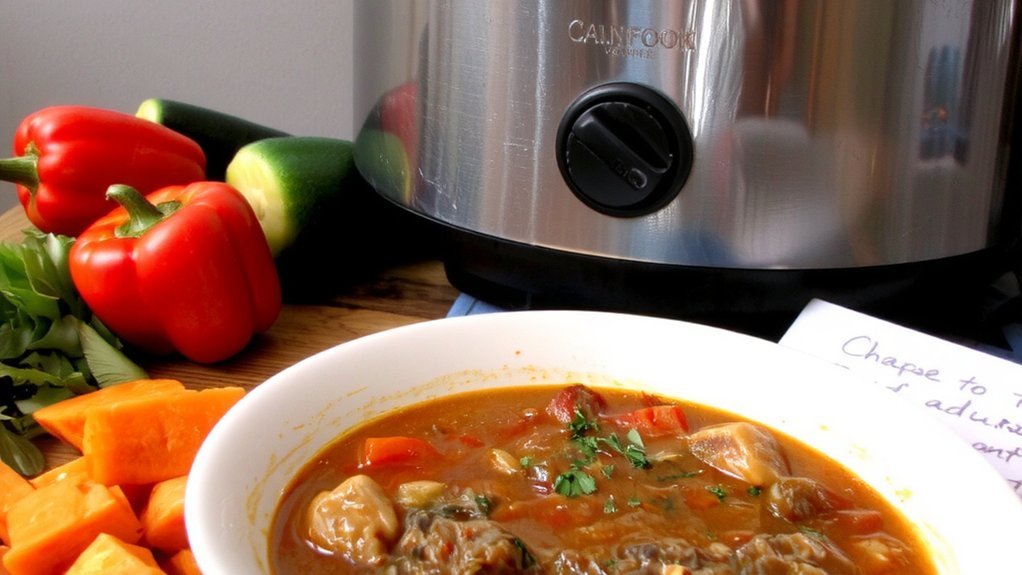
You can stretch pantry staples with smart ingredient swaps to keep slow cooker meals cheap and satisfying.
Use no-fuss prep tricks like hands-off chopping, bagged veggies, and simple seasoning to save time.
Make extra for freezer-friendly batch cooking so you’ll have ready meals on busy nights.
Budget Ingredient Swaps
If you’re trying to stretch your grocery budget without sacrificing flavor, simple ingredient swaps can make slow cooker meals both cheaper and more satisfying.
You can swap pricey cuts for beans or bulk lentils, use frozen vegetables, and rely on pantry staples to boost texture and taste.
Consider allergen alternatives like oat milk or sunflower butter to keep costs down and guests safe.
Use baking shortcuts—pre-mixed spices or instant mashed potato flakes—to thicken sauces or add body without extra hands-on time.
Plan swaps around what’s on sale and what you already own.
- Use dried beans instead of canned
- Choose chicken thighs over breasts
- Substitute oats for breadcrumbs
- Pick frozen veg for convenience
- Rely on stock cubes not fresh stock
You’ll save money and time.
No-Fuss Prep Tricks
Having swapped pricier ingredients for budget-friendly ones, concentrate on prep shortcuts that keep flavors big and effort small. You’ll set up a simple mise en place—measure spices, chop aromatics, and portion proteins before you start—so the slow cooker gets everything fast and clean.
Use canned tomatoes, frozen veg, and bulk beans to cut time without losing depth; toss whole herbs on top to lift taste. Prep shortcuts like shredding cooked meat with two forks or using pre-minced garlic speed dinner and save energy.
Label containers and times on lids to avoid guesswork. You’ll enjoy hearty, cheap slow-cooker meals with minimal stress and predictable results every week.
Rotate simple sauces and spices weekly to keep variety without extra shopping or complicated recipes or flavor fatigue.
Freezer-Friendly Batch Cooking
Batch-cooking freezer meals lets you turn cheap ingredients into ready-to-go slow-cooker dinners in one weekend. You’ll prep, portion, and freeze labeled packs so your slow cooker works overtime on busy nights.
Use basic staples, batch-cook sauces, and freeze in single-meal portions. Keep simple inventory tracking and a rotation system so nothing spoils and meals stay varied.
Thaw in fridge overnight or dump frozen into the cooker on low for longer. Aim for meals that reheat well: stews, chilis, shredded chicken, and curries.
You’ll save money, time, and stress while eating well on a budget. Prep once, feed yourself all week.
- Choose recipes that freeze well
- Portion into meal-sized bags
- Label with date and contents
- Track stock with a list
- Rotate oldest packs first
Pantry-First Family Meal Rotation
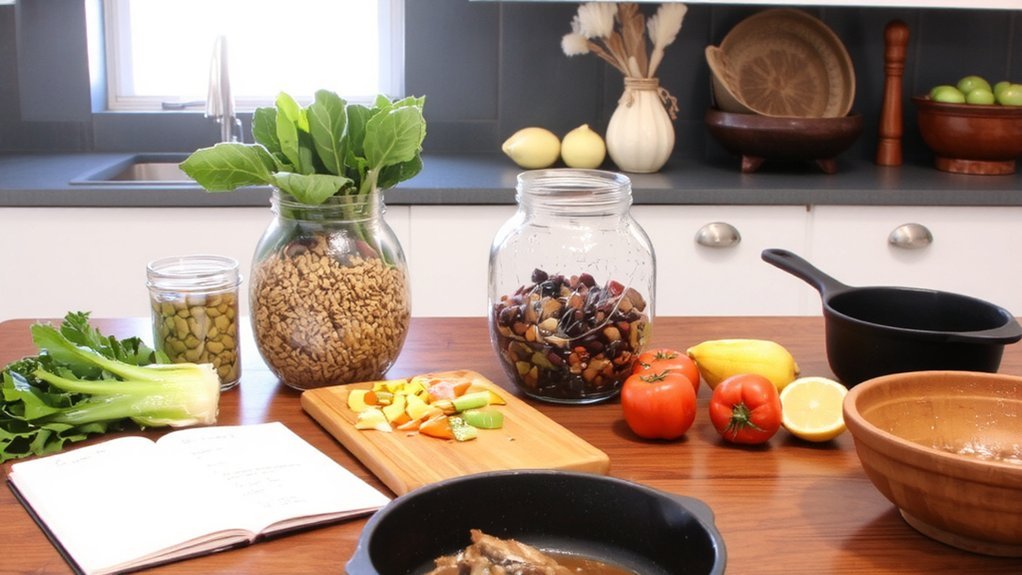
Many families save time and money by building a pantry-first meal rotation that leans on staples like canned beans, rice, pasta, and versatile sauces.
You set a weekly plan around what’s already on shelves, rotating favorites so nothing expires and you buy less. Use simple recipes that mix a staple with fresh produce and a spice or two.
Keep an organized list and practice quick inventory rituals before shopping so you only replace essentials. Teach kids to help: kid involvement can mean labeling jars, stirring, or picking a theme night, which builds skills and buys you time.
Swap ingredients based on sales, and batch-cook components you’ll recombine into different dinners. You’ll save money and reduce waste while keeping mealtime stress low and routines steady.
Low-Cost Meal-Prep Bowls for the Week
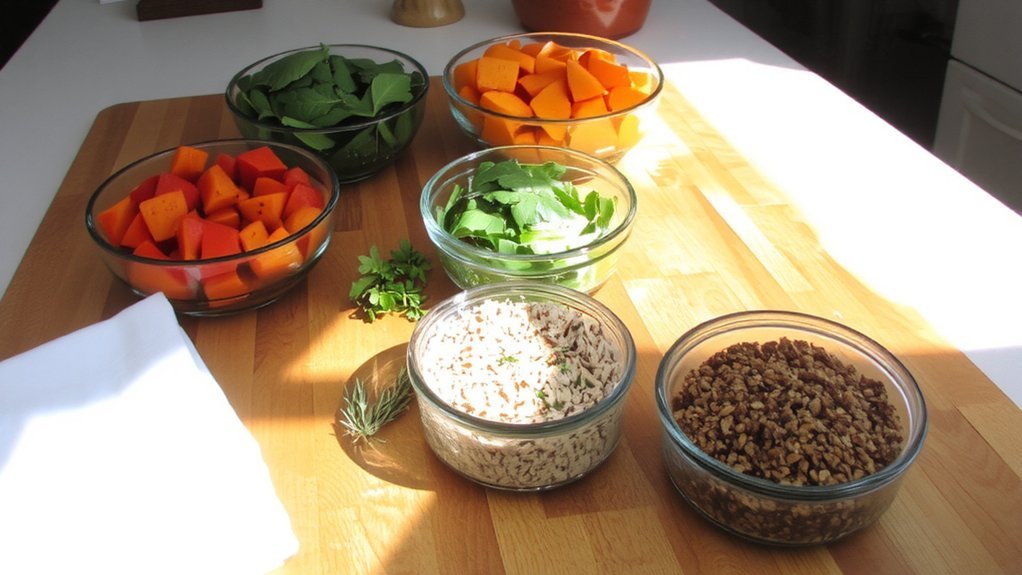
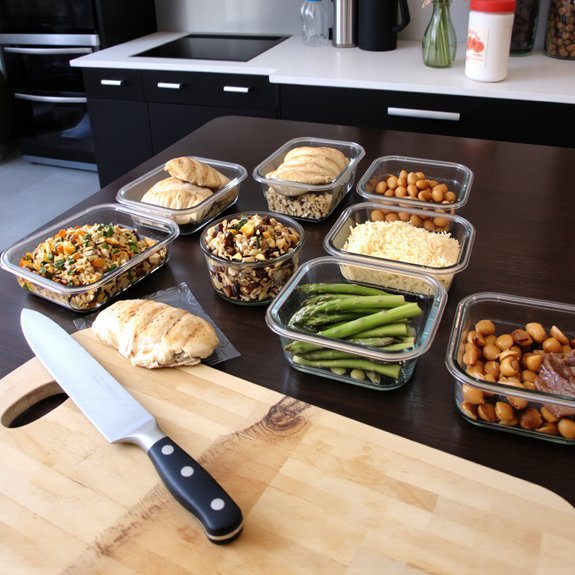
You can build cheap, satisfying meal-prep bowls by choosing affordable proteins like canned tuna, eggs, and tofu.
Cook bulk grains and legumes—rice, lentils, and beans—once for the week to save time and money.
Prep vegetables efficiently by roasting a sheet pan or chopping raw crudités for grab-and-go bowls.
Affordable Protein Choices
Several cost-effective proteins can keep your weekly meal-prep bowls satisfying and nutritious without blowing your budget. You’ll choose versatile, cheap proteins that store well and reheat cleanly.
Focus on lean eggs, canned tuna, frozen chicken thighs, Greek yogurt, and tofu to vary texture and nutrients. Think about Protein Timing to spread intake across meals, and use Amino Balancing by pairing complementary sources within a day.
Cook once, portion, and rotate flavors so you won’t get bored. Store sauces separately and add fresh herbs at serving.
- Eggs (hard-boiled or scrambled)
- Canned tuna or salmon
- Frozen chicken thighs
- Plain Greek yogurt
- Firm tofu or tempeh
Buy in bulk when on sale, freeze portions, and reuse recipes to maximize value and variety.
Bulk Grains and Legumes
After stocking up on affordable proteins, load your meal-prep bowls with bulk grains and legumes that stretch your budget and add fiber and satiety.
Buy staples like brown rice, oats, lentils, chickpeas, and dried beans in large bags to lower cost per serving. You’ll mix and match textures and flavors, emphasizing Varietal Diversity to keep meals interesting: try black rice, red quinoa, split peas, and mixed beans.
Cook batches, portion into containers, and rotate simple dressings and spices so you don’t get bored. When possible, seek Heirloom Varieties at markets — they often offer superior flavor and nutrition for similar prices.
Freeze portions for longevity, label containers, and plan combinations to maximize savings and convenience. You’ll save time, money, and stress all week consistently.
Efficient Veg Prep
Prepping vegetables efficiently saves time and money and keeps your meal-prep bowls tasting fresher all week.
You’ll set aside an hour, use basic knife skills, and apply mise en place to speed assembly.
Wash, trim, and slice with consistent sizes so veggies cook evenly or stay crisp in cold bowls.
Roast sturdier roots, steam greens, and save raw crunch for toppings.
Store components separately in clear containers to mix quickly.
- Choose versatile vegetables
- Cut uniform pieces
- Batch-roast and cool before storing
- Label and date containers
- Keep dressings separate
You’ll reduce waste, stretch produce, and assemble varied bowls in minutes without extra cost.
Prep a weekly plan, list ingredients, and buy in-season produce to maximize savings and flavor boost today.
Affordable Comfort Food Makeovers
How do you turn indulgent comfort dishes into budget-friendly meals without losing flavor? You’ll rethink portioning, swap pricey cuts for beans, and boost taste with caramelized onions, citrus, and homemade broths.
Think Childhood Upgrades, revive mac and cheese using whole-grain pasta, a modest cheese sauce, and roasted vegetables for richness.
Embrace International Comforts by adapting stews and casseroles with affordable spices, seasonal produce, and lentils to reproduce depth. Use slow-cooking to tenderize cheaper proteins and concentrate flavors.
Stretch meals with salads, crusty bread, or roasted root veggies so leftovers become new lunches. Batch-cook, freeze portions, and label them for quick reheats.
With intentional swaps and smart technique, you’ll enjoy familiar, satisfying dishes while trimming cost and waste. You’ll save money and feel great, too.
Thrifty Stir-Fries and Rice Bowls
You can carry the same budget-minded comfort principles into stir-fries and rice bowls, turning a handful of inexpensive staples into vibrant, satisfying meals.
You’ll rely on rice or noodles, seasonal vegetables, and a protein stretched by eggs or beans.
Use regional sauces sparingly to add big flavor without cost, and learn simple presentation tips to make plain ingredients feel special.
Rotate staples, batch-cook grains, and keep a jar of toasted seeds or fried onions for texture.
Plan meals around sales and leftover vegetables. You’ll save time and money while experimenting with flavors.
Watch portions to limit waste and boost value.
- Cook grains in bulk
- Stretch proteins with eggs or legumes
- Keep a small sauce repertoire
- Add crunch with cheap toppers
- Plate with contrasting colors
Minimalist Five-Ingredient Dinners
When time’s short, five-ingredient dinners let you get a full, flavorful meal on the table with minimal shopping and cleanup. You pick a protein, a veg, a grain or starch, a fat, and a bright finishing ingredient, then combine them for big results. Focus on flavor layering: sear for caramel, add acid late, and finish with herb or spice for contrast.
Use simple techniques—roast, pan-sear, simmer—to keep prep fast. Think about plating aesthetics; a tidy stack, a smear of sauce, or a sprinkle of herbs makes the meal feel special without extra cost. You’ll save time and money while still eating satisfying, balanced dinners that look and taste intentional.
You can swap ingredients seasonally to keep meals interesting and reduce grocery waste regularly, too.
Stretch-It-Further Casserole Ideas
Stretch leftovers into hearty casseroles that feed more people, cut food waste, and save money.
You’ll combine cooked proteins, veggies, starch, binder, and sauce into one pan, then bake until bubbly.
Use Regional Twists—add cumin and chiles for a Southwestern vibe, or soy, ginger, and scallions for an Asian spin.
Make dishes Kid Friendly by using mild cheeses, familiar shapes, and gentle spices.
Rotate staples to avoid boredom and freeze portions for busy nights.
Plan so one roast or pot makes two meals: dinner and a casserole later.
Simple swaps keep costs down and flavors fresh and reheat well.
- Use leftover roast or rotisserie chicken
- Add canned beans or lentils
- Mix in frozen vegetables
- Use rice, pasta, or potatoes
- Top with cheese or breadcrumbs
Cheap Eats: Breakfasts, Lunches, and Snacks
A few simple ingredients can make breakfasts, lunches, and snacks that keep you fed and save money.
You’ll stretch eggs, oats, beans, rice, and seasonal produce into varied meals: savory oat bowls, fried rice for lunch, and bean tostadas.
Plan portions, batch-cook, and reuse components across dishes to cut waste.
Try international breakfasts like Spanish tortilla slices, Indian poha, or Mexican huevos a la mexicana to keep mornings interesting without extra cost.
For afternoons, pack versatile sandwiches, grain salads, or hearty soups.
Make kid friendly snacks—fruit skewers, yogurt dips, or baked chickpeas—that travel and satisfy.
Use staples as bases, buy frozen vegetables, and shop sales.
Rotate menus weekly to avoid boredom and reduce impulse buys.
Conclusion
You’ve got ten smart, wallet-friendly plans that make dinner doable even when time and funds are tight. Use pantry staples, batch-cook, and label leftovers so you’ll waste less and eat better all week. Mix and match bowls, one-pot recipes, slow-cooker meals, and casseroles to keep things interesting without extra cost. Stick with simple swaps and bulk buys, and you’ll feed your family nourishing, flavorful meals without stress or overspending and enjoy more free time daily.