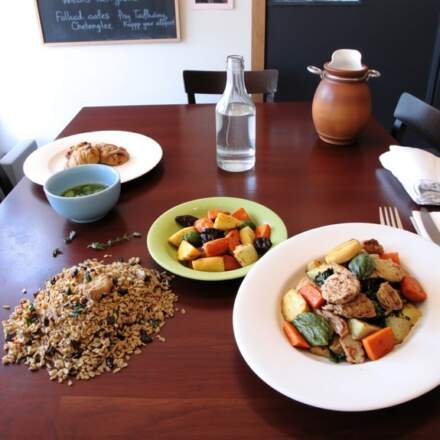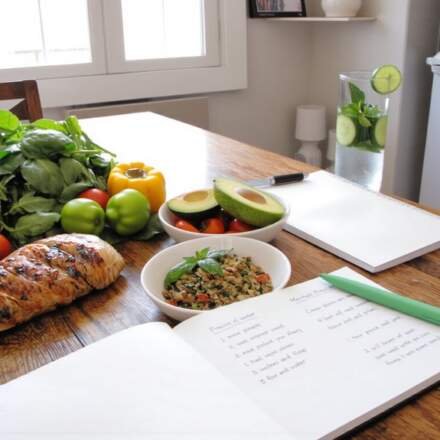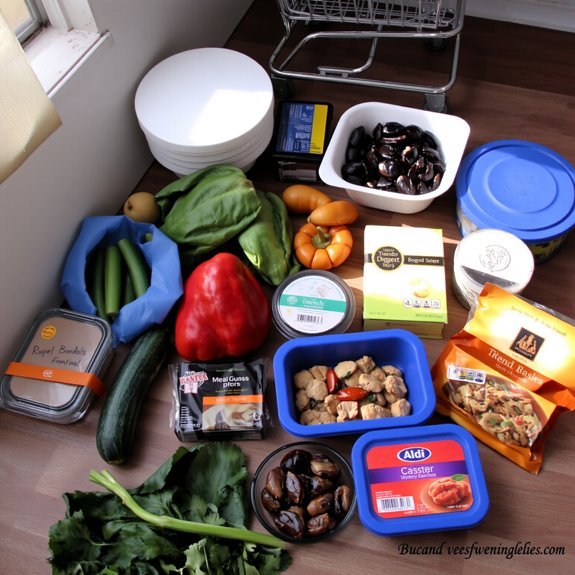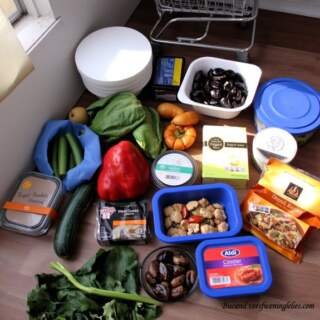
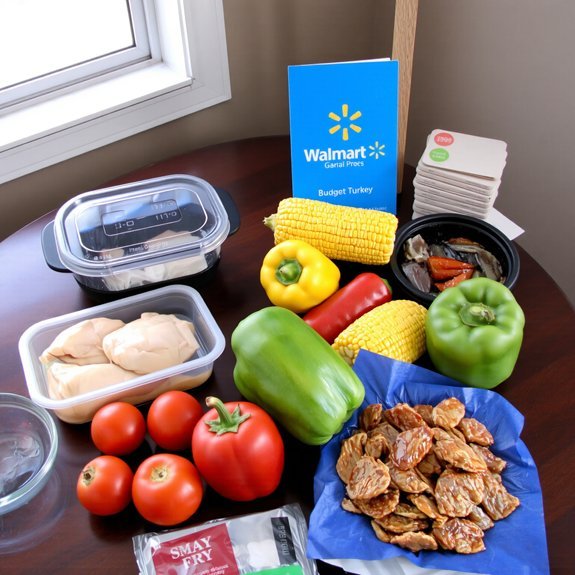

You can cut dinner costs without sacrificing flavor by planning around Walmart rollbacks and versatile staples. This plan shows how to prep grains, roast veggies, and mix sauces to turn a few ingredients into tacos, stir‑fries, and sheet‑pan meals. You’ll save time and waste less — next, I’ll show the exact shopping list and seven easy dinners.
Key Takeaways
- Build weekly meals around versatile staples (rice, pasta, canned tomatoes, frozen veg, beans) to reduce waste and simplify shopping.
- Use Walmart rollbacks, compare unit prices, and choose store brands to lower grocery costs without sacrificing quality.
- Rely on seven flexible dinner templates (tacos, pasta, stir‑fry, sheet‑pan, soup, curry, loaded potatoes) to rotate meals quickly.
- Prep staples once weekly and use time‑saving items (rotisserie chicken, prewashed salad, canned beans, frozen veggies) to cut cooking time.
- Plan repurposing: scale portions and reuse proteins/grains across meals to minimize waste and maximize value.
Meal-Planning Strategy for Stretching Your Grocery Budget
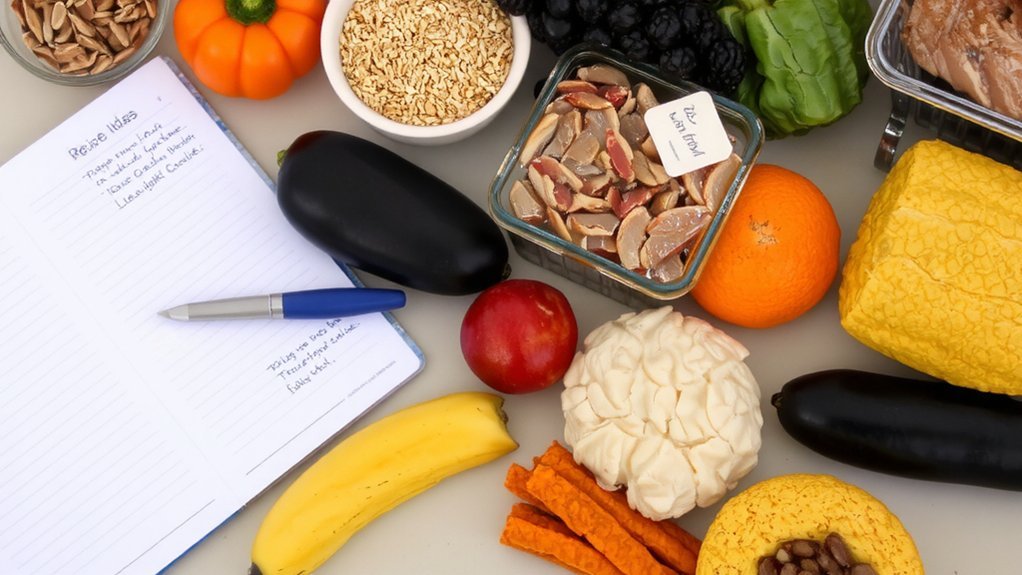
A few simple shifts in how you plan meals can stretch your grocery budget without sacrificing taste or nutrition.
You’ll start by mapping meals around versatile ingredients and using portion scaling to match servings to appetite, reducing waste and leftovers.
You’ll compare unit prices and practice price benchmarking across brands and package sizes to pick the best value.
Focus on recipes that repurpose components—grains, roasted veggies, proteins—so you get multiple meals from one grocery run.
Plan flexible protein swaps and seasonal produce to keep costs down.
You’ll prep staples once each week to cut cooking time and avoid impulse buys.
With deliberate choices and basic tracking, you’ll lower spend while keeping meals satisfying and varied.
You’ll notice real savings while meals stay flavorful, too.
Weekly Shopping List Built From Walmart Essentials
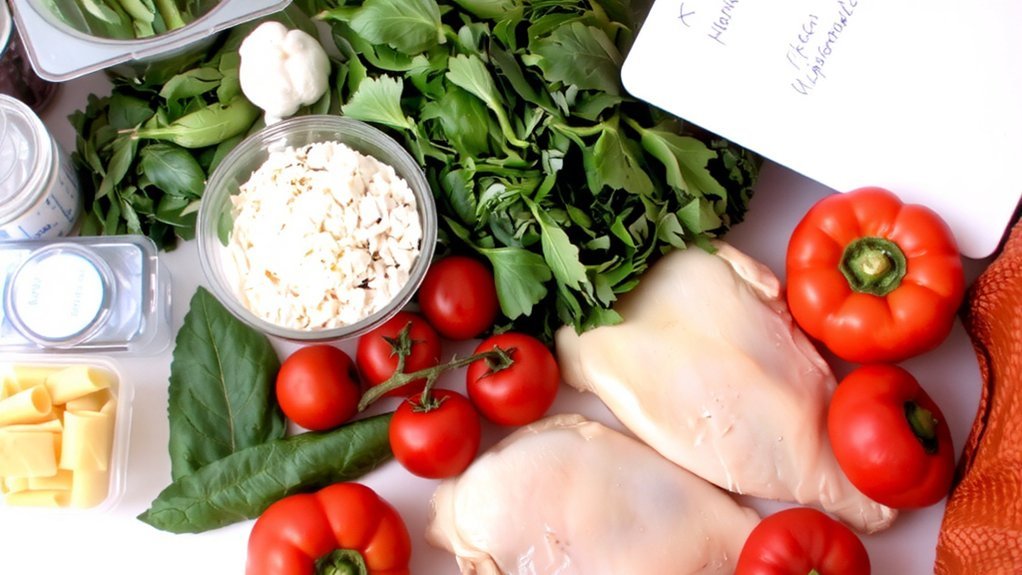
Three staples—rice, canned beans, and frozen vegetables—form the backbone of a Walmart-based weekly list you can scale and swap to cover breakfasts, lunches, and dinners.
Start with a simple skeleton: protein (eggs, rotisserie chicken), carbs (tortillas, pasta), dairy (milk, yogurt), and snack fruit.
Use aisle navigation to plan efficient trips—group items by section and note sale end dates.
Pick one versatile sauce, one spice blend, and one salad base to reduce waste.
Compare unit prices and do quick brand comparisons for quality versus cost; store brands often win.
Add basics like cooking oil, salt, and coffee, but keep quantities modest.
Save receipts, review purchases, and tweak quantities based on actual use.
Pantry Staples, Seasonal Produce, and Smart Swaps
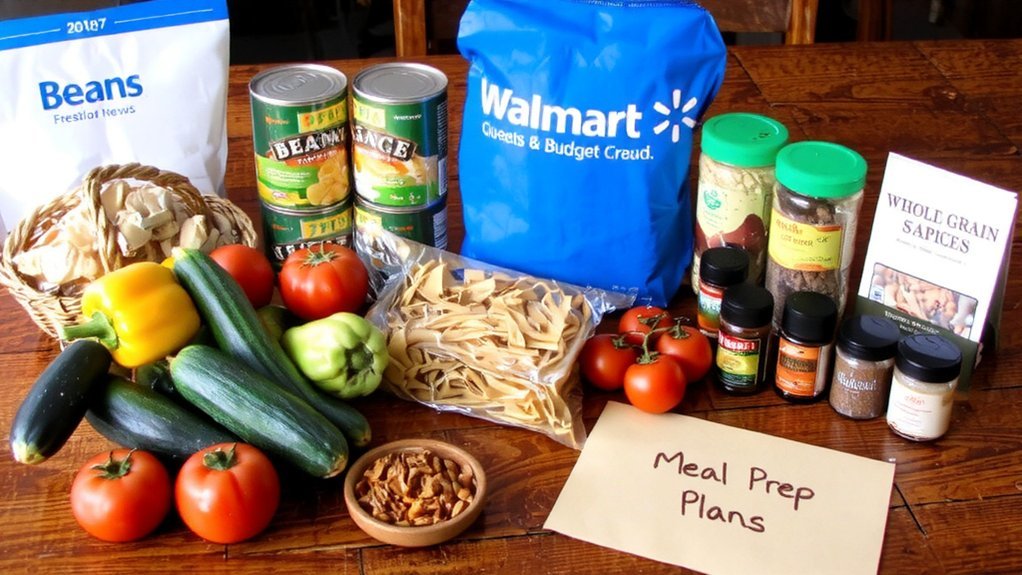
Use the skeleton you built—rice, beans, frozen veg, proteins, carbs, dairy—as the baseline and then stock pantry staples that stretch meals: canned tomatoes, broths, dried pasta, lentils, cooking oil, vinegar, and a basic spice set.
Add shelf stable proteins like canned tuna, chicken, and ready-to-use tofu to keep dinners flexible. Buy seasonal produce to lower cost and boost flavor; pick vegetables and fruits at peak to preserve freshness longer.
Grab seasonal herbs when cheap or grow a small pot for freshness without waste. Make smart swaps: opt for whole grains over processed, frozen fruit for smoothies, and store-brand broths and spices to cut costs.
Rotate staples weekly to avoid spoilage and maximize value. You’ll save money and time while feeding your family well daily.
Seven Budget-Friendly Dinner Recipes to Rotate
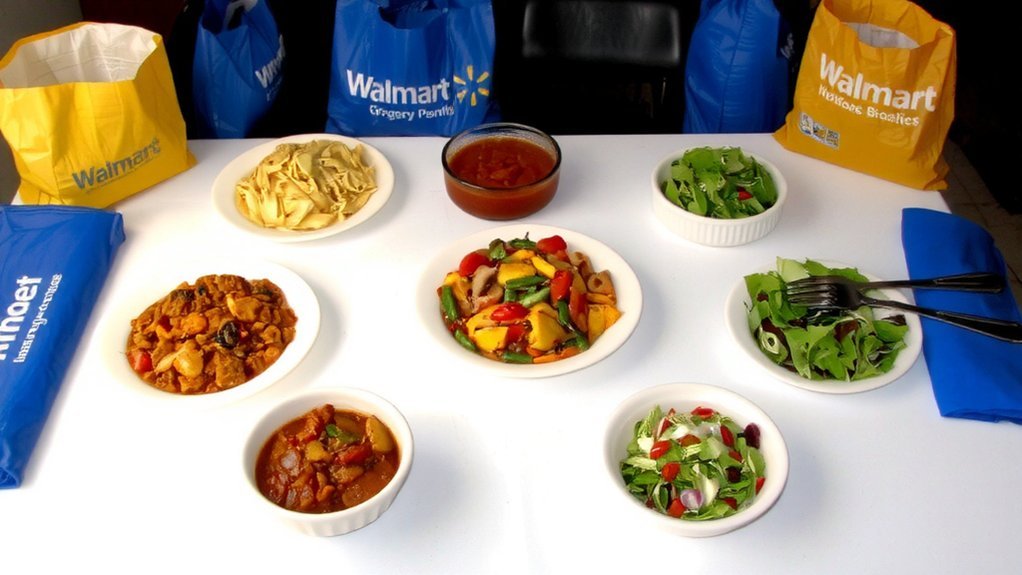
How can seven simple dinners keep your weekly menu fresh and cheap? You’ll rotate meals that use core Walmart staples, stretch proteins, and embrace Theme Nights so planning’s easy.
Pick seven: taco night, pasta night, stir-fry, sheet-pan chicken, soup, loaded baked potatoes, and veggie curry.
Vary sauces and dressings—use Sauce Variations like salsa, marinara, teriyaki, or peanut sauce—to change flavors without extra shopping.
Visualize a week:
- Taco night with beans and rice
- Quick pasta with frozen veggies
- Stir-fry over rice
- Sheet-pan chicken and potatoes
You’ll shop once, mix sauces for variety, and save time and money while keeping dinners exciting and simple. Rotate ingredients week to week, swap proteins, and use bulk buys to cut costs while enjoying consistent flavor and minimal waste daily.
Leftover Transformations and Make-Ahead Meal Prep
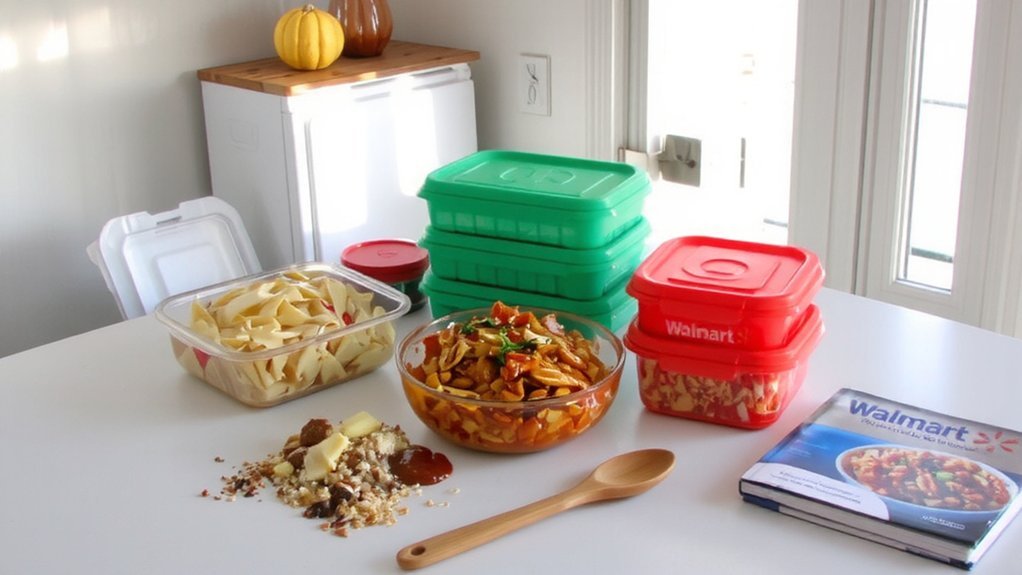
Turning leftovers into new meals saves time and money and keeps your weekly menu interesting. You can pivot roasted chicken into tacos, grain bowls, or a hearty soup — those flavor reinventions stop boredom. Chop, re-season, and add fresh herbs or a zesty sauce to renew protein and veggies.
For make-ahead ease, assemble mason jar salads, marinate proteins, or precook rice and quinoa so dinners come together fast. Use labeled containers and a rotation system so nothing gets wasted.
Batch freezing portions of soups, stews, and casseroles gives you grab-and-go dinners for busy nights; just thaw and reheat. With simple swaps and planning, you’ll cut waste, save money, and enjoy varied, satisfying meals all week. Rotate flavors weekly to keep things fresh and exciting.
Walmart Savings Tips: Rollbacks, Pickup, Delivery, and Walmart
You’ll watch for rollbacks and plan meals around those discounts to stretch your budget.
Compare pickup vs. delivery by checking item availability, timing, and fees so you choose the cheaper, faster option.
Use free pickup, order minimums, promo codes, or Walmart+ when it lowers or waives delivery fees.
Maximize Rollbacks
Many shoppers miss rollback savings by not checking dates and matching ads to their shopping list; if you plan ahead and monitor weekly deals, you’ll catch the best temporary price cuts on essentials and big-ticket items.
Use community alerts and insider newsletters to spot upcoming rollbacks, then set reminders so you don’t miss expiration. Shop early in the rollback window for the widest selection, and combine rollback items with coupons or app offers when allowed.
- Scan weekly ad for marked rollback dates.
- Add rollback items to your meal plan list.
- Mark calendar reminders for end-of-sale.
- Buy multiples of nonperishables when price drops.
Stay flexible on brands and sizes to maximize savings. Check shelf tags and online price history to confirm rollback depth today regularly.
Pickup Vs Delivery
Wondering whether pickup or delivery saves you more at Walmart?
You’ll often save time and reduce outings with pickup, and you can inspect items for freshness when you arrive.
Delivery brings convenience, but you sacrifice the chance to swap produce and check dates yourself.
Consider Environmental Impact: pickup can consolidate your trips, while delivery may optimize route efficiency depending on density.
Prioritize Order Accuracy by reviewing substitutions and confirmations before you leave or accept a drop-off.
You’ll want to compare how each option handles returns and replacements in your area.
Try both for several orders to see which fits your schedule, reduces waste, and protects quality.
Then pick the method that balances cost, convenience, and confidence.
Adjust until you find your ideal sweet spot.
Avoid Delivery Fees
If you want to skip delivery fees, plan orders so they meet Walmart’s free-delivery thresholds, use free store pickup, or sign up for Walmart+ to get unlimited free deliveries on qualifying orders.
You can also coordinate with friends, Community Coops, or neighborhood bulk buys to hit minimums without overspending.
Combine meals into fewer orders, schedule recurring buys, and sync with your Errand Schedules to avoid extra trips.
Visualize how to save:
- Consolidate breakfasts and lunches into one weekly shop.
- Pair pantry staples with fresh produce to reach thresholds.
- Use free pickup windows to grab hot items en route.
- Rotate who orders with a coop to spread costs.
You’ll cut fees and simplify meal planning efficiently and save time daily too.
Time-Saving Cooking Hacks and Minimal-Tool Techniques
When you’re short on time and kitchen space, a few smart shortcuts will get dinner on the table faster without extra gadgets.
Use Microwave Magic for steaming veggies, softening potatoes, or cooking fish packets in minutes; you’ll save pans and cleanup.
Lean on a Single Pot for pasta, rice bowls, or one-pan stir-fries—start proteins and veggies together, add broth, then simmer.
Prep ingredients while something cooks: chop once, batch season, and freeze portions.
Invest in a sharp chef’s knife and a reliable cutting board; they replace specialty tools.
Use pre-washed salads, rotisserie chicken, and canned beans from Walmart to speed meals.
Clean as you go to avoid sink pileups and finish dinners faster with minimal tools.
You’ll plate meals faster and enjoy calmer evenings.
Conclusion
You’ll save time and money following this Walmart meal plan. By buying rollbacks, using store brands and seasonal produce, and prepping grains, roasted veggies and a simple sauce each week, you’ll mix tacos, stir‑fries, sheet‑pan dinners and quick pastas with minimal fuss. Repurpose leftovers, compare unit prices, and use pickup to inspect freshness. These small habits stretch your budget, cut waste, and make dinner easier every night. Stick with it and you’ll see big results.