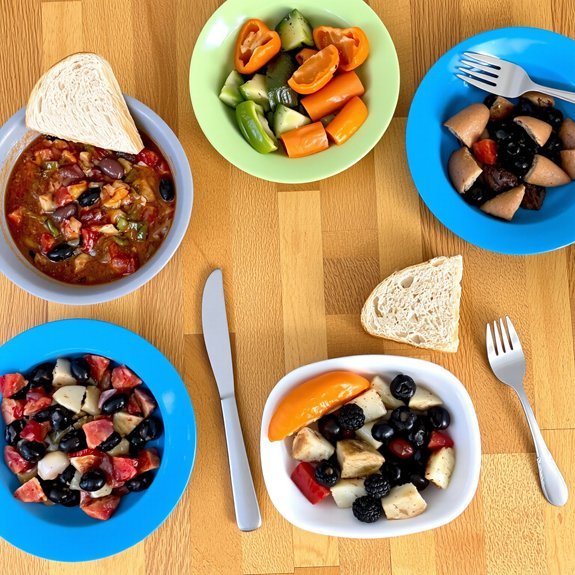

You can make reliable, tasty dinners for under $3 per serving using dollar store staples and simple batch-cooking. You’ll learn essential buys, smart swaps, one‑pot recipes and ways to stretch portions without sacrificing flavor. Start with pantry basics, then turn cans, rice and frozen veg into varied meals that keep costs and effort low…
Key Takeaways
- Batch-cook inexpensive staples (rice, pasta, oats, seasoned beans) once weekly to cut time and reach under $3 per serving.
- Use canned proteins and legumes (tuna, chicken, black beans, chickpeas) to add affordable protein and bulk meals cheaply.
- Compare unit prices and choose store brands to get the best cost-per-serving across cans, pasta, and frozen vegetables.
- Rely on one-pot scalable recipes (skillet pasta, casseroles, rice bowls) that stretch ingredients and simplify prep.
- Portion, label, and freeze single servings to prevent waste, control portions, and keep dinner costs consistently low.
Why Dollar Store Meal Planning Works
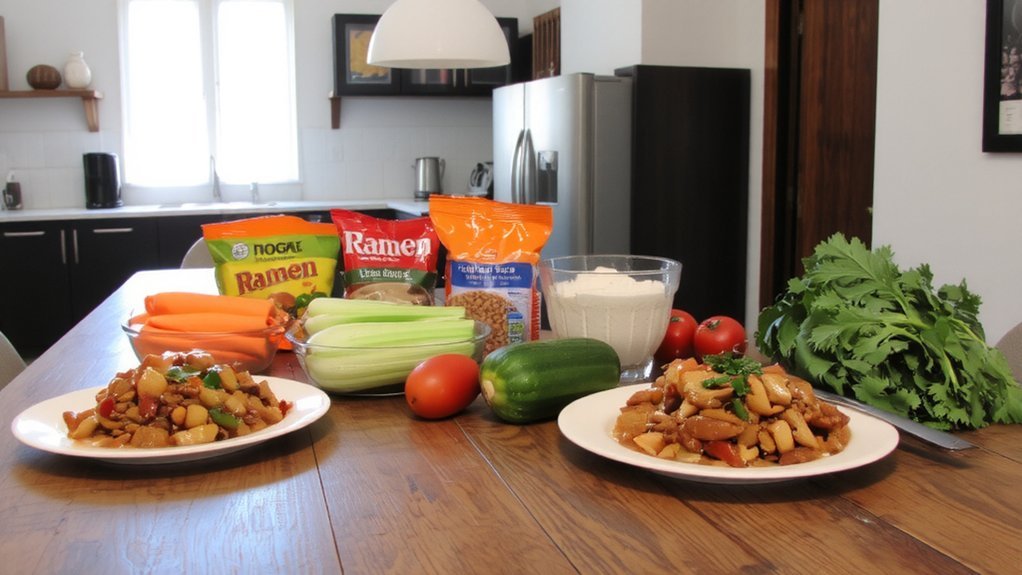
Because you can stretch a few dollars into several meals, dollar store meal planning works: these stores sell inexpensive staples and canned, dried, and frozen items that let you build nutritious, low-cost menus, cut food waste, and simplify shopping.
You adopt a Budget Mindset that prioritizes cost-per-serving and flexible ingredients, so you plan around deals and portion control.
You lean on Resource Creativity, turning modest items into varied dinners by mixing flavors, textures, and simple seasonings.
You’ll reduce impulse buys, minimize spoilage, and save time by batch-cooking and repurposing leftovers.
With consistent planning, you’ll feed yourself or your family affordably without sacrificing nutrition. The approach’s strength is practical: predictable costs, adaptable menus, and less food waste. You’ll gain confidence and control over grocery spending.
Essential Pantry Staples to Buy
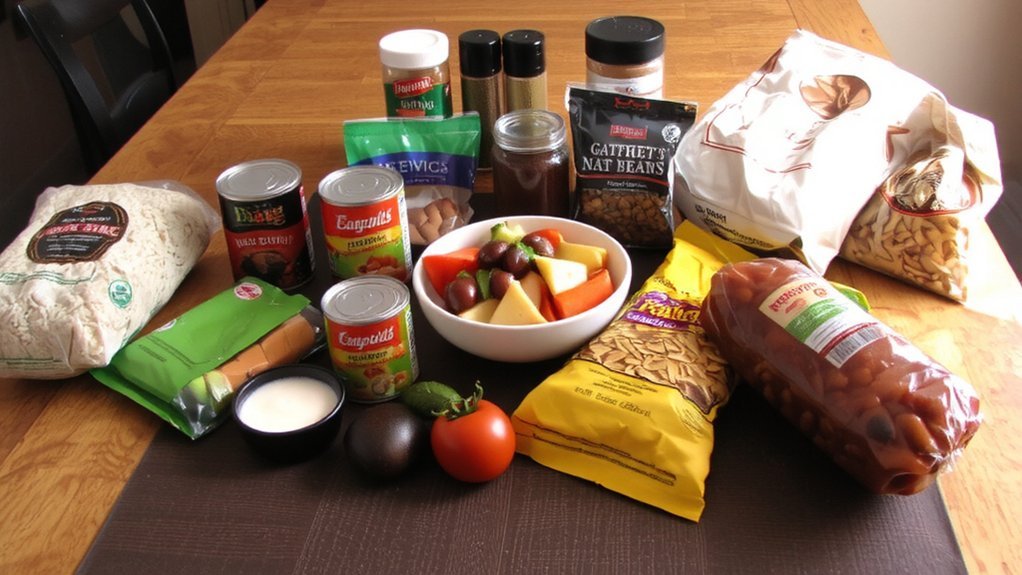
You’ll want to stock canned proteins and beans, plus versatile rice, pasta, and other grains.
Add basic seasonings, spices, and a few condiments to turn simple ingredients into flavorful meals.
We’ll go over what to pick and how to use each so you can stretch every dollar.
Canned Proteins and Beans
Stocking your pantry with canned proteins and beans gives you cheap, shelf-stable building blocks for quick meals — tuna, salmon, chicken, black beans, and chickpeas stretch recipes, add protein and fiber, and cut cooking time.
Choose cans with clear nutritional labeling so you can compare sodium, added sugars and serving sizes; rinse beans to lower salt.
Use tuna or salmon for salads and wraps, chicken for casseroles or quesadillas, and chickpeas for hummus or roasted snacks.
Canned beans bulk up soups, stews and tacos without hours of soaking.
Check BPA-free lining claims and consider environmental impact of sourcing and packaging when you buy.
Rotate stock by date, and you’ll always have affordable, reliable protein on hand.
Keep a manual can opener nearby for easy access.
Rice, Pasta and Grains
Grains like rice, pasta and oats give you cheap, shelf-stable foundations that stretch meals and save time.
You’ll keep bags of white rice, brown rice, pasta, and rolled oats on hand for fast bases, breakfasts, and bulking stews.
Choose whole grains when possible — they last and add nutrients — but white rice and simple pastas cost less and cook quickly.
Look at packaging for origin and basic processing methods; understanding milling and drying helps you pick shelf life and texture.
Buying in larger packages at the dollar store saves per-serving costs.
Rotate stock by date to avoid waste tied to harvest cycles.
Cook a pot batch, portion and freeze or refrigerate for effortless dinners all week.
You’ll mix them with proteins and veggies.
Seasonings, Spices, Condiments
Flavor is everything: a few jars and packets of seasonings turn plain staples into satisfying meals. Stock salt, black pepper, garlic powder, onion powder, paprika, and dried herbs; they’re cheap and versatile. Grab small bottles of hot sauce, soy sauce, vinegar, and mustard for quick acid and umami.
Use bouillon cubes or powdered broth to deepen soups and rice. Make Homemade rubs from brown sugar, chili powder, cumin, and salt to coat chicken, tofu, or vegetables before roasting. Practice Flavor layering: season at each step—salt the water, spice the base, finish with a bright acid or herb.
Store spices in a cool, dark spot and rotate them. You’ll save money and eat better daily.
Smart Shopping Tips and Tricks
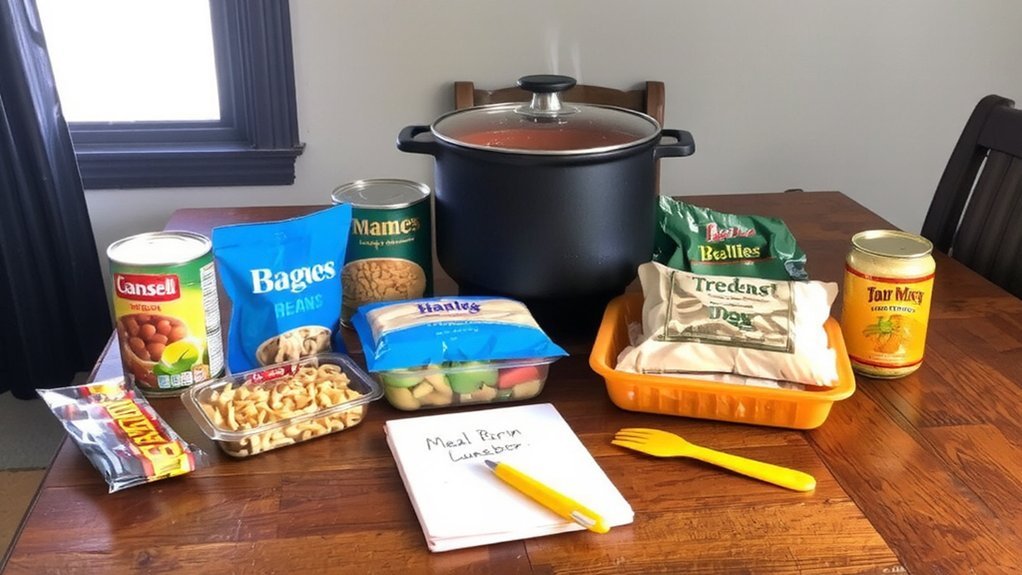
When you’re shopping, compare unit prices to spot the best value, not just the sticker price.
You’ll often save more by choosing store brands that match name-brand quality.
Use both tactics to stretch your dollar-store budget further.
Compare Unit Prices
How do you know if that bargain really saves you money? Check the unit price, not the sticker.
Divide total cost by ounces, grams, or servings so Unit Conversion becomes routine; that shows true value when different package sizes or units hide costs.
Use Price Literacy: scan labels, compare per-ounce or per-serving prices, and ignore flashy sale tags.
Bring a phone calculator or memorize common conversions (pounds to ounces, kilograms to grams).
Remember taxes and usable portion sizes—what looks cheap per package might cost more per cooked serving.
Once you practice this, you’ll pick the better deals fast and avoid impulse buys that weaken your meal plan budget.
Compare unit prices across stores and weekly flyers to stretch every dollar further for dinner consistently.
Buy Store Brands
Many store brands match name-brand taste and nutrition while costing considerably less, so you’ll stretch your budget by choosing them for staples like canned goods, pasta, and frozen vegetables—read ingredient lists, compare unit prices, and buy a small pack to test quality before switching permanently. When you shop, ignore brand perception and focus on ingredient lists, sodium, sugar, and portion sizes. Note packaging differences that don’t affect contents. Use unit-price comparison and try blind taste tests at home. Rotate a few trusted store-brand items into weekly dinners and you’ll save without sacrificing flavor. Keep receipts and note which items earned a repeat buy.
| Item | Unit Price | Taste Test |
|---|---|---|
| Canned Tomatoes | $0.79 | Good |
| Frozen Veggies | $1.00 | Very Good |
| Pasta | $0.50 | Acceptable |
Try weekly comparisons monthly.
One-Pot Meals for Busy Weeknights
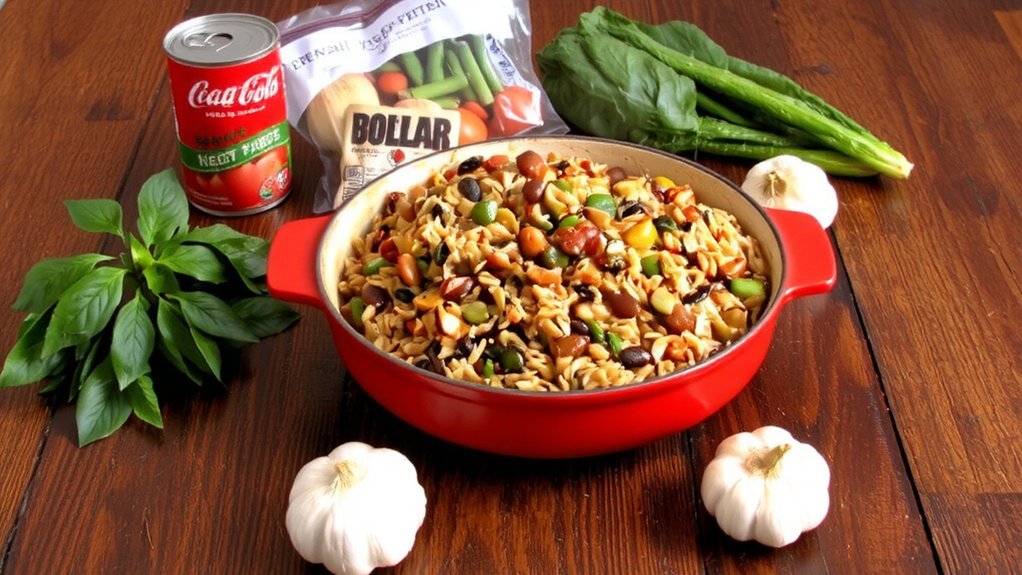
If you’re short on time, one-pot meals turn weeknight chaos into a satisfying dinner with minimal cleanup and few ingredients.
You can stretch dollar-store staples—canned tomatoes, pasta, rice, canned tuna or chicken—into hearty dishes.
Prioritize Flavor Layering: brown aromatics, deglaze, add spices, then liquids so each step builds depth.
For Pot Selection, choose a heavy-bottomed pot or Dutch oven that holds heat and won’t scorch sauces; a deep skillet works for quicker meals.
Plan protein, starch, and vegetable in the same pot with staggered cooking times so everything finishes together.
Cook at medium heat, taste as you go, and adjust seasoning.
Leftovers reheat well, and you’ll save time, money, and cleanup on busy nights.
Freeze portions for quick dinners when schedules get tight, anytime.
Budget-Friendly Vegetarian Dishes
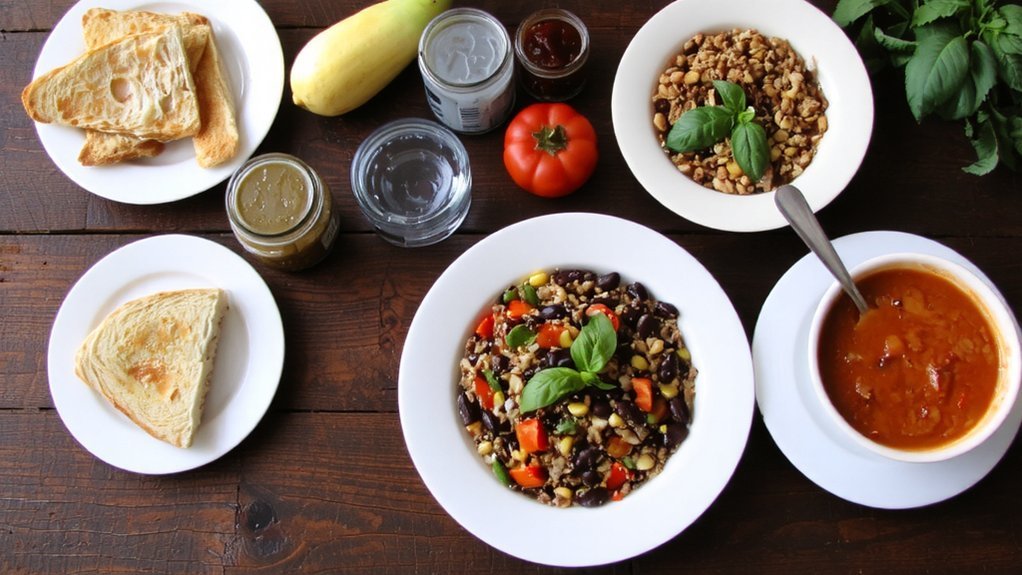
Stretch your dollar-store haul into satisfying vegetarian meals that save time and money while keeping flavor high.
You’ll build balanced plates by focusing on Flavor balancing and Texture variety: mix canned beans, frozen veggies, grains, and spices to create filling dinners.
Rotate sauces and citrus for brightness, and toast nuts or seeds for crunch. Plan simple combos so you won’t overbuy.
- Chickpea curry with rice and frozen spinach
- Lentil taco bowls with salsa and crunchy cabbage
- Peanut noodles using pantry noodles and canned veggies
- Tomato and white bean soup with herbs and lemon
- Stir-fry with tofu, mixed frozen vegetables, and soy sauce
You’ll cook efficiently, waste less, and eat deliciously without spending much. Adjust seasoning often and lean on herbs for instant flavor boosts.
Family-Friendly Recipes and Batch Cooking
Plan batch meals that save time and please picky eaters by leaning on familiar flavors and easy swaps.
You can batch cook basics like rice, pasta, and seasoned beans, then mix with rotating toppings so every night feels new.
Use theme nights (Taco Tuesday, Stir-Fry Friday) to simplify choices and shopping.
Let kids help with safe tasks; kid involvement such as assembling bowls or choosing toppings boosts appetite and reduces mealtime battles.
Choose recipes that scale: sheet-pan quesadillas, large skillet pasta, or simple casseroles using dollar store staples.
Keep seasoning mild and offer optional add-ins for adults.
With templates and small choices, you’ll cut costs, cut stress, and serve meals everyone actually eats.
Rotate proteins weekly to stretch your budget without repeating menus too.
Meal Prep, Storage, and Stretching Leftovers
When you prep with storage and reuse in mind, you’ll save time, cut costs, and make leftovers feel intentional instead of an afterthought. Plan weekly menus, batch-cook staples, and use clear containers.
Use a Labeling System with date and contents so you’ll rotate meals and avoid waste. Practice Portion Control by dividing servings before chilling to simplify reheating and keep calories in check.
Reinvent leftovers into bowls, soups, or wraps for variety.
- Cook grain and protein batches once per week.
- Store sauces separately to preserve texture.
- Freeze single portions for quick meals.
- Use airtight containers and clear labels.
- Repurpose meals into new dishes within three days.
Check temperatures and smell before eating, and thaw in the fridge overnight to keep safety high and flavor.
Conclusion
You can stretch a small dollar-store haul into satisfying dinners under $3 per serving by planning, buying store brands, and batch-cooking staples like rice, pasta, beans and frozen veg. You’ll save time and money when you cook in bulk, mix and match proteins, and repurpose leftovers into bowls, soups or quesadillas. With smart shopping and simple recipes, you’ll feed your household reliably, reduce waste, and keep your budget on track every week and eat well.