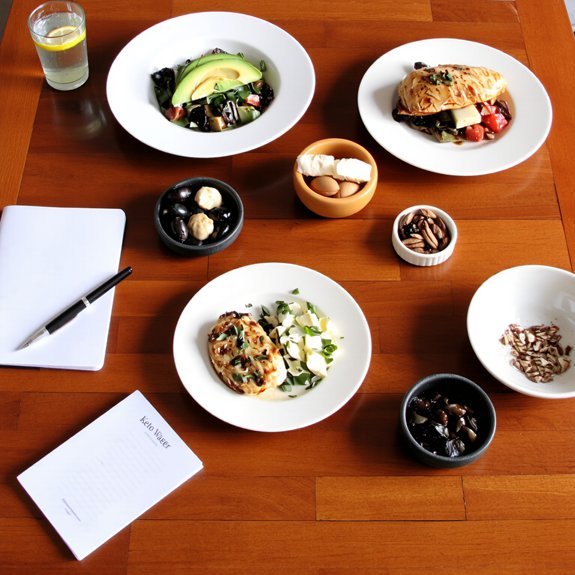

You’ll get a practical 7-day keto menu that balances fats, protein and net carbs so you can stay in ketosis without constant guesswork. The plan gives per-meal macros, simple recipes and portion cues you can follow right away. Keep going to see the day-by-day menus, swaps and shopping list that make this doable—plus the adjustments that really work.
Key Takeaways
- Set daily macros: ~70–75% fat, 20–25% protein, 5–10% net carbs, staying under ~20 g net carbs for ketosis.
- Structure meals: protein-focused breakfast, omega-3 lunch, low-carb fat snack, satiating low-carb dinner; use palm/thumb/fist portion guidance.
- Provide per-meal macros and weights (protein palm-sized, fats thumb-sized, fist-sized veg) to hit daily calorie and macro targets.
- Include 7-day sample menus with swaps: eggs, salmon, chicken thighs, cauliflower mash, zucchini noodles, macadamias, and full-fat dairy.
- Recommend prepping batches, a shopping list, food scale use, tracking apps, and electrolytes (sodium, potassium, magnesium) monitoring weekly.
How to Use This 7-Day Keto Meal Plan
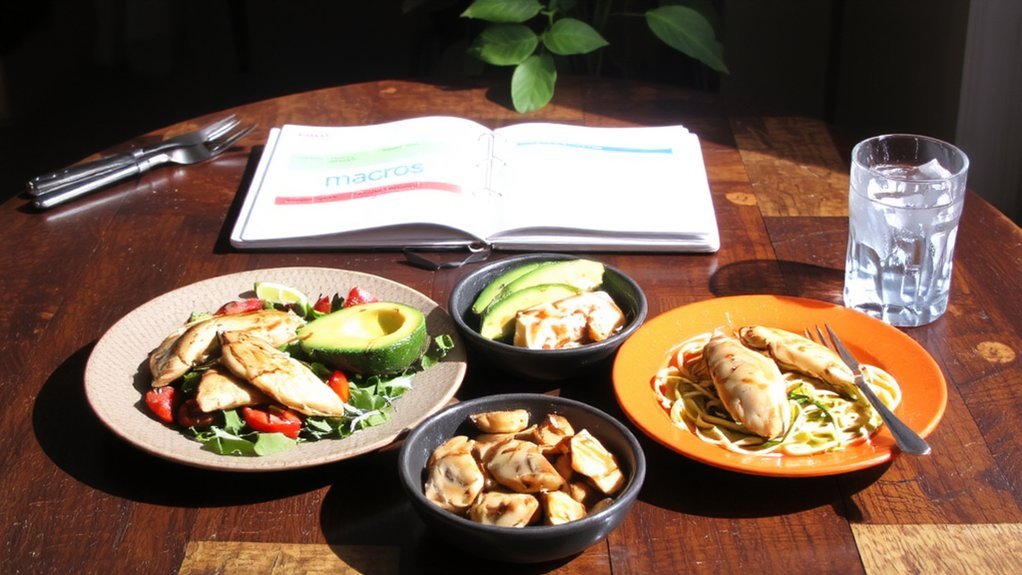
How should you use this 7-day keto meal plan? You’ll follow the menus, adjust portion sizes for your calorie needs, and swap equivalent foods when necessary.
Use Tracking adherence tools—apps, a simple checklist, or a photo log—to monitor carbs, protein, and fats and note patterns. Plan snacks and grocery trips ahead so you won’t reach for high-carb options.
Measure progress weekly by energy, weight, and blood ketones if you use them. Schedule flexible meals for social events and include refeed strategy only if you’ve discussed it with a clinician.
Focus on Diet sustainability: pick recipes you enjoy, rotate favorites, and set realistic goals so this plan fits into your life rather than feeling like a short-term fix. Track sleep and stress for results.
Day 1 Meal Plan With Macros
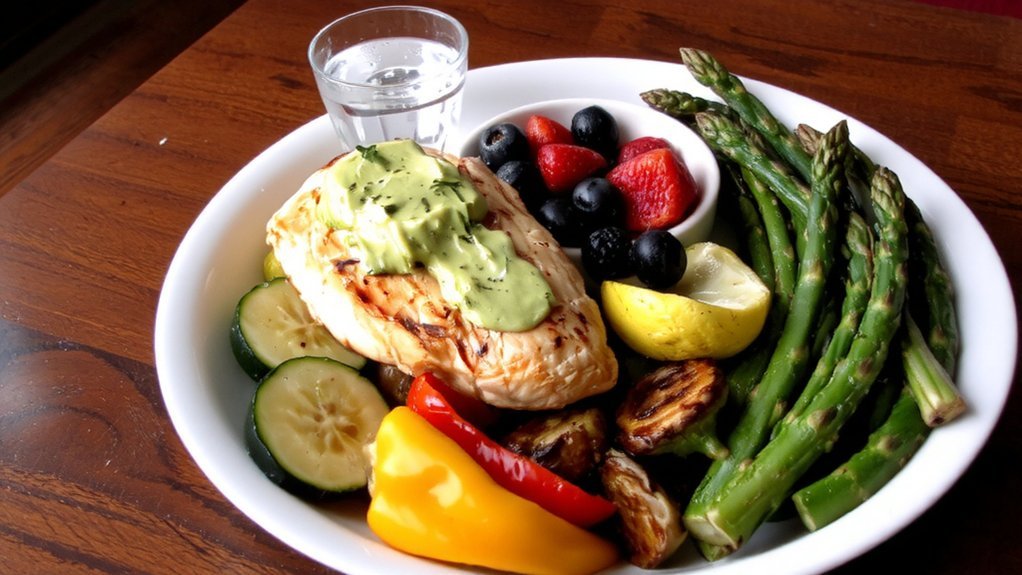
On Day 1 you’ll get a clear macros breakdown so you know your carb, protein, and fat targets.
You’ll also get sample recipes tailored to hit those numbers. Portion sizes and simple swaps are included so you can adjust servings while staying on track.
Day 1 Macros Breakdown
Review the Day 1 macro breakdown to see exact protein, fat, and net-carb amounts for each meal and the daily totals so you can confirm they match your goals.
You’ll get per-meal numbers: breakfast, lunch, dinner, and snacks, with grams and calories, plus the daily macro sum.
Use these figures to check if protein supports muscle maintenance while fat provides satiety and ketone support during Metabolic Adaptation.
Net carbs stay low to maintain ketosis.
Also note sodium, potassium, and magnesium targets to preserve Electrolyte Balance; the table flags where supplements or salty foods are needed.
Adjust servings to hit your target macros without guessing.
Track consistently for accurate progress and tweak as your goals or activity change.
Recheck weekly and record results to refine.
Sample Recipes and Portions
When you cook from the Day 1 plan, these sample recipes and portion sizes give exact ingredients, weights, and simple prep steps so each breakfast, lunch, dinner, and snack matches the macro breakdown shown earlier.
For breakfast, scramble two large eggs (100 g) with 20 g butter and 30 g spinach, salt, and pepper; serve with 30 g avocado — this yields ~18g fat, 12g protein, 3g net carbs.
Lunch: grilled salmon 140 g with 15 g olive oil, lemon zest, 50 g steamed asparagus; finish with chopped herbs to boost flavor pairings and add freshness.
Dinner: chicken thigh 170 g roasted with 10 g olive oil, 80 g roasted broccoli.
Snack: 30 g macadamias.
Focus on plating presentation; you’ll keep portions controlled and accurate.
Day 2 Meal Plan With Macros
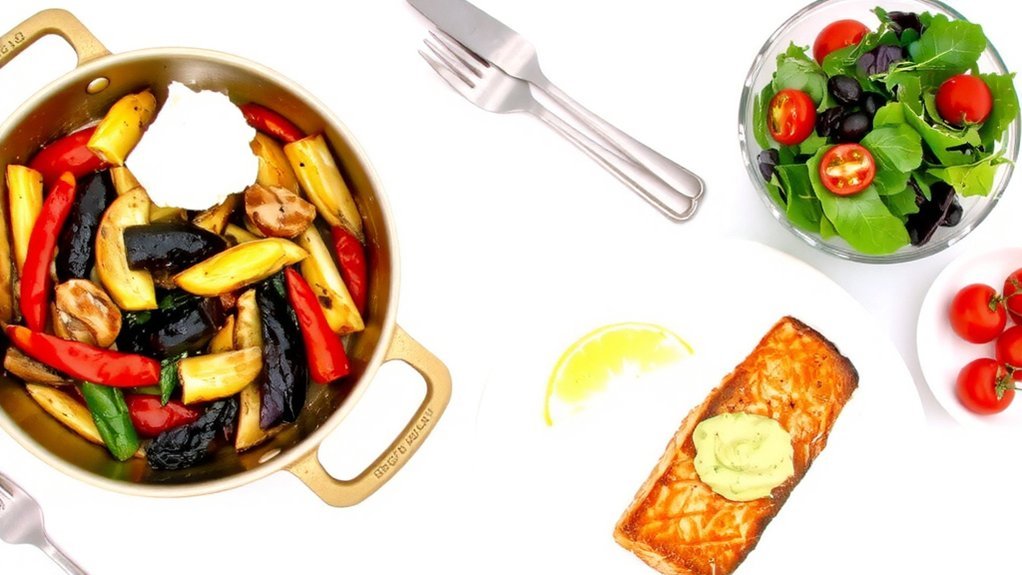
Because Day 2 emphasizes steady energy and satiety, you’ll follow a menu of high-fat, moderate-protein meals with low net carbs — each meal includes clear macro targets so you can hit your daily totals without guesswork.
Start with a creamy avocado and smoked salmon breakfast (450 kcal: 36g fat, 22g protein, 4g net carbs).
Lunch pairs grilled chicken salad with olive oil and feta (520 kcal: 40g fat, 30g protein, 6g net carbs).
Snack on cheese crisps or macadamias (200 kcal: 20g fat, 4g protein, 2g net carbs).
Dinner offers butter-seared shrimp with cauliflower mash (600 kcal: 48g fat, 32g protein, 5g net carbs).
Use flavor variations and leftover hacks to rotate seasonings and repurpose components, keeping meal prep efficient and simplify your weekly planning.
Day 3 Meal Plan With Macros
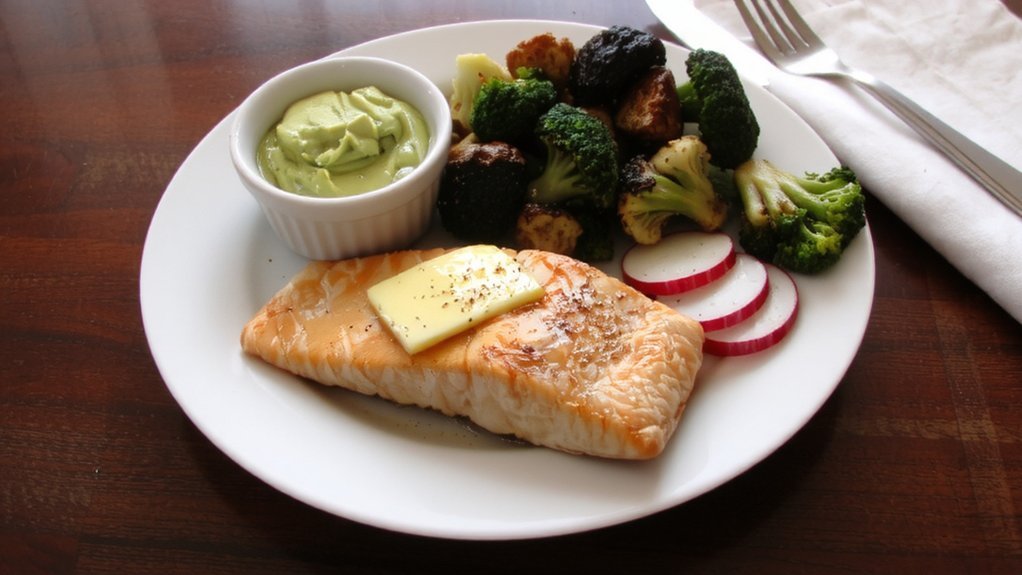
On Day 3 you’ll follow a low-carb, high-fat lineup that keeps energy steady and cravings down.
I’ll break out meal-by-meal macros for breakfast, lunch, dinner, and snacks so you know exactly what to hit.
Then you’ll get the daily macros totals to confirm you’re within your target for calories, carbs, protein, and fat.
Day 3 Overview
As you go through Day 3, you’ll get three structured meals plus a snack designed to hit keto targets — about 70–75% fat, 20–25% protein, and 5–10% net carbs — with macros listed per item and totaled for the day.
You’ll practice mindful eating, tune portions, and use travel adaptations so you stay consistent on the road.
Focus on whole foods, simple swaps, and hydration to support satiety and energy.
- Prioritize high-fat foods for steady energy.
- Choose leaner proteins if you need lower calories.
- Swap veggies for higher-fiber options when traveling.
- Pack keto-friendly snacks to avoid slips.
Use these cues to stay flexible, track progress, and adjust portions based on hunger and activity.
You’ll see improved focus and steadier weight.
Meal-by-meal Macros
When you break Day 3 down meal by meal, each dish lists fat, protein, and net carbs so you can hit roughly 70–75% fat, 20–25% protein, and 5–10% net carbs; I’ll provide per-item macros and a daily total so you can track, tweak portions, and stay consistent.
Breakfast: avocado egg skillet — 28g fat, 18g protein, 4g net carbs.
Lunch: grilled salmon salad — 34g fat, 30g protein, 6g net carbs.
Snack: cheese and olives — 20g fat, 8g protein, 2g net carbs.
Dinner: buttered steak with greens — 40g fat, 38g protein, 5g net carbs.
Note your protein timing to support muscle repair and monitor hormonal impact; shift portions around activity to suit hunger and fasting windows for better energy balance and preference.
Daily Macros Totals
Adding up Day 3’s meals gives you 122 g fat, 94 g protein, and 17 g net carbs — about 1,542 kcal total, which breaks down to roughly 71% fat, 24% protein, and 4% net carbs.
You’ll meet satiety and muscle needs while staying well under typical carb limits.
Track electrolytes and hydration to support Energy and avoid keto flu; focus on Sodium, Potassium, Magnesium for Electrolyte Balancing.
Aim for nonstarchy vegetables to hit Fiber Targets without exceeding net carbs.
Use the following checklist to review the day:
- Protein adequacy for repair and satiety.
- Fat for energy and hormonal support.
- Net carbs under 20 g to maintain ketosis.
- Electrolyte Balancing and Fiber Targets monitored daily.
Adjust portions to meet goals.
Day 4 Meal Plan With Macros
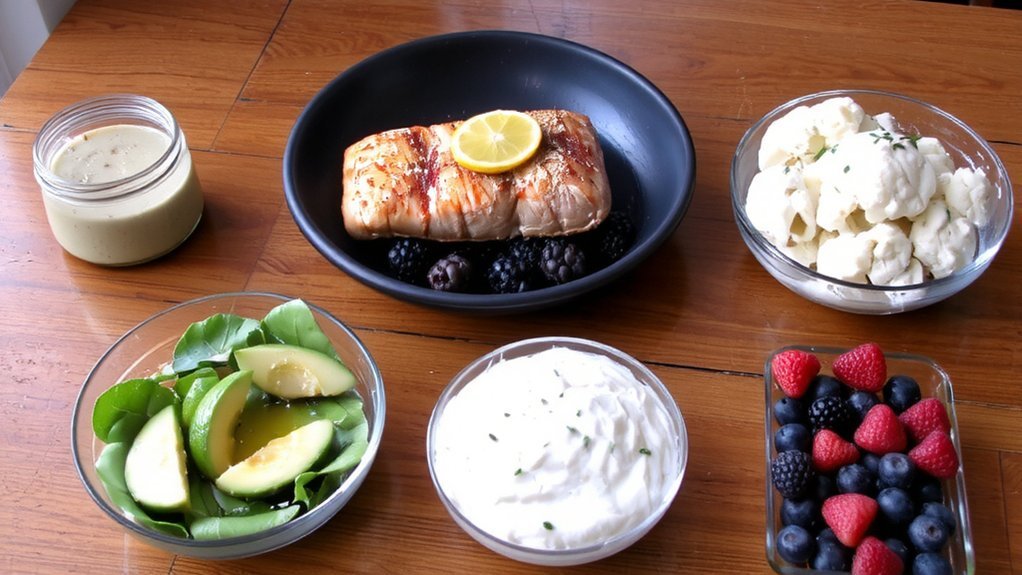
Day 4’s keto meal plan gives you a full day of easy, satisfying meals with clear macronutrient targets so you can stay in ketosis without guesswork.
Start with a high-fat breakfast—cheese omelet with avocado—and aim for steady eating cadence: three meals and one snack to prevent blood sugar dips.
Lunch is grilled salmon over spinach with olive oil; dinner is cauliflower mash with butter and a ribeye.
Snack is macadamia nuts.
Track macros: roughly 75% fat, 20% protein, 5% carbs; adjust portions to hit your personal totals.
Prioritize electrolyte timing: take sodium and magnesium with meals or the snack to reduce cramps and fatigue.
Prep portions ahead so you don’t deviate from targets.
Use a food scale and app to stay precise and consistent.
Day 5 Meal Plan With Macros
Start your fifth day with a keto-friendly routine designed to keep you in ketosis: three meals and one snack totaling roughly 75% fat, 20% protein, and 5% carbs.
For breakfast, have an avocado omelet cooked in butter, adding spinach for fiber.
Lunch is grilled salmon over mixed greens with olive oil; it’s great for dining out choices too.
Snack on macadamia nuts or full-fat Greek yogurt.
Dinner features roasted chicken thighs and cauliflower mash.
This plan supports fasting compatibility—shift meals earlier if you’re time-restricted.
Track macros: aim for ~75% fat, 20% protein, 5% carbs by calories.
Portion sizes depend on your calorie goals and activity level regularly.
- Breakfast: high-fat, moderate protein
- Lunch: omega-3 focus
- Snack: low-carb fats
- Dinner: satiating, low-carb
Swaps, Portion Guidance, Shopping List and Prep Tips
Several simple swaps will keep you on track—use canned tuna or sardines instead of salmon, zucchini noodles for pasta, and Greek yogurt or cottage cheese in place of sour cream; pick higher-fat cuts of meat or add extra olive oil to hit your fat target.
For portions, aim for palm-sized protein, a thumb of fats, and fist-sized low-carb veg per meal; weigh portions initially to learn portions.
Make a concise shopping list: proteins, eggs, leafy greens, low-carb veg, nuts, seeds, cheese, oils, and condiments.
Use pantry swaps like almond flour, erythritol, and canned coconut milk to simplify recipes.
Cook big batches, portion into containers, and use batch freezing for meals and sauces.
Label dates and rotate supplies to avoid waste.
You’ll save time weekly.
Conclusion
You’ve got a practical, flexible 7-day keto roadmap that makes low-carb eating simple and sustainable. Use the palm/thumb/fist portions and per-meal macros to guide portions, swap meals to fit preferences, and prep ahead to save time. Track your electrolytes, energy, and progress weekly, and adjust portions as needed to stay on target. Stick with what works, stay consistent, and you’ll see measurable results while enjoying satisfying, keto-friendly meals that support your long-term goals.