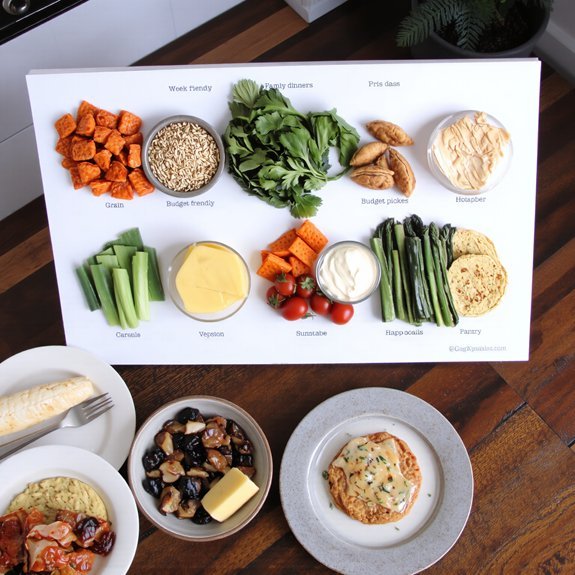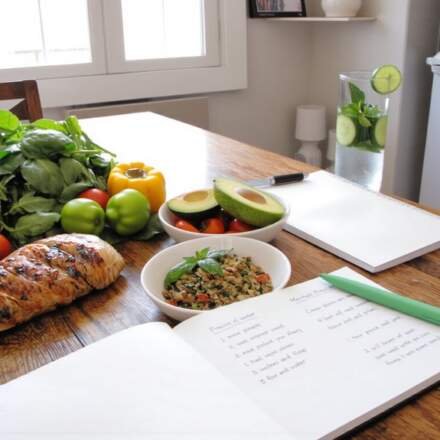
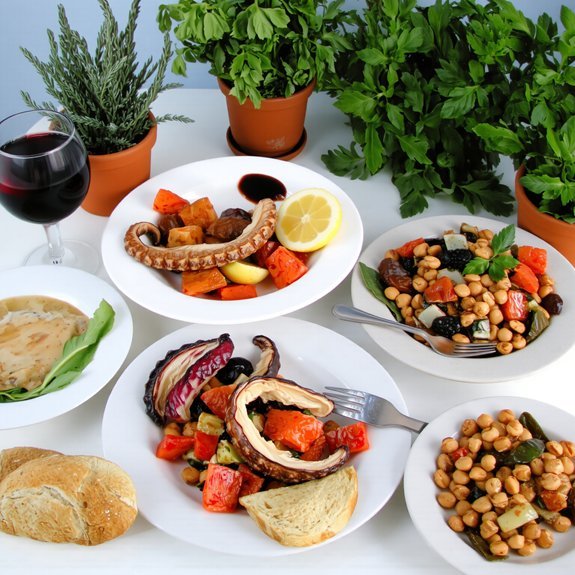

You’ll find a practical weekly Mediterranean meal plan that protects your heart without strict rules. It focuses on olive oil, whole grains, fish, legumes, and lots of vegetables. You’ll get shopping, batch-cook tips, and easy swaps for any diet. Start here to see a simple, sustainable week—and how to make it fit your life.
Key Takeaways
- Emphasize whole foods, healthy fats (olive oil, nuts, fatty fish), fiber, and polyphenols to reduce inflammation and lower cardiovascular risk.
- Build a simple weekly menu: breakfasts, lunches, dinners, snacks, and one flexible “swap” night for variety and adherence.
- Batch-cook grains, legumes, roasted vegetables, and proteins on Sunday; label portions and freeze extras for effortless weekday meals.
- Stock pantry staples (olive oil, canned tomatoes, whole grains, beans, herbs) and plan perishables for a single weekly shopping trip.
- Use gluten-free grains, legumes, tofu/tempeh for plant proteins, and herbs, citrus, vinegars, or miso to flavor food without excess salt.
Why the Mediterranean Diet Protects Your Heart
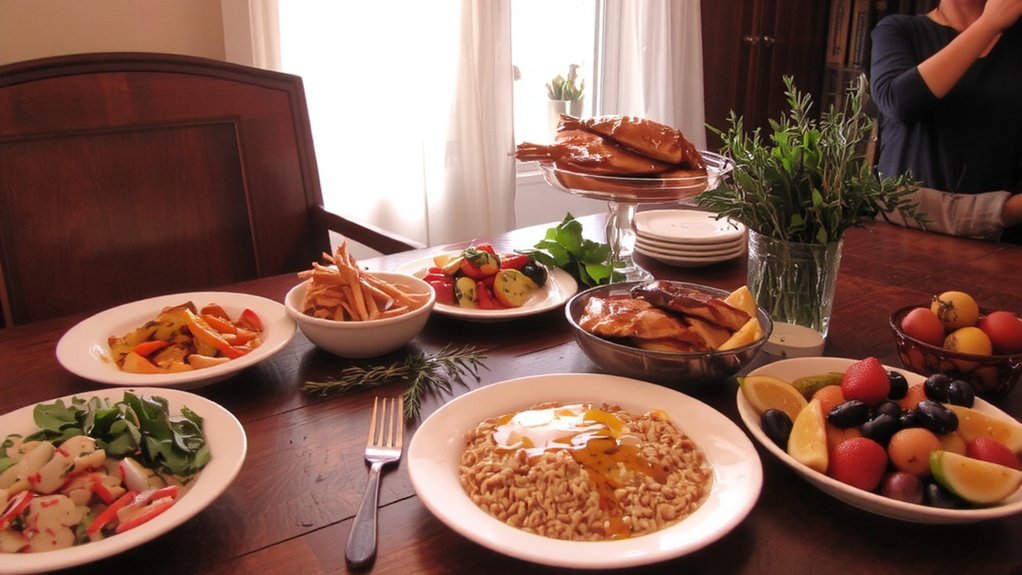
Because it emphasizes whole foods and healthy fats, the Mediterranean diet lowers inflammation, improves cholesterol, and stabilizes blood sugar—three key drivers of heart disease.
You get anti inflammatory effects from olive oil, nuts, fatty fish, and antioxidants in vegetables and fruits, which reduce systemic inflammation and vascular stress.
You’ll also improve endothelial function: nitric oxide production rises with polyphenols and omega‑3s, letting blood vessels dilate and lowering blood pressure.
The diet’s fiber and plant sterols help lower LDL and raise HDL modestly, while steady glucose control cuts oxidative damage.
Altogether, this pattern reduces plaque buildup, supports circulation, and lowers your risk of heart attack and stroke without strict calorie counting.
It’s evidence‑based, flexible, and sustainable for lifelong heart health when you commit consistently daily.
Weekly Meal Calendar and Shopping List
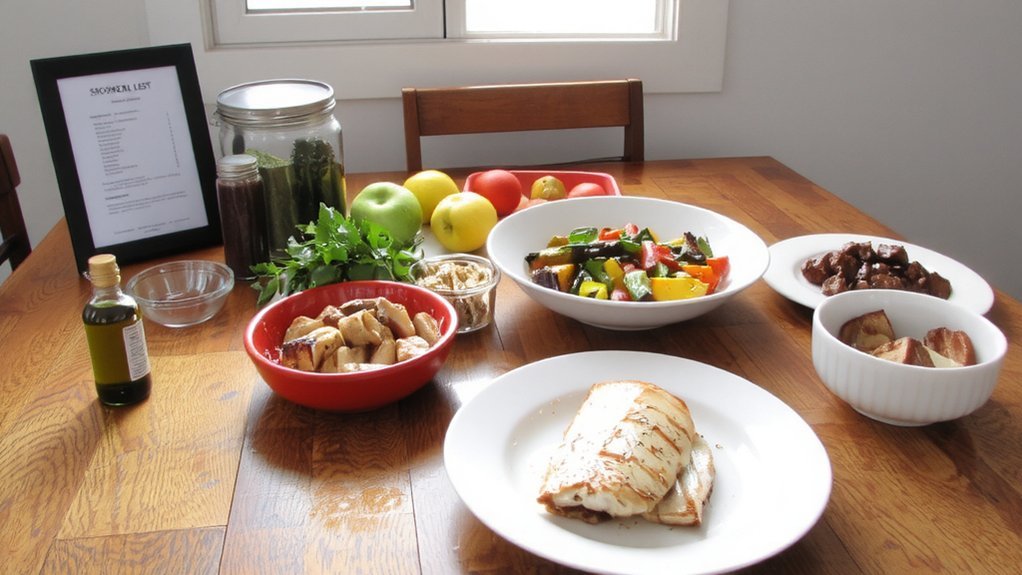
You’ll use a simple weekly meal calendar to plan breakfasts, lunches, dinners, and snacks that follow Mediterranean patterns.
Check your pantry to note staples—olive oil, whole grains, canned tomatoes, beans, and herbs—and jot what you need.
Then create a shopping list organized by category so errands are fast and meals stay consistent.
Weekly Meal Calendar
Start the week by mapping out seven balanced Mediterranean meals that fit your schedule and tastes, then group similar ingredients to streamline shopping and prep. You’ll assign meals to days based on time, activity, and leftovers, using Family coordination to make sure everyone’s preferences are met and duties are shared.
Use App integration to sync menus, reminders, and recipes with household calendars so cooking becomes predictable, not chaotic. Plan one flexible “swap” night for leftovers or quick grain bowls.
- Quick dinners
- Prep blocks weekly
- Leftover nights
Prep tasks—wash greens, chop vegetables, marinate proteins—get slotted into low-energy days. Keep dinners simple: lean proteins, whole grains, lots of vegetables.
Review the calendar each weekend and adjust portions or recipes to avoid waste and keep the week enjoyable. Swap flavors seasonally to stay inspired regularly.
Pantry and Shopping
With your weekly calendar set, align the pantry to match so shopping stays focused and waste drops—take a quick inventory of staples (olive oil, canned tomatoes, grains, beans, spices), note perishables that need weekly buys, and list proteins and produce by recipe and day. Use Shelf Rotation: move older items forward, label dates, and avoid duplicates. Group items by meal to simplify trips. Set Budget Planning limits per category and compare prices. Print a shopping list organized by store sections and meals. Use the table below to snapshot essentials and frequency.
| Item | Quantity | Purchase Frequency |
|---|---|---|
| Olive oil | 1 bottle | Monthly |
| Canned tomatoes | 4 cans | Biweekly |
| Leafy greens | 3 bags | Weekly |
You’ll save time, reduce food waste, and stick to heart-healthy meals all week consistently.
Breakfasts to Start Your Day Right
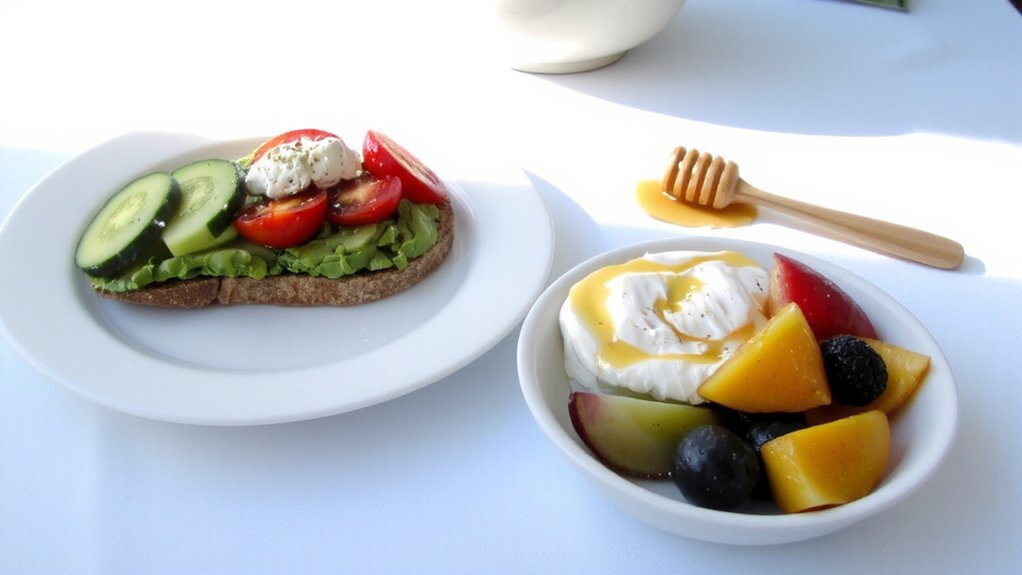
In the morning, you’re fueling your body best by pairing whole grains, healthy fats, and fresh produce.
Choose simple breakfasts that keep energy steady and support heart health. Think Seasonal Bowls with oats or quinoa topped with nuts, olive oil, and seasonal fruit.
Practice Mindful Eating: slow bites, notice flavors, and stop when satisfied.
- Seasonal Bowls: oats, nuts, olive oil, seasonal fruit
- Egg scramble with spinach
- Whole-grain toast
Aim for fiber, protein, and unsaturated fats each day. Prep components ahead—cooked grains, roasted vegetables, and nut mixes—to assemble quickly.
Keep portions reasonable and flavors varied so you stick with the plan. Small, consistent choices each morning add up to lasting cardiovascular benefits.
You’ll feel lighter, more focused, and ready for the day ahead, energized daily
Lunches for Workdays and Meal Prep
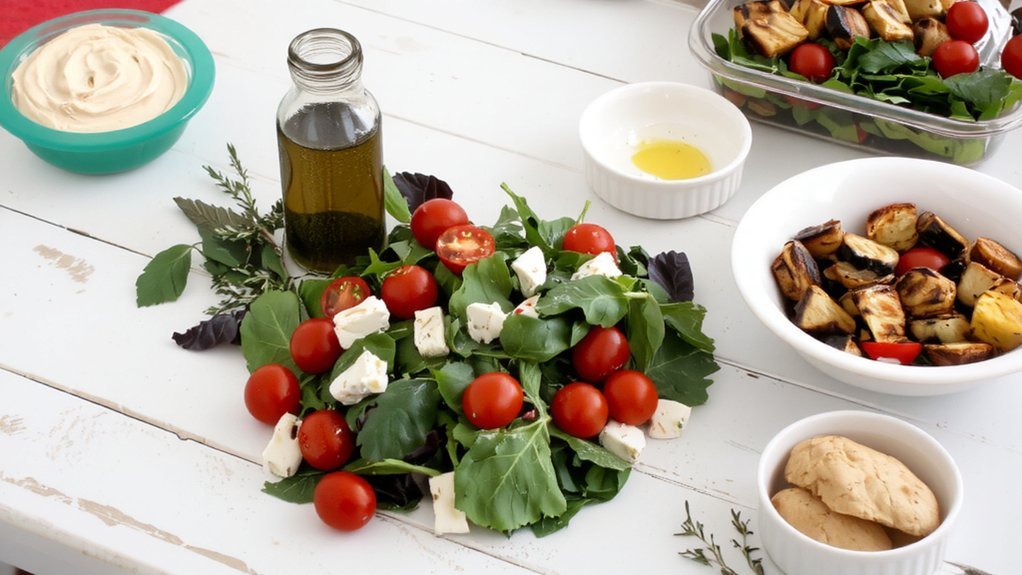
Because your lunch should fuel the afternoon without fuss, plan simple, balanced meals you can batch-cook and grab on busy mornings.
Pack mason jars with layers of leafy greens, chickpeas, roasted vegetables, quinoa and a drizzle of olive oil so flavors stay bright and textures hold.
Make a rotation of tuna-and-bean salads, grain bowls with feta and olives, and vegetable-packed wraps to avoid monotony.
For commute lunches, use insulated containers and ice packs to keep salads crisp and yogurt chilled.
Develop lunch rituals—set aside thirty minutes Sunday to portion meals, label containers, and stash snacks—so mornings stay calm.
Carry a small dressing container to prevent soggy greens, and include a piece of fruit or handful of nuts for satisfying energy.
Enjoy steady afternoon focus.
Dinners: Simple, Flavorful, Heart-Healthy Recipes
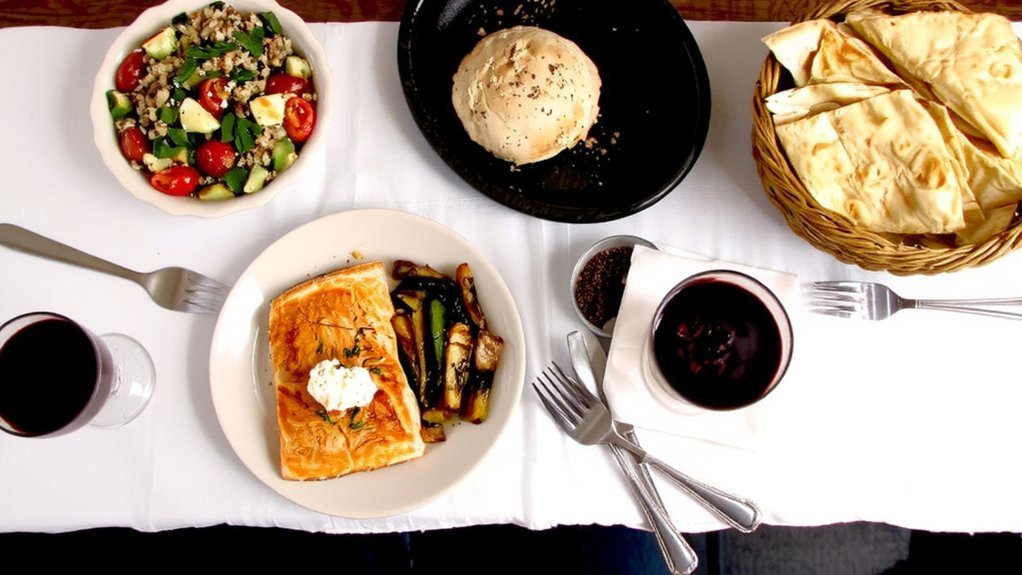
When evenings are busy, pick quick dinners that deliver bold flavor and heart-healthy nutrients.
You can grill Herb Salmon with lemon, garlic, and rosemary—serve over wilted spinach and farro.
- Herb Salmon with lemon and rosemary
- Zesty Cod with tomatoes, olives, and capers
- Roasted veggies with chickpeas and whole grains
Keep meals simple: focus on whole grains, legumes, colorful veggies, and moderate olive oil.
Batch-roast veggies or cook lentils to speed weeknight dinners.
Use herbs, citrus, and toasted nuts to enhance taste without excess salt.
Try these easy ideas to stay consistent with the Mediterranean approach while enjoying satisfying, nutrient-dense evenings.
You’ll build effortless routines, swap processed foods for fresh options, and cultivate a taste for simple, wholesome dinners that protect your heart long term.
Snacks, Desserts, and Smart Indulgences
If you want treats that satisfy without derailing your Mediterranean routine, pick snacks and desserts built around fruit, nuts, yogurt, whole grains, and modest dark chocolate—ingredients that deliver fiber, healthy fats, and natural sweetness.
Choose portion-controlled bowls of Greek yogurt topped with honey, walnuts, and sliced figs, or baked apples with cinnamon and a sprinkle of oats for a warm, comforting finish.
Use Dessert Psychology: make sweets a planned, mindful conclusion to a meal rather than an impulsive add-on.
To manage Nighttime Cravings, prioritize protein and fiber earlier in the evening and create a simple ritual—herbal tea and a few dark chocolate squares—to signal satisfaction without excess.
Rotate small servings weekly so you’ll enjoy variety and avoid habituation, keeping treats special and satisfying regularly.
Swaps and Substitutions for Dietary Needs
You’ll find easy gluten-free grain swaps like quinoa, buckwheat, and brown rice to keep Mediterranean texture and flavor.
Choose plant-based proteins—lentils, chickpeas, and tofu—to boost protein without meat.
Use low-sodium alternatives such as herbs, lemon, garlic, and smoked paprika to keep taste while cutting salt.
Gluten-Free Grain Swaps
Although traditional Mediterranean cooking leans on wheat-based breads and pasta, you can swap in gluten-free grains without losing the region’s bright flavors and satisfying textures.
When you bake, understand baking chemistry so mixes rise and bind; combine flours like rice, buckwheat, or sorghum with xanthan or psyllium for structure and moist crumb. Choose ancient grains—quinoa, millet, teff—for salads, pilafs, and crêpes; they offer fiber and nutty flavor. Mind storage longevity: cool and store cooked grains promptly, and keep flours airtight in the fridge or freezer to prevent rancidity.
- Quinoa: quick-cooking base for tabbouleh-style salads.
- Millet: light, fluffy substitute for couscous.
- Buckwheat groats: robust for pilafs and pancakes.
Also, try toasting grains briefly to boost aroma. Swap confidently—texture tweaks help you enjoy Mediterranean meals gluten-free.
Plant-Based Protein Options
Many plant-based proteins can replace animal ones without sacrificing flavor or nutrition.
You’ll swap lentils, chickpeas, and beans into stews, salads, and pasta to boost fiber and plant protein; combine them with whole grains or nuts to improve protein bioavailability.
Tofu, tempeh, and seitan offer versatile textures—marinate and grill or crumble into sauces.
Opt for edamame and shelled peas for snacks or side dishes.
If you miss dairy, choose fortified plant milks and yogurts to maintain calcium and B12 where needed.
For weight control and heart health, prioritize minimally processed options and portion sizes.
These swaps lower your environmental footprint compared with most meats, and they keep meals more satisfying and Mediterranean in spirit while supporting local producers and seasonal ingredient choices whenever possible.
Low-Sodium Seasoning Alternatives
When you’re cutting salt, lean on herbs, acids, spices, and umami-rich ingredients to keep dishes lively without extra sodium.
You can replace salt with umami-rich ingredients and acids for depth.
- Herb Blends: oregano, thyme, rosemary.
- Citrus Zests: lemon, orange, grapefruit.
- Umami swaps: miso, toasted nuts, sun-dried tomatoes.
Brighten salads and marinades with zest and vinegar.
Toast spices to release aroma, taste as you go.
Keep labeled jars so you won’t grab the shaker.
Swap blends seasonally for consistent daily results.
Measure citrus zests fresh, not dried, for brighter flavor; freeze extra zests in small portions.
Experiment with smoked paprika and cumin sparingly to mimic savory notes without sodium.
Document favorite combinations so meals stay varied and heart-healthy long term.
Enjoy the process.
Stay curious.
Practical Meal-Prep Tips and Portion Guidance
If you want to eat Mediterranean all week without stress, batch-cook versatile staples—grains, legumes, roasted veggies, and a lean protein—and mix-and-match them for quick meals.
Use portion plates to balance veggies, whole grains, and healthy fats, and divide servings into reusable containers for grab-and-go lunches.
Label meals with date, contents, and reheating instructions; good freezer labeling prevents waste and confusion.
Cook sauces and dressings separately to keep textures fresh.
Roast a big tray of vegetables and store some in the fridge for three days, freeze the rest.
Portion snacks like nuts and olives into single servings to avoid overeating.
Reheat gently, add fresh herbs and lemon, and vary combinations so meals stay enjoyable all week.
Rotate proteins weekly to keep nutrition and maintain interest.
Conclusion
You can protect your heart and enjoy every bite with this Mediterranean meal plan. By batching grains, roasting vegetables, and choosing olive oil, nuts, legumes, and fatty fish, you’ll cut inflammation and support vascular health without strict rules. Use the swaps and meal‑prep tips to fit allergies, preferences, or busy weeks. Keep flavors bright with herbs, citrus, and umami, and you’ll sustain a delicious, heart‑healthy routine year‑round. You’ll feel better, cook less, and live longer.