
You want dinners that are flavorful, simple, and entirely lactose-free, and you’ll find a week’s worth of reliable recipes here. These dinners balance protein, vegetables, and pantry-friendly ingredients. Each comes with quick prep, storage, and reheating tips to save time and reduce waste. Keep going to see how to make a week of stress-free, dairy-free meals…
Key Takeaways
- Build dinners around protein (fish, chicken, legumes, tofu) plus vegetables and a whole grain for balanced, lactose-free meals.
- Batch-cook breakfasts and roasted proteins to reuse in easy salads, grain bowls, and wraps for weekday dinners.
- Use dairy-free swaps (coconut, oat, almond milk, nutritional yeast) to recreate creamy sauces and cheesy flavors.
- Make concentrated sauces (tahini, miso-tamari, tomato base) ahead and freeze portions to simplify nightly cooking.
- Prevent cross-contamination by storing dairy separately, cleaning surfaces, and checking labels for lactose or whey.
Week-at-a-Glance Menu Overview
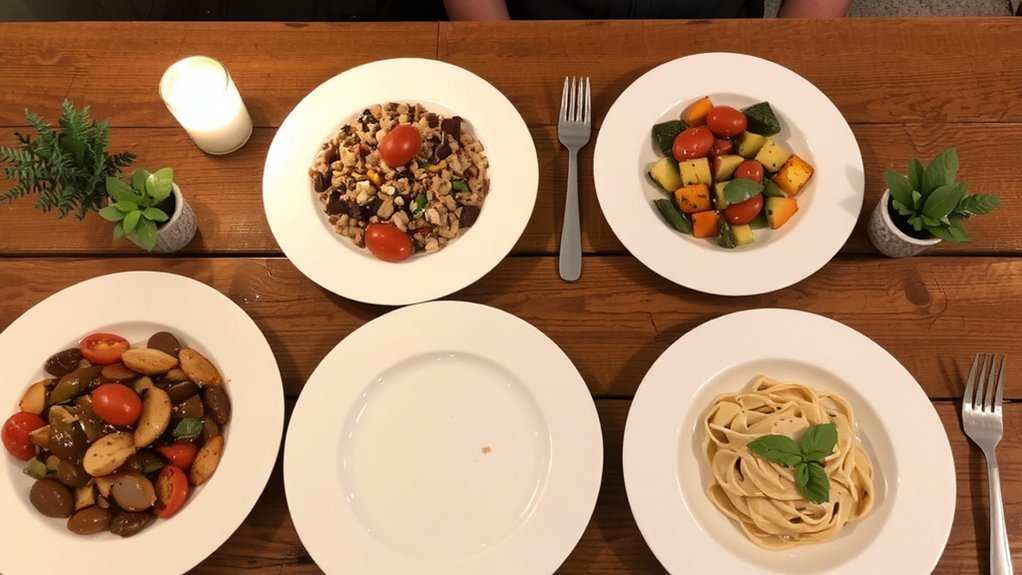
Here’s a clear weekly snapshot of your dairy-free meal plan: each day pairs a protein-forward dinner with simple make-ahead breakfasts, portable lunches, and two snacks, plus one themed night (like Taco Tuesday) to keep things interesting.
You’ll get a balanced rotation—grilled fish, roasted chicken, plant-based bowls, and quick stir-fries—so dinners stay fast and satisfying. Breakfasts are overnight oats or egg muffins you prep once; lunches reuse roasted proteins with salads or grain bowls for variety. Snacks mix fresh fruit, nuts, and hummus with veggies.
Use theme nights to simplify shopping and prep, and set calendar integration reminders so you start thawing, marinating, or pre-baking ahead. This structure minimizes decision fatigue and keeps meals predictable and flexible. You’ll stay on track all week with ease.
Pantry Staples, Dairy-Free Substitutes, and Flavor Builders
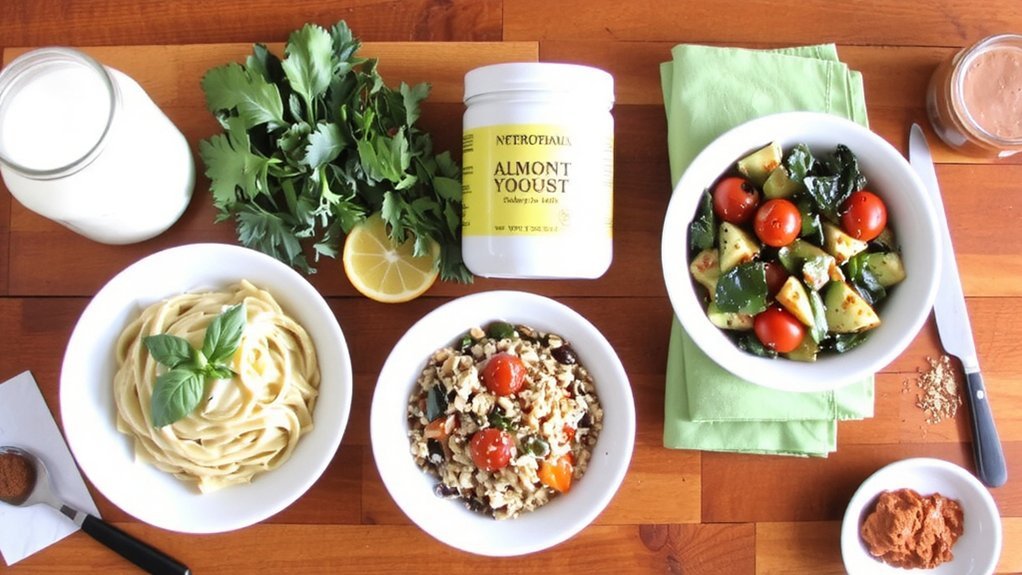
To make that weekly plan work with minimal fuss, stock a core set of pantry staples, dairy-free swaps, and concentrated flavor builders.
You’ll want canned tomatoes, broth, grains, legumes, olive oil, vinegars, miso, tamari, and toasted nuts for texture.
Keep coconut, oat, or almond milk and dairy-free yogurt and cheeses labeled for ingredients; practice careful Label reading to avoid hidden lactose and whey.
Have shelf-stable tahini, nutritional yeast, mustard, chili paste, and preserved lemons to punch up simple dishes.
Freeze homemade dairy-free sauces in portions.
Store allergens separately and clean tools and surfaces to prevent Cross contamination when you also handle dairy in other kitchens.
Rotate staples to keep meals tasting fresh.
Grocery Shopping List by Category
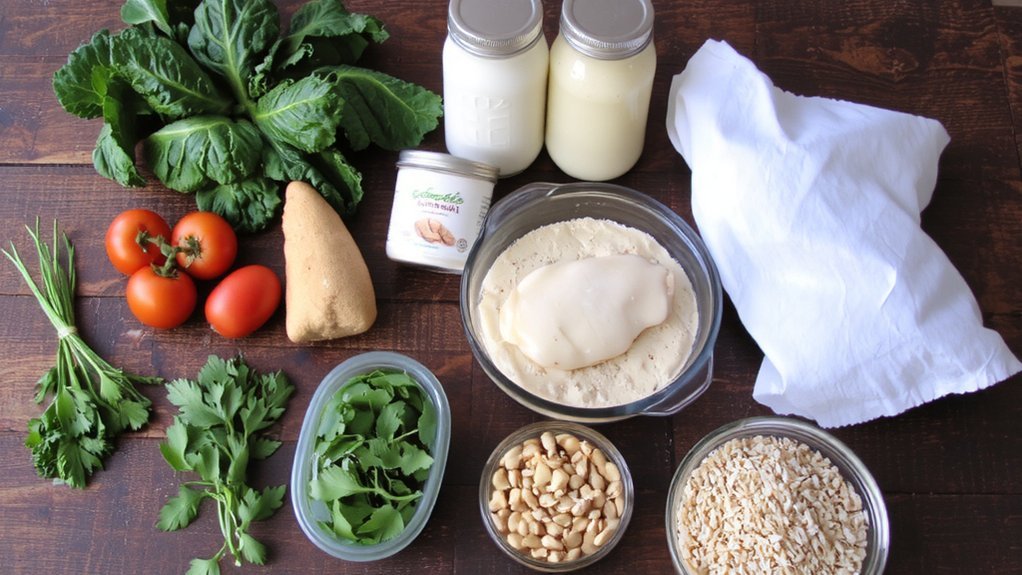
When you shop, focus first on fresh produce and herbs that’ll brighten dairy-free meals.
Then stock pantry staples and whole grains—beans, lentils, rice, quinoa, and shelf-stable broths—to build reliable meals.
Keep a running list so you replace essentials before they run out.
Produce and Herbs
Stocking your cart with fresh produce and fragrant herbs gives you the foundation for flavorful, dairy-free meals. Choose crisp greens, ripe tomatoes and colorful peppers to add texture and nutrients.
If you garden, Herb cultivation and Companion planting let you grow basil, cilantro and chives for peak flavor and savings.
Pick produce that’s seasonal and firm, and smell herbs to confirm freshness. Store leafy greens wrapped in paper towels and keep herbs in water like cut flowers to extend life.
Use citrus zest to brighten dishes and avocados for creamy texture without dairy. Rotate a small selection weekly so you use everything before it spoils.
- Leafy greens
- Tomatoes/peppers
- Fresh herbs
- Citrus/avocados
Buy what you’ll cook and aim for variety weekly.
Pantry Staples and Grains
A few key pantry staples and grains will keep your dairy-free meals quick, versatile, and nutritious.
Stock long-grain rice, quinoa, oats, buckwheat, and polenta for varied textures and nutrients.
Keep cans of beans, chickpeas, and diced tomatoes, plus stock cubes or jars of vegetable broth.
Choose pantry oils—olive, avocado, sesame—and shelf-stable nut butters and tahini for flavor and healthy fats.
Have gluten-free flours and breadcrumbs if you avoid gluten.
For condiments, get tamari, apple cider vinegar, and mustard.
When shopping, prioritize brands with transparent sourcing ethics and note global origins for flavor authenticity and sustainability.
Buy whole spices and dried herbs to boost freshness.
Rotate supplies, label dates, and you’ll simplify weekly cooking while keeping meals interesting and nutritious.
You’ll save time and money.
Monday: Lemon Herb Salmon With Roasted Vegetables
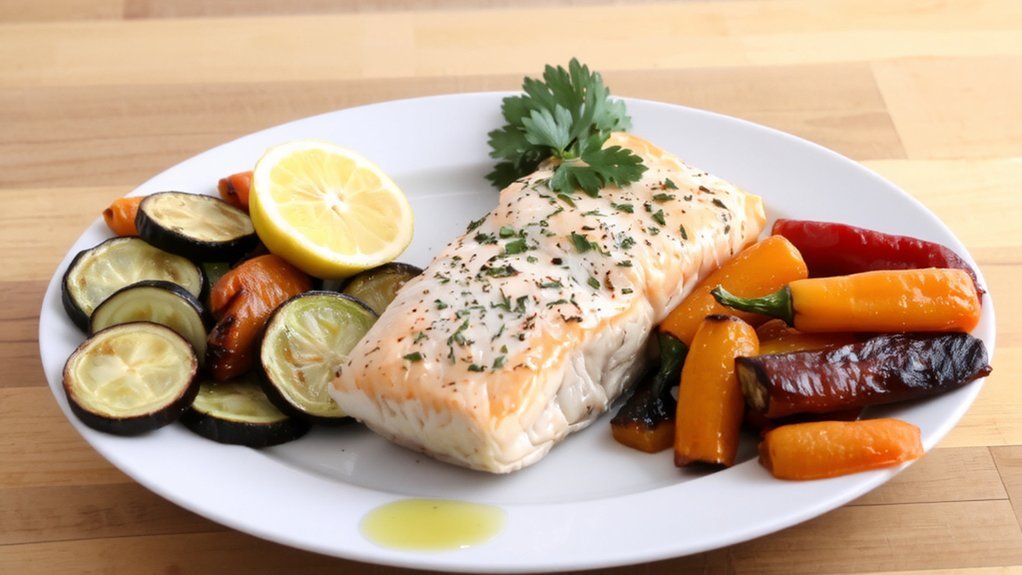
Because you want a quick, flavorful weeknight dinner, lemon-herb salmon with roasted vegetables fits the bill: it cooks on one sheet pan, the citrus and herbs brighten the fish, and the veggies caramelize for contrast.
You’ll prep salmon with olive oil, garlic, lemon zest, parsley, and pepper, then roast at high heat until flaky.
Focus on Citrus Pairings like lemon and orange for bright notes, and choose sustainably harvested fish—Sustainable Sourcing keeps meals eco-friendly.
Toss broccoli, carrots, and red onion with oil and salt; they’ll crisp while the salmon cooks.
Serve with a salad or quinoa.
Quick tips:
- Pat salmon dry for crispness.
- Use fresh herbs for best flavor.
- Roast vegetables on the outer pan.
- Let fish rest one minute.
Tuesday: Chickpea and Spinach Coconut Curry With Jasmine Rice
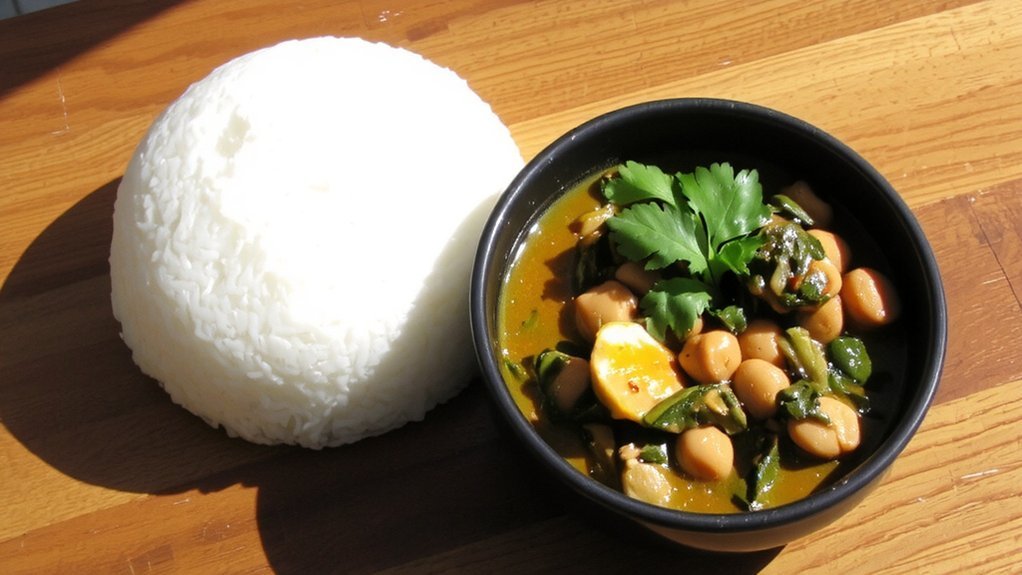
Whip up a comforting chickpea and spinach coconut curry that comes together in about 25–30 minutes and shines with jasmine rice. You’ll sauté onion, garlic, ginger and spices, add canned tomatoes, coconut milk and chickpeas, then simmer until flavors meld; stir in spinach at the end.
The dish honors South Asian cultural origins without complex prep, and you can adjust heat to taste. Serve over fluffy jasmine rice for texture contrast.
For drink pairing, try a crisp white like Sauvignon Blanc or a cooling mango lassi (use dairy-free yogurt) to balance spice. Leftovers reheat well and freeze nicely, making this an efficient, flavorful weeknight dinner.
You can garnish with cilantro, lime, and toasted coconut for brightness and a pleasant textural finish each night, reliably.
Wednesday: Turkey and Sweet Potato Skillet With Greens
Searing ground turkey with diced sweet potato and aromatics gives you a one-pan meal that’s ready in about 25–30 minutes and packs savory, slightly sweet, and earthy notes.
You’ll brown turkey, cook sweet potato until tender, then stir in garlic, onion, and greens for color and texture.
Use spinach, kale, or Swiss chard; you can tweak spices for Regional variations like cumin and smoked paprika or thyme and rosemary.
Nutrition breakdown helps you plan portions: this dish offers lean protein, complex carbs, fiber, and iron.
Serve with a simple salad or grain if you want.
Steps:
- Sear turkey and aromatics.
- Add sweet potato, cover and cook.
- Stir in greens and season.
- Finish, taste, and serve. Great for weeknight dinners, too.
Thursday: Creamy Avocado Pesto Pasta (Dairy-Free)
You’ll gather ripe avocados, basil, garlic, lemon, olive oil, pasta, and optional substitutions like spinach, arugula, or toasted nuts for a dairy-free pesto.
You’ll blend the sauce, toss it with hot pasta, and follow simple prep steps to keep the result creamy and vibrant.
Finish with serving ideas, portioning tips, and storage instructions so leftovers stay fresh for a few days.
Ingredients and Substitutions
For this dairy-free creamy avocado pesto pasta you’ll need ripe avocados, fresh basil, garlic, lemon juice, olive oil, and a starchy pasta (or gluten-free pasta).
Nutritional yeast provides the “cheesy” flavor; use pine nuts or walnuts in the blender for texture and add salt and pepper to taste.
When shopping, focus on Label Reading and Ingredient Sourcing so you avoid hidden dairy or additives.
Choose ripe avocados and fresh herbs for flavor.
Consider these substitutions for allergies and pantry stock:
- Swap basil with spinach or arugula for milder or peppery notes.
- Replace pine nuts with toasted walnuts or sunflower seeds if nut-free.
- Use gluten-free pasta or chickpea pasta to boost protein.
- Add a splash of reserved pasta water or plant milk to thin.
Preparation Steps
Prepping the ingredients first helps the recipe come together quickly: bring a large pot of salted water to a boil and cook your pasta until just al dente, reserving about a cup of the starchy pasta water before draining.
While pasta cooks, pit and scoop avocados, wash basil, and toast pine nuts.
Use a food processor to blitz avocado, basil, lemon juice, garlic, olive oil, and salt to a smooth pesto; thin with reserved pasta water if needed.
Follow a simple sanitation protocol: wash hands, sanitize surfaces, and keep produce separate from raw proteins.
Check your equipment checklist before starting — pot, colander, processor, spatula, measuring spoons — so you move efficiently and avoid interruptions.
Taste and adjust seasoning just before tossing with pasta.
Serving and Storage
After tasting and adjusting seasoning, plate the pasta immediately so the avocado pesto stays bright and creamy: toss hot pasta with a little reserved starchy water until the sauce coats each strand, then finish with torn basil, toasted pine nuts, a squeeze of lemon, a drizzle of olive oil, and a pinch of flaky salt.
- Portion Sizes – 1 to 1.5 cups cooked per person.
- Table Styling – neutral plates, torn basil, scattered pine nuts.
- Storage – airtight container up to 24 hours; add oil before reheating.
- Reheat – gently warm with a splash of water and lemon.
You serve family-style for relaxed meals.
If transporting to potlucks, keep chilled, top with nuts and basil before serving to maintain texture.
Friday: Beef and Broccoli Stir-Fry With Brown Rice
Bring together tender slices of beef, crisp-tender broccoli, and nutty brown rice in a quick, savory stir-fry you can make on a busy Friday night—naturally dairy-free and ready in about 30 minutes.
You’ll marinate beef briefly, sear it hot, then stir-fry broccoli until bright and crisp; toss everything with a sauce of soy, garlic, ginger, and a splash of toasted sesame oil. Serve over brown rice for fiber and a nutty counterpoint.
This dish nods to Asian cultural origins while fitting modern restaurant trends for fast, shareable plates. You can swap tamari for gluten-free needs, add scallions or chili for heat, and scale portions easily. Leftovers reheat well for a simple next-day meal. Prep chopping and rice ahead to save time on dinner tonight.
Saturday: Grilled Portobello Burgers With Sweet Potato Fries
Grilling meaty portobello caps and baking crisp sweet potato fries gives you a satisfying, dairy-free weekend meal that’s ready in about 35–40 minutes.
You’ll marinate mushrooms in balsamic, garlic, and olive oil, then grill until tender; assemble with dairy-free mayo, lettuce, and tomato on toasted buns.
The fries get a quick toss with paprika and rosemary before baking, so they’re golden and slightly sweet.
For Outdoor Entertaining, serve family-style with simple condiments and a green salad.
For Kids’ Versions, halve mushrooms or swap for small chicken patties and cut fries thinner for snacking.
Quick tips:
- Use firm portobellos
- Don’t over-marinate
- Space fries apart
- Toast buns briefly
Enjoy a relaxed, flavorful Saturday dinner.
Pair it with iced tea or sparkling water.
Meal Prep Strategies, Storage Tips, and Reheating Advice
The portobello burgers and sweet potato fries show how weekend favorites can be prepped ahead to save time: marinate the mushrooms, par-bake the fries, and portion condiments so you just finish and assemble at dinner.
Plan a single prep session: chop veggies, cook grains, and portion proteins into labeled containers for four days.
Use clear, stackable tubs and a checklist to keep container organization efficient.
Cool foods before sealing, date everything, and place newer items behind older ones to enforce shelf rotation.
For reheating, use an oven or air fryer for fries to restore crispness; reheat burgers gently on a skillet to avoid drying.
Microwave soups or stews covered, stirring halfway.
Discard leftovers after four days for safety.
Label allergens clearly and follow dates.
Conclusion
You’ve got a week of simple, flavorful dairy‑free dinners that save time and satisfy. Use the make‑ahead tips, roast and cook grains in batches, and keep herbs, citrus, and pantry staples on hand to boost flavor. You’ll enjoy easy reheating and safe storage so leftovers stay bright. Swap ingredients to suit tastes, and don’t be afraid to double recipes for busy nights. Eat well, stress less, and savor every lactose‑free bite this week and beyond.