
You’ll get a practical weekly menu that’s sized for two and built to cut prep time, shrink waste, and keep dinners varied. It pairs batch-cooked bases with five quick weeknight finishes, one remix night, and clear freezing/portion tips. You’ll see swaps for seasons and dietary needs — and how to shop and prep like a pro…
Key Takeaways
- Build a simple weekly structure: theme nights, one leftover-remix night, and predictable breakfasts, lunches, dinners for repeatable ease.
- Batch-cook two weekend mains plus grains and roasted vegetables to enable 20–40 minute weeknight finishes.
- Plan breakfasts, mason-jar salads, and snack boxes sized for two, adjusting quantities over two weeks to minimize waste.
- Label, date, and freeze portions flat; rotate seasonal produce and pantry swaps to stretch ingredients and save money.
- Set a shopping rhythm: one grocery trip per week, aisle-organized list, and 60–90 minute prep session for mise en place.
How the Weekly Menu Works
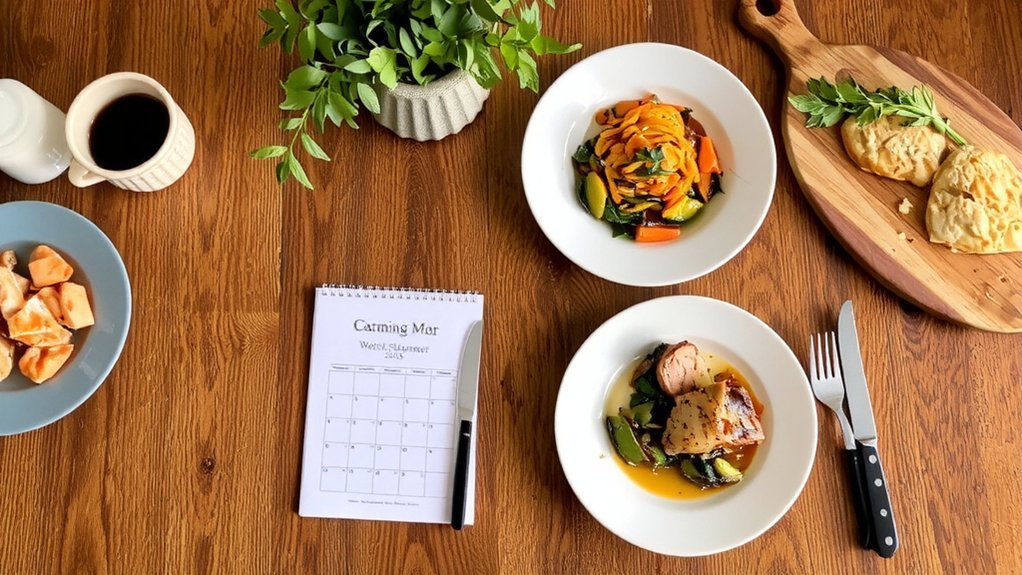
When you follow the weekly menu, you’ll get a clear plan for breakfasts, lunches, dinners, and snacks that balances variety with simplicity.
You’ll rely on a steady planning rhythm that sets when you shop, prep, and cook, so decisions become automatic and stress drops.
The menu uses rotation principles to repeat favorites while swapping in seasonal produce and different proteins, keeping waste low and shopping efficient.
Portions are scaled for two, with notes for doubling or freezing, and flexible swaps let you accommodate preferences or time constraints.
You’ll be able to glance at the plan, prep components in batch sessions, and finish meals quickly during busy days without sacrificing taste or nutrition.
You can track favorites to refine future weeks and save time easily.
Weeknight Dinner Plans (5 Nights)
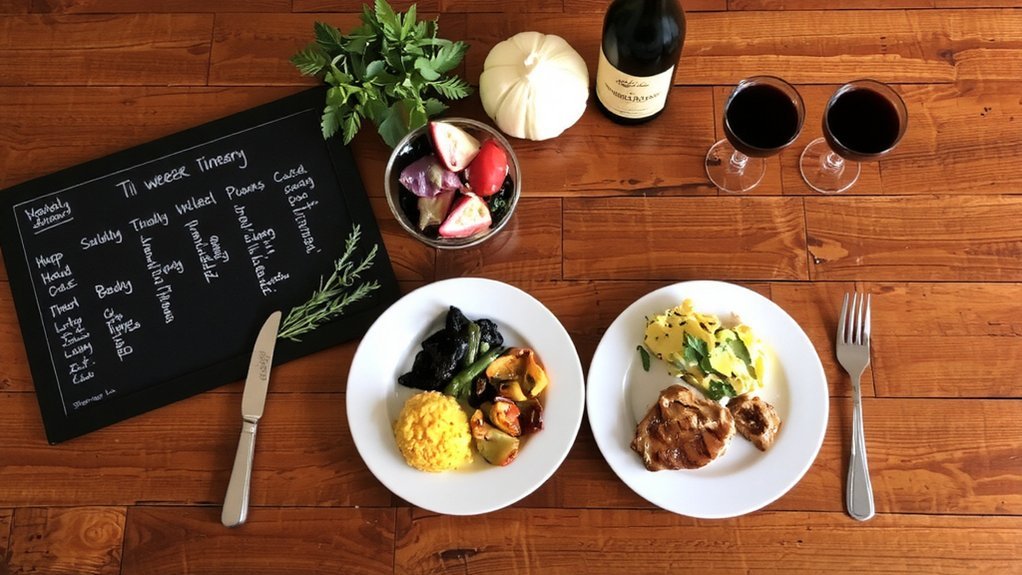
Now that you’ve established a shopping and prep rhythm, plan five weeknight dinners that lean on batch-made components, simple swaps, and predictable cook times so you can finish meals in 20–40 minutes most nights.
Pick Theme Nights—Taco Tuesday, Pasta Wednesday—so decisions take seconds. Use batch grains, roasted vegetables, and a protein that reheats well; mix and match those elements across nights.
Rely on reliable Spice Pairings (cumin+cilantro, oregano+garlic, turmeric+ginger) to shift cuisine without extra effort. Keep one ultra-simple night (sheet-pan or stir-fry) and one “leftover remix” night where you transform earlier components into bowls or sandwiches.
Prep sauces and dressings twice weekly. With consistent structure, you’ll reduce nightly friction and keep dinners varied, fast, and satisfying. Rotate proteins seasonally to prevent boredom and waste.
Weekend and Make‑Ahead Meals
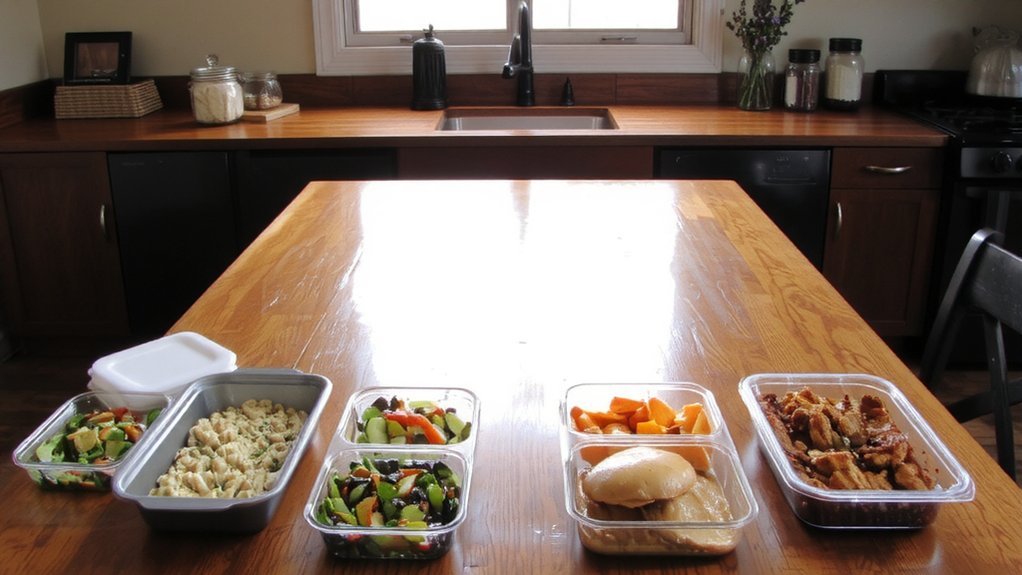
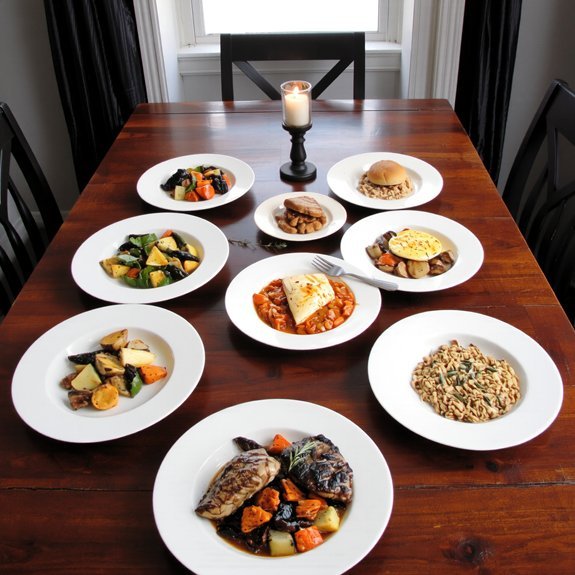
Batch-roasting vegetables and slow-simmering a protein over the weekend gives you grab-and-go meals and components you can reheat or remix all week.
Plan two main batches—one plant-forward roast and one braise or stew—so you mix textures and sauces without extra cooking.
Use airtight containers to portion dinners, ready for effortless weeknight plating or Casual Entertaining when friends drop by; warm, assemble, and serve.
Freeze individual portions labeled with dates to extend freshness and simplify Meal Gifting; a jarred sauce plus a roasted tray makes a thoughtful present.
Reheat gently, refresh with bright herbs or acid, and combine elements differently midweek to avoid boredom.
You’ll thank yourself later for calm, predictable weeknights now.
Breakfasts, Lunches & Snacks for Two
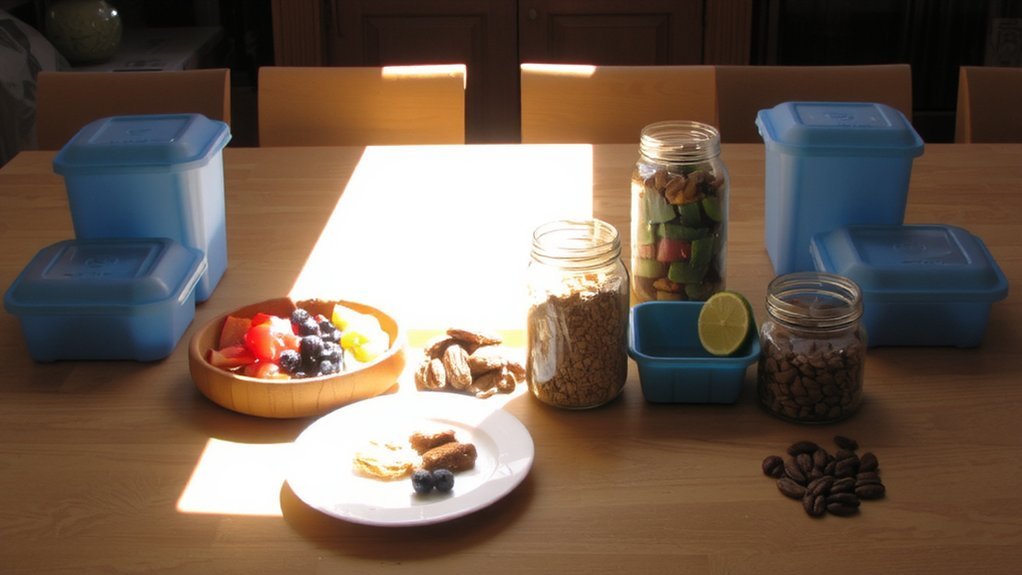
Planning breakfasts, lunches, and snacks for two means prepping just enough variety to keep mornings easy and midday meals satisfying without wasting food. You’ll design repeatable shared rituals—quick oatmeal jars, egg sandwiches, and weekday salads—so both of you grab what you need. Pack portions that reheat or eat cold, label containers, and pre-mix snack boxes. Think simple beverage pairings: coffee and citrus water in the morning, herbal tea or sparkling water at lunch. The table below shows example options to rotate through the week.
| Meal | Example | To-go tip |
|---|---|---|
| Breakfast | Overnight oats | Add nuts separately |
| Lunch | Mason jar salad | Keep dressing separate |
| Snack | Hummus & veggies | Portion in containers |
You’ll tweak quantities over two weeks until portions reliably match both your appetite and schedule.
Seasonal Produce & Pantry Swaps (2025–2026)
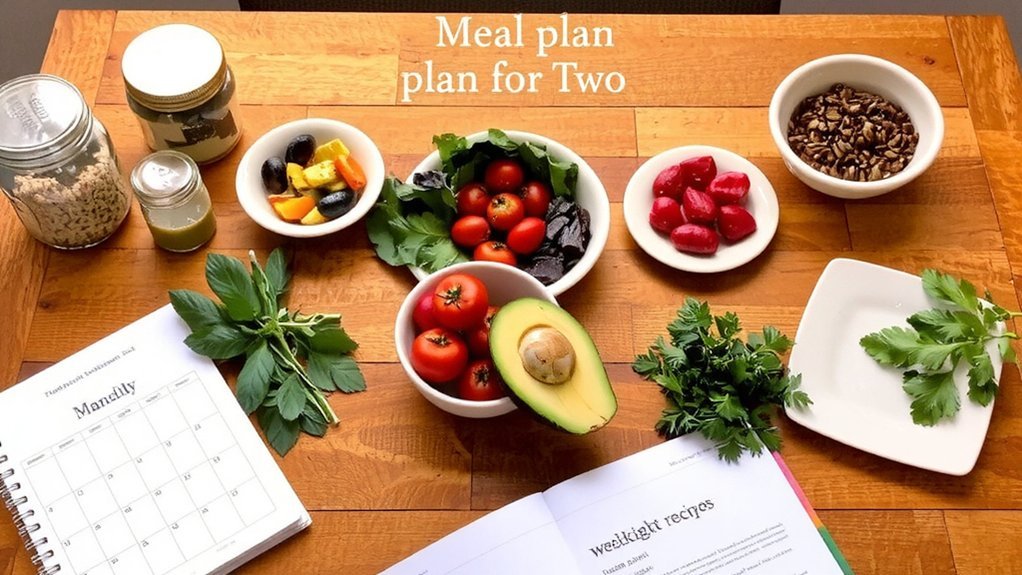
You’ll follow a seasonal produce timeline to know what’s at peak each month.
Swap pantry staples—grains, canned goods, and sauces—to match the fresh picks and simplify meal prep.
Use quick preserving tricks like freezing, pickling, and proper storage to lock in peak freshness for two.
Seasonal Produce Timeline
For 2025–2026, this seasonal produce timeline maps out when fruits, vegetables, and common pantry staples peak so you can buy, swap, and preserve at the best times; use it to plan meals, minimize waste, and make targeted pantry swaps when something’s out of season.
You’ll track pollination periods and crop succession to understand short windows for berries and extended harvests for leafy greens.
Expect strawberries and asparagus in spring, tomatoes and stone fruit in summer, apples and late-summer squash in early fall, and hardy roots and brassicas through winter.
Note regional shifts and market timing; prioritize fresh buys at peak, then preserve by freezing, canning, drying, or fermenting to extend availability and keep your couple-sized menu varied and efficient and reduce grocery costs annually.
Pantry Swap Strategies
When seasonal fruit or veg dips out of peak, swap in pantry-preserved equivalents—jarred tomatoes, frozen berries, or canned beans—to keep meals vibrant and reduce trips to specialty markets.
You’ll plan swaps by matching texture and acidity; use jarred tomatoes for stews, frozen berries for smoothies, and canned beans for salads.
Do an Allergen Mapping of pantry items so substitutions avoid cross-contact and unexpected allergens. Run a quick Cost Comparison between fresh and pantry options; canned goods often stretch farther for sandwiches and soups.
Label shelf-life and note sodium or sugar in pantry swaps, then adjust seasoning. You’ll save time and money while keeping couple-sized portions balanced, flexible, and ready with minimal shopping. Revisit your swap list monthly to refine preferences and reduce waste regularly.
Preserving Peak Freshness
After mapping pantry swaps, shift your focus to preserving peak freshness of seasonal produce with simple, science-backed steps and updated pantry options for 2025–2026.
You’ll sort perishables by ripeness, using ethylene control: separate producers (apples, bananas, tomatoes) from sensitive items (leafy greens, cucumbers).
Wash only what you’ll eat within days; dry thoroughly and store in breathable containers or paper-lined bins to prevent mold.
Calibrate fridge maintenance: keep temperatures at 34–40°F, clean seals monthly, and replace charcoal filters seasonally to reduce odors.
Freeze extras in portioned bags or vacuum-seal for best texture.
Label dates and rotate stock weekly.
These habits cut waste, extend flavor, and make couple-sized meal prep predictable and efficient throughout each season.
You’ll save money, eat fresher, and enjoy seasonal variety year-round.
Dietary Options: Vegetarian, Low‑Carb, Dairy‑Free
While balancing tastes and nutrition, you can combine vegetarian, low‑carb, and dairy‑free choices so both of you get satisfying, easy-to-prepare meals. Focus on label literacy and simple dining substitutions to swap cheeses for nut creams, grains for cauliflower, and legumes for meat where it fits your plan. Rotate bold flavors—roasted peppers, lemon, smoked spices—so meals feel generous, not restrictive. Build plates around protein, vegetables, and healthy fats; use herbs and acid to lift dishes. Below is a quick mood table to guide choices and keep meals appealing.
| Mood | Example |
|---|---|
| Cozy | Mushroom ragù over zucchini ribbons |
| Bright | Citrus chickpea salad |
| Comfort | Spiced eggplant stew |
You’ll find small swaps keep variety high and effort low, so you’ll enjoy meals that fit goals and taste daily seasonally.
Portioning, Doubling & Freezing Tips
Scaling recipes and freezing portions saves time and reduces waste, so plan servings and storage before you cook. You’ll decide which dishes freeze well—stews, casseroles and sauces usually do—then halve or double recipes to match your freezer space and meal rhythm.
Use portion psychology: pack individual meals in consistent containers so you eat appropriate amounts and avoid overeating. Label containers with contents, date and reheating notes.
When doubling, stagger flavors so you don’t tire of repeats; when halving, adjust seasoning gradually. Freeze flat in zip bags for faster thawing and stackability.
Track inventory on a simple list to prevent spoilage and support budget optimization by buying in bulk and minimizing impulse purchases. You’ll enjoy consistent, stress-free dinners weekly and easily.
Quick Cooking Techniques & Time‑Saving Shortcuts
Prepping smartly saves you time and keeps dinner from turning into a scramble: set out ingredients, measure spices, and wash and chop produce before you heat a pan.
You’ll speed dinner by improving knife skills, batching tasks, and choosing cookware that finishes fast.
Use a sharp knife to slice evenly, and chop in bulk for salads and sauces.
Embrace pressure cooking for stews, beans, and grains — it shaves hours.
Keep mise en place, clean as you go, and prioritize recipes with shared components so you reuse roasted vegetables or grains across meals.
- Relief when the kitchen’s calm
- Pride in crisp, uniform cuts
- Joy from fast, flavorful dinners
- Confidence using a pressure cooker
- Freedom to relax after plating tonight
Grocery Lists by Meal and Shopping Tips
How do you turn a weekly menu into a grocery list that saves time and money? You break meals into ingredients, prioritize perishables, and group items by aisle. Use store mapping and coupon organization: map your route, clip digital deals, and stack discounts. Build one list per shopping trip, noting quantities for two and optional leftovers. At checkout, review items and receipts for mistakes.
| Section | Example | Tip |
|---|---|---|
| Proteins | Chicken breasts | Buy in bulk, freeze portions |
| Produce | Spinach, tomatoes | Choose firm, use within 3 days |
| Pantry | Rice, canned tomatoes | Replenish staples on low |
This system cuts trips and waste. Time your shopping after meals, use list apps to sync with your partner, and compare unit prices to avoid overspending. Rotate specials into next week’s menu.
Conclusion
You’ll find this couple-sized weekly menu keeps cooking simple, saves time, and cuts waste while letting you enjoy varied, seasonal meals. With batch bases, labeled portions, and one remix night, you’ll finish five weeknight dinners in under 40 minutes and have breakfasts and lunches ready to grab. Swap ingredients for preferences, double or freeze confidently, and use the grocery lists and shortcuts to keep routines smooth. Adjust as you go, and enjoy stress-free weeknight meals.