
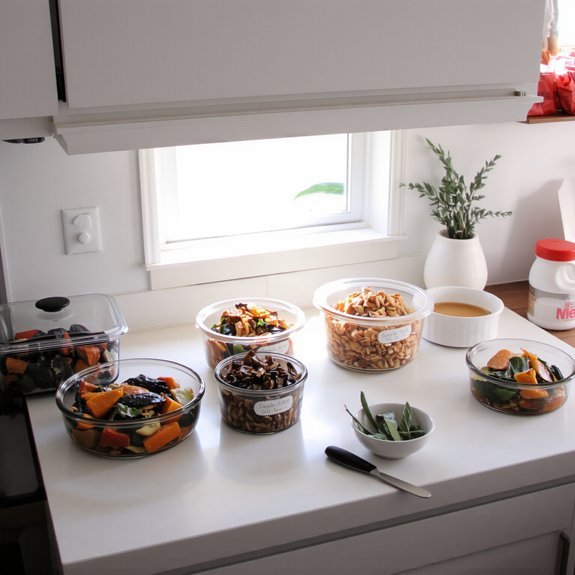

You’re juggling healing, feeding, and a tiny sleep schedule, so meals need to be effortless and nourishing. This plan shows how to batch-cook and freeze single-serve stews, grain bowls, and lactation-friendly dishes that save time and support recovery. Keep reading for a one-day batch schedule, recipes, and safe storage tips…
Key Takeaways
- Prepare high-protein, calorie-dense freezer meals to support healing, lactation, and consistent energy during unpredictable newborn schedules.
- Include iron-rich foods paired with vitamin C, calcium/DHA sources, and simple swaps for vegetarian or allergen‑safe options.
- Batch-cook using a schedule: 1–2 hours prep, 3–4 hours cooking, then cool, portion, label, and freeze flat for space efficiency.
- Stock freezer-friendly recipes like chicken-barley stew, lentil curry, salmon bake, meatballs with oats, and lactation oat bars for grab-and-go ease.
- Follow freezer safety: 0°F (-18°C), clear labeling with date/allergens, thaw in fridge or cold water, and reheat to 165°F (74°C).
Why Freezer Meals Help New Moms Thrive
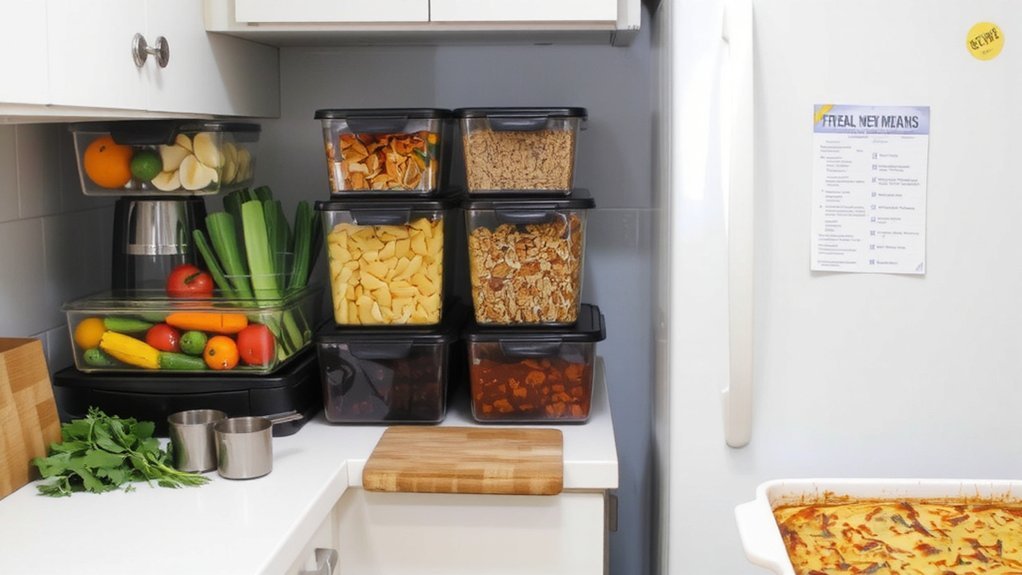
Because you’ll have less time and more demands, having ready-made freezer meals takes a huge burden off your plate. You’ll skip nightly planning, reduce Decision fatigue, and free up energy for the baby and healing.
Batch-cooking lets you portion meals, label dates, and rotate favorites so you don’t wonder what’s safe or quick. That predictability steadies routines, supports Emotional wellbeing, and lowers stress when sleep’s fragmented.
You’ll also save money and minimize takeout temptation, which keeps routines steady.
With simple reheat instructions and balanced combos ready, visitors can help without guessing. Freezer meals make feeding practical, dependable, and kinder to your time and mind during postpartum.
Create a short note on each package so anyone reheating knows portions, allergies, and reheating times and preferences.
Nutrient Priorities for Postpartum Recovery and Lactation
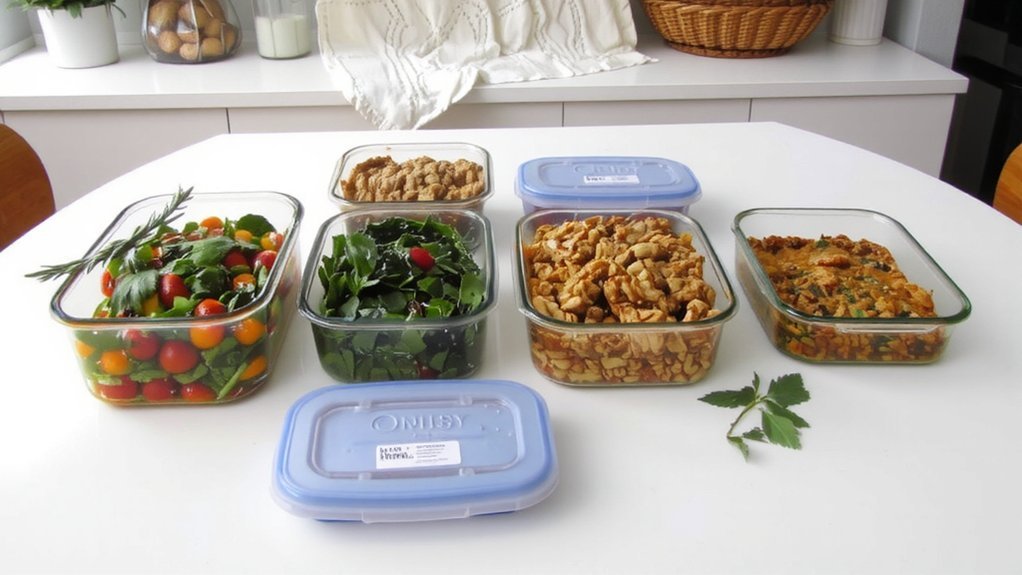
As you recover and (if you’re breastfeeding) supply milk, focus on nutrients that rebuild tissue, support energy, and keep milk nutrient-dense: prioritize adequate protein and calories, iron and vitamin C for healing and blood recovery, calcium and vitamin D for bone health, iodine and DHA (omega‑3) for baby’s brain development, and B12 if you’re low or plant‑based.
Eat lean meats, legumes, dairy or fortified plant milks, and fatty fish or algae sources for omega three.
Pair iron-rich foods with vitamin C to boost iron absorption.
Keep snacks with protein and healthy fats to steady energy and milk supply.
Stay hydrated and consider a postnatal multivitamin if your diet’s limited—check with your provider.
Adjust portions to your hunger and recovery goals over time, as needed.
Batch-Cooking Schedule: One-Day Plan to Stock the Freezer
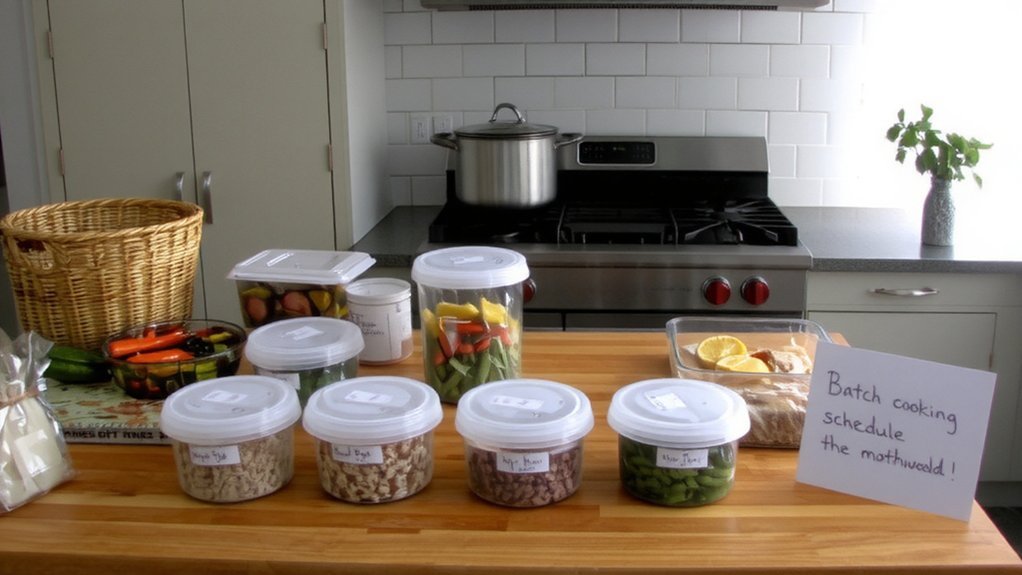
When you carve out one focused day, you’ll set up a streamlined batch-cooking routine that stocks your freezer with nutrient-dense meals for postpartum recovery and breastfeeding.
Begin by making an equipment checklist—slow cooker, sheet pans, mixing bowls, freezer-safe containers, labels, and sharp knives.
Break the day into time blocks: prep (1–2 hours), cook (3–4 hours), cool/portion (1–2 hours), and clean (30–45 minutes).
Prep ingredients first: chop, marinate, and par-cook grains. Stagger oven and stovetop tasks so nothing sits idle.
Cool foods quickly on racks, then portion into labeled containers while still baying warmth for accurate portion sizes. Freeze flat for space efficiency and rotate older meals forward.
You’ll save hours later and guarantee nourishing meals are ready when you need them and feel calmer.
12 Easy Freezer-Friendly Recipes (Including Lactation Boosters)
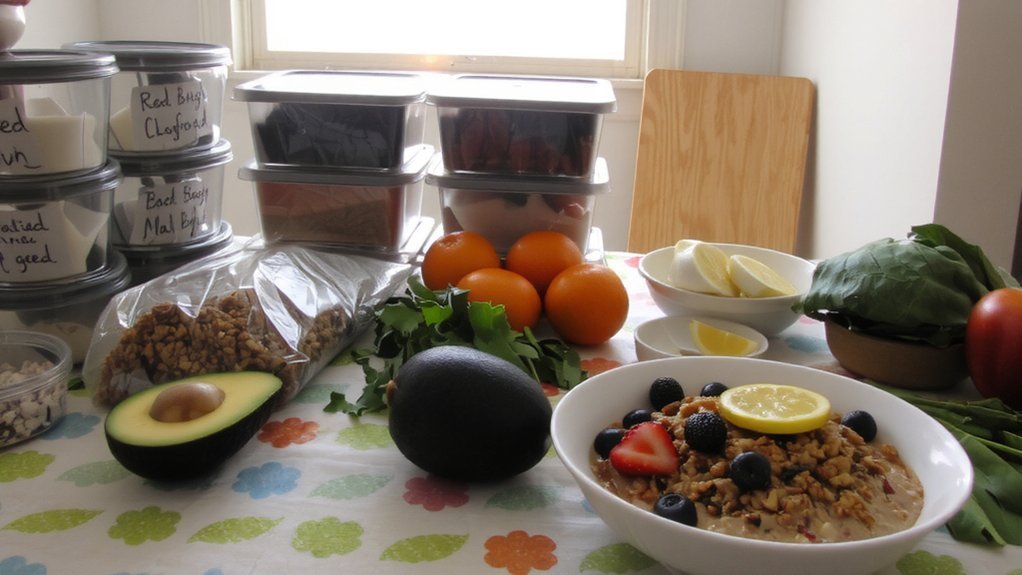
Now that you’ve stocked the freezer, choose meals that hold texture and nutrients after thawing and include ingredients known to support milk supply—oats, flax, brewer’s yeast, lean protein, and iron-rich greens.
Pack single-serving stews with shredded chicken, barley and spinach; freeze flat for quick reheating.
Make meatballs with oats and chopped kale, freeze on trays then bag in meal-sized groups.
Prep hearty casseroles in Snack sized portions for solo reheats.
Bake Lactation cookies with oats, flax and brewer’s yeast, freeze between parchment so you can grab one or two.
Label with reheating instructions and use clear containers to avoid waste.
Rotate older items forward and keep a small list on the freezer door so you always know what’s ready. Restock staples weekly for ease.
Plant-Based and Allergen-Aware Freezer Options
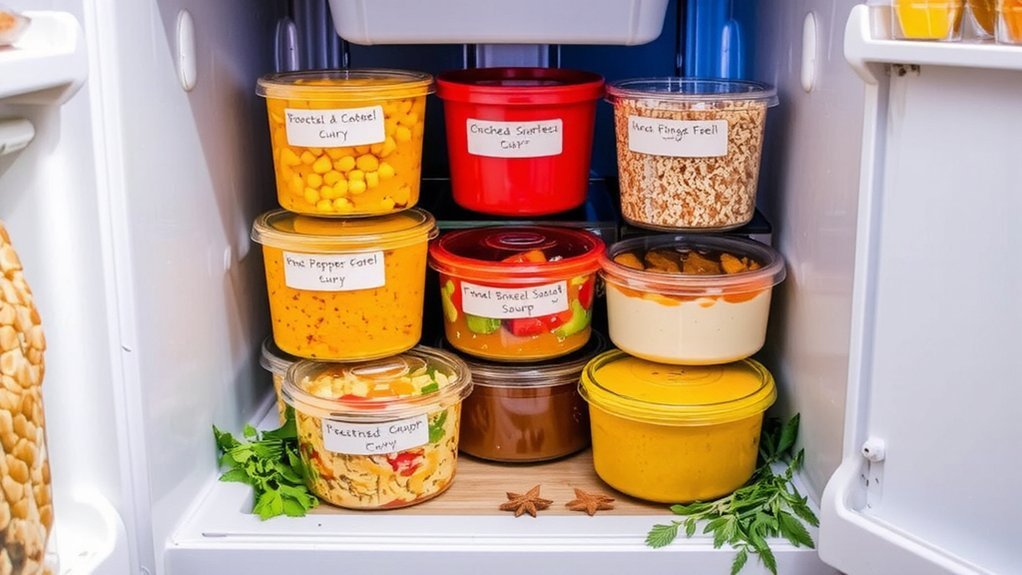
Choosing plant-based, allergen-aware freezer meals helps you keep nutritious, grab-and-go options without common triggers. You’ll stock diverse, shelf-stable dishes that honor dietary limits and bring ethnic inspirations into easy reheats. Rotate portions so you always have allergy friendly snacks and savory mains ready. Label ingredients and use airtight containers to protect texture and flavor. Freeze in single servings for quick thawing and clear reheating instructions for caregivers. Prioritize whole foods, simple herbs, and bright sauces you can reheat quickly. Example ideas below show variety, safety, and comfort.
| Meal | Notes |
|---|---|
| Lentil curry | Freezes well; ethnic inspirations |
| Chickpea shawarma bowls | Allergy friendly snacks option |
| Sweet potato & black bean tamales | Vegan, nut-free |
| Miso-glazed tofu | Soy-aware alternatives |
| Berry oat bars | Dairy-free snack |
You’ll feel calmer and nourished.
Simple Swaps to Increase Calories, Protein, or Fiber
If you want to boost calories, protein, or fiber without overhauling recipes, make targeted swaps: choose full-fat dairy or coconut milk for higher calories, add Greek yogurt or silken tofu to smoothies for protein, and fold beans, lentils, or extra oats into soups and casseroles for fiber and protein.
Use simple ingredient swaps like nut butters, avocado, or olive oil to raise calories in dressings and purees.
For protein, swap some pasta or rice for quinoa, add chopped chicken, tempeh, or canned salmon to stews, or stir whey or pea-protein powder into batters.
Prioritize Fiber additions such as chia, ground flax, chopped veggies, or extra whole grains to keep meals filling and support postpartum recovery.
You’ll enjoy denser, nourishing portions during busy postpartum weeks.
Freezer Storage, Labeling, and Food-Safety Best Practices (2025–2026)
To keep postpartum meals safe and nutritious, set your freezer at 0°F (-18°C) or colder and check it regularly.
Label each package with the contents and date so you use oldest items first and avoid guesswork.
Thaw in the fridge or under cold running water, and always reheat to 165°F (74°C) so you kill bacteria before serving.
Safe Freezer Temperatures
While you’re juggling feedings and sleep, keeping your freezer at 0°F (-18°C) or lower will protect nutrients and prevent bacterial growth, so check the temperature with a reliable freezer thermometer and log readings regularly.
You should perform periodic temperature calibration to verify accuracy, and position the thermometer away from the door—correct sensor placement gives a true reading of stored food.
Keep an emergency plan: if power’s out, keep the door closed, and discard anything that’s thawed for more than 48 hours or smells off.
Avoid refreezing partially thawed meals unless they stayed colder than 40°F (4°C).
Defrost and clean coils yearly, and don’t overload the freezer so air can circulate; that keeps temperatures steady and food safer.
Check seals and gaskets regularly for leaks.
Proper Food Labeling
Labeling your frozen postpartum meals clearly prevents confusion, reduces waste, and protects baby and caregiver health.
You should include item name, date prepared, and use-by date on every package, and note any allergens and whether contents are breastmilk-safe or dairy-free.
Use a waterproof marker or printed labels that resist freezer burn; consider standard abbreviations for consistency.
Follow regulatory compliance by keeping records for commercial or shared-batch meals and by meeting local food-safety labeling laws.
Apply simple Design principles: high-contrast text, legible font size, and placement on a flat surface for scanners.
Color-code labels by category (proteins, sides, breastfeeding-friendly) to speed identification.
Rotate stock using first-in, first-out and discard any package beyond recommended storage times.
You’ll also keep a simple log for quick inventory checks.
Thawing and Reheating
Because thawing at room temperature ramps bacterial growth, you should always plan safe thawing and reheating methods before you pull a meal from the freezer.
Thaw in refrigerator overnight for meals; smaller portions can defrost in a cold-water bath sealed in a leakproof bag, changing water every 30 minutes.
Reheat until internal temperature reaches 165°F (74°C) to kill pathogens.
Use low, steady heat for casseroles and soups to aid texture preservation and support flavor retention.
For stove or oven reheating, stir and cover to keep moisture; for microwaves, pause to stir and rotate.
Label reheated portions with date and discard after two hours at room temp or after one reheating cycle; it’s safer.
When in doubt, throw it out to protect your baby’s health.
Quick Reheating Methods and Serving Tips for Tired Caregivers
When you’re sleep-deprived and juggling a newborn, simple reheating tricks and easy plating will save time and reduce stress: Keep meals covered in microwave-safe dishes, use gentle defrost then high-power bursts, and finish with easy garnishes for appetite appeal. For stovetop items, warm low and stir frequently to prevent drying. Use a thermometer to verify safe temperatures. For serving, think tray assembly—plate protein, starch, veggies in sections so you can hand it off quickly. Use disposable liners or washable tray to simplify cleanup. Below is a quick visual guide.
| Method | Quick Tip |
|---|---|
| Microwave | Cover, 1–2 min, stir |
| Oven | 350°F, 10–15 min covered |
| Stovetop | Low heat, stir often |
You’ll also keep utensils handy and pre-chilled drinks nearby for faster comfort and hydration. Stay kind, mama.
Conclusion
You’ve built a simple, realistic freezer plan that keeps nourishing meals within reach when you’re exhausted. These protein-, iron-, calcium- and hydration-focused recipes cut decision fatigue, save money, and support healing and breastfeeding. Batch-cook one day, label portions, and use caregiver-friendly trays so reheating is fast. Mix lactation boosters like oats and flax into favorites, and follow the food-safety tips. With this plan, you’ll feel steadier, fed, and more able to focus on your baby.
