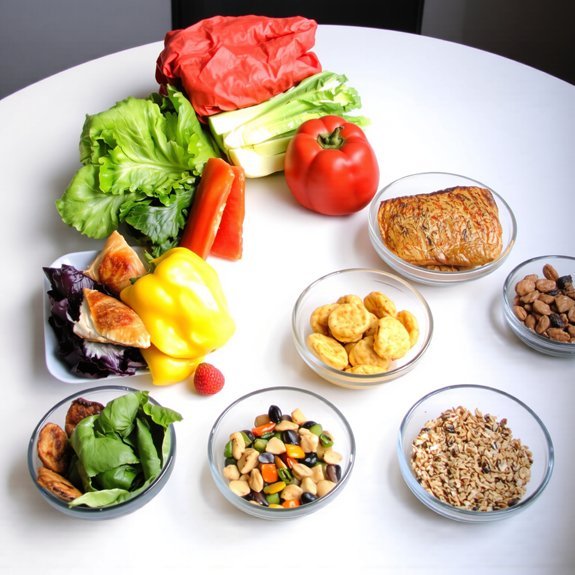

You’ll get a practical four-week meal plan to help you lose up to 10 pounds by pairing a modest calorie deficit with high-protein meals, fiber-rich vegetables, whole grains, and healthy fats. It lays out meals, snacks, portion cues, and easy prep steps so you save time and stay satisfied — next you’ll find the weekly schedule, grocery lists, and simple tweaks to make it yours.
Key Takeaways
- Aim for a 500–1,000 kcal/day deficit (1–2 lb/week); losing 10 pounds in four weeks may require a larger, possibly unsafe deficit—consult a professional.
- Prioritize 30–35% of calories from protein and include fiber-rich vegetables at every meal to preserve muscle and control hunger.
- Use portion cues: palm-sized protein, cupped-hand carbs, fist-sized vegetables, thumb-sized fats, and eat three meals plus 1–2 snacks daily.
- Combine three weekly strength sessions with brisk daily walks and ~150 minutes weekly cardio to maximize fat loss and retain lean mass.
- Track weight weekly, photos and measurements; if progress stalls two weeks, reduce calories 100–200 kcal or increase activity while monitoring recovery.
Why This Plan Works
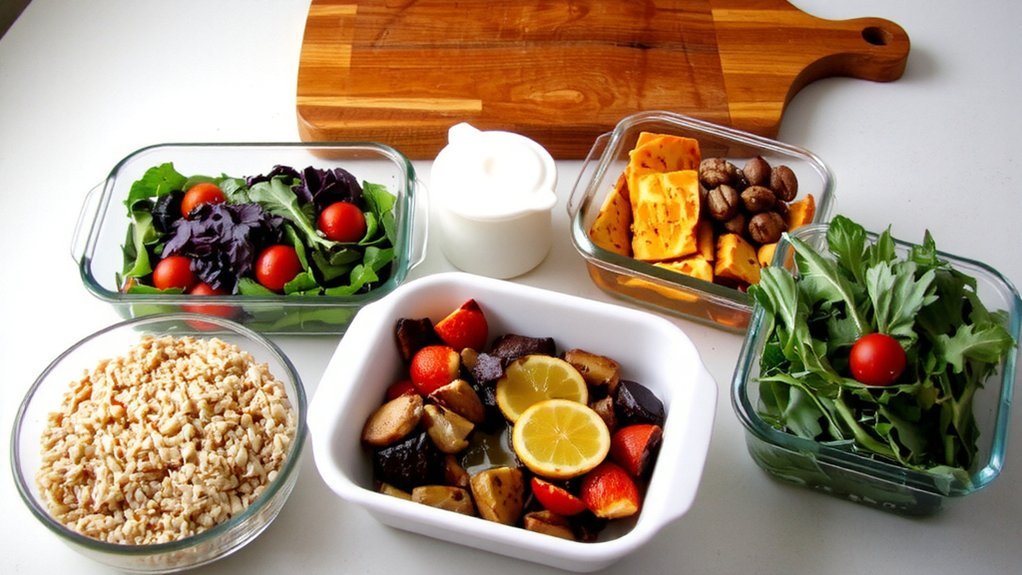
Because it balances calories, protein, fiber, and meal timing, this plan helps you lose fat while preserving muscle and keeping hunger manageable.
You get a structured approach that supports metabolic efficiency and Hormonal balance, so energy and appetite signals stay steadier. Meals prioritize protein and fiber to protect muscle and slow digestion, while modest calorie deficits create consistent fat loss.
You’ll build Habit formation through simple, repeatable meal patterns and practical swaps, making changes stick without willpower fights. Portions and timing reduce extreme cravings and preserve performance, so you can sustain progress.
The plan’s clarity removes guesswork, helps you measure results, and keeps adjustments practical, letting you focus on adherence rather than perfection. You’ll see steady improvements when you follow it consistently each week.
How to Use This Plan
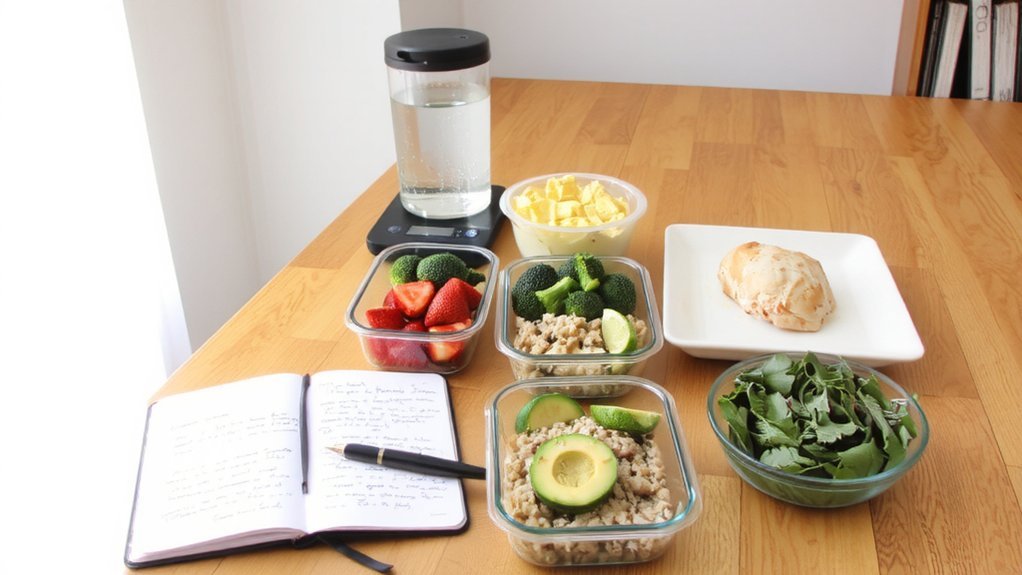
Follow the daily meal templates and portion guidance, track your weight, energy, and hunger, and make small weekly adjustments to calories or swaps so you stay on target and keep progress steady.
Use the starter checklist to gather measuring tools, pantry staples, and a simple food scale before you begin.
Log meals and snacks promptly; if you prefer digital tracking, enable app integration for calories, macros, and progress charts so you’ll spot trends.
Plan substitutions from the approved food lists when cravings or schedule changes pop up.
Prioritize protein at each meal, hydrate, and sleep enough to support appetite control.
If progress stalls, reduce intake modestly or increase activity, and reassess after several days to stay safe and consistent.
Check progress with professionals regularly.
Weekly Meal Schedule Overview
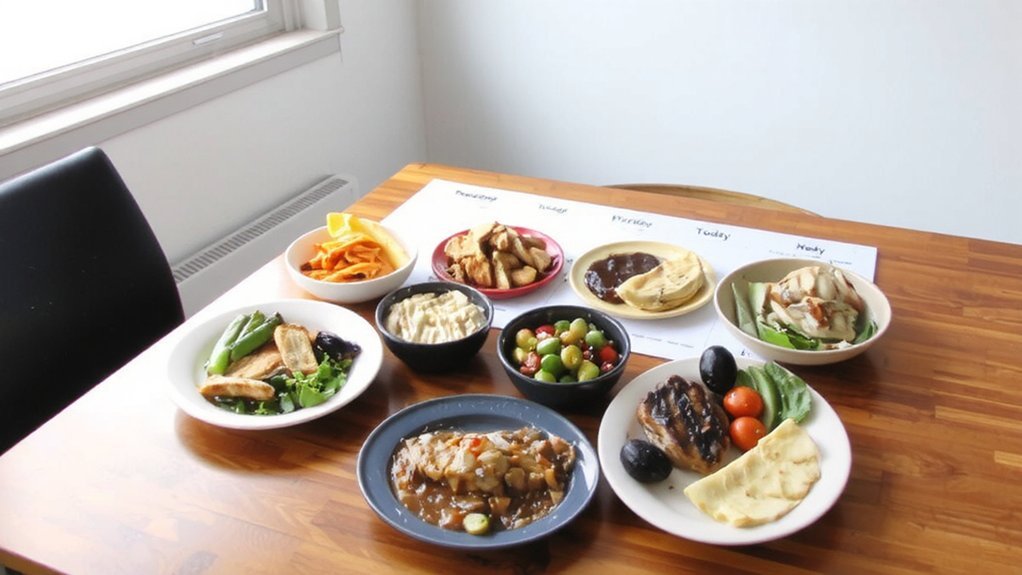
You’ll use consistent daily meal timing to stabilize hunger and energy.
Plan breakfasts, lunches, dinners, and snacks at set times and match portions to your calorie goals.
On grocery day you’ll prep a shopping list and batch-cook staples so you can stick to the schedule all week.
Daily Meal Timing
Typically, plan three balanced meals and one or two snacks spaced every 3–4 hours to keep your hunger steady and energy even through the day; across the week, keep timing consistent while allowing small shifts for workouts or social events.
Use Meal spacing to prevent overeating, support steady blood sugar, and honor Circadian alignment by front-loading calories earlier when possible.
Aim to eat within a consistent daily window (e.g., 8–10 hours) if that fits you.
Adjust meal timing around workouts: have a snack 30–60 minutes before and a protein-rich meal within 90 minutes after.
- Morning: calorie-focused breakfast and coffee daily
- Midday: balanced lunch, include fiber and protein
- Afternoon: snack to bridge to dinner
- Evening: lighter dinner, avoid late heavy meals
Grocery Prep Plan
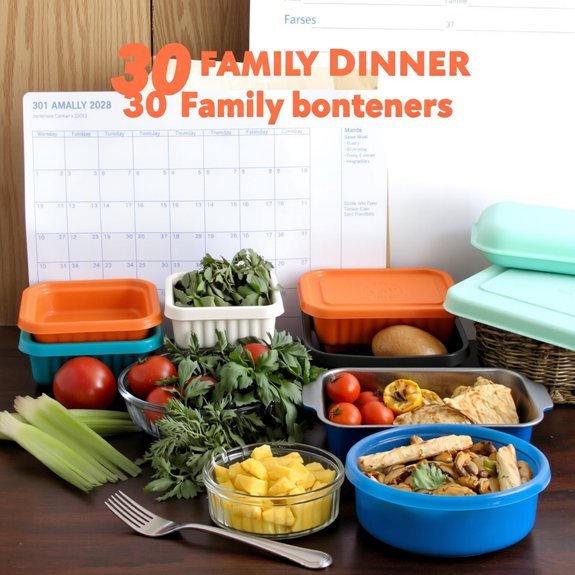
Each week, map your grocery trip to the meals and snacks you’ve scheduled so you buy only what you need and cut waste. Plan breakfasts, lunches, dinners, and snacks, then list ingredients by day. Use a Labeling system for containers (meal, date, portion) so you grab the right item and reduce spoilage. Build a simple 3×3 checklist for staples, proteins, produce.
| Day | Main Meal | Prep Note |
|---|---|---|
| Mon-Wed | Batch cook chicken | Freeze portions |
| Thu-Sun | Roast veggies | Use within 4 days |
| Snacks | Prep fruit cups | Labeling system applied |
Apply Budget strategies: compare unit prices, buy frozen when cheaper, and stick to the list. Review weekly and adjust quantities. You’ll save time, avoid impulse buys, and hit calorie targets by sticking to this weekly grocery prep plan. Track receipts for adjustments monthly.
Grocery Lists and Pantry Staples
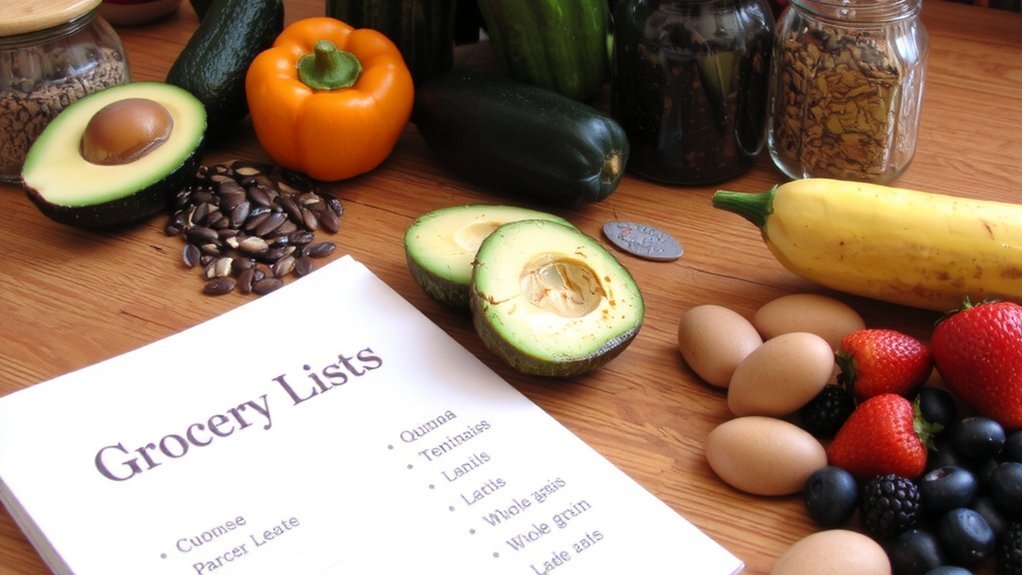
For efficient shopping, build a list that prioritizes lean proteins, high-fiber grains, healthy fats, and plenty of vegetables.
Keep Budget staples like canned beans, oats, frozen veggies, and brown rice on rotation to save money and speed choices.
Use Storage hacks—airtight containers and clear labels—to extend freshness and avoid waste, so you’ll stick to portions.
- Proteins: chicken breast, canned tuna, lentils, Greek yogurt.
- Grains & legumes: oats, quinoa, brown rice, chickpeas.
- Veggies & fruits: frozen mixed vegetables, spinach, apples, berries.
- Healthy fats & extras: olive oil, nuts, seeds, avocado.
Check pantry dates weekly, restock essentials, and shop with a precise list to resist impulse buys.
Plan variety within your staples, rotate flavors, and compare unit prices before checkout every week.
Simple Recipes and Meal Prep Tips
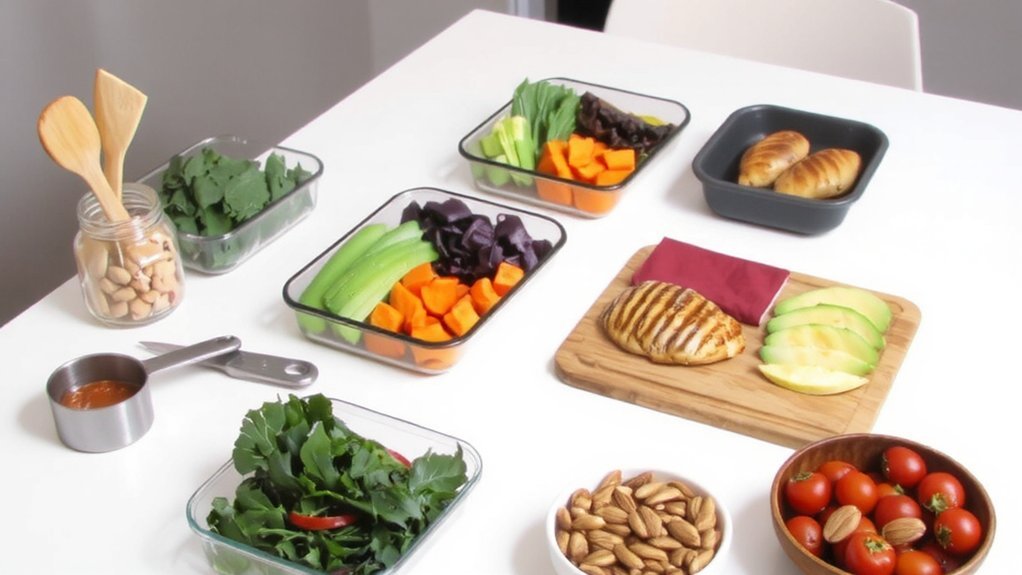
When you batch-cook a few base components—grilled chicken, roasted veggies, and a whole-grain like quinoa—you’ll have ready-to-assemble meals all week.
Use Sheetpan Dinners for fast, low-fuss cooking: toss protein and veggies with spices, roast, then divide into containers.
Build simple bowls, salads, or wraps in minutes. Label containers with dates and rotate flavors—cilantro-lime one day, balsamic-herb the next—to avoid boredom.
Keep sauces separate to preserve texture. For snacks, portion hummus with cut veggies or nuts.
Embrace Leftover Makeovers: transform last night’s stew into a stuffed pepper or a grain bowl with fresh greens.
Clean as you go, plan two cooking sessions per week, and you’ll save time while eating satisfying, controlled meals.
Prep spices and dressings ahead so you can mix and match quickly daily.
Portion Sizes and Macronutrient Targets
Now you’ll set clear portion size guidelines—think palm-sized protein, cupped-hand carbs, and fist-sized vegetables—to control calories without feeling deprived.
You’ll also pick daily macronutrient targets (protein, carbs, fats) that match your goals and activity level, often expressed as grams or percentages.
Together, portion control and macronutrient targets give you a practical framework for meal planning and tracking progress.
Portion Size Guidelines
Although everyone’s calorie needs differ, you can reliably control weight loss by using simple portion cues and clear macronutrient targets.
Use Visual cues and Portion psychology to size servings without obsessing over scales, focusing on plate balance, hand-size measures, and mindful eating.
Practice consistency: same plates, measure first week, then eyeball.
- Use your fist for one cup of vegetables.
- Palm-sized protein per meal.
- Cupped hand for carbs, half to one cup.
- Thumb for fats like oils or nut butters.
Track portions for two weeks, adjust by hunger and progress, and keep meals predictable so you sustain a calorie deficit without feeling deprived.
Eat three balanced meals and an optional snack, focus on protein and vegetables, and hydrate before eating daily.
Daily Macronutrient Targets
Because your goal is weight loss, set daily macronutrient targets that prioritize protein for muscle preservation, moderate carbs for energy, and controlled fats for satiety—using your hand-size portion cues to translate grams into servings. Aim for about 30–35% protein, 35–40% carbs, and 25–30% fat, adjusting by activity; protein increases the thermic effect and preserves lean mass, carbs timed around workouts help insulin dynamics, and fats aid satiety. Track portions: palm-sized protein, cupped carbs, thumb-sized fats. Be consistent, weigh or estimate portions, and adjust calories weekly based on progress.
| Target | Portion cue |
|---|---|
| Protein 30-35% | Palm per meal |
| Carbs 35-40% | Cupped hand |
| Fats 25-30% | Thumb-sized |
If progress stalls, lower calories slightly, increase protein, or add more activity while monitoring hunger and strength each week and recovery.
Exercise and Lifestyle Strategies
Combining regular exercise with simple lifestyle changes makes weight loss sustainable.
You’ll pair three weekly strength sessions with brisk daily walks, prioritize Sleep Hygiene to aid recovery, and use Stress Management techniques like breathing or short breaks to curb emotional eating.
Hydrate, limit late-night snacking, and track progress to stay accountable.
- Schedule: 3 strength + 150 min cardio weekly.
- Movement: Stand and walk every hour.
- Recovery: Prioritize 7–9 hours sleep and mobility work.
- Habits: Meal timing, hydration, and stress-coping routines.
Use a fitness tracker or journal to monitor steps, workouts, food, mood, and sleep for clearer trends, and adjust habits weekly.
You’ll adjust intensity gradually, celebrate small wins, and keep routines realistic so the plan fits your life and sticks.
Customizing for Food Preferences and Allergies
While keeping the plan’s calorie and macronutrient targets, swap ingredients to match your tastes, cultural preferences, and allergies so meals stay enjoyable and safe.
Use swaps like gluten-free grains, plant-based proteins, or lactose-free dairy without changing portions.
If you’ll follow cultural traditions, adapt spices and cooking methods to preserve flavor while keeping portions controlled.
Label meals for allergens and prep separate batches to avoid cross-contact; involve household members so family dynamics support your choices.
When dining out, scan menus, ask about ingredients, and choose grilled, steamed, or roasted options.
Keep a short list of go-to substitutions and simple recipes that satisfy cravings and restrictions.
Consistency with safe, tasty choices helps you stick to the plan.
Rotate favorites weekly to prevent boredom and nutrient gaps.
Monitoring Progress and When to Adjust
If you want reliable feedback, track a few consistent metrics regularly.
Use measures so you’re able to compare objectively.
- Weigh weekly
- Take Progress Photos
- Measure waist, hips, limbs
- Log Habit Consistency (meals, sleep, workouts)
Review trends every seven to fourteen days; don’t react daily.
If progress stalls for two weeks, reduce calories by 100 to 200, adjust macros, or increase activity.
If energy crashes or performance drops, raise intake slightly and reassess.
Keep changes small and singular so you can attribute effects.
Record brief notes daily about mood and hunger to contextualize measurable results.
Reassess goals monthly, and consult a professional when major adjustments or medical concerns arise.
Consistent, measured tweaks will prevent setbacks and support sustainable weight loss over weeks and months ahead.
Conclusion
You’ve got a practical, flexible plan that pairs modest calorie cuts with protein, fiber, whole grains, and healthy fats to help you lose up to 10 pounds in four weeks. Stick to portion cues, meal prep, and strength training, track weight and energy, and tweak calories if progress stalls. Use swaps for tastes or allergies, prioritize sleep and hydration, and celebrate steady wins—you’re building habits that keep the weight off long term for lasting health.