
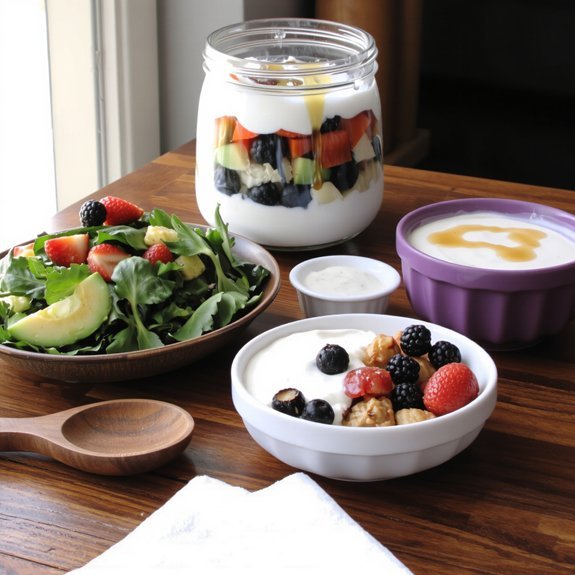

You’ll get a practical gut‑health meal plan that blends probiotics, prebiotics and diverse fiber with straightforward prep and seasonal choices. It’s evidence‑informed and built for busy weeks, with swaps, DIY ferments and safety notes. Here’s how to make meals that support digestion, steady energy and microbial diversity…
Key Takeaways
- Prioritize daily fermented foods plus diverse fiber-rich plants to supply probiotics, prebiotics, and polyphenols for microbiome support.
- Structure meals around modest, regular servings: probiotic source + resistant starch or whole grain + colorful vegetables + lean protein.
- Rotate fermented options (yogurt, kefir, kimchi, sauerkraut, miso) across the week to broaden microbial exposures and flavor variety.
- Use batch-cooking and batch-ferments (grains, legumes, roasted veg, quick sauerkraut) for easy weekday assembly and consistent intake.
- Expect gentler digestion, steadier energy, and improved microbiome stability within weeks; seek medical care for severe pain, bleeding, or unexplained weight loss.
Why Gut Health Matters: Benefits Backed by Science
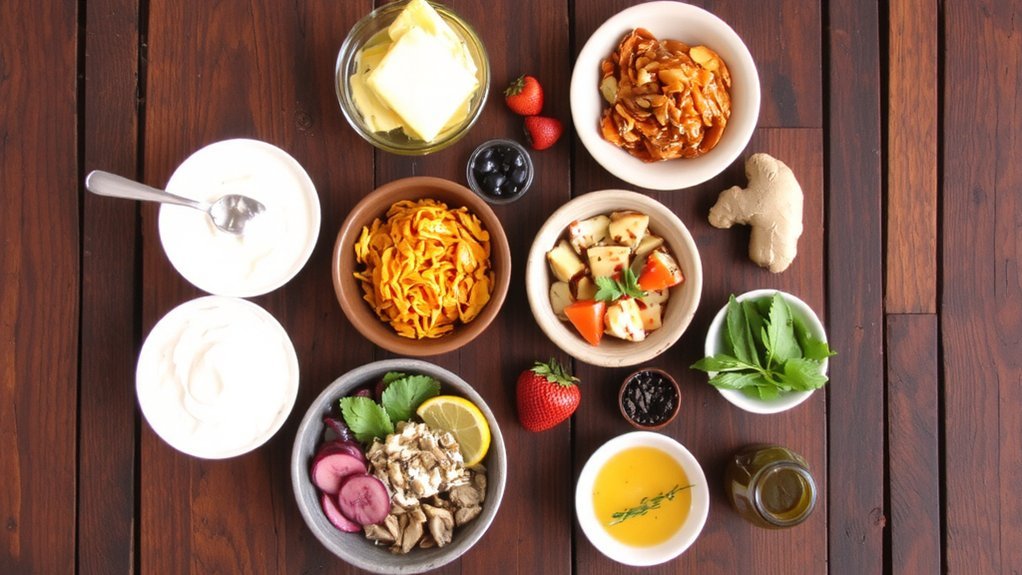
Because your gut hosts trillions of microbes that influence digestion, immunity, mood, and metabolism, keeping it healthy has measurable benefits backed by research.
You’ll notice clearer digestion, fewer bloating episodes, and steadier energy when your microbiome stays balanced.
It shapes Brain Communication through neural and biochemical signals, so mood and focus improve as gut signals stabilize.
Your immune defenses calibrate more effectively, lowering inflammation and infection risk.
Metabolic Regulation also depends on microbial activity; blood sugar, appetite, and fat storage respond to microbial metabolites, altering weight and energy balance.
Prioritizing diverse, nutrient-dense meals and regular routines supports these outcomes.
You’ll get tangible gains: better sleep, resilient immunity, sharper cognition, and more reliable metabolic control.
You’ll notice sustained improvements within weeks with consistent daily habits.
How Probiotics, Prebiotics and Polyphenols Support Your Microbiome
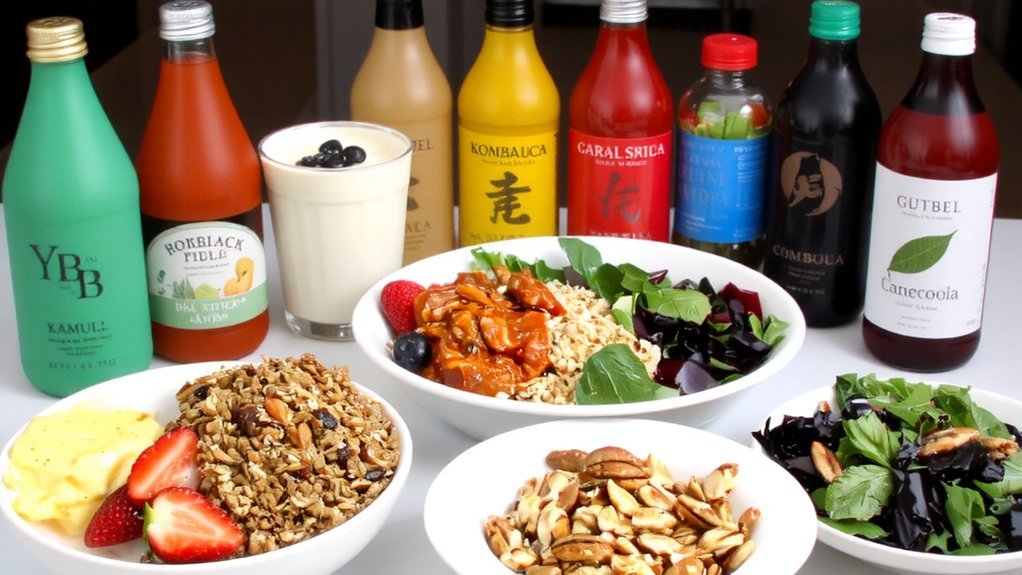
While probiotics introduce helpful microbes, prebiotics feed those microbes and polyphenols shape their behavior, together creating a balanced, resilient gut ecosystem.
You’ll get diverse probiotic strains from fermented foods and supplements that colonize briefly and interact with resident microbes.
Prebiotics, fibers and resistant starch, fuel growth and promote production of Microbial Metabolites like short-chain fatty acids, which nourish your colon lining.
Polyphenols from fruits, tea, and cocoa selectively encourage beneficial species and can alter gene expression in microbes.
These combined actions support barrier function and help regulate inflammation through direct microbial signals and Immune Modulation.
Principles Behind This Probiotic-Rich Weekly Menu
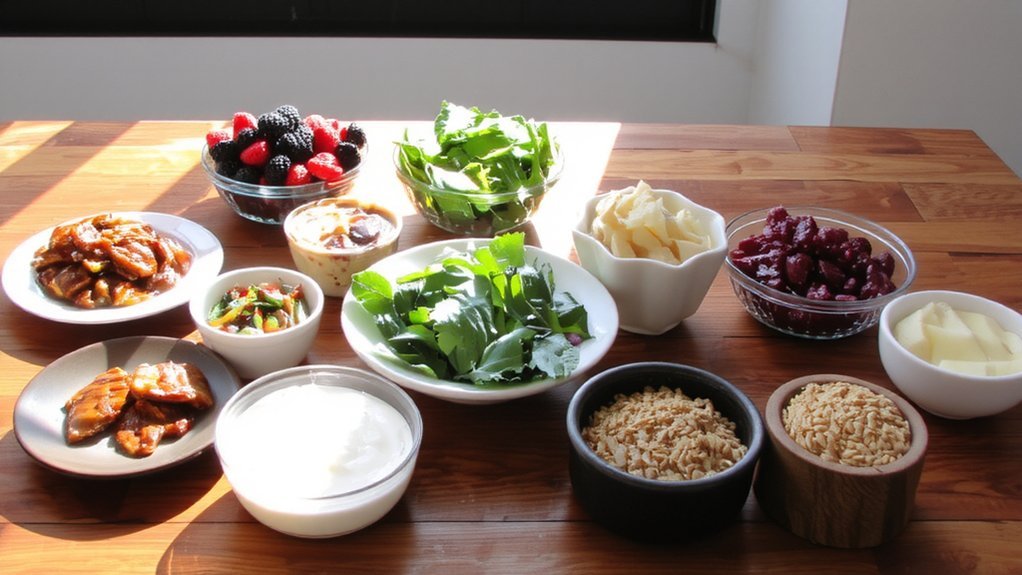
Now that you know how probiotics, prebiotics and polyphenols shape your microbiome, the menu translates those mechanisms into practical meal rules.
You’ll rotate fermented foods daily, pair fiber-rich plants with cultured items, and favor diverse colors to feed varied microbes.
Portioning emphasizes regular, modest servings rather than extremes, helping consistency and tolerance.
Seasonal sourcing guides ingredient choices so you get peak nutrients and supportive fibers at lower cost.
Recipes balance animal and plant proteins, include resistant-starch opportunities, and limit added sugars that disrupt beneficial strains.
Meal prep focuses on simple swaps, batch ferments, and portable snacks to keep adherence high.
Budget scalability means the plan adapts to pantry staples or premium options, so you can sustain gut-friendly habits long term.
With measurable, realistic goals.
Breakfasts: Easy, Culture-Rich Starts to the Day
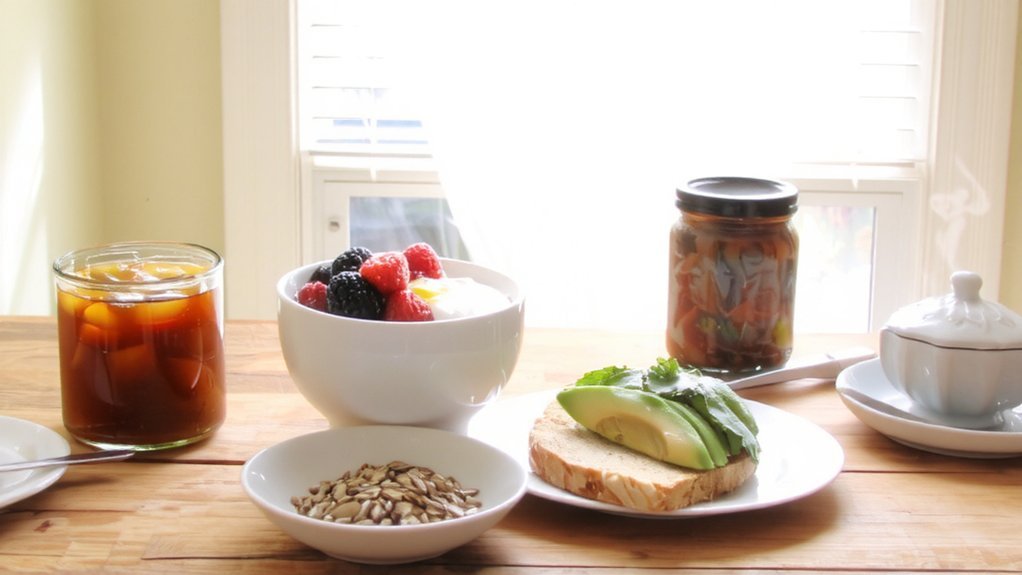
If you want a gut-friendly morning, choose small, culture-rich breakfasts that pair live cultures with fiber and resistant starch to feed them.
You’ll favor plain yogurt or kefir topped with oats soaked overnight, sliced banana, and a sprinkling of toasted seeds; the mix brings probiotics and prebiotic starch without heaviness.
Try miso soup with soft tofu or a fermented grain porridge for variety, and honor Cultural Rituals by preparing these dishes mindfully to support digestion.
Use Seasonal Ingredients—berries in summer, stewed apples in fall—to boost nutrients and flavor.
Keep portions moderate, rotate options, and avoid added sugars.
These straightforward starts help stabilize your microbiome and set a calm, nourishing tone for the day.
You’ll likely feel gentler digestion and steadier energy within several weeks.
Lunches: Fiber-Forward Midday Meals
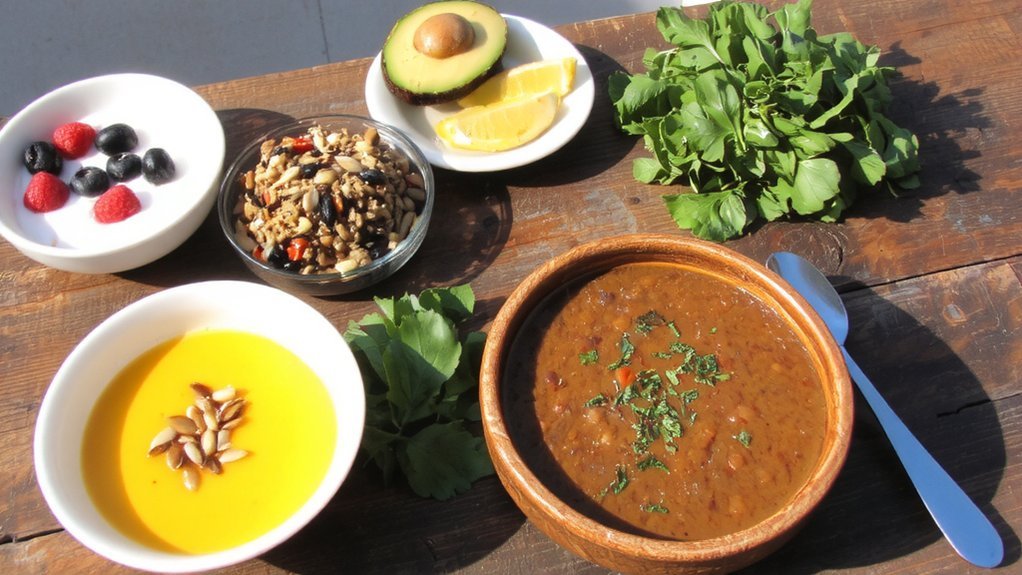
After a culture-rich breakfast, make lunch a fiber-forward anchor that keeps your microbiome fed through the afternoon.
Choose whole grains, legumes, and colorful veggies to boost prebiotic fiber; you’ll feel sustained and support diverse gut flora.
Build bowls and salads around Texture Balance — tender grains, crunchy raw veg, creamy avocado — so every bite encourages chewing and digestion.
Add fermented elements like kimchi or plain yogurt for probiotics, and finish with a fruit-based vinaigrette to tie sweet and acidic notes.
Be mindful of portion sizes and simple, complementary Flavor Pairings: lemon with beans, apple with cabbage, miso with roasted carrots.
Rotate recipes through the week so your gut meets varied fibers without monotony.
Prep ahead to save time and keep choices consistent and gut-friendly daily.
Dinners: Satisfying, Gut-Friendly Entrees
When you settle into dinner, choose entrees that satisfy hunger while feeding your microbiome: think roasted salmon or lentil stew paired with roasted crucifers, a side of fermented veggies, and a whole-grain or starchy tuber to provide resistant starch. You’ll pick Weeknight Favorites that are simple, nutrient-dense and lean on prebiotic vegetables. For Family Classics, aim for balanced plates — protein, fiber, and a comforting carb — that encourage varied gut microbes. Rotate flavors and textures weekly so you don’t tire of patterns, and use herbs, citrus, and gentle fats to support digestion. The table below captures feelings these meals can inspire.
| Cozy | Nourishing | Joy |
|---|---|---|
| Warmth | Sustenance | Comfort |
| Home | Energy | Togetherness |
You’ll feel calmer, more satisfied, and confident when you plate varied, gut-friendly dinners regularly consistently.
Snacks, Fermented Sides and Simple DIY Ferments
You can boost your gut health between meals with quick probiotic snacks like yogurt with fruit, kefir smoothies, or miso-tossed rice cakes.
Add easy fermented sides—quick sauerkraut, pickled cucumbers, or kimchi—to complement your dinners and snacks.
You can even try simple DIY ferments at home with just salt, water and a jar to create tasty, consistent probiotics.
Quick Probiotic Snacks
Packing probiotics into snacks makes supporting your gut simple and tasty.
You can grab kefir smoothies, yogurt parfaits with fruit and seeds, miso-glazed edamame, or probiotic-rich pickled carrots as quick options.
Look for Packaging Innovations that preserve live cultures and practice Label Literacy to choose strains and CFU counts that match your needs.
Assemble snack boxes with kombucha mini-bottles, a cheese like aged gouda with live cultures, and kimchi-topped rice crackers for an easy, portable boost.
Keep portions modest and pair probiotics with prebiotic foods—banana slices, oats, or garlic hummus—to feed beneficial bacteria.
Store snacks cold, rotate them weekly, and note how your digestion responds so you can fine-tune choices.
Don’t expect instant fixes; consistency helps your microbiome steadily adapt and thrive over time.
Easy Home Ferments
Starting small with simple ferments makes gut-boosting snacks and sides approachable and fun.
You can make quick sauerkraut, refrigerator pickles, or kefir smoothies with minimal equipment.
Use clean jars, fresh produce, and a salt brine or starter culture; Wild Ferments add complexity if you leave things exposed to ambient microbes, but control temperature and timing.
Experiment with Flavor Pairings—carrot-ginger, apple-fennel, or cucumber-dill—to complement meals.
Turn a cabbage jar into a taco topping, or serve kimchi as a side to grilled fish.
Label jars with dates, taste daily, and refrigerate when you like the tang.
Start with small batches, document results, and share successes to build confidence and sustainable habits every week.
Meal Prep, Storage and Smart Swaps for Busy Weeks
Batch-cook staples like grains, legumes, and roasted veg so you’ll have gut-friendly meals ready to assemble.
Label and date portions, keep cooked dishes 3–4 days in the fridge or up to 2–3 months in the freezer, and reheat until steaming hot.
When you’re short on time, swap ingredients—Greek yogurt for sour cream, canned beans for dried, frozen fruit for fresh—to preserve fiber and probiotic benefits.
Batch Cooking Strategies
When you prep meals for the week, focus on a few versatile base components—grains, roasted vegetables, a protein, and a flavorful dressing—that you can mix and match to create different dishes quickly; this keeps meals varied, saves time, and reduces food waste.
Use Pantry Mapping to know staples and avoid duplicate buys, then plan recipes that share ingredients.
Batch Scaling helps you double or triple portions efficiently: cook large pots of beans, grains, and sheet-pan vegetables, then portion them into meal-sized containers.
Label containers with contents and intended use, rotate flavors with different dressings or toppings, and repurpose components into bowls, wraps, or salads.
Keep a short checklist to streamline prep and shopping. You’ll save time, reduce stress, and eat better all week, too.
Safe Storage Timelines
Keep perishable prepped meals safe by following clear timelines: refrigerate cooked grains and roasted vegetables for up to 4 days, most cooked proteins for 3–4 days (limit cooked fish and shellfish to 2 days), and freeze portions you won’t eat within those windows for 2–3 months. Label containers, cool within two hours, and date them so you eat oldest first. Use clear Retention Schedules and simple Audit Trails for batch batches and family menus. Rotate stock and thaw safely in the fridge. Quick checks of smell and texture catch issues.
| Item | Fridge | Freezer |
|---|---|---|
| Cooked grains | 4 days | 2-3 months |
| Roasted veg | 4 days | 2-3 months |
| Cooked proteins | 3-4 days | 2-3 months |
| Fish/shellfish | 2 days | 2-3 months |
Stick to labels and reheating temps for safety.
Quick Ingredient Swaps
Swap in pantry staples to stretch meals and save time: swap canned beans for fresh legumes, frozen vegetables for fresh when produce is past its prime, cooked grains like quinoa or farro for rice, and Greek yogurt for mayo or sour cream to boost protein and tang.
You’ll prep fewer ingredients, rely on smart swaps, and keep probiotics intact when you choose fermented options. Use herb pairings to lift flavor—cilantro with lime, dill with yogurt—and pay attention to texture matching so crunchy, creamy, and chewy elements balance each dish.
Store components separately for easy assembly and reheating.
- Canned chickpeas -> roasted salads
- Frozen spinach -> sautéed garlic
- Cooked quinoa -> grain bowls
- Greek yogurt -> dressings
- Sauerkraut -> sandwich
Signs to See a Healthcare Professional and Personalized Guidance
If you experience severe abdominal pain, rectal bleeding, unexplained weight loss, persistent changes in bowel habits lasting more than a few weeks, recurrent vomiting, fever, difficulty swallowing, or signs of malnutrition (like hair loss, fatigue, or easy bruising), see a healthcare professional promptly; you’ll also want personalized guidance if you have chronic conditions, take regular medications, are pregnant, or you’re over 50 and develop new symptoms, since those factors change assessment and treatment.
Also note Red Flag Symptoms and review Medication Interactions with your clinician before probiotics or major diet changes. Your provider can run tests, check nutrient status, and tailor probiotic strains, fiber targets, and elimination steps.
Share supplement lists and symptom diaries so they can make safe, effective, individualized recommendations and follow-up.
Conclusion
By following this probiotic‑rich weekly menu, you’ll feed diverse microbes, steady your energy, and support digestion and immune balance with simple meals and tiny habits. Try batch preps, DIY ferments, and modest swaps to make gut‑nourishing eating practical, and rotate foods to sustain variety. If you have chronic conditions, pregnancy, or take medications, check with your clinician. Start small, listen to your body, and adjust the plan to fit your life over the long term.
