
You’ll build a weekly, performance-focused plan that matches carbs to hard days and protein to recovery. It balances hydration, sleep-friendly dinners, and quick batch-cook strategies. Portion visuals and swaps fit your sport and schedule. Keep going—there’s a practical seven-day menu and prep shortcuts waiting…
Key Takeaways
- Structure your week around training intensity: high-carb days for intense sessions, moderate carbs for easy days, and recovery-focused meals on rest days.
- Prioritize pre-workout carbs (20–60 g) and post-workout protein (20–40 g) within 30–90 minutes to support performance and recovery.
- Use portion visuals: palm-sized protein, cupped hand carbs, fist vegetables to scale meals for easy-session versus intense-session energy needs.
- Hydrate proactively: drink 300–500 ml before exercise, sip electrolytes during long efforts, and replace 150% of fluid losses afterward.
- Save time with batch cooking (grains, roasted veg, proteins), label containers, and swap ingredients for allergies or taste while preserving macros.
Weekly Meal Overview and Daily Templates
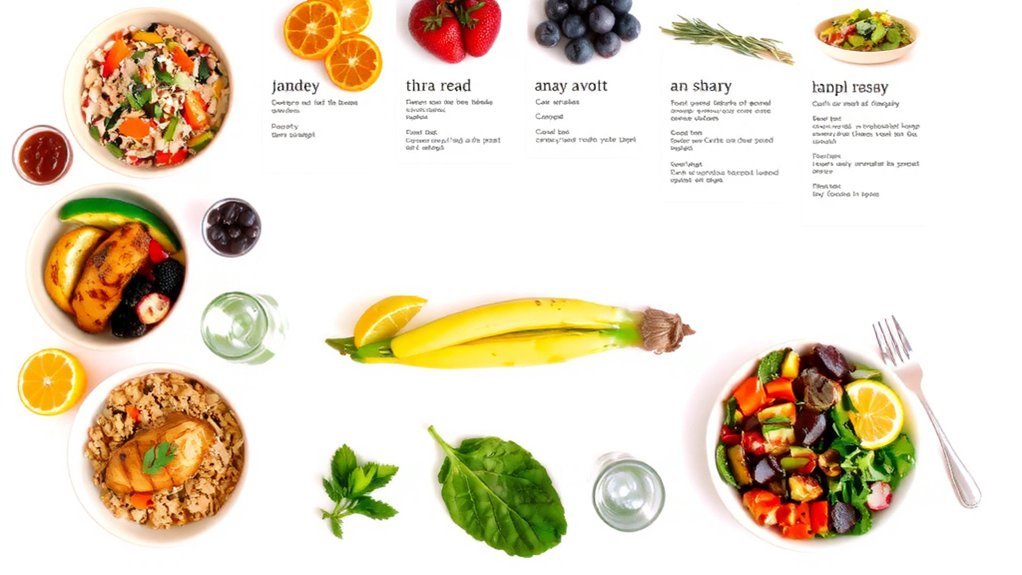
Planning a weekly meal overview gives you a clear structure for training days, recovery days, and travel or competition days. You’ll map meals around energy needs, portion sizes, and convenient cooking slots so you’re never improvising.
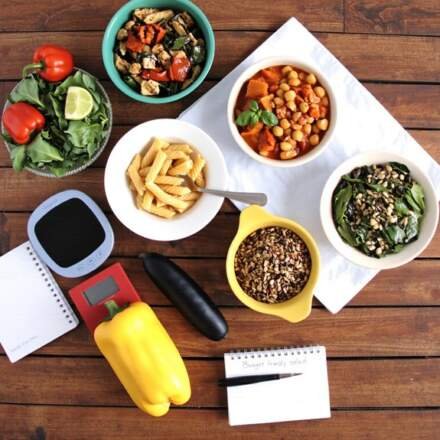
Use theme days — like carb-focus, protein-focus, or plant-forward — to simplify shopping and prep. Create visual templates for each day: a plate diagram, snack options, and quick swap lists that match calorie and macronutrient targets.
Keep templates editable so you can adjust for travel, late sessions, or appetite changes. Batch-cook versatile components (grains, roasted veg, lean proteins) and pair them per the visual templates.
That way, you’ll save time, reduce decision fatigue, and maintain nutritional consistency throughout the week. You’ll also track progress and tweak portions weekly.
Pre- and Post-Workout Fueling Strategies
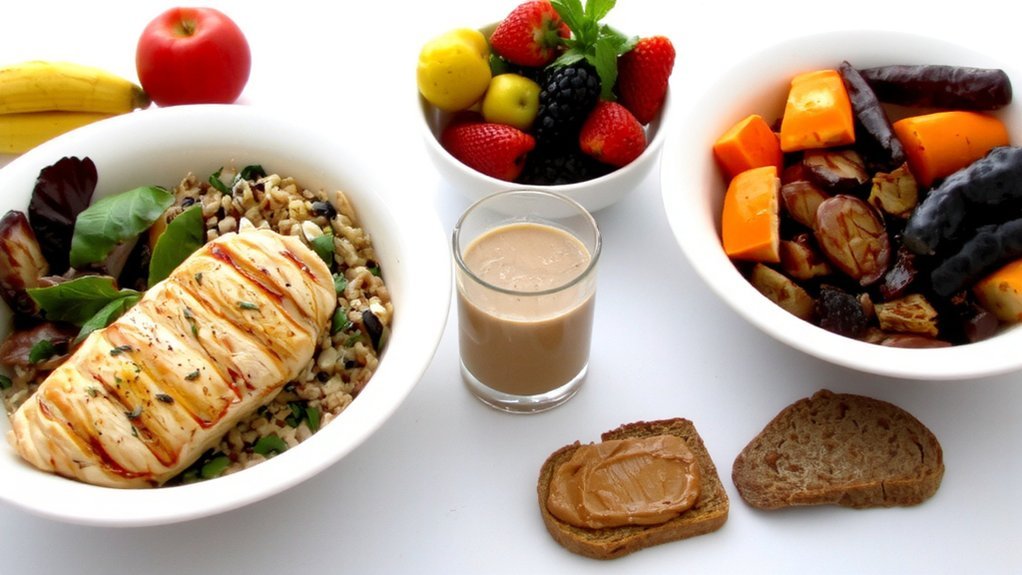
Before training, time your carbs so you’ve got steady energy — aim for a moderate carb snack 30–90 minutes before exercise or a larger meal 2–3 hours out.
Afterward, prioritize protein (20–40 g) within an hour to support muscle repair and recovery.
Also, stay hydrated and replace electrolytes lost in sweat to maintain performance and speed recovery.
Pre-Workout Carb Timing
When should you eat carbs to get the most from your workout? Aim to consume easily digestible carbs 30–90 minutes before activity, or 2–3 hours prior if you prefer a larger meal.
You’ll reduce performance dips by considering glycemic variability—choose lower-glycemic options earlier and faster carbs closer to start.
Also match intake to your training time: circadian carbs can help if you train morning versus evening, so shift amounts accordingly.
Portions depend on session length and intensity: 20–60 grams for most workouts, more for endurance. Hydrate and test timing in training, not on race day. Track how you feel and adjust type, amount, and timing to optimize energy without causing GI upset. Keep it simple and consistent as your baseline strategy.
Post-Workout Protein Intake
How soon should you eat protein after a workout? Aim to consume 20 to 40 grams within 30 to 90 minutes to maximize repair and adaptation.
You’ll benefit more if you choose sources with high Protein quality — complete amino acid profiles and rapid digestibility.
Prioritize meats, dairy, eggs, or whey, or combine plant proteins to reach the Leucine threshold that triggers muscle protein synthesis.
If sessions are frequent or long, spread intake every 3–4 hours afterward to sustain net protein balance.
Don’t overdo total protein at one sitting; consistent distribution matters.
Pair with some carbs to replenish glycogen and support recovery, but focus primarily on timely, quality protein to drive strength and adaptation.
You’ll notice faster gains when you’re consistent with timing daily.
Hydration and Electrolytes
Why should you treat hydration and electrolytes as part of your fueling plan?
You rely on fluid and sodium balance to power performance, recover faster, and avoid cramps.
Use sweat testing to personalize losses and guide beverage selection before, during, and after sessions.
Pre-workout, drink 300–500 ml of fluid with a small sodium snack if you’re a heavy sweater.
During long efforts, aim for consistent sips and electrolyte-containing fluids.
After training, replace 150% of measured fluid losses with sodium-rich drinks and whole foods.
Monitor urine color and weight changes to track status.
- Feel energized
- Avoid cramps
- Recover faster
Stick to individualized plans; small adjustments create big gains in comfort and output daily.
You’ll perform better when you hydrate smartly every day.
Sample 7-Day Menu With Recipes
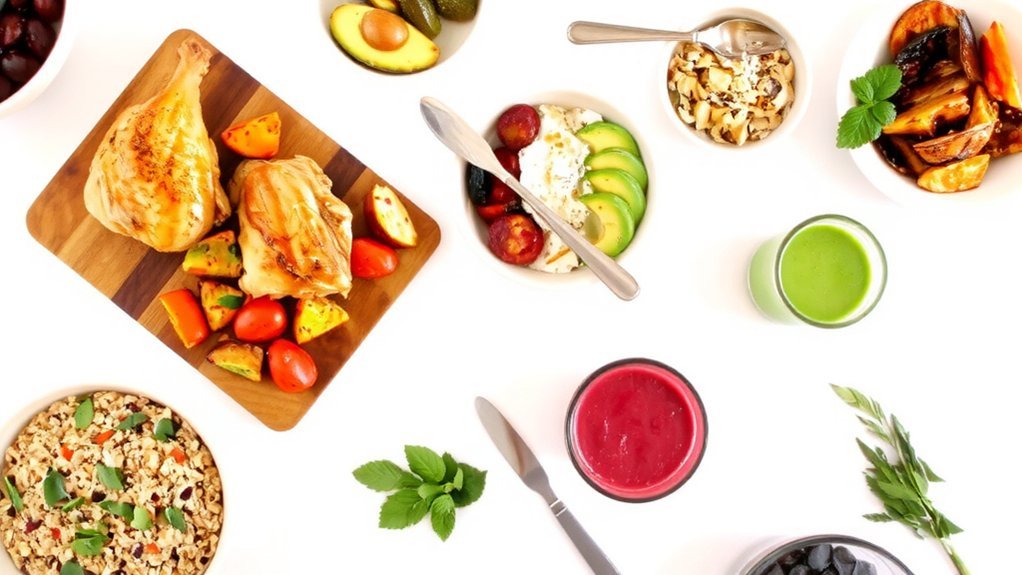
Although everyone’s needs differ, this sample 7-day menu gives you balanced, performance-focused breakfasts, lunches, dinners, and snacks with simple recipes and prep tips you can follow or tweak to fit your goals.
You’ll rotate lean proteins, whole grains, healthy fats, and colorful Seasonal Produce to support training and recovery. Each day pairs easy recipes—overnight oats, grain bowls, grilled salmon, and stir-fries—with quick snack ideas.
Prep strategies include batch-cooking grains, roasting vegetables, and portioning mixed nuts so you’ll save time. Swap ingredients to match taste or allergies; turn one-pan dinners into Family Favorites by adding familiar spices.
Breakfasts focus on carbs plus protein, lunches on nutrient-dense bowls, dinners on recovery-promoting meals, and snacks on portable options you can grab between sessions. Adjust weekly as needed.
Portion Guidance for Different Training Loads
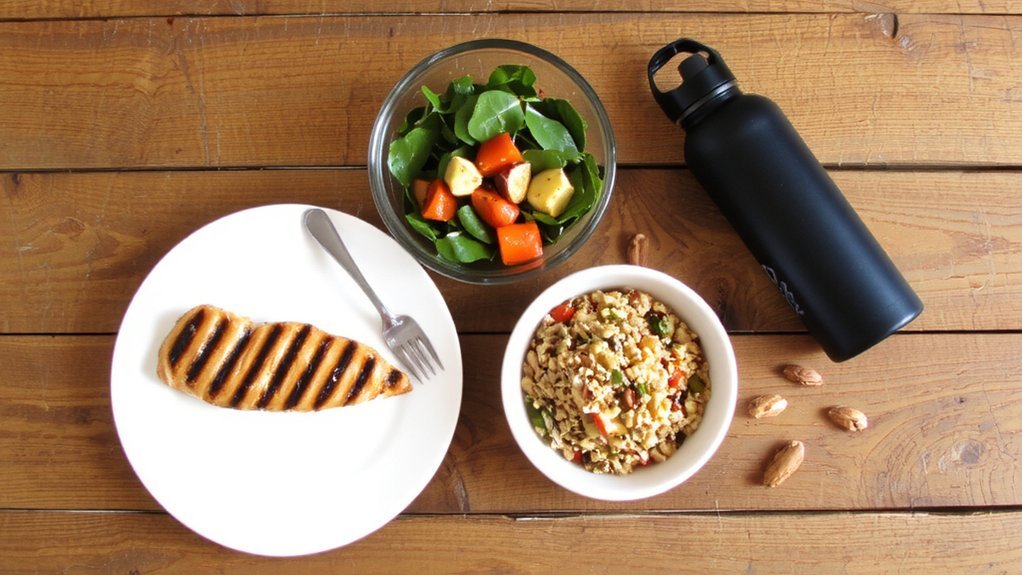
You’ll adjust portions based on session intensity, with easy-session portions smaller and intense-session portions larger.
For easy-session portions, choose moderate carbs, lean protein, and slightly reduced calories to support recovery without excess.
For intense-session portions, boost carbs and total energy, prioritize quick-absorbing carbs around training, and add more protein for repair.
Easy-Session Portions
The day-after-easy-session rule is simple: cut overall calories and carbs to match the lower energy demand while keeping protein steady to support recovery.
You’ll feel lighter without sacrificing repair—aim for protein at every meal, smaller starchy portions, and extra vegetables.
Use visual cues and mindful eating to judge portions: a palm-sized protein, a cupped hand of carbs, and a fist of veg.
Trust how your body responds; hunger and energy guide tweaks.
- Celebrate the calm—choose comforting, nutrient-dense foods.
- Notice satisfaction—stop before you’re overly full.
- Respect recovery—prioritize sleep and gentle movement.
These adjustments keep you nourished, prevent unnecessary weight swings, and let you return ready for harder sessions.
Small tweaks compound, so be patient and consistent with portion choices over time, results.
Intense-Session Portions
When training ramps up, match portions to the higher energy demand by increasing carbs and overall calories while keeping protein steady to support repair and adaptation.
You should boost carbohydrate portions around long or intense sessions—oatmeal, rice, potatoes, pasta—and add healthy fats for calorie density if weight gain is desired.
Maintain protein at each meal (20–30 g) to aid recovery.
Monitor satiety signals to avoid under- or over-eating; eat slightly before hunger when sessions are long.
Test timing and volume in training to confirm gastrointestinal tolerance, adjusting fiber and fat before sessions.
Snack strategically with liquid or easily digestible options if appetite drops.
Track performance, body weight, and recovery to fine-tune portion sizes for sustained progress.
Reassess weekly and tweak portions as needed regularly.
Hydration and Electrolyte Timing
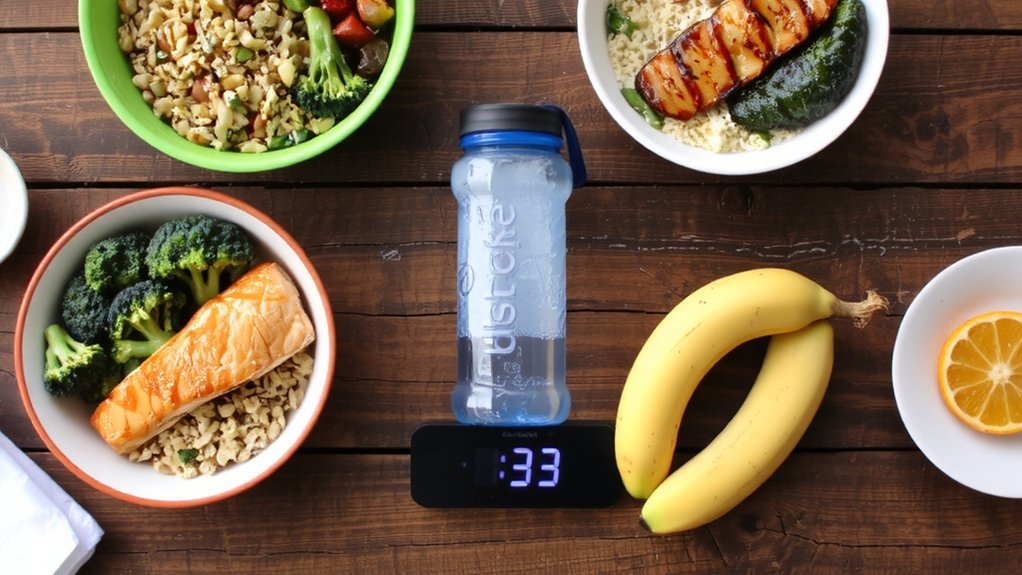
Before, during, and after training, plan your fluids and electrolytes to match sweat losses and session intensity. You’ll use Circadian Hydration to time morning and evening intake, and consider Altitude Acclimatization if you train high—both change sodium and fluid needs.
Start with pre-hydration 2–3 hours before, sip during based on minutes and heat, and rehydrate to restore body mass after. Aim for balanced sodium, potassium, and chloride in drinks or snacks.
- Remember: thirst lags—drink proactively.
- Visualize performance: hydrated=sharp, depleted=sluggish.
- Practice the plan in training, not race day.
Monitor urine color, weight changes, and adapt volumes to tolerance. You’ll check sweat rate with simple trials and adjust drink concentration; aim for 300–700 mg sodium per liter during long sessions. Track responses daily.
Recovery Snacks and Sleep-Promoting Meals
After rehydrating, pair your fluids with targeted recovery snacks that restore glycogen and repair muscle, then plan evening meals that promote restorative sleep and overnight repair.
Choose snacks with carbs plus quality protein—yogurt with fruit, a turkey sandwich, or a smoothie—to kickstart repair and reduce inflammation.
Nighttime meals should include tryptophan-containing proteins, complex carbs and magnesium-rich vegetables to support neurotransmitter balance and melatonin production.
Fermented foods, fiber and polyphenol-rich plants help your gut microbiome, aiding nutrient absorption and immune recovery.
Time snacks within 30 to 60 minutes post-exercise and don’t overfill evenings to avoid sleep disruption.
Consistent routines—meal timing, portion control and whole-food choices—speed recovery and sharpen next-day performance.
Track how different combinations affect your sleep and tweak timing based on objective recovery markers.
Dietary Preferences and Easy Swaps
If you have taste, cultural, or medical preferences, you can still hit performance targets by choosing smart swaps that preserve macro- and micronutrient balance.
You’ll keep energy, recovery, and focus by replacing ingredients without losing nutrient profiles. Use Allergen swaps like oat or pea protein instead of whey, and swap dairy for fortified plant milks to maintain calcium and vitamin D.
Apply Cultural adaptations to honor flavors—add fermented vegetables, legumes, or spices that match traditional meals while keeping carbs, protein, and fats aligned. Prioritize whole foods, color variety, and simple seasoning. Think of swaps as creative solutions, not sacrifices:
- Swap ingredients to match nutrients and comfort.
- Keep portions and timing consistent.
- Test one change per week and track performance. daily.
Meal Prep Tips and Time-Saving Strategies
How can you shave hours off your week while keeping meals performance-focused?
Plan your week around workouts, list meals, and shop once.
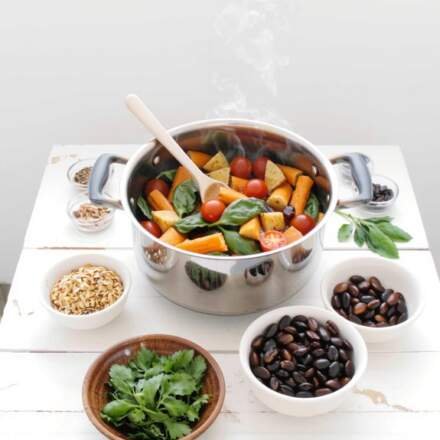
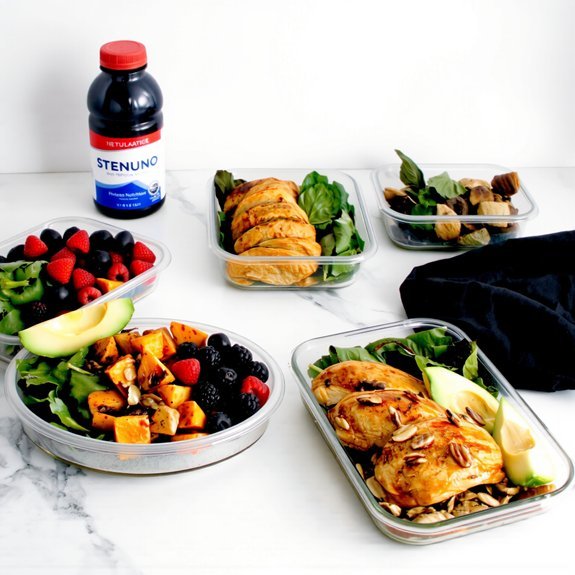
Use Batch Cooking for grains, roasted veg, and proteins so you just reheat.
Cook versatile bases—brown rice, quinoa, sweet potato—and rotate sauces to avoid boredom.
Chop vegetables and portion snacks in advance.
Use a Labeling System with contents, date cooked, and portion info; freeze extras in meal-sized containers.
Choose recipes that share ingredients to streamline prep.
Use sheet-pan roasting, slow cooker, and Instant Pot to free up time.
Schedule one or two blocks of prep per week and treat them like training sessions.
You’ll eat better, recover faster, and reduce decision fatigue.
Rotate breakfasts and lunches so variety stays simple yet efficient.
Conclusion
You now have a practical, performance-focused weekly plan that fits training, recovery and life. Use the daily templates, pre/post-workout timing, portion guides and hydration tips to power sessions and speed recovery. Swap ingredients for taste or diet, batch-cook staples, and pack portable snacks so you’ll stay consistent on busy days. Track portions against your training load, prioritize sleep-supporting dinners, and adjust calories as your workouts change to keep improving and enjoy sustainable gains over time.