
You can feed a family of four on $50 a week without living on rice and beans alone. With a two-week rotating menu, theme nights, and one weekly prep day, you’ll stretch staples like rice, dried beans, oats, pasta, and canned tomatoes into varied dinners. Keep going to get the shopping strategy, seven-day plan, and easy recipes that make it work.
Key Takeaways
- Build a two-week rotating menu using cheap staples: rice, beans, oats, pasta, canned tomatoes, and seasonal vegetables.
- Schedule one weekly prep session to batch-cook grains, beans, and chopped veggies for fast assembly.
- Use theme nights (e.g., taco, pasta, soup, stir-fry, breakfast-for-dinner) to simplify shopping and reduce decision fatigue.
- Shop sales, buy bulk staples, swap proteins (lentils for ground meat), and freeze markdowns to stretch a $50 weekly budget.
- Reuse leftovers as bowls, quesadillas, or soups; label and FIFO fridge rotation to minimize waste and save money.
Weekly Meal Framework and Planning Tips
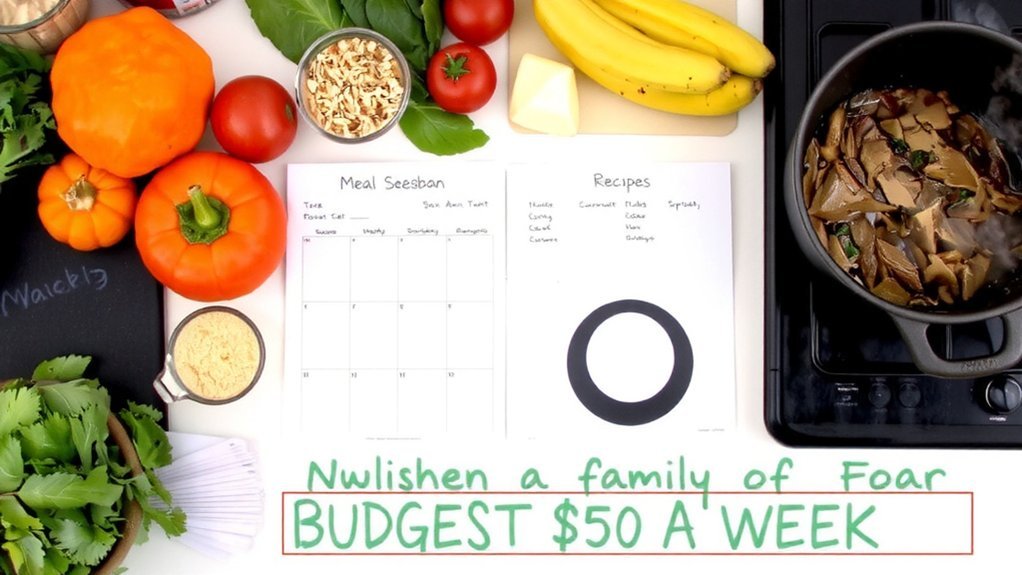
When you build a weekly meal framework, you’ll cut stress and stretch your grocery dollars—so pick theme nights (like Taco Tuesday, Pasta Thursday) to simplify choices, schedule one prep day for chopping and batch-cooking, and plan meals that reuse ingredients and leftovers.
Use Time Blocking to assign windows for planning, shopping, and cooking so tasks don’t spill into family time.
Create a rotating two-week menu that balances proteins, grains, and veggies, then adjust portions by Portion Mapping: note servings per person and scale recipes to avoid waste. Batch-cook versatile bases (rice, beans, roasted veggies) and store meal components separately for quick assembly.
Review the plan each weekend, swap recipes to keep variety, and track what your family actually eats. Adjust as tastes and schedules.
Smart Shopping: Sales, Bulk Staples, and Seasonal Picks
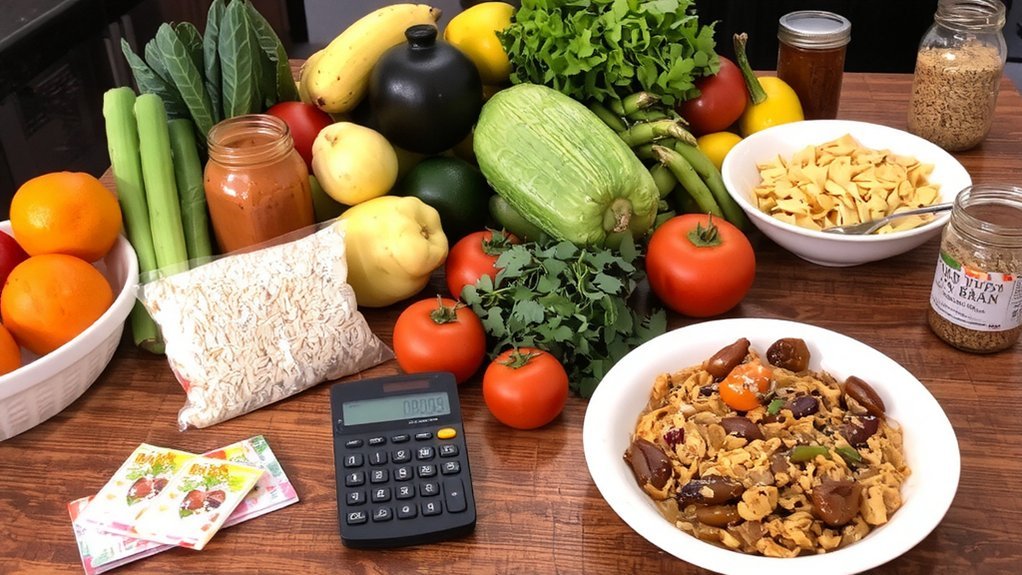
Often you can cut your grocery bill substantially by combining sale-hunting, buying versatile bulk staples, and choosing seasonal produce; plan around store flyers, stock up on nonperishables and freezer-ready items when they’re cheap, and prioritize fruits and veggies that are in season for better price and flavor.
You should scan weekly sales, map prices across stores, and use loyalty apps to time purchases.
Buy rice, beans, oats, pasta, and frozen vegetables in bulk for shelf life and meal flexibility.
Practice coupon stacking when it genuinely reduces cost, but avoid impulse buys.
Try clearance hunting for markdowns on proteins and bakery items to freeze immediately.
Keep a concise list, stick to unit prices, and rotate pantry stock to prevent waste.
You’ll save money every week.
7-Day Meal Plan With Simple Recipes for a Family of Four
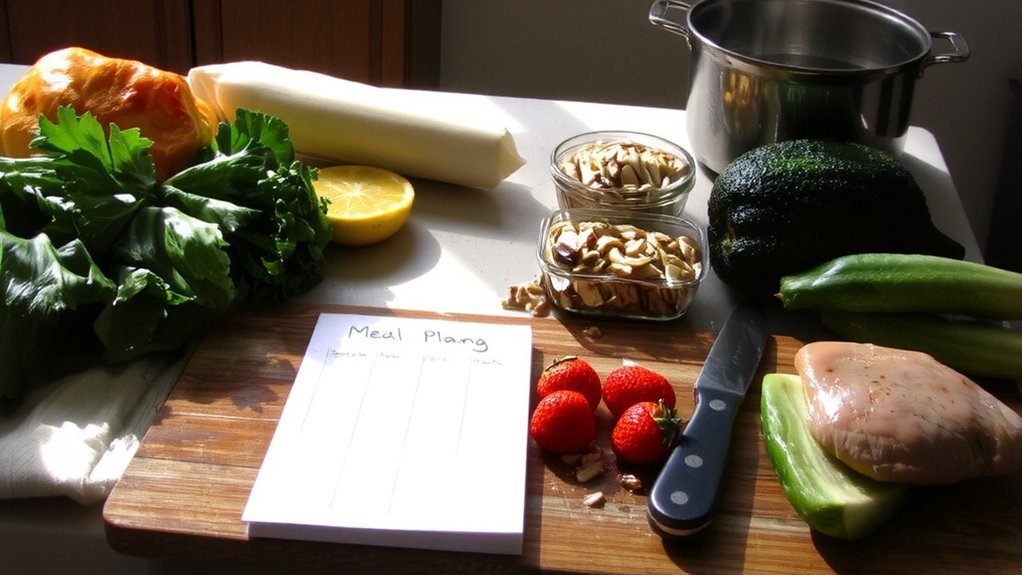
While keeping a tight budget, you can feed four with simple, tasty meals that reuse ingredients and minimize waste. Plan a day’s meals: breakfast—oat porridge topped with banana and peanut butter; pack extra for Kid Portions with a sliced apple.
Lunch—bean and cheese quesadillas, carrot sticks, and a small yogurt. Snack—popcorn or hummus with cucumber.
Dinner—Theme Nights make planning easy: Monday taco bowls with rice, seasoned beans, shredded lettuce, and salsa; serve smaller plates for Kid Portions. Include a quick vegetable side like steamed broccoli.
Provide simple recipes: cook rice once, heat beans with taco seasoning, assemble bowls. Label containers and set portions so meals stay predictable and affordable. Rotate Theme Nights weekly and adjust spice levels to suit tastes and nutritional needs regularly.
Stretching Ingredients, Leftovers, and Waste-Reduction Strategies
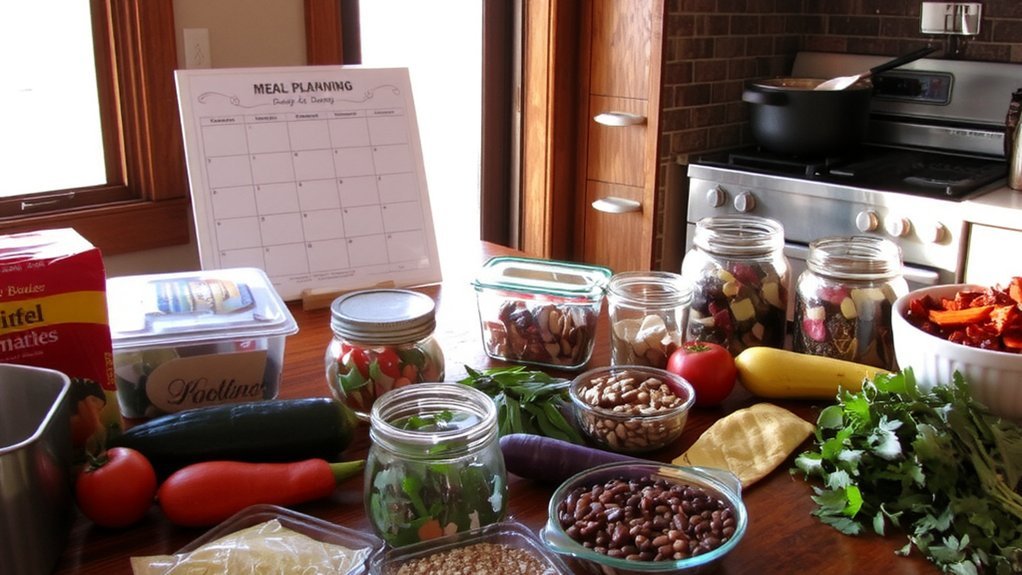
After you set up theme nights and predictable portions, use batch-cooking, smart storage, and simple repurposing to stretch ingredients and cut waste. You’ll cook once and freeze portions, trim bones for broth, and turn roasted veg into hearty soups. Use clear labels, FIFO fridge rotation, and airtight containers so nothing gets forgotten. Reimagine leftovers as bowls, quesadillas, or pasta tosses; kids often like variety more than reheated repeats. Keep a small bin for peelings and yard waste and follow Compost basics to reduce trash and nourish a garden. Track what’s tossed for a week to spot patterns. Below is a quick guide.
| Tip | Action |
|---|---|
| Batch cook | Freeze portions |
| Label & date | FIFO fridge rotation |
| Repurpose | Soups, bowls, quesadillas |
| Compost | Compost basics: peelings, eggshells tips |
Quick Swaps, Pantry Essentials, and Price-Shift Adjustments
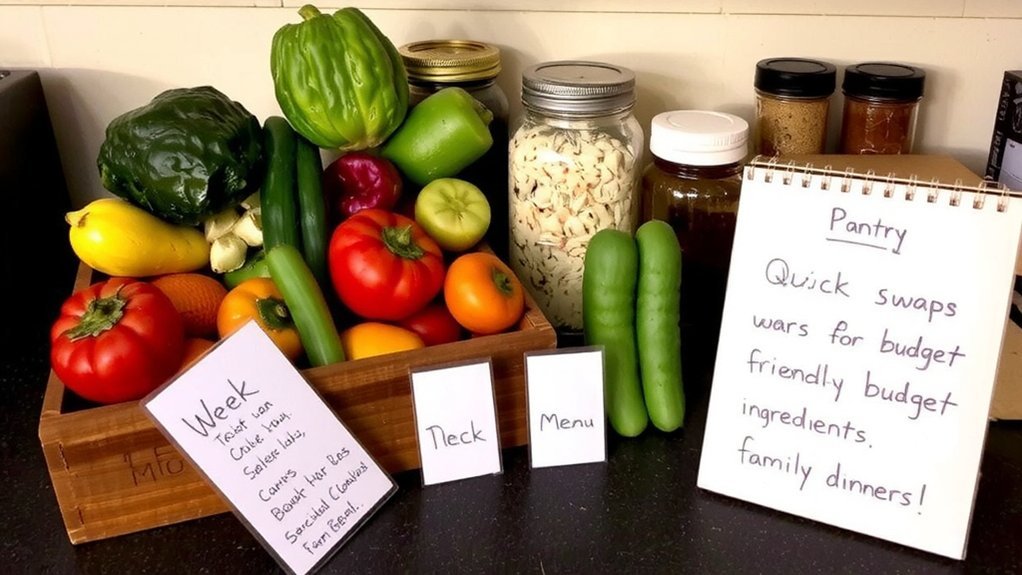
Stock a few flexible staples—rice, dried beans, canned tomatoes, oats, pasta, and a neutral oil—so you can make quick swaps when prices spike and keep meals filling and familiar.
When an item jumps, swap proteins (lentils for ground beef), grains (barley for rice), or veg (frozen for fresh) without changing recipes.
Build an Inflation Buffer by buying small extras of sale items and rotating them first.
Keep pantry organization simple: group staples, label dates, and use Label Literacy so you know contents, expiry, and prep notes at a glance.
Plan meals around what’s cheapest that week, and shop with a short list. Adjust recipes minimally—seasoning and texture tricks stretch substitutions into family favorites. You’ll save money, reduce waste, and feed everyone reliably each week.
Conclusion
You’ve got a practical plan that keeps meals tasty, flexible, and cheap. With theme nights, a weekly prep day, and staples like rice, beans, oats, pasta, and canned tomatoes, you’ll hit $50/week without feeling deprived. You’ll shop sales, buy seasonal produce, freeze portions, and swap lentils for meat when prices jump. Use leftovers for bowls, quesadillas, and soups to avoid waste, and you’ll stretch every dollar while feeding your family well and save time too.