
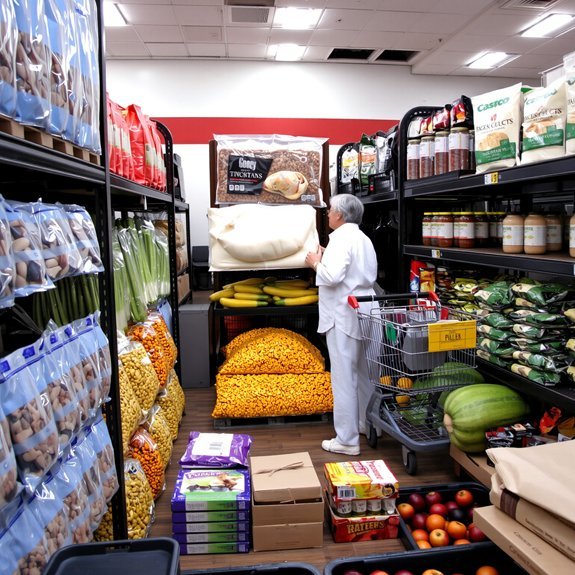

You’ll streamline weekly meals by using Costco-sized staples, seasonal produce, and two simple prep sessions. This plan focuses on batch breakfasts, portable lunches, one‑pot dinners, and freezer-ready portions to save time and cut waste. It also includes swaps for common diets and a shopping list — keep going to see the exact menus and step‑by‑step prep.
Key Takeaways
- Build weekly menus around bulk proteins (rotisserie, ground beef, chicken breasts, frozen shrimp) and versatile staples from Costco to lower per-meal cost.
- Plan two batch-cook sessions: a 90–120 minute Sunday prep and a midweek refresh to roast proteins, cook grains, and portion meals.
- Use Costco pantry essentials—rice, pasta, canned tomatoes, beans, olive oil, frozen vegetables—and rotate seasonal produce for variety and savings.
- Portion, vacuum-seal or freeze meal-sized packs, label with dates, and stack flat for fast thawing and minimal freezer waste.
- Swap easily for diets: tofu or chickpeas for vegetarian, cauliflower rice for keto, and certified gluten-free pasta when needed.
Why Bulk Shopping Works at Costco
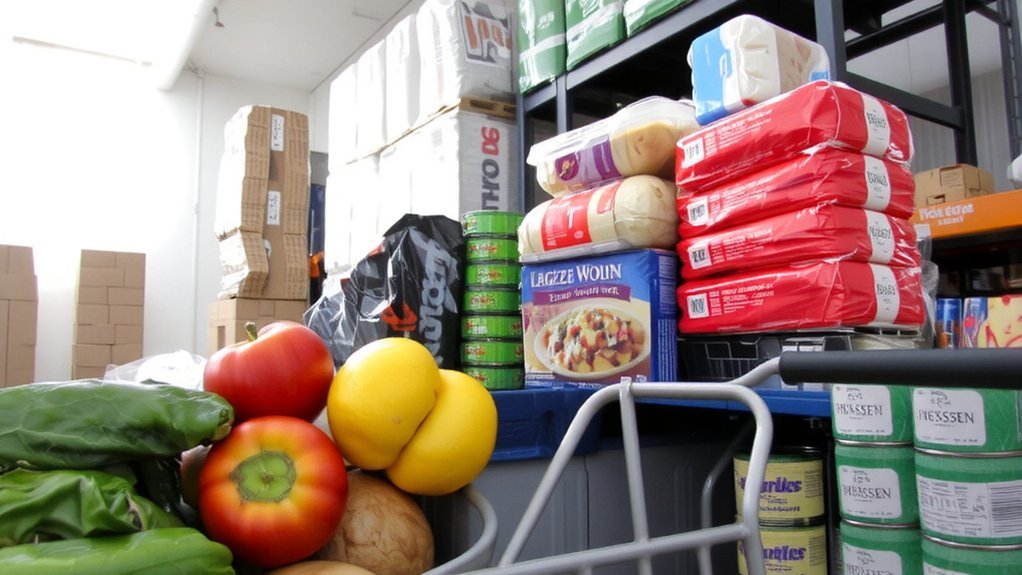
Many shoppers find buying in bulk at Costco cuts your per-unit cost and saves you time.
You’ll plan fewer trips because larger packs last longer, and you’ll reduce impulse buys by sticking to a list.
Membership Benefits include access to bulk pricing, exclusive deals and efficient checkout that justify the annual fee when you buy staples consistently.
You’ll also see value in portioning items into meal-sized containers to freeze or refrigerate, which keeps meals convenient.
Buying larger quantities can lower packaging waste per unit and support a Sustainability Impact by reducing frequent single-use purchases.
You’ll balance storage space and spoilage risk by choosing long-lasting goods, rotating stock, and sharing bulk buys with family or friends, and tracking usage helps you avoid unnecessary extra purchases.
Weekly Meal Plan Overview and Weekly Prep Goals
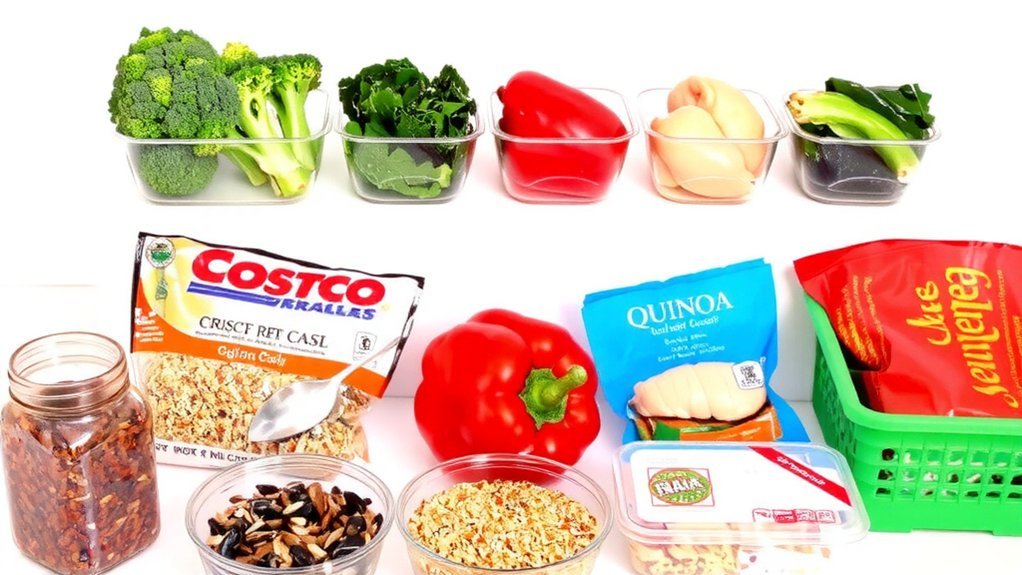
If you want to cut weekday cooking time and get the most from your Costco purchases, set a simple weekly meal plan and concrete prep goals. You’ll pick core proteins, versatile sides, and quick meals that reuse ingredients. Adopt a Prep Mindset: batch-cook proteins, pre-chop veggies, and portion snacks. Keep Budget Targets in mind—prioritize items that stretch across meals. Use this short planner to stay focused:
| Day | Main | Prep Task |
|---|---|---|
| Mon-Wed | Roast chicken | Slice, store |
| Thu-Sun | Bean bowls | Cook rice, portion |
Review portions midweek and adjust. Aim for two intensive prep sessions: one full shop and one midweek refresh. That approach saves time, reduces waste, and keeps costs predictable. You’ll enjoy simpler evenings, clearer shopping lists, and measured savings that match your family needs.
Breakfasts: Easy Bulk-Friendly Recipes
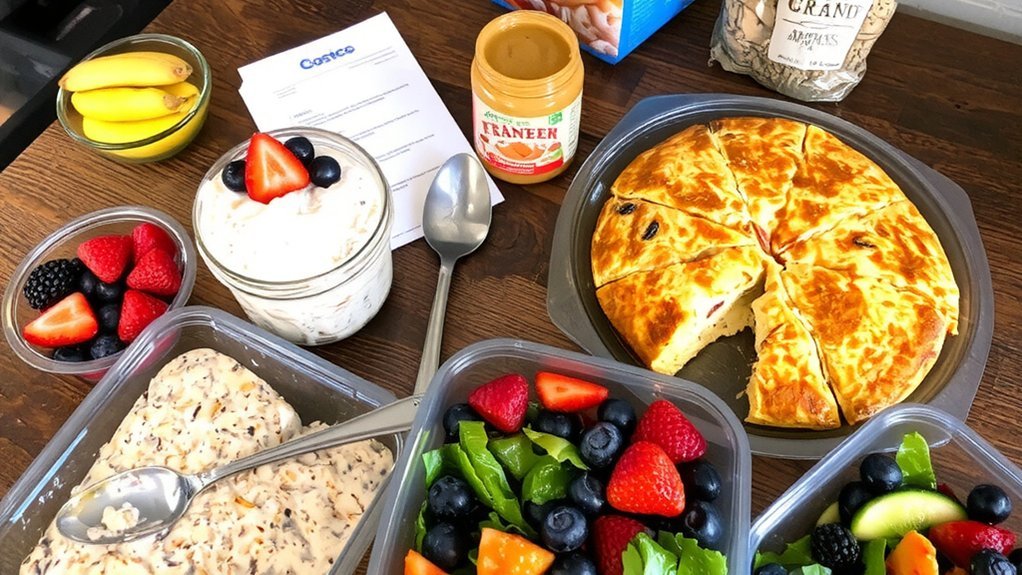
You can set up an overnight oats station for grab-and-go breakfasts that scale easily.
Make freezer breakfast sandwiches in batches with English muffins, eggs, cheese, and sausage or veggie patties for quick reheating.
Or bake a sheet-pan egg bake loaded with veggies and cheese, slice it, and freeze portions for the week.
Overnight Oats Station
When you set up an overnight oats station, you’ll grab bulk ingredients from Costco—oats, Greek yogurt, chia seeds, nuts, and frozen berries—and assemble grab-and-go breakfasts for the week in minutes. You’ll label jars, test flavor pairings like banana-cinnamon or berry-almond, and streamline portions. Use mason jars for durability and Jar aesthetics; layer colors and textures so they look appealing.
| Mix | Topping |
|---|---|
| Banana-cinnamon | Walnuts |
| Berry-almond | Almond slivers |
Keep wet components chilled and prep dry mixes in airtight bags. In the morning, stir, top with toasted nuts or a drizzle of honey, and grab your breakfast. Quick swaps (maple for honey, almond milk for yogurt) keep variety easy. You’ll also rotate toppings weekly to use Costco bulk finds and avoid flavor fatigue efficiently. It saves money.
Freezer Breakfast Sandwiches
Prepping freezer breakfast sandwiches saves time and money: assemble batches with Costco English muffins or bagels, bulk eggs or egg bites, sliced ham or sausage patties, and your favorite cheese, then flash-freeze and store in labeled freezer bags for weeks.
You’ll portion ingredients to guarantee consistent reheating and wrap each sandwich in parchment before bagging to prevent sogginess.
Use vacuum sealing or resealable bags as Packaging innovation to extend quality and cut freezer burn. Label each packet with date, contents, and reheating instructions to meet any home food safety needs and mimic Regulatory labeling standards for family use.
Reheat from frozen in a toaster oven or microwave-safe cover for even heat. Rotate stock by date so nothing lingers past ideal flavor. Enjoy simple mornings.
Sheet-Pan Egg Bake
Bake a crowd-sized egg casserole on a single sheet pan for quick breakfasts that last the week.
You’ll whisk eggs with milk or Greek yogurt, add shredded cheese, chopped vegetables, cooked sausage or bacon, and seasonings.
Understand Bake chemistry: eggs set as proteins coagulate, fats and dairy influence texture, and steam from veggies affects moisture.
Use sturdy Pan materials—aluminum or stainless steel with rimmed edges—to guarantee even heat and easy sheet removal.
Line the pan with foil or parchment for faster cleanup and portion in squares once cooled.
Store portions in airtight containers or freeze for longer.
Reheat slices in a toaster oven or microwave for fast, consistent breakfasts that save time and money when you shop Costco in bulk every month and seasonally.
Lunches: Make-Ahead Meals for Work and School
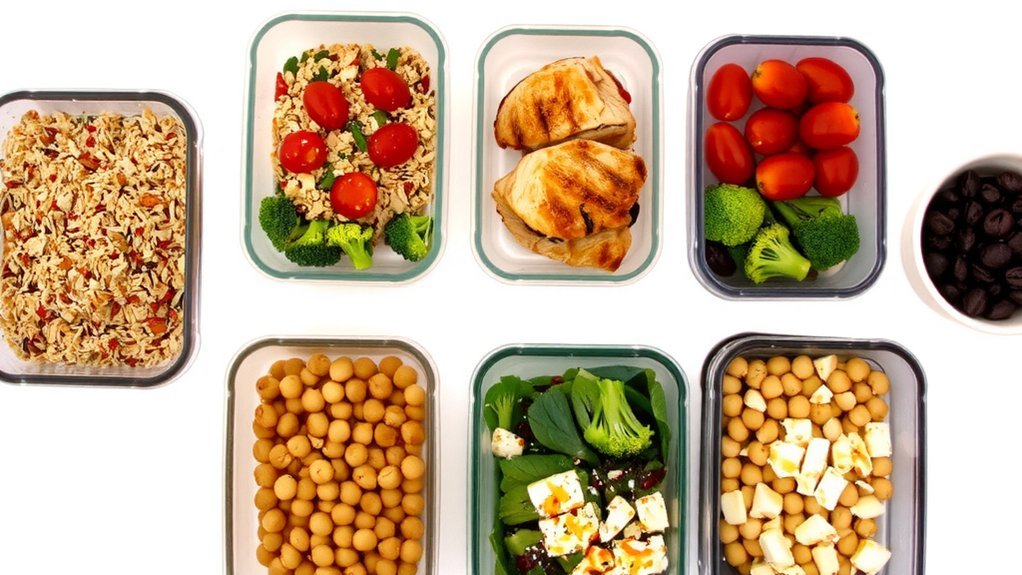
Packing lunches ahead saves time and stress—you’ll use Costco staples like rotisserie chicken, frozen quinoa, mixed vegetables, and bulk hummus to assemble varied, grab-and-go meals for work and school. Pack Salad Jars layered with dressing, quinoa, chicken and veggies; use Bento Boxes to portion dips, fruit, and snacks so nothing gets soggy.
Prep two or three different bases—grain bowls, wraps, or pasta salads—then rotate proteins and sauces to keep things interesting. Store portions in freezer-safe containers for longer shelf life, labeling dates.
Reheat or grab cold depending on preference. With a focused shopping list and 60–90 minutes of Sunday prep, you’ll save time, reduce waste, and eat better all week.
Freeze extras for quick weekday lunches, and rotate spices to avoid boredom each month.
Dinners: Family-Friendly Favorites and One-Pot Meals
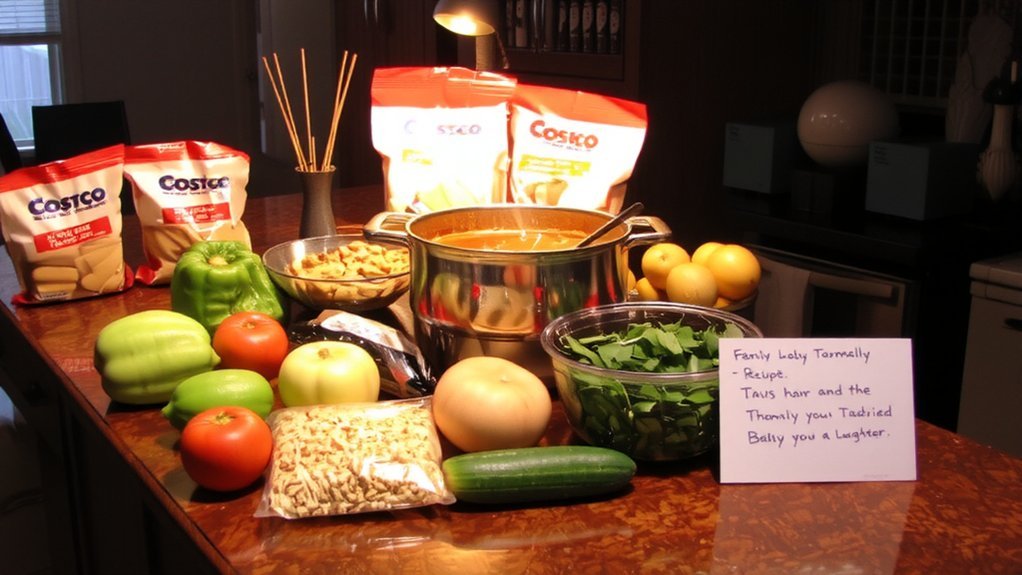
You can simplify weeknight dinners with family-friendly one-pot recipes that use Costco staples.
They’ll save time, cut cleanup, and still please picky eaters with familiar flavors.
With a few versatile ingredients you can make kid-approved meals everyone will actually eat.
Family-Friendly One-Pot Dinners
Several one-pot dinners make weeknights easier because they cut prep, minimize dishes, and please picky eaters; you’ll get hearty, balanced meals from a single skillet, Dutch oven, or sheet pan with simple ingredients from Costco.
Pick proteins like rotisserie chicken, ground beef, or shrimp, add frozen vegetables, whole grains, and a can of beans or tomatoes for fiber and flavor.
Use spice mixes and stock cubes from bulk bins to save time.
Rotate Mexican-style skillet, lemon-garlic pasta, chicken and rice casserole, or sheet-pan sausage with potatoes.
Let kids join taste experiments as you teach safe steps, turning cooking into cooperative kitchen games without creating separate meals.
Store leftovers in labeled containers for fast lunches and stress-free dinners all week.
Prep lists simplify shopping weekly.
Kid-Approved Weeknight Meals
After mastering one-pot dinners, you’ll focus on kid-approved weeknight meals that mix family favorites with quick, healthy tweaks.
You’ll rotate simple recipes—sheet-pan chicken, turkey tacos, baked salmon bites—and use Costco bulk staples to streamline prep.
Turn evenings into Taste testing Games: label containers, blind-sample sauces, let kids vote to build buy-in.
Use Dinner Negotiation techniques: offer two vetted options, swap veggies into favorites, and set a short timer for decisions.
Prep components on weekends—grain, roasted veg, protein—for 15-minute assembly.
Keep seasonings mild with optional add-ins for adults.
You’ll reduce whining, cut waste, and keep dinners nutritious without extra work.
Repeat favorites and introduce one new dish each week to expand palates.
Rotate sauces, involve kids in shopping lists, and gently praise adventurous bites daily.
Snacks, Sides, and Portable Bites From Costco Finds
Stocking up at Costco means you’ll find snacks and sides that travel well, feed a crowd, and save time.
You can grab Party Platters for easy gatherings, salads for quick sides, and snack-size portions that keep lunches moving.
Use Snack Swaps by replacing pricier single-serve items with mixed nuts, hummus tubs, and cut fruit trays.
Build portable bites for work or school with assembly.
- Rotisserie chicken sliders — shred, add sauce, pack.
- Cheese and cracker packs — mix varieties for interest.
- Veggie trays with dip — ready-made and crisp.
- Mixed trail mix — portion into reusable bags.
These Costco finds lower prep time, stretch budgets, and simplify weeknight routines.
You’ll get consistent quality that makes planning meals painless, reliably too.
Special Diet Swaps: Vegetarian, Keto, and Gluten-Free Options
Wondering how to adapt Costco staples to vegetarian, keto, or gluten-free diets? You can swap proteins, choose low-carb produce, and read labels carefully. Practice label decoding to spot hidden gluten, sugars, or non-veg additives, and avoid bulk items with shared lines that risk cross contamination. Use this quick visual guide:
| Diet | Swap Idea | Costco Picks |
|---|---|---|
| Vegetarian | Replace deli meat | Rotisserie chicken → tofu, canned chickpeas |
| Keto | Swap carbs for fat | Rice → cauliflower rice, avocados, nuts |
| Gluten-Free | Choose certified items | Pasta → GF quinoa or rice pasta, certified snacks |
You’ll save money and stay compliant by checking ingredient lists and choosing sealed, certified products. Also, prioritize sealed multipacks, certified labels, and rotate menu components so you’re not juggling incompatible items or risking accidental gluten exposure while feeding
Storage, Freezing, and Portioning to Prevent Waste
Because you buy in bulk, plan how you’ll store and portion items before you put them away: divide proteins into meal-sized packs,
transfer dry goods to airtight containers,
label with dates,
and freeze extras in flat, stackable bags to speed thawing and avoid freezer burn.
Use Portion Psychology to set portions that match appetites, then reseal or freeze.
Keep an inventory list on your phone so you rotate and avoid spoilage.
For scraps, use Compost Strategies for peels and trimmings instead of tossing them.
Follow these four actions:
- Freeze meals flat for quick thaw.
- Portion snacks into single-serve bags.
- Vacuum-seal proteins in meal portions.
- Store grains in clear, dated jars.
You’ll reduce waste, save money, and eat fresher meals.
Costco Shopping List: Pantry Staples and Seasonal Picks
When you shop Costco, stick to pantry essentials like bulk olive oil, canned beans, rice, and versatile spices to build reliable meals. You’ll also want to pick seasonal produce—berries in summer, squash and apples in fall—to keep flavors fresh and costs down.
Balance staples with seasonal picks so your meal plan stays flexible, nutritious, and budget-friendly.
Pantry Essentials
Stocking your pantry at Costco saves money and cuts down on shopping trips.
You’ll focus on pantry essentials: bulk rice, canned tomatoes, olive oil, and versatile spices.
Compare brands for quality and price — brand comparisons help you pick items that last and taste better.
Think about shelf aesthetics too; clear bins and labeled jars make decanting bulk simple and tidy.
Here’s a concise buying checklist:
- Rice, pasta, grains (bulk bags)
- Canned goods & broths (long shelf life)
- Cooking fats & oils (olive, avocado)
- Spices, sugar, salt (refillable containers)
Buy measured quantities that suit your consumption rate, rotate stock by date, and avoid impulse oversized packs you won’t finish.
Plan meals around staples to minimize waste and maximize savings daily.
Seasonal Produce Picks
How do you pick the best seasonal produce at Costco to get quality, value, and less waste? Start by scanning Farmer Varieties labels—local batches often taste better and last longer.
Check the Ripeness Guide signs or ask staff for harvest timing; choose firm, unbruised pieces and a mix of ready-to-eat and slightly underripe items so nothing spoils simultaneously.
Buy bulk for recipes that freeze, can, or share with neighbors. Prioritize versatile items (apples, carrots, winter squash, leafy greens) and compare unit prices against smaller stores.
Inspect packaging for condensation or damage, and separate delicate fruit at checkout. With a simple plan you’ll save money, reduce waste, and enjoy fresher produce week after week.
Rotate purchases monthly and note favorites for future Costco runs regularly.
Time-Saving Meal Prep Schedule and Batch-Cooking Strategies
Batch-cooking on a Sunday slashes weekday prep: pick 2–3 proteins, roast vegetables, and cook a grain or legume in big batches, then portion meals you’ll grab and heat.
Use workflow optimization and kitchen ergonomics—set stations for chopping, roasting, cooling, and packing to move efficiently.
Plan flavors so components mix across meals and label containers with reheating times.
- Map a 90–120 minute plan: oven, stovetop, and cooling rotations.
- Prioritize proteins first, then grains, then quick vegetables.
- Use multi-purpose sauces and spice blends to vary meals.
- Freeze twice-weekly batches and thaw overnight for freshness.
You’ll save time, reduce waste, and maintain consistent weeknight dinners.
Rotate proteins monthly, track favorites, and adjust portions so your weekly shopping from Costco stays efficient and simple.
Conclusion
You’ll save time and money by using Costco’s bulk staples, seasonal produce, and rotisserie chicken to build flexible breakfasts, grain bowls, one‑pot dinners, and portable lunches. By prepping two sessions—Sunday bulk assembly and a midweek refresh—you’ll portion, label, and freeze meals to reduce waste, simplify reheating, and rotate stock. Vary flavors with sauces and spice blends, swap proteins for diets, and enjoy stress‑free weekly meals that scale for family needs and save even more monthly.
