
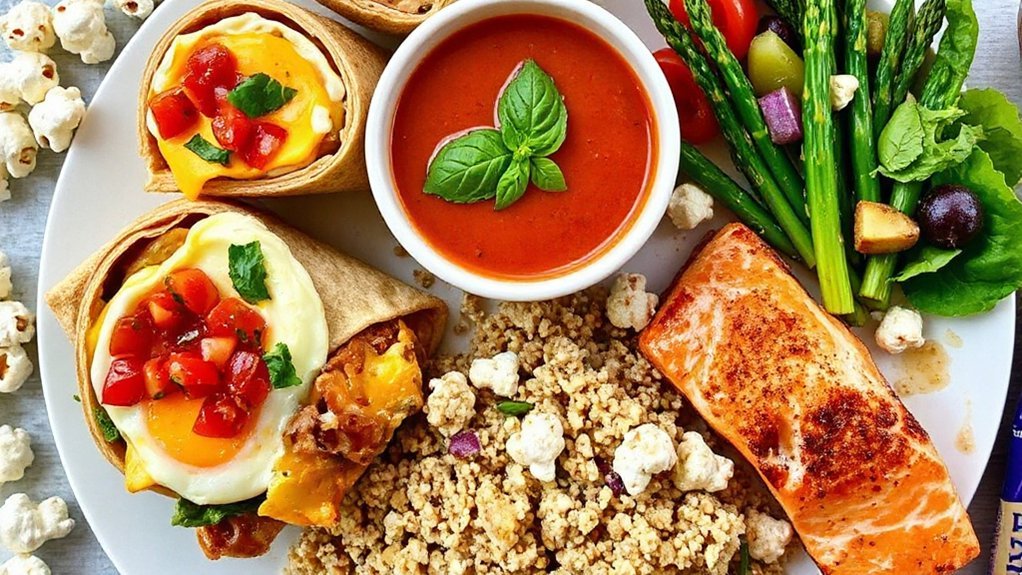

You’ll start Day 3 with a hearty breakfast burrito—seasoned eggs, melting cheese, salsa, black beans and crispy hash browns—then move to a turkey and provolone panini with tomato basil soup and pickles. Dinner brings baked salmon, roasted asparagus and a quinoa pilaf, with popcorn and a protein bar for snacks. Keep going to see the simple techniques that make each element shine…
Breakfast Burrito Essentials
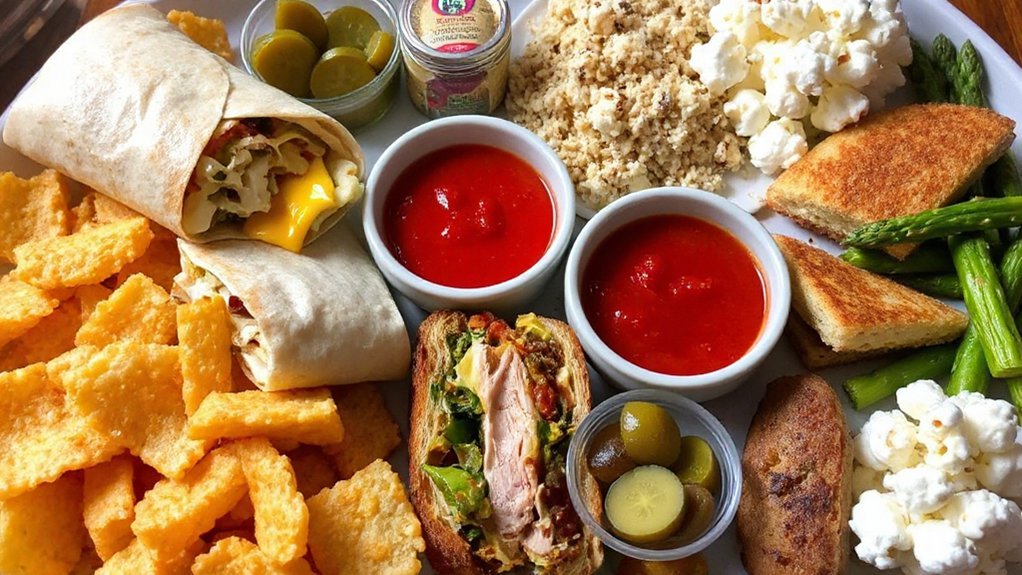
A great breakfast burrito starts with a warm, pliable tortilla, well-seasoned eggs, melting cheese, and a balance of fillings that add texture and flavor.
You’ll choose eggs cooked soft but set, seasoned with salt, pepper, and a touch of cumin or chili for warmth. You’ll pick a cheese that melts smoothly—cheddar, Monterey Jack, or provolone—for creaminess.
Include black beans rinsed and warmed, and crisp hash browns for crunch. Salsa should be bright and acidic to cut richness; use a chunky pico or roasted tomato salsa.
For protein variety, turkey offers lean, seasoned slices. Finish components at proper temperature: hot eggs, warm beans, melted cheese, and crisp potatoes, so each bite tastes intentional without overcomplicating prep.
You’ll aim for balanced portions and clean, efficient prep.
Assembling the Perfect Breakfast Burrito
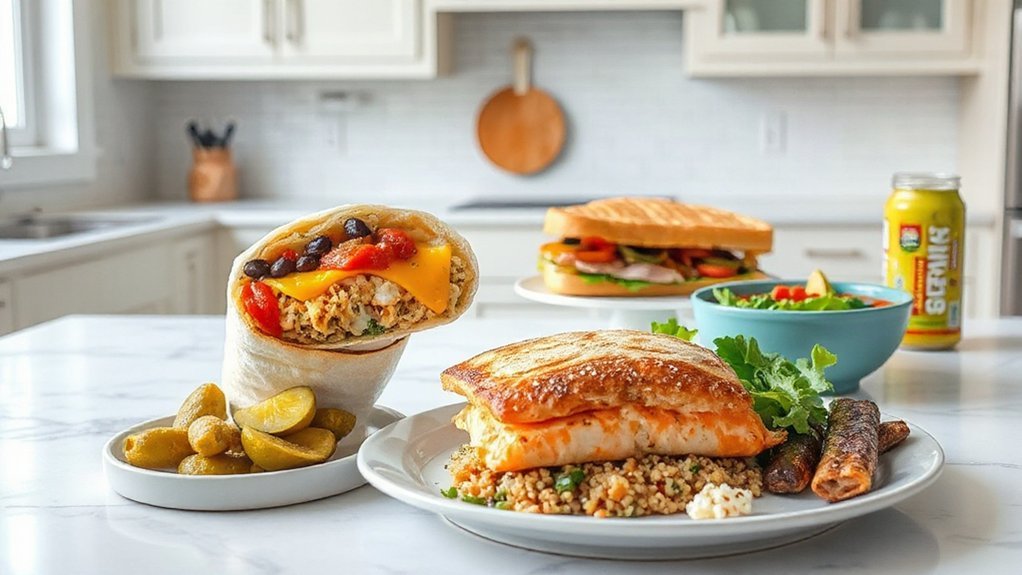
Every step matters when you assemble the perfect breakfast burrito: you’ll layer hot, seasoned eggs and melted cheese closest to the tortilla, add beans and potatoes for body, then salsa and any greens or turkey for brightness and protein.
Fold with purpose: pull the bottom edge up over fillings, tuck sides in, and roll tight to seal warmth and prevent leaks. Keep fillings centered and leave a two-inch border so the tortilla wraps cleanly.
Warm the tortilla to make it pliable, then press seam-side down to finish. If you like, toast the wrapped burrito for a crisp exterior and melted cheese.
Serve with extra salsa, a squeeze of lime, or chopped cilantro to brighten flavors. Cut in half to show layers and ease eating.
Crafting Crispy Hash Browns
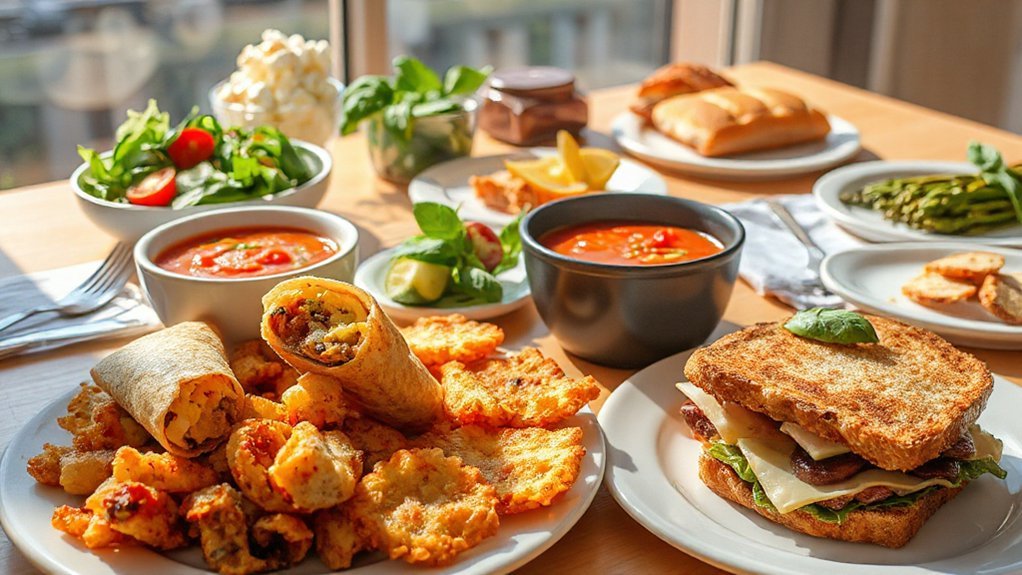
To make ultra-crisp hash browns, grate the potatoes and wring out as much moisture as you can—use a towel or cheesecloth—so they’re dry before they hit a hot, oiled skillet.
Patience pays: spread the shredded potatoes into a thin, even layer, press down with a spatula, and don’t flip until the edges turn golden and release easily.
Use a mix of butter and neutral oil for flavor and higher smoke point. Keep the pan hot but not smoking; medium-high gives a brown crust without burning.
Season lightly with salt after they start to brown so moisture doesn’t leach. For extra crunch, let them rest on a rack briefly before serving.
You’ll get crisp, tender centers every time. Adjust thickness and time to suit preference.
Seasoning and Serving Black Beans and Salsa
When seasoning black beans and salsa, taste as you go and build layers of salt, acid, and heat: a pinch of salt and a squeeze of lime brightens beans, while a bit of cumin or smoked paprika adds depth and a touch of garlic and onion anchors the flavors.
Adjust textures by mashing some beans for creaminess and leaving others whole for bite. Warm beans gently with a splash of reserved bean liquid or broth, then finish with chopped cilantro and more lime.
For salsa, balance tomatoes’ sweetness with minced jalapeño, red onion, and a little sugar if needed.
Serve both at room temp or warm, offer lime wedges, chopped cilantro, and hot sauce so diners’ll customize each spoonful and enjoy bright, layered flavors.
Turkey and Provolone Panini Techniques
Three basics will make your turkey and provolone panini sing: layer for balance, heat to melt cheese and crisp bread, and press just long enough to bind fillings without squeezing out juices.
Start with sturdy bread, like ciabatta or sourdough, and spread a thin layer of butter or olive oil for even browning. Layer provolone directly on the bread near the heat source so it melts into turkey slices; add a single crunchy element—pickles or arugula—for contrast.
Preheat your press or skillet until medium-high, then cook two to four minutes per side, checking color and cheese melt.
Rest the sandwich a minute before slicing to let juices redistribute. Cut diagonally and serve hot for best texture and flavor. You’ll notice perfect melt and crunch, always.
Making Comforting Tomato Basil Soup
Although simple, a well-made tomato basil soup delivers deep, comforting flavor with bright herbal lift. You start by roasting ripe tomatoes and garlic with olive oil until caramelized; that concentrates sweetness and reduces acidity.
Sauté onion until translucent, deglaze with a splash of stock, add the roasted tomatoes and more broth, then simmer briefly to marry flavors. Purée until smooth — use an immersion blender for control — then taste and balance with salt, pepper, and a touch of sugar or vinegar if needed.
Stir in chopped fresh basil and a swirl of cream or yogurt for silkiness, but add dairy off heat so it won’t separate. Serve hot, garnish with basil and a grind of black pepper.
Leftovers keep refrigerated for three days.
Pickles: Types and Pairing Ideas
Bright, tangy pickles can cut through the creaminess of tomato basil soup and lift an entire meal. You’ll find several types to match textures and flavors: crisp dill spears for sharpness, bread-and-butter slices for sweet-sour balance, and quick-pickled cucumbers with garlic and chili for brightness and heat.
Try cornichons with a rich sandwich or panini to add acidity without overwhelming fillings. Use pickled onions to brighten salads and grain dishes, or serve pickled beets for earthy sweetness alongside roasted vegetables.
For snacking, pair pickle chips with cheese or a protein bar substitute for crunch. Keep portions small so acidity complements rather than dominates, and balance salt levels across dishes to maintain harmony.
You can vary brine time to dial intensity and crispness precisely too.
Simple Baked Salmon Preparations
One simple approach is to roast skin-on salmon fillets: pat them dry, rub with olive oil, season with salt and pepper, top with lemon slices, and bake at 400°F (200°C) for about 10–12 minutes per inch of thickness until the flesh flakes easily—finish with fresh herbs or a quick pan sauce.
You can also wrap portions in foil with aromatics and a splash of white wine or citrus to steam the fish gently, which keeps it moist and cuts cleanup.
For bolder flavor, brush a honey-soy or Dijon-mustard glaze before baking, or press panko mixed with Parmesan and herbs onto the top for texture.
Check doneness at the thickest part, let it rest briefly, then serve with grains, greens, or pickles and enjoy immediately.
Roasted Asparagus Tips and Tricks
If you want crisp-tender asparagus, trim the woody ends, toss the spears in just enough oil to coat, and spread them in a single layer so they roast instead of steam.
Pat spears dry to help browning, and choose even-thickness pieces so they finish together.
Roast at high heat — 425°F works well — for 10–15 minutes depending on thickness; flip once for uniform caramelization.
Season simply with salt and freshly ground pepper, add a squeeze of lemon after roasting, and finish with grated Parmesan or toasted breadcrumbs if you like texture.
Don’t overcrowd the pan or use too much oil, and check early to avoid limp, overcooked spears.
Serve immediately for best texture. You can reserve tips and thicker stems for different timings.
Quinoa Pilaf, Side Salad and Snack Pairings
Quinoa pilaf gives you a nutty, protein-rich base that balances the asparagus’ brightness and soaks up pan juices.
Pair it with a simple side salad of peppery arugula, cherry tomatoes, cucumber and a lemon vinaigrette to add freshness and acidity.
You’ll want contrasting textures: crunchy seeds or toasted almonds, creamy avocado, and a sprinkle of feta or goat cheese.
For snacks, choose light options that won’t overwhelm the meal — air-popped popcorn seasoned with smoked paprika, a plain protein bar if you need satiety, or crisp apple slices with almond butter.
These pairings keep flavors focused, boost nutrients, and let the baked salmon remain the star while making the plate more satisfying.
You’ll finish satisfied, energized, and ready for a light afternoon or walk afterward.
Conclusion
You’ve built a balanced Day 3 menu that fuels activity and satisfies cravings. Start with the hearty breakfast burrito—eggs, cheese, salsa, black beans and crispy hash browns—then enjoy a warm turkey and provolone panini with tomato basil soup and pickles. Finish with flaky baked salmon, roasted asparagus, quinoa pilaf and a fresh side salad, snacking on popcorn and a protein bar to keep energy steady throughout your day so you feel nourished, satisfied, and ready.
