
You’re managing blood sugar and want meals that fit your life, not the other way around. This plan gives balanced breakfasts, lunches, dinners, and snack swaps that aim for steady glucose, simpler shopping, and easier prep. Keep going—there’s a practical 7‑day template and clear portion cues to help you apply it.
Key Takeaways
- Use a weekly 7‑day menu with balanced meals: half nonstarchy veg, quarter lean protein, quarter whole grains or starchy veg per plate.
- Aim for 30–45 g carbohydrates per meal and 15–20 g per snack, spacing three meals and one or two snacks daily.
- Prep staples (cooked grains, beans, roasted veg, proteins) and batch‑cook to simplify portioned, blood sugar–friendly meals.
- Prioritize low‑GI carbs, fiber‑rich foods, lean protein, and healthy fats; use herbs, vinegar, and umami to boost flavor without sugar.
- Track carbs and postprandial glucose trends weekly and adjust portions or timing with your care team for medication alignment.
Understanding Blood Sugar–Friendly Eating
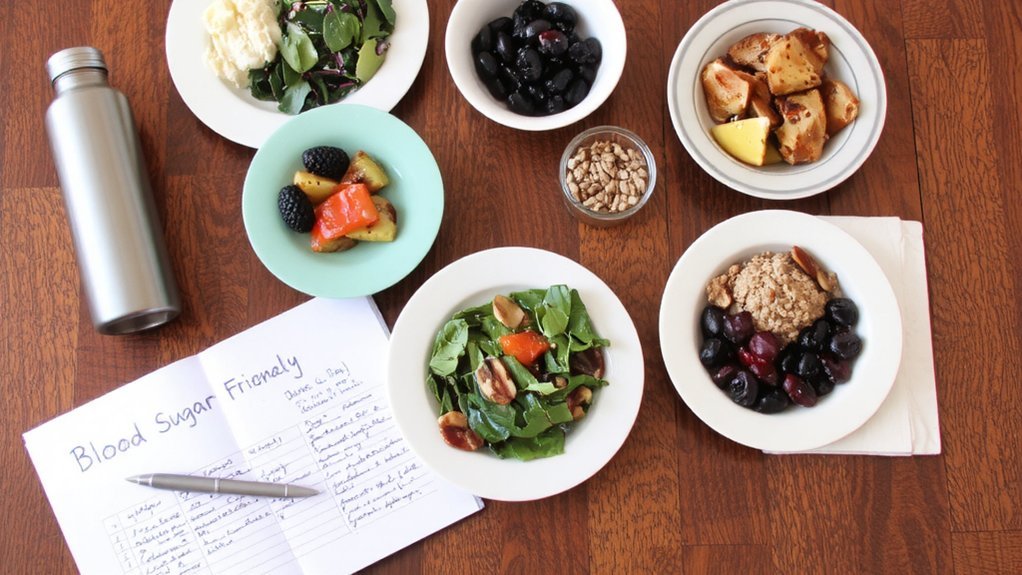
How you eat affects your blood sugar every time you sit down to a meal. You’ll steady levels by choosing balanced portions of carbohydrate, protein, and healthy fat, and by spacing meals to avoid large glucose swings.
Pay attention to Hormonal influences—insulin, and stress hormones change how your body stores and uses sugar, so sleep, movement, and stress management matter.
Prioritize fiber-rich foods and fermented options that support your Gut microbiome, since microbes influence digestion and insulin sensitivity.
You’ll monitor portion sizes and prefer low-glycemic carbohydrates, but you won’t eliminate carbs unless advised. Track patterns: note which foods spike you and which keep you stable, then adjust meals to match activity and medication timing for consistent control, and review with your care team.
How to Use This Weekly Menu
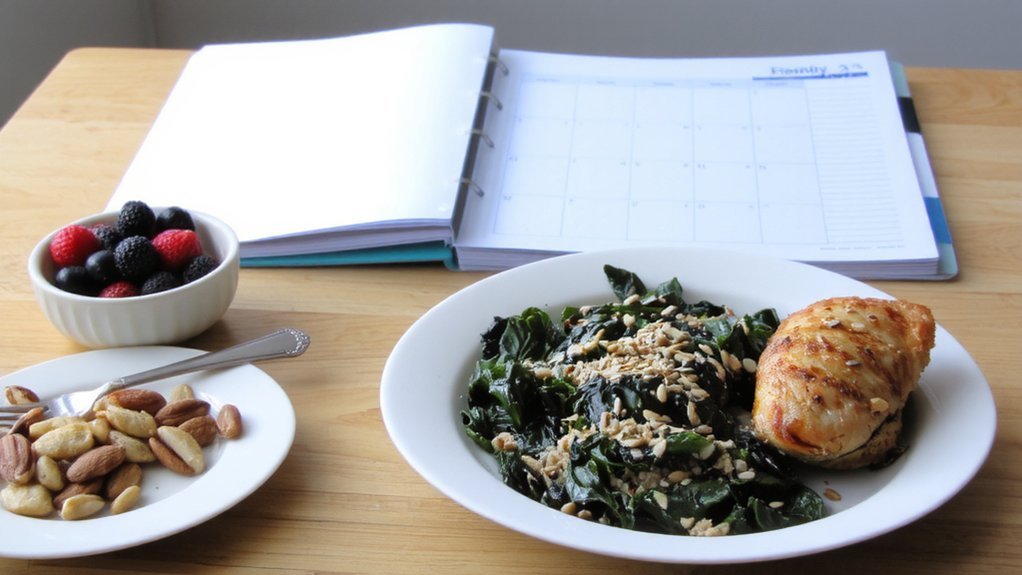
Why start with this weekly menu? You’ll get a clear, practical template that balances carbs, protein, and fiber so you can stabilize glucose without guessing.
Use it as a baseline: rotate meals, swap equivalents, and track portions to see what works.
Before you cook, check calendar syncing to align meals with appointments, workouts, or clinic days.
You can print, export, or load the plan into your phone so reminders keep you on track.
Make family customization by swapping side dishes, adjusting portions for kids or partners, and using shared grocery lists so everyone eats similar, healthful options.
Reassess weekly, note blood sugar trends, and tweak meals—this keeps the plan realistic and sustainable.
If needed, consult your care team to personalize portions and medications safely.
Breakfasts: Fast and Balanced Options
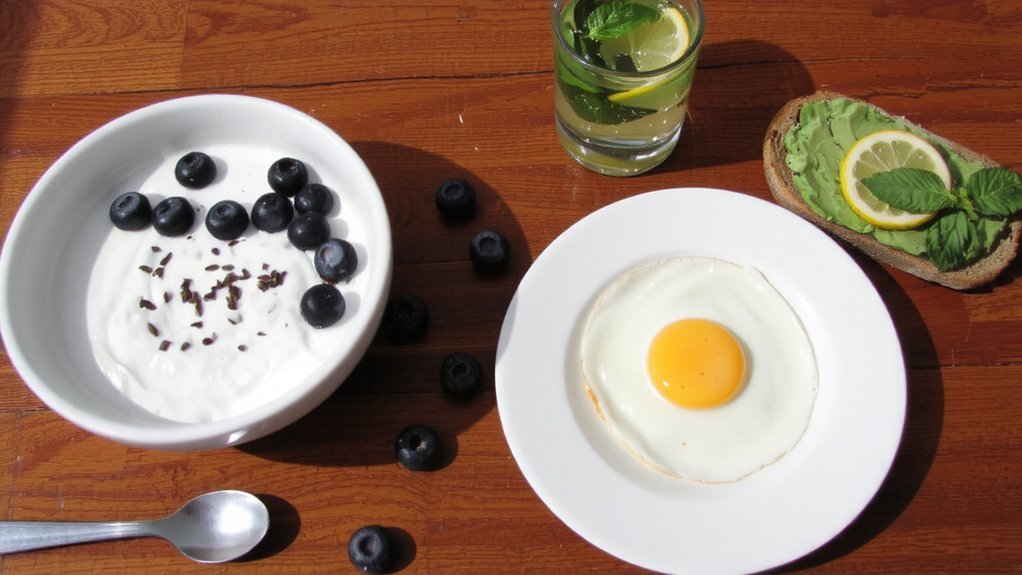
You can start mornings with high-protein quick choices like Greek yogurt, cottage cheese, or hard‑boiled eggs to help keep blood sugar steady.
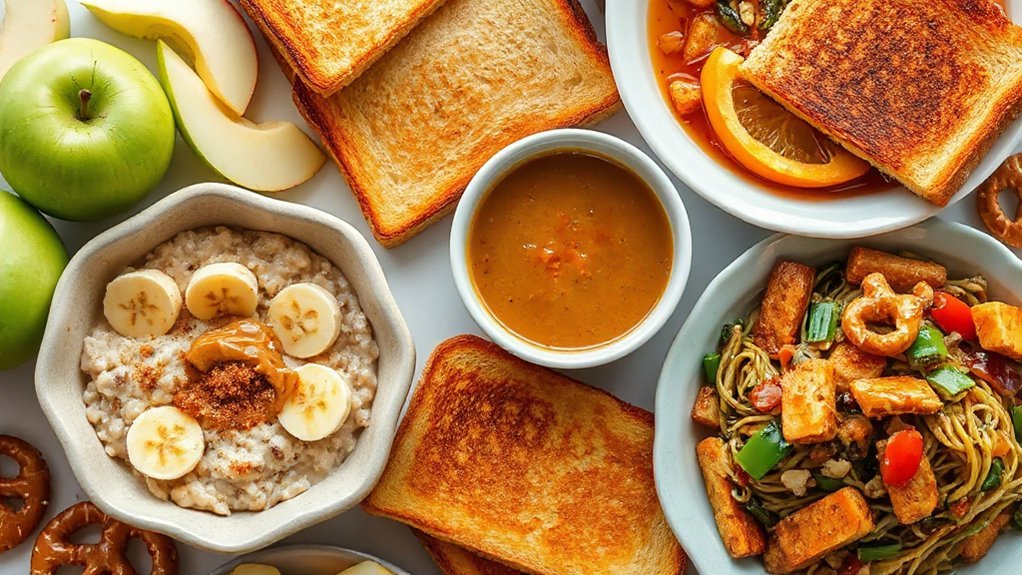
Pair those with low‑GI grains such as steel‑cut oats, quinoa, or whole‑grain toast for longer-lasting energy.
We’ll cover simple combos and timing so you can mix fast, balanced breakfasts through the week.
High-Protein Quick Choices
Grab a high-protein breakfast that’s ready in minutes to help stabilize blood sugar and keep you full until lunch.
Choose Greek yogurt or cottage cheese topped with berries and a sprinkle of chopped nuts for protein and fiber.
Hard‑boiled eggs are portable and simple; peel one, add pepper, eat.
Blend a quick protein shake with unsweetened milk or a plant-based alternative if you’re mindful of environmental impact and animal welfare.
Toss firm tofu with spices and microwave briefly for a savory bowl.
Smoked salmon on cucumber slices gives omega‑3s without carbs.
Nut butter with apple slices works when you need portable fuel.
Prep portions the night before to avoid morning decisions and maintain steady glucose control.
Rotate choices to prevent boredom and promote variety.
Low-GI Grain Options
Adding low‑GI grains to your morning meal balances the protein choices above and gives steady glucose release to keep you satisfied until lunch.
Choose intact grains like steel‑cut oats, barley, and quinoa; they digest slower and cut postprandial spikes.
Mix a small portion with Greek yogurt or cottage cheese, add nuts and cinnamon for flavor without sugar.
Consider Cultural Heritage — many traditions favor whole grains that pair well with savory or sweet toppings, making adherence easier.
Watch Processing Effects: instant oats and flour raise GI compared with minimally processed kernels.
Portion control matters; a modest serving (¼–½ cup cooked grains) complements protein and fiber.
Rotate grains to diversify nutrients and keep meals interesting.
You’ll notice steadier energy and easier blood sugar control daily.
Lunches: Portable and Glucose-Stabilizing Meals
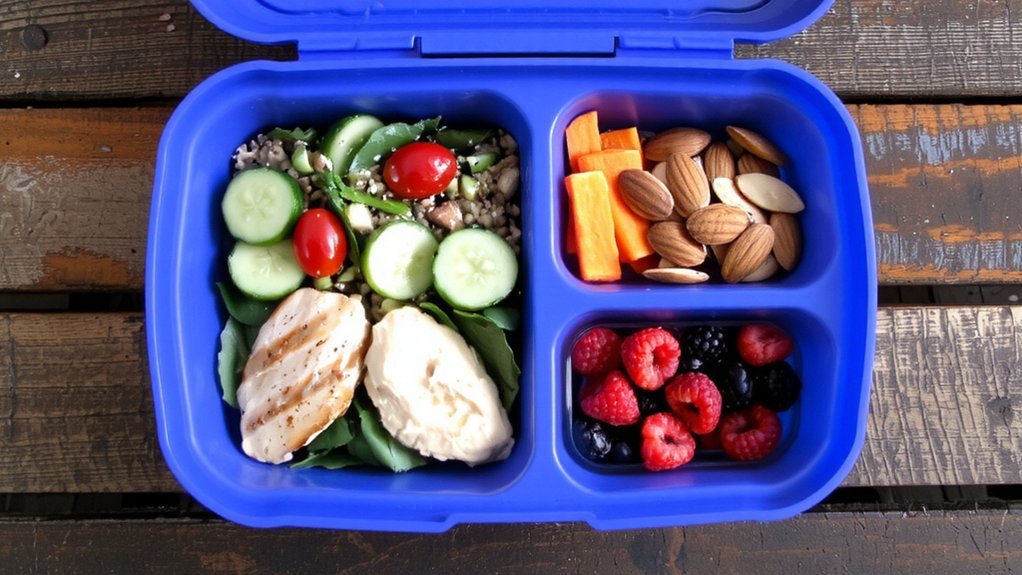
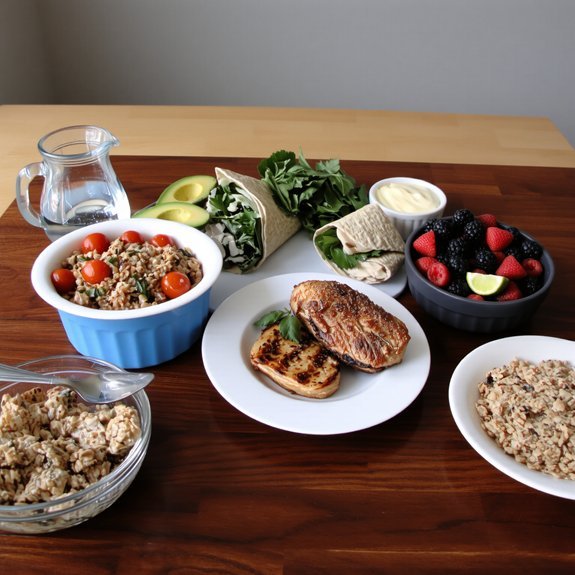
Several portable lunch options will help keep your blood sugar steady during a busy day. Use insulated containers and a labeling system to pack balanced portions: lean protein, fiber-rich carbs, healthy fats, and nonstarchy veggies. Aim for consistent carbs, add a small fruit or yogurt, and include a portion of nuts for satiety. Rotate choices to avoid monotony and test how meals affect your glucose.
| Meal | Key Components | Tip |
|---|---|---|
| Mason jar salad | Lean protein, greens, beans | Keep dressing separate |
| Grain bowl | Quinoa, veg, tofu | Measure portions |
| Wrap | Whole-grain wrap, turkey, veg | Add hummus |
| Bento box | Veg, cheese, fruit | Use insulated container |
Track portions and timings, carry water, you’ll consult your care team to personalize plans based on meds and activity for best daily results.
Dinners: Satisfying Low-Glycemic Recipes
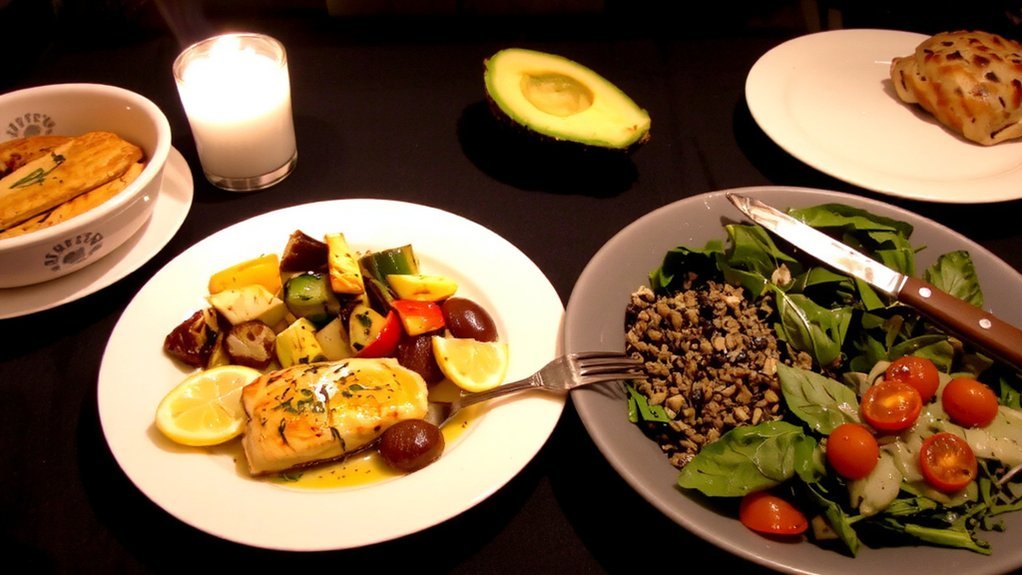
When evening hunger hits, choose dinners built around lean protein, low‑glycemic carbohydrates, nonstarchy vegetables, and healthy fats so you stay full without spiking your glucose.
You’ll often rotate grilled salmon, turkey meatballs, tofu stir‑fries and legume-based stews, pairing them with quinoa, barley or roasted sweet potato.
Embrace Global flavors — citrusy, herb-forward, smoky and umami — to keep meals interesting while controlling carbs.
Plan Sauce pairings that boost taste without extra sugar: yogurt-tahini, chimichurri, tomato-basil, or miso-ginger vinaigrette.
Add a side salad or sautéed greens for fiber and color.
Cook simply, watch portion sizes and test blood glucose to learn how each recipe affects you.
That steady approach makes dinner both satisfying and diabetes-friendly.
Swap ingredients seasonally to maintain variety and nutrient balance daily.
Snacks and Smart Portion Cues
Because snacks can stabilize blood sugar and prevent overeating at meals, choose small portions that combine protein, fiber and a little healthy fat — for example, a hard‑boiled egg with a small apple, Greek yogurt with berries, or a handful of almonds and raw veggies.
Keep portions consistent: aim for 150 to 200 calorie mini‑meals or clearly measured servings so you don’t nibble unknowingly. Use visual cues (fist for carbs, palm for protein, thumb for fats) and measure until you trust them.
Pause before eating to check emotional cues versus physical hunger; if you’re stressed, try a short walk or water first.
Track how long snacks keep you satisfied to refine timing, and listen to satiety signals to avoid doubling portions and spiking glucose.
Carb-Conscious Swaps and Ingredient Tips
To keep blood sugar steady between snacks and meals, pick lower‑glycemic ingredients and simple swaps that cut carbs without sacrificing flavor.
Choose cauliflower rice, spiralized zucchini, and shirataki noodles instead of white rice, pasta, and starchy sides; they’ll lower carb load and add volume.
Swap regular flour for almond or oat flour in modest amounts, and use sugar substitutes like stevia or erythritol sparingly in baking.
Favor whole fruits over juices and pair them with protein or fat.
Boost taste with herbs, spices, acid (lemon, vinegar) and umami-rich condiments as flavor boosters so you won’t miss sugar.
Cook with heart-healthy oils, watch portion sizes, and read labels for hidden carbs and added sugars to stay in control.
Adjust swaps to your personal preferences gradually.
Sample 7-Day Meal Plan With Portion Guidance
You’ll get a clear daily meal structure that shows balanced breakfasts, lunches, dinners, and snacks.
Each day includes portion size examples—plate models and simple weights—to keep servings consistent.
I’ll also show practical carb-counting tips and how to adjust portions to meet your target grams per meal.
Daily Meal Structure
Typically, a daily diabetic meal structure balances consistent carbohydrate amounts, lean protein, healthy fats, and nonstarchy vegetables across three meals and one or two snacks to help you maintain steady blood sugar.
You’ll split carbs evenly, pair them with protein and fiber, and include fats to slow absorption.
Plan meals around predictable times so medication and activity sync with glucose trends. Keep simple family rituals—shared breakfasts or timing rules—to support consistency and model dining etiquette for kids and guests. Use snacks to prevent dips and choose nutrient-dense options.
- Breakfast: include protein, fiber, controlled carbohydrate.
- Lunch: focus on vegetables and lean protein.
- Snack: pair a small carbohydrate with protein or healthy fat.
- Dinner: mirror earlier meals and keep timing consistent daily.
Portion Size Examples
Here’s a sample 7‑day meal plan with portion guidance you can adapt—each day lists breakfast, lunch, dinner, and snacks with suggested portion sizes (carbohydrate grams or exchanges, lean protein amounts, and vegetable servings) so you’ll be able to keep blood sugar steady.
Use plate models: half nonstarchy vegetables, a quarter lean protein (3–4 oz cooked), and a quarter whole grains or starchy vegetables (30–45 g carbs) per meal.
Snacks can be 15–20 g carbs plus 1 oz protein or fat.
Pay attention to portion psychology—visual cues help you avoid overeating, and measuring early trains portions.
Beware restaurant illusions: large servings often double your target portions, so split meals or request a to‑go box before you start.
Adjust portions by activity and meds, and hydration.
Carb Counting Tips
How will you keep carbs consistent across the 7‑day plan?
You’ll plan target carb ranges per meal, measure portions, and use label literacy to pick packaged foods.
Track totals daily so you notice patterns.
- Calculate a daily carb goal, then split among meals and snacks.
- Weigh portions, use measuring cups, and log grams to stay precise.
- Practice label literacy: read serving sizes, carbs per serving, and added sugars.
- Use restaurant decoding—ask for nutrition info, swap sides for veggies, or request sauces on the side.
Rotate similar-carb meals to simplify shopping and glucose control.
Use apps or a simple spreadsheet to compare actual intake versus targets and adjust portions as needed.
Consult your healthcare team for personalized targets and insulin adjustments when necessary.
Ask regularly.
Grocery List and Budget-Friendly Shopping Tips
When you plan meals around fiber, lean protein, healthy fats and nonstarchy vegetables, your grocery list stays focused and affordable; prioritize whole grains, canned or dried beans, frozen vegetables, eggs, plain yogurt, seasonal produce and bulk oats, and buy sale proteins to freeze.
Use coupon stacking and visit farmers markets for deals on produce and bargain proteins, but compare unit prices.
Make a weekly plan, shop with a list, and stick to perimeter aisles. Buy store brands, frozen fruit for smoothies, and legumes in bulk. Prep portions and batch-cook to avoid waste. Keep pantry staples like spices, olive oil, and vinegar to elevate simple meals. Track receipts to spot recurring savings and rotate bargains into future menus. You’ll save money and time consistently, too.
Monitoring, Adjusting Meals, and Working With Your Care Team
As you track blood glucose, meals, and how you feel, you’ll learn which foods and portions work best and where adjustments are needed; share those patterns with your care team so they can help fine-tune your plan, medications, and testing schedule.
Use a simple log or app, enable remote monitoring for your clinician, and note symptoms and activity.
At visits, practice shared decision making: set targets, modify meals, and adjust meds together. Start small changes, review results, and repeat.
- Record glucose, meals, meds, activity daily.
- Use apps or devices with remote monitoring features.
- Discuss patterns, goals, and alternatives with your team.
- Implement small adjustments, reassess weekly, iterate.
Bring questions and data to visits to speed decisions and improve outcomes consistently.
Conclusion
You’ve got a practical, flexible plan that helps you balance carbs, protein, fats, and fiber while keeping meals simple and budget‑friendly. Use the swaps, portion cues, and prep tips to make routines easier, check your glucose, and adjust based on results. Share the menu and data with your care team so you can personalize medications and goals. With small changes and consistency, you’ll steady blood sugar and enjoy meals that satisfy for long-term health gains.