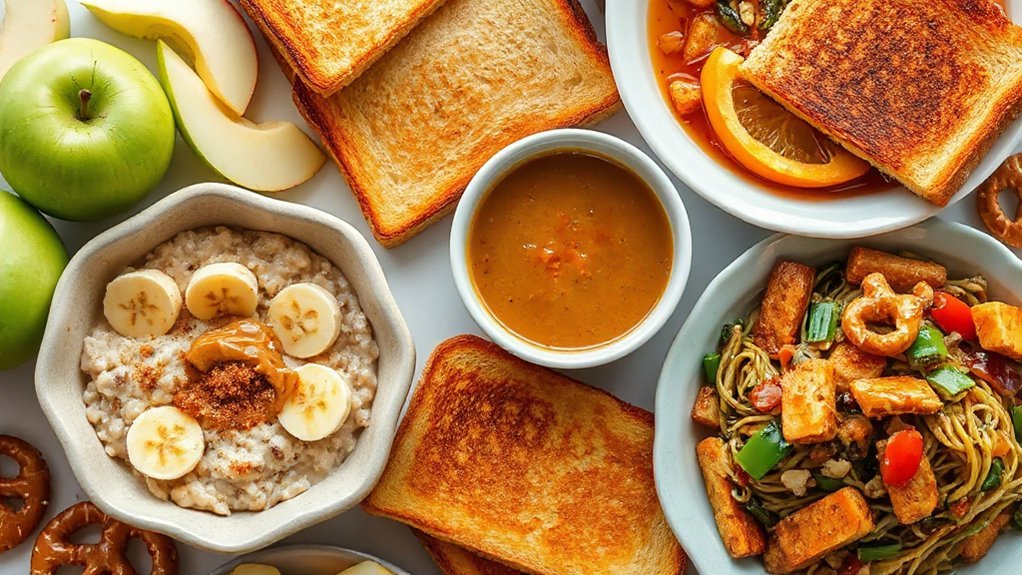
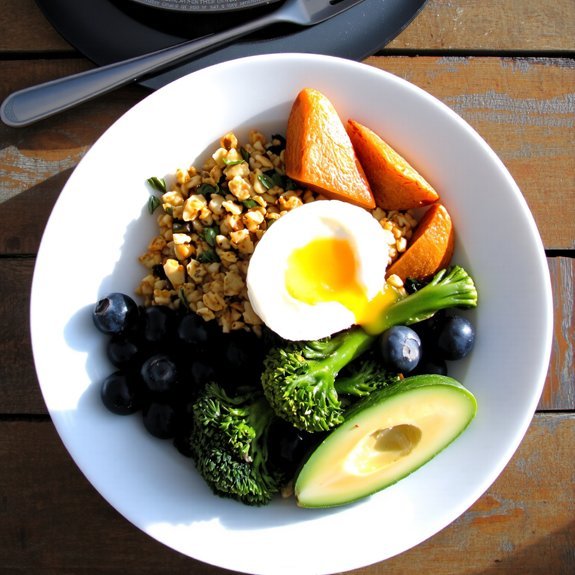

You’re probably tired of afternoon slumps and quick fixes that backfire. This plan shows how steady carbs, protein, healthy fats, and key minerals keep your energy stable. You’ll get simple breakfasts, smart lunches, and snack choices that prevent crashes. Stick around to learn practical swaps and meal-prep tricks that actually make a difference.
Key Takeaways
- Eat regular balanced meals and timed snacks to stabilize blood sugar and prevent energy crashes.
- Build meals around complex carbohydrates plus protein and healthy fats for steady glucose and prolonged satiety.
- Include iron, B vitamins, magnesium, fiber, and adequate fluids to support cellular energy and prevent fatigue.
- Choose smart snacks and pre/post-workout fuel combining protein and carbs, like yogurt with fruit or a banana with nut butter.
- Plan and batch-cook breakfasts, lunches, and portable snacks aligned with circadian timing to reduce decision fatigue and sustain energy.
Why Food Affects Your Energy Levels

Because your body turns food into the fuel it needs, what and when you eat directly shapes how energized you feel. You’ll notice steady meals and timed snacks keep blood sugar stable, so your mental focus and stamina don’t crash.
Eating irregularly or overloading on simple carbs makes energy spike then drop, while balanced timing supports alertness across the day. Your gut microbiome also signals metabolic pathways that influence energy extraction and inflammation, so food patterns alter how efficiently you access fuel.
Aligning meals with circadian rhythms—for instance, favoring earlier intake and predictable routines—helps hormonal cycles regulate appetite and wakefulness. By paying attention to portions, frequency, and timing, you’ll control energy availability and reduce unpredictable fatigue without relying on quick-fix caffeine or crashes.
Key Nutrients That Prevent Midday Slumps
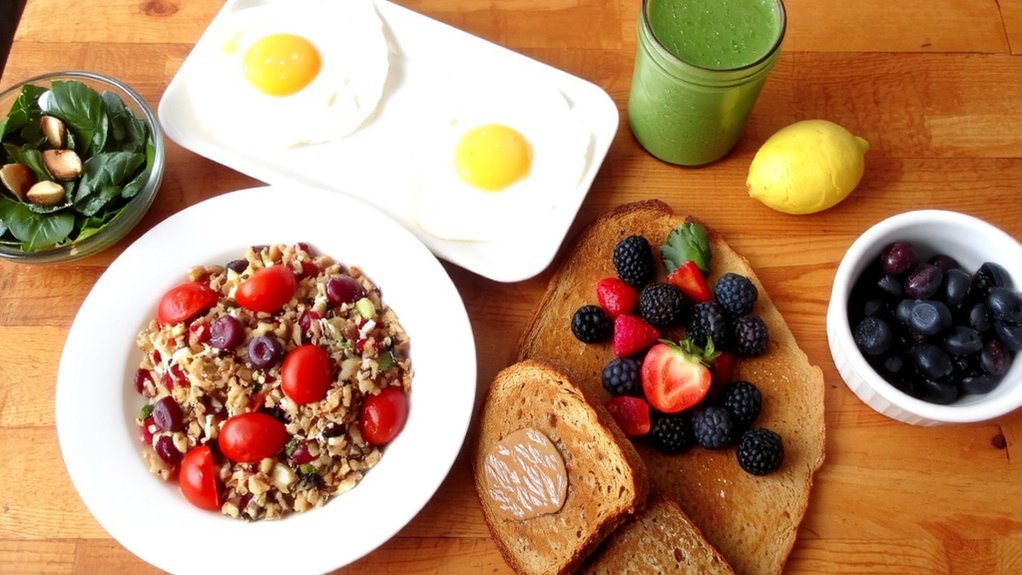
Alongside regular meal timing and balanced portions, specific nutrients help you avoid midafternoon crashes: complex carbohydrates for steady glucose, protein and healthy fats to slow absorption, iron and B vitamins for cellular energy production, magnesium for muscle and nerve function, and fiber plus adequate fluids to prevent blood-sugar swings.
You should favor whole grains, legumes, nuts, seeds, lean meats, and leafy greens to sustain focus and mood.
Pair vitamin C–rich foods with plant iron sources to boost Iron Absorption, and spread protein across snacks to keep glucose stable.
Remember Magnesium Benefits when choosing snacks like almonds, spinach, or yogurt to support nerves and reduce tension.
Hydrate regularly and limit refined sugars to maintain even energy through the afternoon.
You’ll feel steadier and more productive.
Morning Meals to Power Your Day
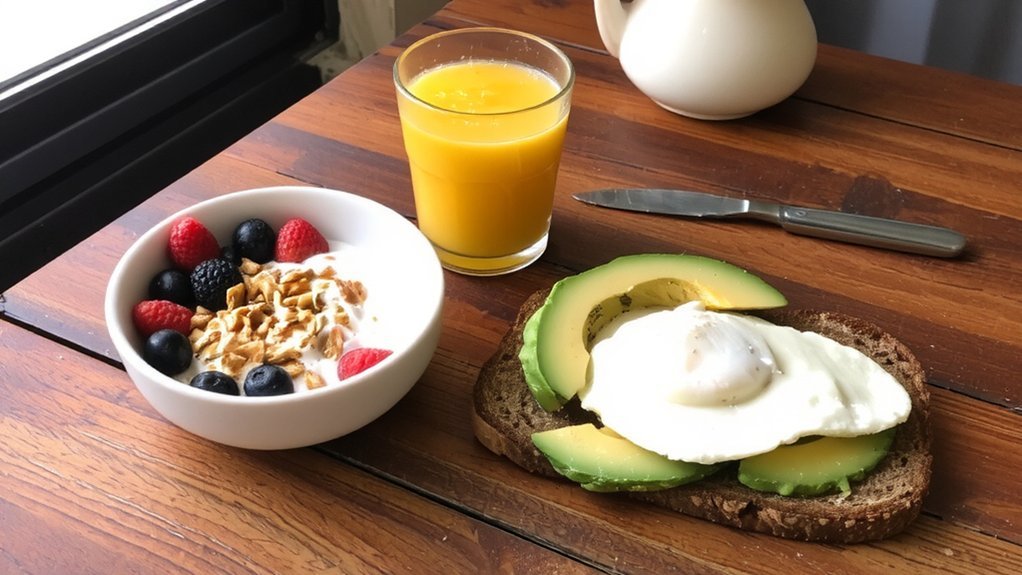
When you start with a balanced breakfast that pairs complex carbs, protein, and healthy fats, you’ll keep blood sugar steady and stay focused until lunch.
You can build simple morning rituals that prime energy: hydrate, add fiber, and choose lasting protein. Aim for meals you can prep quickly or assemble on the go, and favor budget breakfasts that don’t sacrifice nutrition.
- Overnight oats with Greek yogurt
- Whole-grain toast with avocado and egg
- Smoothie with spinach, banana, and protein
- Cottage cheese with fruit and nuts
- Peanut butter and banana wrap
Rotate these options, prep portions, and keep staples on hand. You’ll reduce decision fatigue, maintain steady energy, and feel ready for the day. Start small, adjust portions to your needs, and track what works regularly.
Energizing Lunch Ideas for Sustained Focus
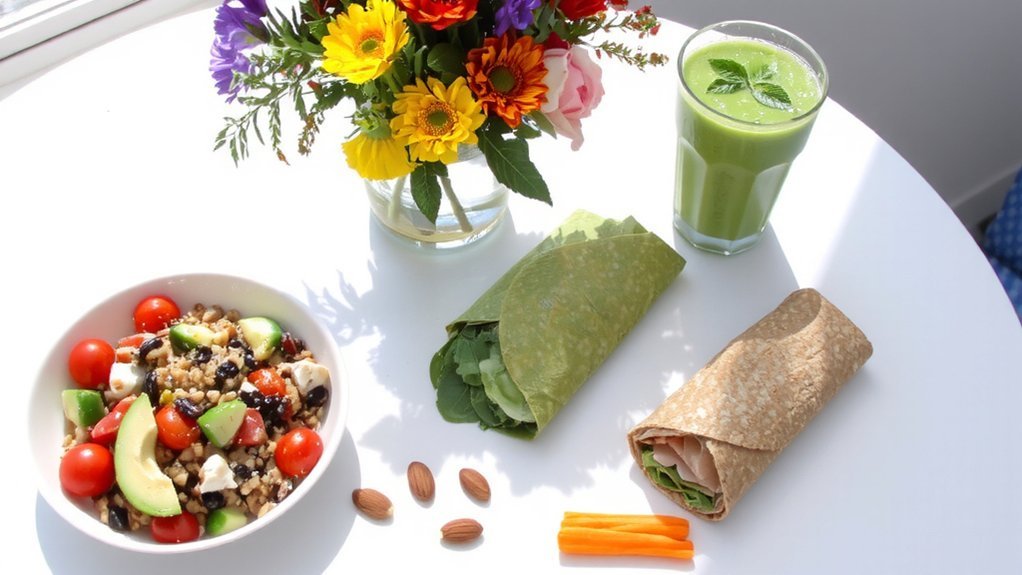
How can you keep energy steady through the afternoon? Choose balanced lunches with lean protein, whole grains, healthy fats, and colorful veggies to avoid midafternoon crashes.
Build Portable Bowls with grilled chicken or tofu, quinoa, roasted vegetables, avocado, and a lemon tahini dressing so you can eat without rushing.
Include legumes or a hard boiled egg for lasting protein, and pick fiber rich greens to support digestion.
Practice Mindful Eating: sit down, chew slowly, and notice portion size so you don’t overeat and feel sluggish. Hydrate with water or herbal tea alongside your meal. Prep components on weekends to assemble quickly. These strategies keep glucose steady, sharpen concentration, and help you return to work alert and productive without depending on stimulant fixes. daily routines.
Smart Snacks to Bridge Energy Gaps

After a balanced lunch, plan smart snacks to keep your energy steady until dinner. Choose nutrient-dense options that combine protein, fiber and healthy fats so you avoid sugar crashes.
Pack portions to practice portion control and pick items with sustainable packaging when possible. Keep snacks simple and portable.
- Greek yogurt with berries
- Apple slices and almond butter
- Hummus with carrot sticks
- Mixed nuts and dried fruit (small handful)
- Whole-grain crackers with cheese
Rotate these choices across the week to prevent boredom. You’ll feel steadier, focus better, and curb overeating at dinner.
When you buy prepackaged snacks, look for recyclable containers and clear serving sizes to maintain both energy and environmental responsibility. Keep water nearby and sip regularly to support lasting daily alertness.
Pre- and Post-Workout Fueling Tips
If you’re gearing up for a workout, eat a light, carb-focused snack 30–60 minutes before or a balanced meal 2–3 hours ahead to top up glycogen and stabilize blood sugar.
Before you train, choose easily digestible carbs like banana, toast with honey, or yogurt with fruit to power performance without stomach upset.
For strength or long sessions, include modest protein to support muscle repair.
Right after you finish, prioritize Glycogen Restoration with carbs plus protein—think chocolate milk, a turkey sandwich, or a smoothie with whey.
Also focus on Electrolyte Replenishment if you sweat heavily: water with a pinch of salt, coconut water, or an electrolyte drink.
Keep portions moderate, listen to your body, and plan timing to avoid hitting energy lows.
Adjust based on your goals.
Simple Swaps to Reduce Sugar Crashes
To avoid sugar crashes, choose whole fruit instead of juices and swap refined grains for whole grains.
You’ll pair protein with carbs—think yogurt with berries or chicken and brown rice—to slow glucose spikes.
These simple swaps keep your energy steadier throughout the day.
Choose Whole Fruit
When you swap whole fruit for juice or sugary snacks, you get fiber that slows sugar absorption, steadies energy, and helps prevent crashes.
Choose fruits based on seasonal selection to maximize flavor and nutrients, and learn simple storage methods to keep them fresh longer.
Pair fruit with protein or healthy fat to prolong satiety and steady blood sugar. You’ll carry ready-to-eat options like apples, bananas, berries, or clementines for quick snacks. Avoid added syrups or dried fruit with lots of sugar.
- Apple with peanut butter
- Greek yogurt and berries
- Handful of almonds and an orange
- Cottage cheese with pineapple chunks
- Sliced pear with walnuts
These swaps keep your energy steadier through the day.
They also reduce midafternoon energy slumps often.
Swap Refined Grains
Although refined grains feel light and quick, they spike your blood sugar and leave you crashing, so swap them for whole grains and fiber-rich alternatives to steady energy and keep hunger at bay.
Choose brown rice, quinoa, oats, and whole-wheat pasta to extend energy and add nutrients.
Make simple baking adjustments: replace half white flour with whole-grain flour or use mixed flour blends designed for texture.
Try using oat flour or ground almonds in muffins and pancakes to add fiber and healthy fats.
Read labels to avoid added sugars and aim for minimally processed grains. Cook larger batches of whole grains to grab for quick meals and snacks, so you won’t reach for refined options when you’re tired.
Your energy will feel steadier daily.
Pair Protein With Carbs
If you add protein to carb-rich meals, you’ll slow digestion and blunt the blood sugar spikes that trigger energy crashes.
Pairing lean protein with carbs stabilizes energy, so plan Meal sequencing—eat protein or veggies before starches.
Aim for Portion balance: half nonstarchy veggies, quarter protein, quarter whole grains or starchy veg.
Simple swaps cut crashes without complex dieting.
- Greek yogurt instead of flavored yogurt
- Turkey slices with whole-grain bread
- Hummus with pita and veggies
- Eggs with toast and avocado
- Cottage cheese with fruit
These swaps are practical: pack protein-first lunches, choose snacks combining protein and carbs, and watch portions.
You’ll sustain energy and avoid late-afternoon slumps.
Small, consistent choices will improve your daytime energy and overall focus and mood.
Meal-Prep Strategies for Consistent Energy
Because planning meals ahead reduces decision fatigue and prevents energy dips, you’ll stay fueled throughout the day.
Use batch cooking to prepare proteins, grains, and vegetables in bulk, then practice container rotation so nothing goes stale and meals stay varied.
Portion balanced servings that combine complex carbs, lean protein, and healthy fats to stabilize blood sugar.
Schedule simple reheats for breakfasts, lunches, and snacks, and label containers with dates to track freshness.
Keep a small list of quick swaps—different spices, dressings, or toppings—to refresh flavors without extra cooking.
Pack snacks like nuts, yogurt, or fruit to bridge gaps.
Review your weekly energy patterns and tweak portions or timing to match your activity and avoid afternoon crashes.
Rotate flavors weekly to keep meals interesting consistently.
Conclusion
You can beat fatigue by choosing steady carbs, lean protein, healthy fats, fiber, and key nutrients like iron, B vitamins, and magnesium. Eat balanced breakfasts, protein-forward lunches, and smart snacks timed to stabilize blood sugar. Batch-cook staples, pair carbs with protein, hydrate, and tweak portions around workouts. With simple swaps and consistent meal prep, you’ll sustain focus, avoid crashes, and feel more energized and resilient every day. Stick with it and enjoy steady energy today.