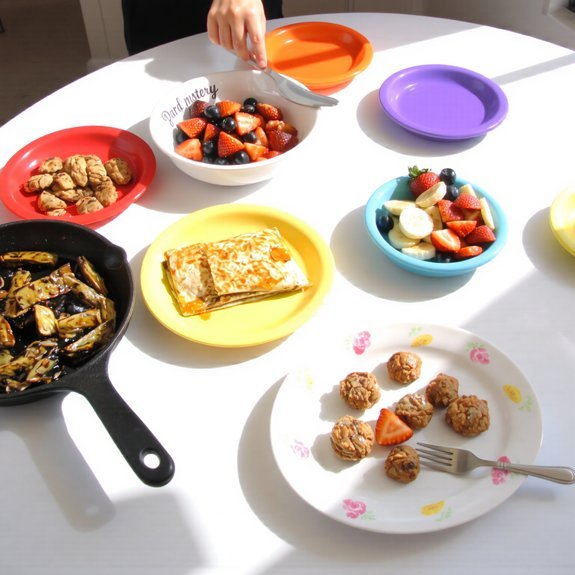

You can cut weeknight stress and keep kids at the table without a battle. This plan gives rotating menus, make-ahead staples, and simple swaps that actually work for picky eaters. You’ll find quick recipes, sneaky veggie tricks, and presentation tips to win them over — but there’s one key habit that changes everything.
Key Takeaways
- Build a 3–4 week rotating menu with theme nights (Taco Tuesday, Pasta Wednesday) to reduce decision fatigue and boost predictability for picky eaters.
- Use 4 repeatable templates (one-pot, sheet-pan, slow-cooker, quick pasta) so meals stay varied but grocery lists remain consistent.
- Sneak vegetables into sauces, purees, grated mixes, or familiar formats (burgers, mac-and-cheese) to increase acceptance without battles.
- Batch-cook and freeze portions with clear labels and reheating instructions for reliable 30-minute heat-and-serve dinners on busy nights.
- Present food with predictable layouts, dipping compartments, and one new item alongside two favorites to encourage tasting and reduce resistance.
Meal-Planning Basics for Busy Families
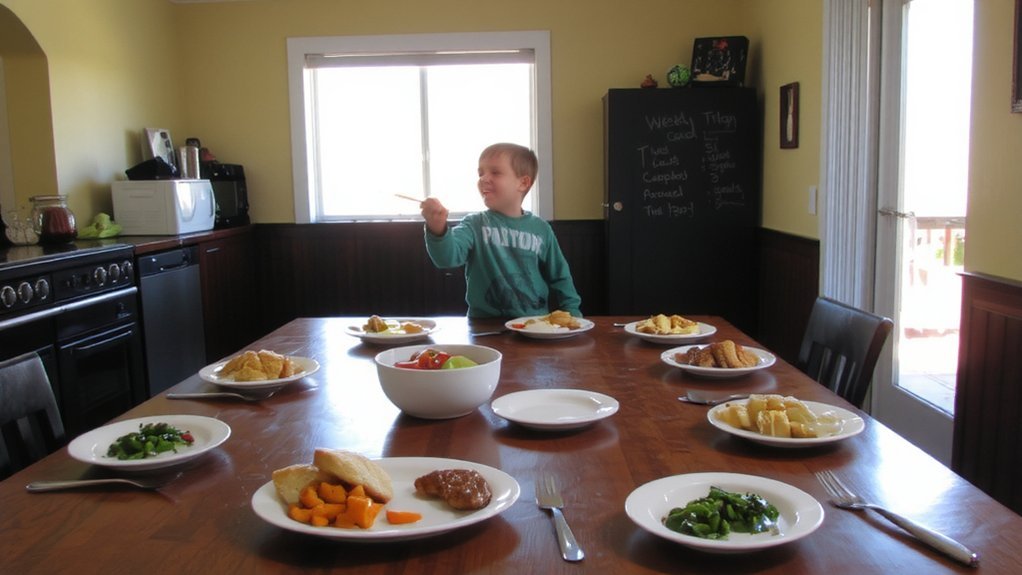
When you juggle work, school, and activities, meal planning stops chaos before it starts: set a weekly rhythm, pick 3–4 repeatable templates (one-pot, sheet-pan, slow-cooker, pasta), build a master grocery list, and batch-cook or prep ingredients once for multiple meals.
Use a simple shopping checklist tailored to those templates so you buy once and save time.
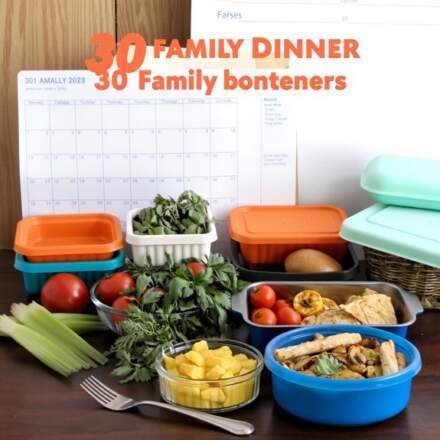
Schedule one prep session—chop, cook grains, portion proteins, and label containers for quick assembly.
Invite kids to help with age-appropriate tasks and let partners rotate nights; family involvement reduces resistance and teaches skills.
Keep recipes flexible: swap proteins or sides without reworking steps.
Review wins each week and adjust templates so dinners stay doable and kid-approved.
Track favorites and dislikes to streamline future shopping and reduce waste consistently.
A Rotating Weekly Menu That Sticks
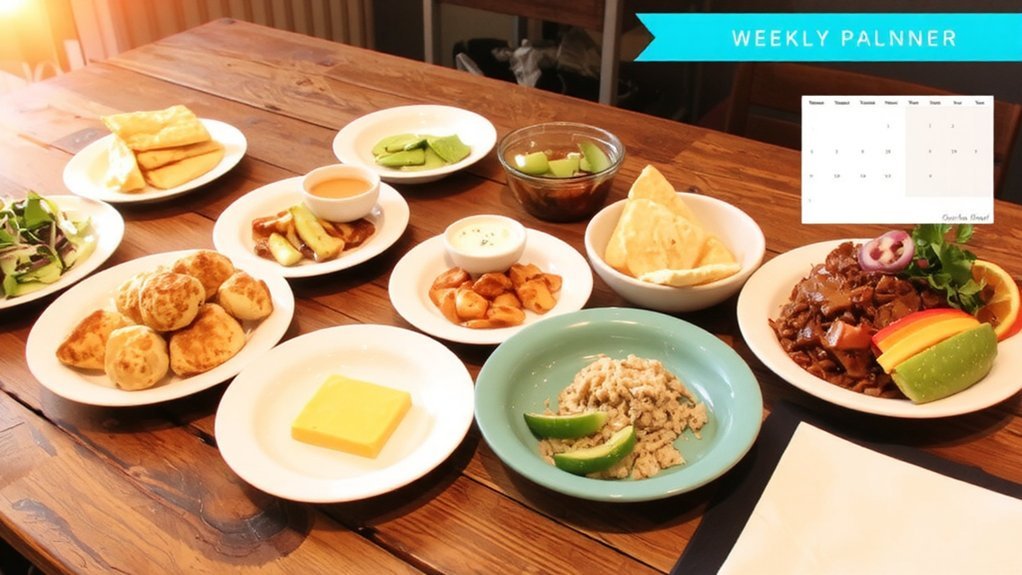
Because a predictable rhythm beats nightly decision fatigue, build a rotating weekly menu that repeats every 3–4 weeks so you shop less, cook faster, and kids know what to expect.
Start by assigning Theme Nights—Taco Tuesday, Stir-Fry Wednesday, Pizza Friday—so choices shrink and favorites rotate. Pick core recipes you tweak with different proteins, sauces, or sides to keep interest without new shopping lists.
Use Seasonal Rotation to swap produce and flavors monthly, keeping meals fresh and budget-friendly. Put the plan on the fridge and let kids help pick swaps; their buy-in reduces resistance.
Review after each cycle: drop what flops, repeat what works. Stick to the pattern, and dinner becomes predictable, manageable, and kid-approved. Keep a short notes column for tweaks and allergy reminders too.
Make-Ahead and Freezer-Friendly Dinner Options
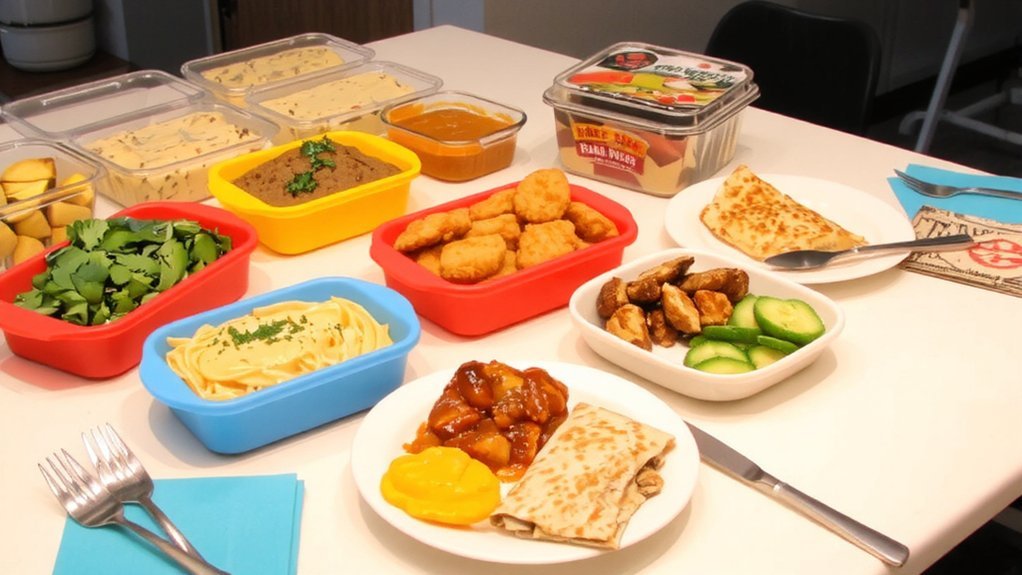
Batch-cooking saves you nightly stress and gives you ready-to-heat dinners that actually taste good. You’ll prep staples—meatballs, casseroles, and grains—then portion, vacuum sealing where possible to extend freshness. Use a clear labeling system with date and reheating instructions so kids know what’s inside. Freeze individual portions for lunches and family dinners; thaw overnight in fridge. Reheat gently to keep textures kid-friendly.
| Meal | Prep Time | Freeze Tip |
|---|---|---|
| Meatballs | 30 min | Vacuum sealing; stack flat |
| Pasta bake | 45 min | Cool completely before freeze |
| Rice bowls | 25 min | Portion with sauce separately |
Rotate meals weekly so kids spot favorites, and keep an inventory on your phone. Label bins by child and date. When you reheat, test temperature and serve with a familiar side to reassure picky eaters.
Simple Swaps for Common Picky-Eater Objections
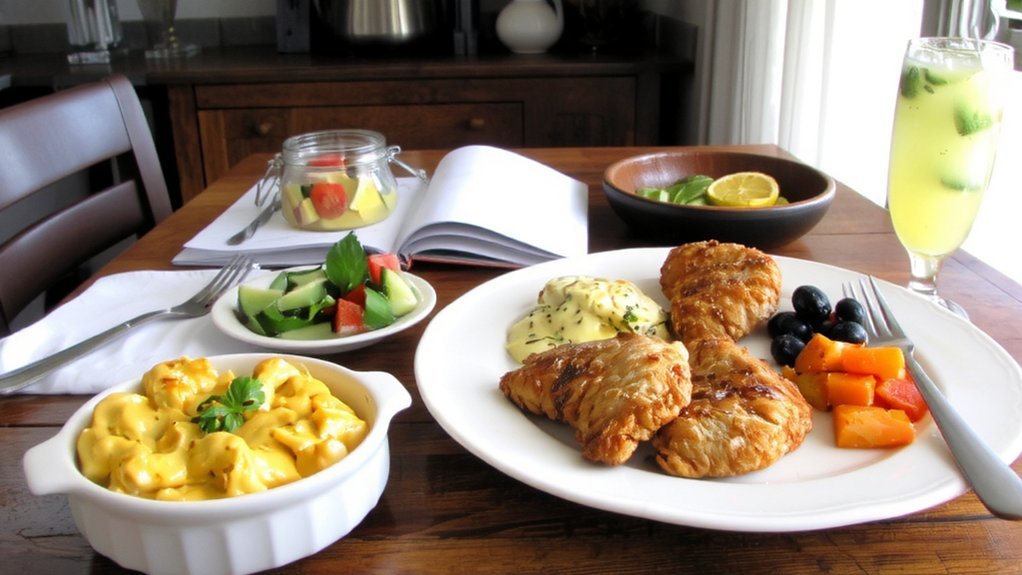
You can hide veggies smartly by blending them into sauces or finely chopping them so they blend into familiar flavors.
Swap sauces creatively—try pesto, yogurt-based dressings, or mild curry to give the same dish a new taste without changing the core ingredients.
Offer texture-friendly alternatives like roasting instead of steaming, using crunchy coatings, or serving smooth purees to match different sensitivities.
Hide Veggies Smartly
When picky eaters push back on texture or flavor, hide veggies with simple swaps that keep the meal familiar: use pureed carrots or butternut in sauces, grate zucchini into burgers and muffins, trade half the meat for mashed beans, and swap riced cauliflower for rice or potatoes.
Use Puree Pairings to boost creaminess and Color Camouflage to keep dishes visually appealing so kids don’t notice changes. You’ll want stealthy, nutrient-dense swaps that match flavor and look.
Try these moves:
- Mix cauliflower rice into fried rice for extra bulk without flavor change.
- Stir pureed carrots into mac-and-cheese for sweetness and creaminess.
- Fold grated spinach or zucchini into meatballs and muffins for sneak nutrition.
Rotate swaps, observe reactions, adjust textures to build acceptance.
Swap Sauces Creatively
Sauces are one of the easiest places to hide veggies and tweak flavor or texture without changing the whole meal.
You can swap ketchup for a roasted tomato purée with blended carrots, or trade plain ranch for yogurt mixed with dill and lemon to lighten richness.
Use Global condiments—like a mild tahini drizzle, coconut-lime sauce, or Japanese sesame dressing—to introduce new notes without overwhelming.
Focus on quick wins: mellow sweetness for bitter kids, tang for bland lovers.
Practice flavor layering by adding a pinch of smoked paprika, a squeeze of citrus, or a small drizzle of honey to build complexity gradually.
Let kids taste small changes, name ingredients, and choose their favorite combo so they’ll accept new flavors more readily.
Repeat and adjust together.
Texture-Friendly Alternatives
Although picky eaters often reject foods for texture, small swaps can turn an objection into acceptance. You can ease them toward new flavors by changing how things feel: replace lumpy mashed potatoes with Silky Purees, or swap soggy fries for Crispy Coatings on homemade wedges.
Heat, chill, and shape matter too — kids respond to familiar forms.
- Offer Silky Purees (carrot, cauliflower) instead of chunky sides.
- Use Crispy Coatings (panko, cornflake) for mild proteins.
- Serve deconstructed plates so textures stay separate.
You’ll reduce battles by testing one swap per meal, describing textures positively, and praising bravery. Keep portions small and choices limited so you build acceptance step by step.
Rotate favored textures with new ones weekly to normalize changes without overwhelming your child at home.
Sneaky Veggies and Protein Boosters Kids Actually Eat
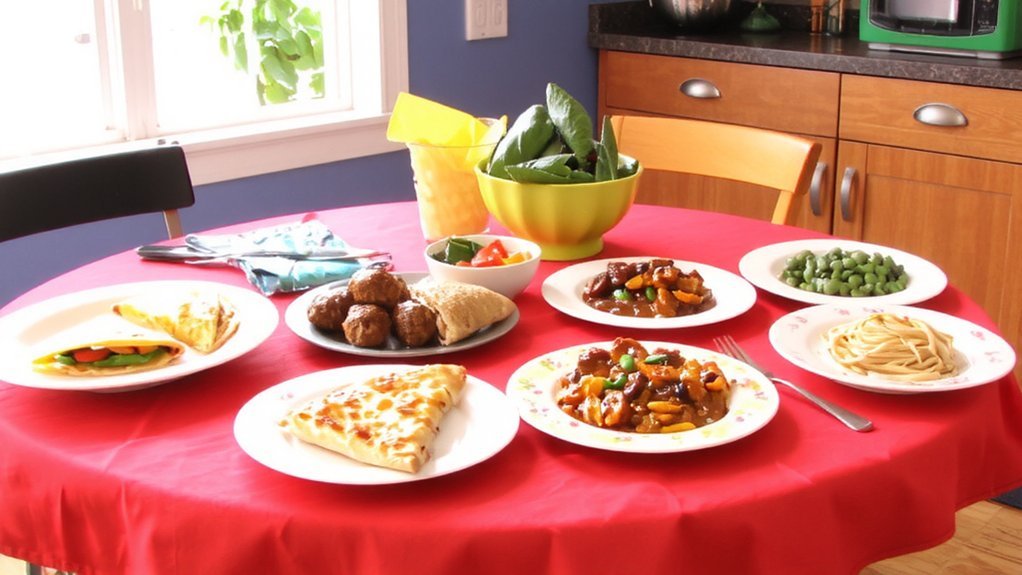
How can you sneak vegetables and extra protein into meals without a fight? Use legume purees in sauces, burgers, and pancakes to add protein and creaminess, and mix yogurt boosters into smoothies, dips, and dressings for tang and extra protein.
Grate zucchini or carrot into meatloaf, meatballs, and baked goods; finely chop spinach into omelets, quesadillas, and casseroles.
Blend cauliflower into mashed potatoes or rice substitutes; fold silken tofu into mashed potatoes or puddings for invisible protein.
Keep flavors mild, mask with tomato sauce, cheese, or spices kids’ll love, and offer a familiar base—pasta, toast, or wraps.
Let kids pick mix-ins and names for creations to increase buy-in. Repeat exposure; patience turns surprise bites into accepted favorites. Track favorites, rotate them, and repeat weekly
Quick 30-Minute Weeknight Recipes
You can rely on one-pan speedy meals to cut cleanup and cook time.
Keep a few 20-minute pasta ideas on hand for nights when you need dinner fast.
Prep freezer-friendly quick meals ahead so you’ll have heat-and-serve options ready.
One-Pan Speedy Meals
When time’s tight, one-pan meals get dinner on the table in under 30 minutes without a sink full of dishes.
You can rely on seared chicken, roasted veggies and quick sauces that cook together, saving time and energy.
Use sheet pans, skillets or foil-lined trays; you’ll love the minimal cleanup.
Try these habit-forming tricks:
- Pick proteins that brown fast for flavor and speed.
- Toss sturdy produce that roasts evenly with a drizzle of oil.
- Finish with quick sauces or melts to please picky eaters.
Don’t forget One pan desserts for an easy finish and Cleanup shortcuts like soaking the pan while you eat.
Rotate flavors weekly so kids stay curious and you stay sane.
Prep components ahead to speed weeknights easily.
20-Minute Pasta Ideas
Why not toss dried pasta into a single pot, stir in quick sauces and proteins, and have a satisfying dinner ready in 20–30 minutes?
You can pick small shapes kids like, add frozen peas or cherry tomatoes, and finish with cheese.
Use timing hacks: start sauce while water heats, salt pasta water early, and drain only if needed to keep starchy sauce.
Choose wide, heavy-bottom pans for even heat, or a deep skillet so you can cook sauce and pasta together—pan choices matter for stirring space and cleanup.
Rotate proteins: canned tuna, shredded rotisserie chicken, or quick-cooking sausage.
Taste and adjust seasonings last.
You’ll get fast, family-friendly dinners without complex steps.
Keep staples on hand so you can improvise meals any busy weeknight easily.
Freezer-Friendly Quick Prep
Keep the same quick-pasta mindset and apply it to freezer-friendly prep: batch-cook sauces, hearty casseroles, and portioned proteins you can grab and heat in 30 minutes.
Freeze meals in meal-sized containers, note dates, and use a clear Labeling system so you know flavors and cook times.
For weeknights, rely on thaw-smart combos and reheating hacks; always prioritize Defrost safety by transferring a package to the fridge the night before or using the microwave’s defrost setting.
Three go-to prepped options:
- Baked ziti in single servings
- Chicken + veg grain bowls
- DIY taco meat packs
You’ll cut stress, save money, and serve a familiar favorite fast when time’s tight. Rotate options weekly, note allergens, and teach kids simple reheat steps so they’ll help and eat more reliably.
Presentation Tricks to Win Over Texture-Averse Eaters
Although texture can turn off picky eaters, you can use visual cues and clever plating to make foods look more inviting and predictable. Use color contrast and playful garnishes to distract from odd mouthfeels and set expectations — bright carrots beside creamy mash, cucumber coins arranged in predictable rows. Cut items into uniform shapes, offer dipping compartments, and label components with fun names so your child anticipates how to eat. Rotate presentation: faces, bento boxes, or skewers create control and predictability. Keep sauces smooth and separate to avoid surprises. Table below taps emotion: familiar layout, tiny rewards.
| Comfort | Surprise |
|---|---|
| Smiley fries | Tiny ketchup cup |
| Steamed stars | Hidden cheese dip |
You’ll tweak elements, try small swaps, and celebrate every brave bite to build trust over time.
Winning Sides and Snacks to Complement Every Meal
After you’ve mastered presentation tricks, pick sides and snacks that reinforce the same predictability and appeal while filling nutritional gaps.
You want small, familiar options that add variety.
Build around Seasonal Sides: roasted carrots, slaw, or squash rotated weekly.
Set up Snack Stations for after-school hunger:
- Fruit jar with apples and berries
- Hummus cup with carrot and pita dippers
- Yogurt parfait bar with granola and fruit
Keep portions kid-sized and texture-consistent.
Let kids assemble plates to boost buy-in.
Offer one new item with two known favorites.
Praise tasting attempts, not finishing.
Over time you’ll broaden preferences without battles, making meals calmer.
This approach keeps expectations clear, reduces fights, and gradually builds trust.
Conclusion
With a rotating menu, theme nights, and make‑ahead staples, you’ll cut chaos and serve meals kids actually eat. You’ll batch‑prep proteins and grains, label portions, and offer deconstructed plates so everyone builds their favorite combo. Sneak veggies into sauces, try one new item beside a familiar one, and let kids help—small tasks boost buy‑in. Use one‑pan or slow‑cooker nights to keep dinners fast, flexible, and family-friendly all year. You’ll enjoy calmer evenings and happier kids.