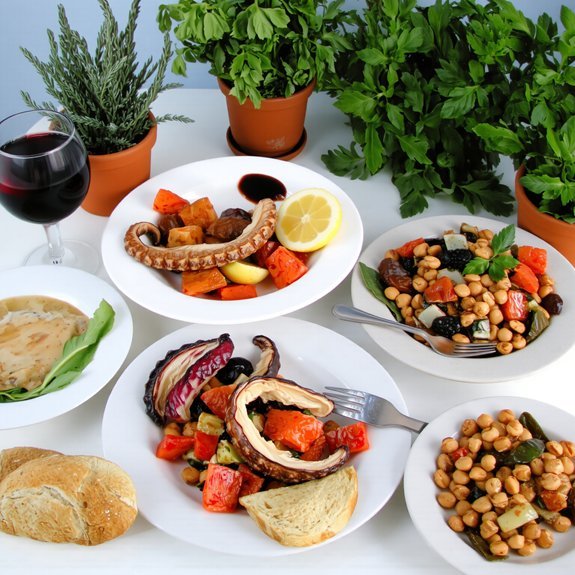
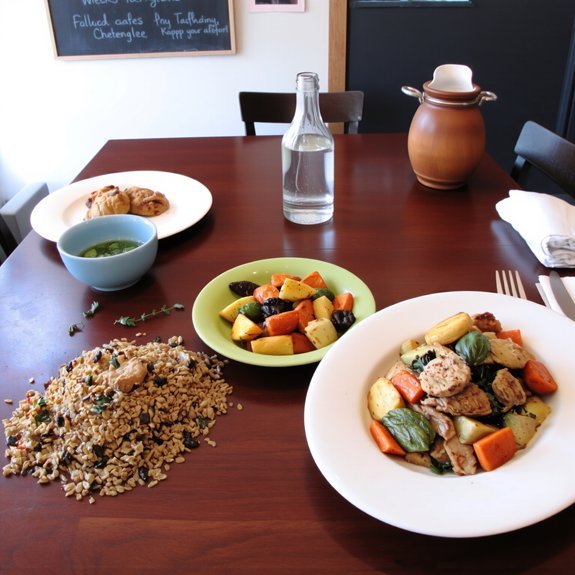

You need dinners that keep you safe, save time, and actually taste good. This celiac-safe weekly plan gives balanced, gluten-free meals, simple swaps, and clear cross-contact steps you can trust. It also shows how to batch-cook and use one-pan methods so weeknights get easier — plus a few surprises to make it stick.
Key Takeaways
- Base weekly dinners on certified gluten-free grains, varied proteins, and seasonal vegetables to ensure balanced, celiac-safe meals.
- Prioritize certified labels, separate storage, and dedicated utensils to prevent gluten cross-contact during prep and serving.
- Use one-pan, sheet-pan, or make-ahead recipes to simplify cooking, reduce contamination risk, and save cleanup time.
- Batch-cook grains and proteins, pre-chop produce, and label portions with dates for fast reheats and consistent weeknight dinners.
- Keep gluten-free pantry staples (tamari, broths, canned tomatoes, xanthan gum) and clear swap options for quick recipe adjustments.
Weekly Dinner Schedule and Recipe Overview
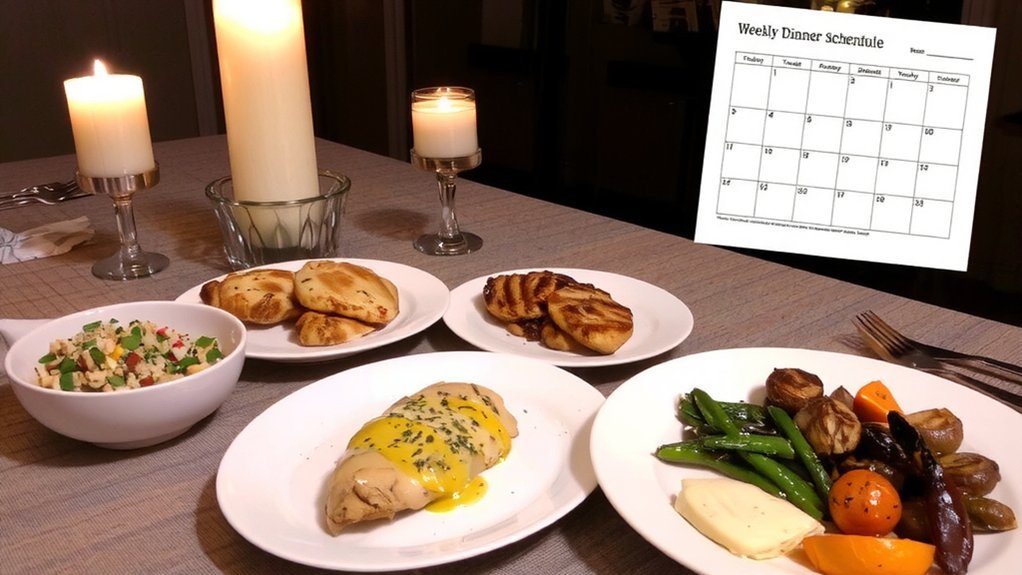
Usually, you’ll get a balanced seven-night plan that rotates proteins, vegetables, and gluten-free grains to keep meals varied. You’ll find each dinner paired with a brief recipe overview, prep time, and swap options so you can adapt to schedules.
Focus on clear Flavor Pairings — citrus with fish, umami mushrooms with dark greens, herbs with roasted roots — to simplify seasoning. Weekly themes (comfort, quick, grilling, casserole, soup, salad, skillet) help you reuse techniques without repetition.
Note Seasonal Variations for produce and protein choices to boost freshness and cost-effectiveness. Each recipe lists straightforward steps, oven or stovetop timing, and one-pot or sheet-pan alternatives so you can execute dinners reliably all week.
You’ll easily swap proteins or sides based on cravings and available seasonal produce.
Shopping List and Gluten-Free Pantry Essentials
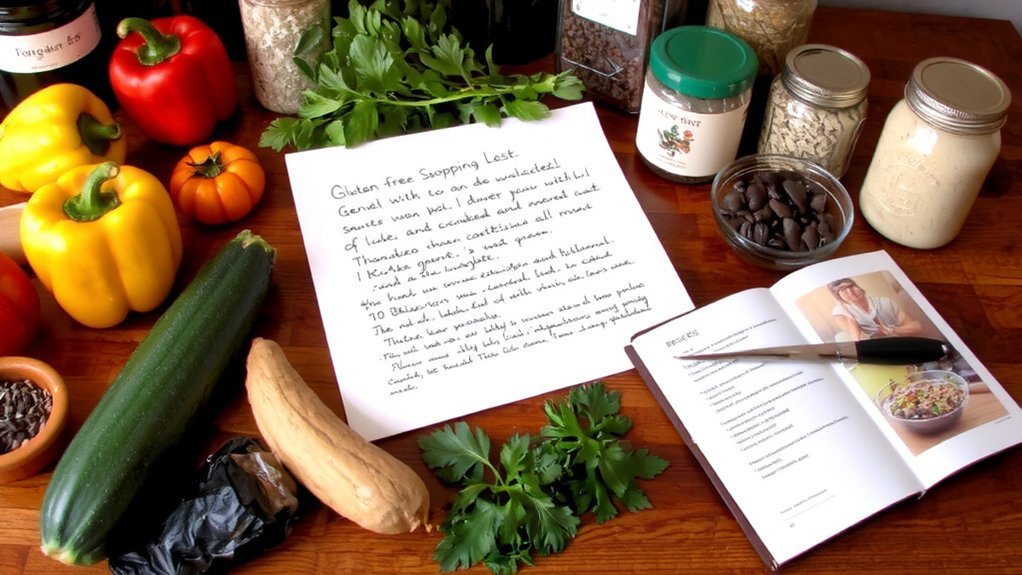
A handful of pantry staples will make sticking to the weekly plan simple: stock certified gluten-free grains (quinoa, brown rice, millet), a selection of gluten-free flours (rice, almond, tapioca), canned tomatoes and beans, low-salt broths, gluten-free soy sauce/tamari, olive and neutral oils, vinegars, dried herbs and spices, gluten-free baking powder, and a binder like xanthan or psyllium.
Make a shopping list by category: grains, flours, canned goods, condiments, oils, spices, baking items, and binders.
Prioritize certified labels and note cross-contamination.
Include produce, proteins, and dairy or alternatives.
For budget staples buy bulk or store brands and do quick brand comparisons on broth, pasta, and sweeteners.
Label opened packages, rotate stock, and replenish weekly so your pantry reliably supports the weekly dinner plan for celiac.
Meal-Prep Strategies and Time-Saving Tips
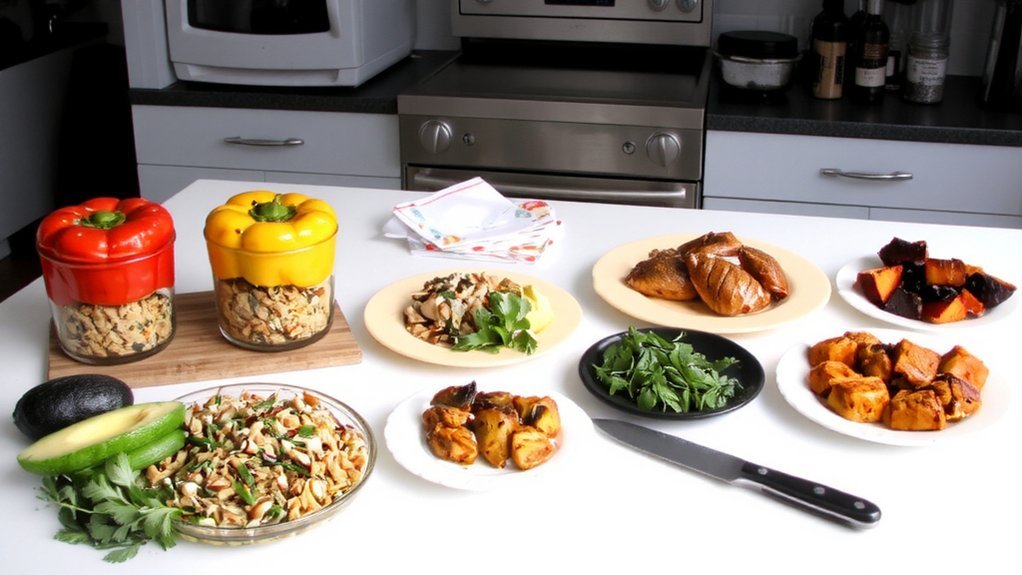
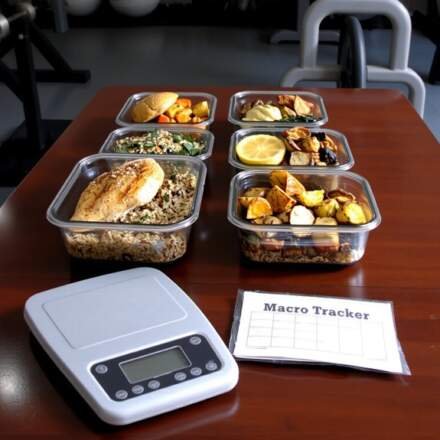
With a stocked gluten-free pantry you can streamline cooking by prepping components ahead: batch-cook grains and proteins, chop and portion produce, and make sauces and dressings that keep well.
Set Kitchen Stations—grain, protein, veg, sauces—to reduce steps and clutter.
Use Speed Chopping techniques to halve prep time and keep knives sharp. Label and date portions for quick assembly.
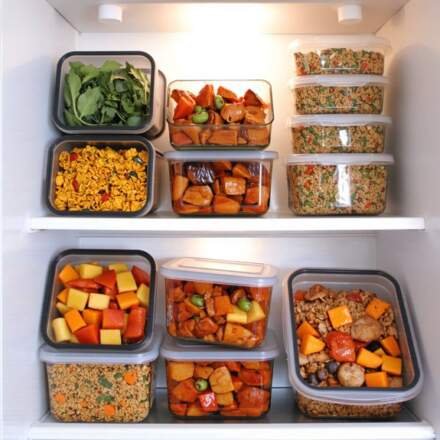
Refrigerate meals in clear containers so you see portions at a glance.
- Plan two protein bases and three veg rotations for variety
- Pre-portion lunches and dinners in stackable containers
- Freeze half of a batch for emergency nights
- Keep a go-to sauce jar for reheating and finishing
- Schedule one two-hour prep session each weekend
You’ll save time nightly and reduce stress while keeping dinners reliable and healthy.
Safe Cooking Practices and Cross-Contact Prevention
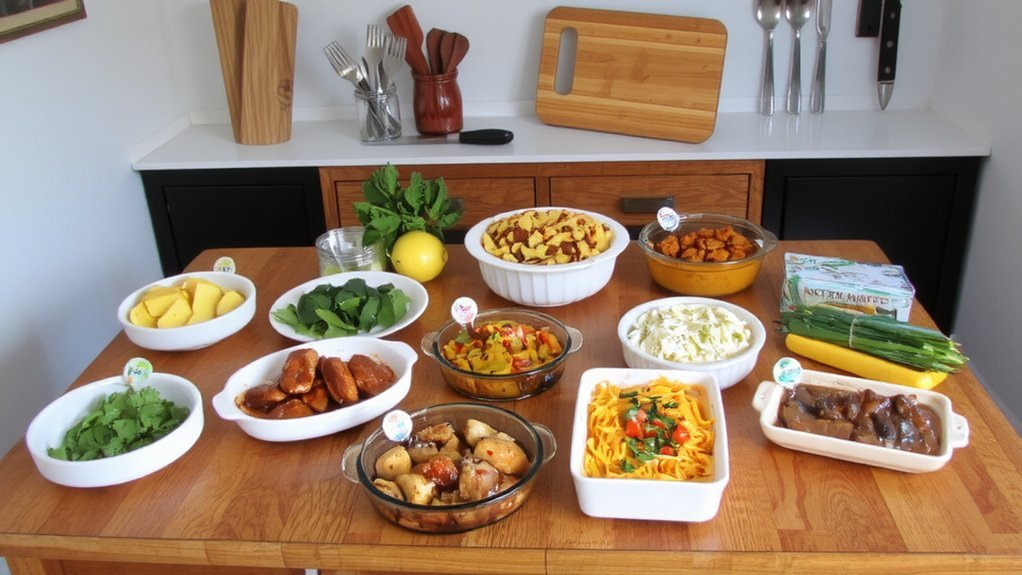
Because even tiny crumbs can trigger a reaction, you’ll treat every surface, utensil, and appliance as a potential source of gluten and clean them thoroughly before making gluten-free food.
| Action | Frequency |
|---|---|
| Clean surfaces | After each use |
| Dedicated tools | Always |
| Store separately | After shopping |
You’ll separate gluten-free ingredients and label containers. Practice Surface Sanitization: wash with hot, soapy water, then sanitize with an approved solution. Avoid shared toasters, oil, or cutting boards unless fully cleaned. Build Allergen Awareness by asking household members about hidden gluten in sauces or snacks. When eating out, confirm prep areas and request utensils. Use color-coded boards, clean spills immediately, and store gluten-free food above items. Consistent habits prevent cross-contact and protect anyone with celiac disease or severe gluten sensitivity.
One-Pan, Sheet-Pan, and Make-Ahead Dinner Recipes
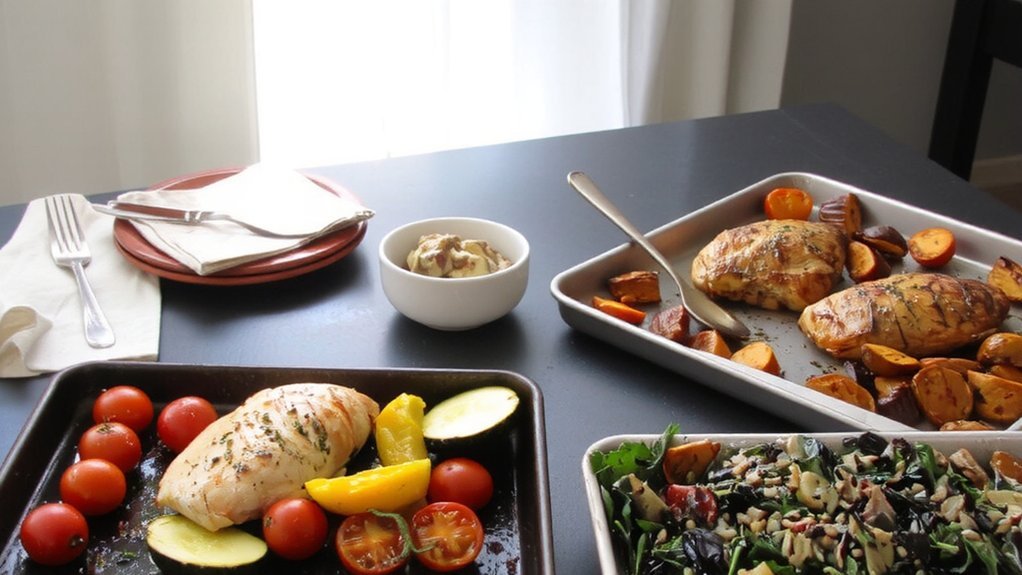
When you need a quick, low-mess dinner, one-pan, sheet-pan, and make-ahead recipes deliver—saving time, reducing dishes, and minimizing cross-contact risks in a gluten-free kitchen.
You’ll streamline prep, control ingredients, and batch-cook safely. Use bold Flavor Pairings like lemon-herb with roasted fish or smoked paprika with sweet potatoes.
Focus on Presentation Tips: wipe pans clean edges, garnish fresh herbs, and plate with contrast. Rotate trays to prevent crowding and guarantee even cooking.
Label make-ahead containers with dates and reheating instructions.
- Plan balanced proteins, veggies, and starches.
- Use separate utensils for gluten-free batches.
- Choose simple marinades and sauces.
- Test internal temps for doneness.
- Store portions for quick reheats.
You’ll build confidence and save time while protecting those with celiac disease everywhere.
Conclusion
You can use this gluten-free dinner rotation to keep meals varied, budget-friendly, and safe for celiac needs. With pantry staples, batch-cooking, and clear cross-contact steps, you’ll save time while protecting health. Swap ingredients seasonally, label containers, and keep dedicated tools so dinner prep stays simple. You’ll build confidence and consistency, and your family will enjoy flavorful, balanced meals every week without the stress of accidental gluten exposure. You’re ready to start now. Enjoy every meal.