
You’re looking at Category 5: goal-based meal plans designed around outcomes like pregnancy, strength, or steady weight. Each plan ties calorie and nutrient targets to practical shopping lists and simple prep. I’ll outline ten focused options and the key trade-offs so you can choose what fits your schedule and clinical needs…
Key Takeaways
- Focus titles on specific pregnancy/postpartum goals: trimester needs, lactation, recovery, blood-sugar control, and nutrient-dense weight gain.
- Use clear, benefit-driven phrasing like “for increased iron” or “to boost breastmilk supply” in each title.
- Include audience qualifiers (vegan, allergy-friendly, busy parent) to target plan suitability and search relevance.
- Highlight format or duration (one-week, 4-week roadmap, quick-prep) to set user expectations.
- Embed key nutrients or outcomes (folate, protein, calcium, omega‑3s, postpartum healing) to communicate plan focus.
14-Day Rapid Weight-Management Meal Plan

Jumpstart your progress with a focused one-day rapid weight-management meal plan that balances lower calories, protein to preserve muscle, fiber for fullness, and mindful portions to curb cravings; follow it as a short-term tool, stay hydrated, and check with your healthcare provider before trying aggressive calorie reductions.
Plan three structured meals and two light snacks: lean protein, nonstarchy veggies, whole grains, and a controlled healthy fat.
Use Hydration Timing—drink water before meals to reduce intake and sip throughout the day.
Track Behavioral Triggers like stress or boredom that prompt snacking and replace slips with a walk or herbal tea.
Keep portions moderate, avoid liquid calories, and prioritize sleep to support appetite control.
Review results and adjust next day modestly.
Repeat cautiously over several days.
Muscle-Building Weekly Meal Blueprint
To build muscle, you’ll hit specific daily protein targets based on your weight and training intensity.
Planning a weekly meal prep around those targets makes it simple to meet calories and macros without guesswork.
We’ll outline how to calculate protein needs and set a practical prep schedule you can stick with.
Daily Protein Targets
How much protein do you need each day to build muscle efficiently? You should aim for one-point-six-to-two-point-two grams per kilogram daily, adjusted for training intensity and recovery.
Ignore RDA misconceptions: the RDA prevents deficiency, not ideal growth.
Hit total intake and distribute protein across meals so each feeding reaches the leucine threshold to trigger muscle protein synthesis.
Prioritize complete proteins and combine plant sources to improve amino acid profiles.
Practical targets:
- Calculate 1.6–2.2g/kg daily
- Divide into three to five meals
- Aim for ~0.4–0.55g/kg per meal
- Include leucine-rich servings
Track performance, adjust after four to six weeks, and stay consistent.
If weight changes or recovery stalls, raise protein slightly or consult a coach or dietitian for tailored recommendations and track sleep regularly.
Weekly Meal Prep
Now that you’ve set daily and per-meal protein targets, plan your week so those numbers fit into realistic, repeatable meals.
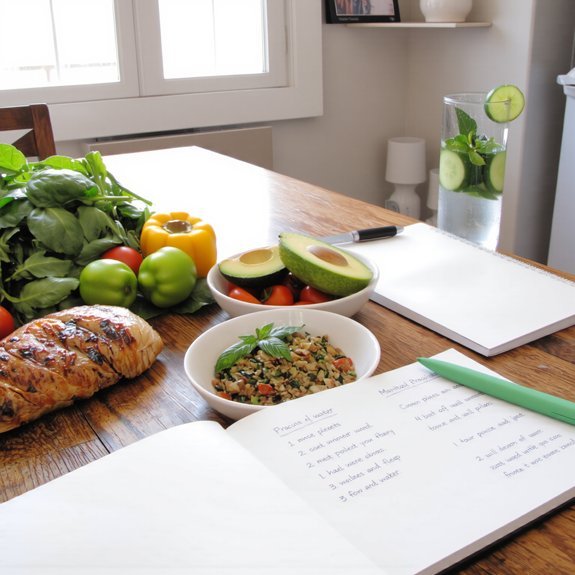
Start by listing breakfasts, lunches, dinners that meet targets, then choose two or three base proteins to rotate.
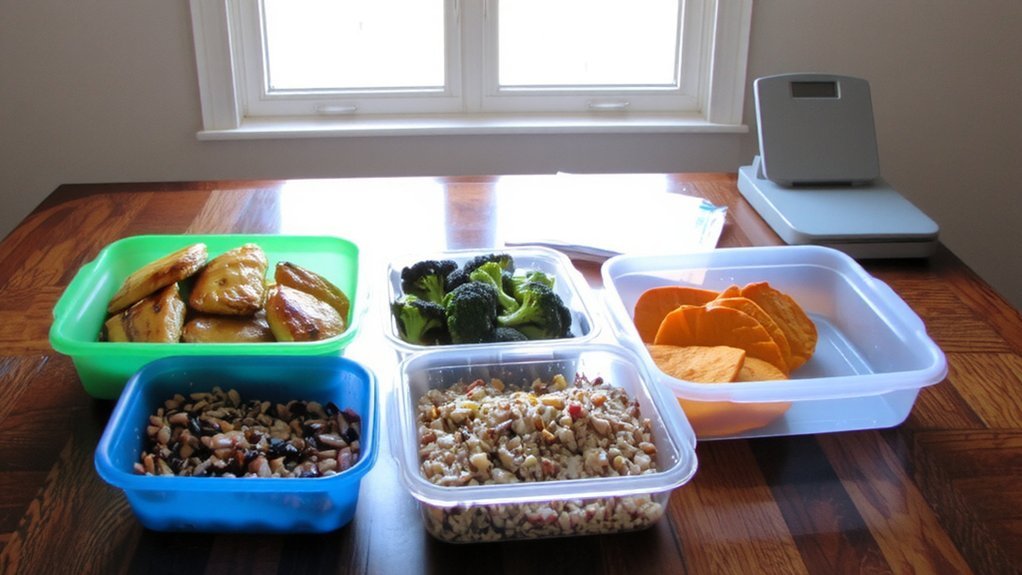
Use Batch cooking for roots like rice, roasted vegetables, and grilled chicken or tofu to save hours.
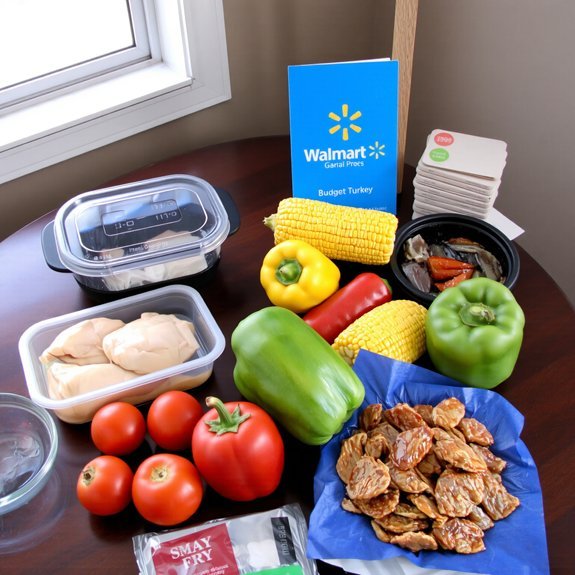
Portion meals into containers so grab-and-go choices match your goals.
Schedule one cook day and one refresh day to keep variety without extra work.
Label containers with dates and macros to stay accountable.
Maintain Kitchen organization: clear counters, organized spices, and stacked containers speed prep and cleanup.
Stick to this blueprint and you’ll hit protein goals consistently while minimizing decision fatigue. Adjust portions weekly as strength and appetite change.
Blood Sugar–Stable Daily Eating Guide
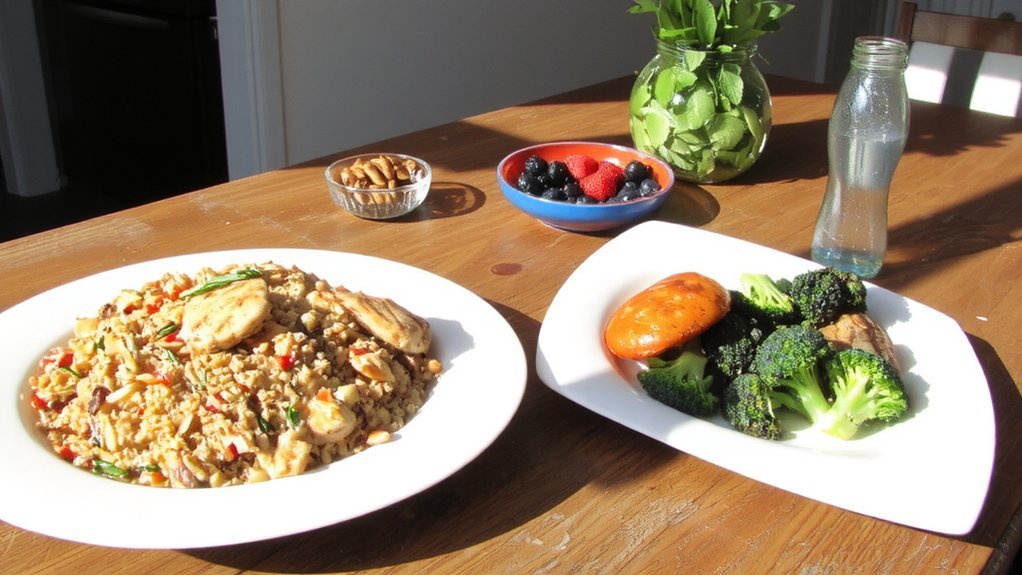
Usually, you’ll steady your blood sugar by pairing protein or healthy fat with every meal and snack, spacing carbohydrates evenly, and prioritizing fiber-rich whole foods. You’ll plan meals with Meal Sequencing: start with vegetables and protein, add complex carbs, finish with fruit if desired.
Aim for consistent timing every 3 to 4 hours to avoid spikes. Focus Snack Composition on protein plus fiber or fat, like Greek yogurt with berries or apple slices with nut butter. Keep portions moderate and track patterns to adjust.
Simple rules:
- Include protein at breakfast.
- Fill half your plate with nonstarchy vegetables.
- Choose whole grains over refined.
- Pair snacks with protein or fat.
You’ll feel steadier energy and fewer cravings when you follow this guide.
Heart-Healthy 4-Week Meal Strategy
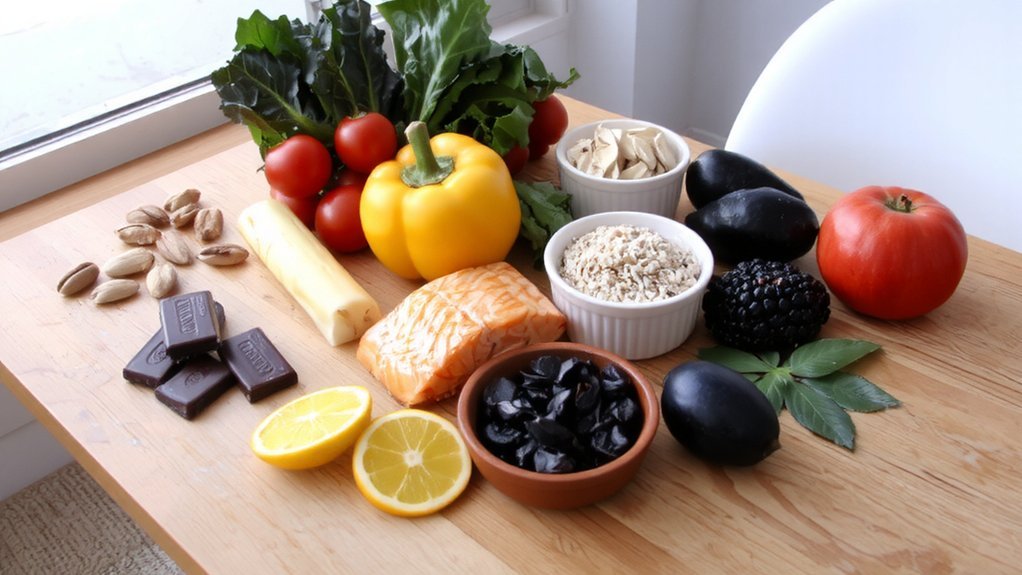
Over four weeks you’ll build a sustainable, heart-healthy meal routine that lowers saturated fat and sodium while boosting fiber, unsaturated fats, potassium, and omega-3s.
Week 1 you’ll audit habits, swap processed snacks for whole fruits and vegetables, and prioritize oily fish twice weekly.
Week 2 you’ll implement Mediterranean swaps—olive oil for butter, whole grains for refined—and start tracking salt at the table.
Week 3 focuses on portion balance: more legumes, greens, and potassium-rich produce like bananas and sweet potatoes, plus portion-controlled nuts.
Week 4 you’ll refine menus, test quick low-sodium recipes, and establish shopping lists and weekly prep.
These deliberate steps make Sodium reduction practical, sustainable, and tailored to your lifestyle.
You’ll feel better, see improved markers, and sustain changes long term consistently now.
Plant-Forward Protein-Focused Plan
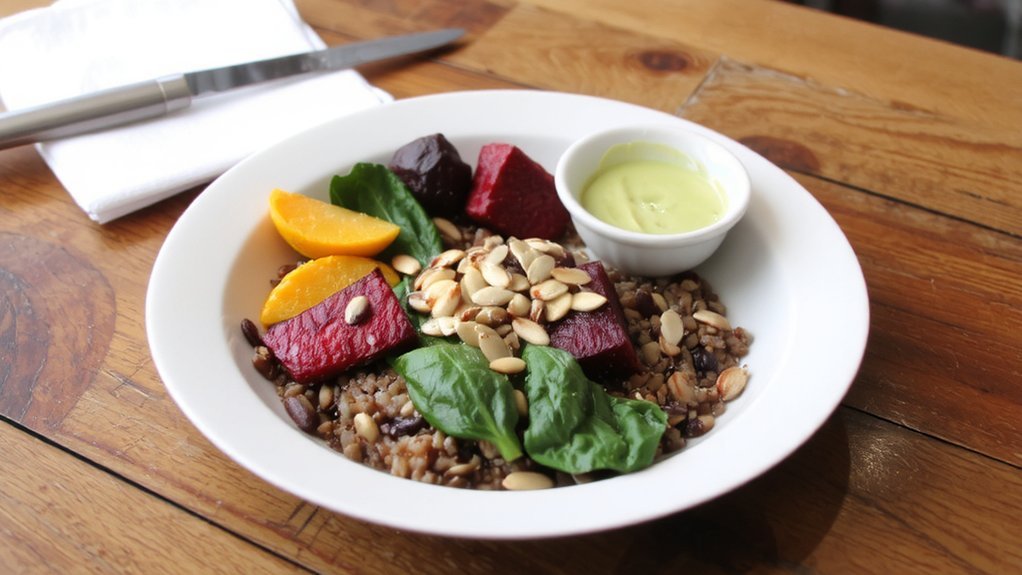
As you shift to a plant-forward, protein-focused plan, you’ll prioritize legumes, tofu and tempeh, high-protein grains, nuts, and seeds while using modest portions of dairy, eggs, or fish when needed to meet your protein goals.
Focus meals around varied proteins: beans, lentils, edamame, tempeh and Fermented Proteins like miso and natto, plus quinoa and amaranth.
Add Seed Blends and nut butters for texture and micronutrients. Rotate preparations to keep meals satisfying and prevent monotony. Use simple flavors: citrus, herbs, spices to elevate dishes.
- Plan a bean or tempeh main weekly
- Combine grains with legumes for complete profiles
- Snack on seed blends and nuts for protein boosts
- Include occasional dairy, eggs, or fish for variety
You’ll build strength and lasting energy.
Mindful Portioning for Sustainable Weight Loss
Often, you’ll find that paying attention to portion sizes—not just calories—helps you lose weight without feeling deprived.
You can use Plate Psychology by visually dividing your plate: half vegetables, a quarter lean protein, a quarter whole grains or starchy vegetables.
Measure portions initially to recalibrate serving sizes, then rely on consistent plate patterns.
Practice Sensory Slowing by eating without screens, chewing thoroughly, and pausing mid-meal to reassess hunger.
That slower pace lets fullness cues catch up so you stop eating sooner.
Track portions for a week to identify habits, then adjust meal timing and snack size to steady appetite.
Small, repeatable changes to portions and mindful pace create sustainable calorie reduction without strict restrictions, making weight loss realistic long term.
You can maintain progress.
Family-Friendly Balanced Meals for Busy Evenings
When evenings get hectic, you can still put together balanced, kid-friendly meals in 20–30 minutes by leaning on simple formulas and smart shortcuts.
Focus on a protein, veggie, grain, and quick sauce so the plate feels complete and familiar for a picky eater. Rotate weeknight favorites like seasoned chicken, taco bowls, stir-fries, and pasta with greens to keep variety without fuss. Use frozen vegetables, canned beans, and pre-cooked rice to save time.
- Build plates: protein + veg + carb
- Sneak veg into sauces and quesadillas
- Let kids customize toppings
- Batch cook small portions for two nights
You’ll feed family members well without stress. Swap sauces, herbs, and textures to refresh repeats, and involve kids in simple tasks so meals feel cooperative and less stressful.
Time-Crunched Meal Prep for 5-Day Weeks
If you’ve only got pockets of time on weekends, you can set up a streamlined plan that feeds five weeknights with minimal nightly work: pick two proteins, two grains, and a rotating set of vegs, batch-cook components in one or two sessions, and portion them into labeled containers so you just reheat and assemble. Use simple recipes, label sauces, and schedule two 90-minute sessions to chop, roast, and cook. The table below maps combos for Quick dinners and shows kitchen shortcuts for assembly.
| Protein | Grain | Veg |
|---|---|---|
| Chicken | Rice | Broccoli |
| Tofu | Quinoa | Spinach |
| Ground beef | Pasta | Roasted carrots |
Rotate sauces, mix bases each night, and finish with a salad or steamed veg. Keep spices visible, reuse containers, and reheating stays fast. Plan weekly, save time.
Pregnancy and Postpartum Nutrition Roadmap
As you plan meals, focus on trimester-specific nutrient targets—more folate and iron in early pregnancy, increasing protein and calcium in later trimesters.
After birth, shift to postpartum recovery nutrition that supports healing, energy, and breastfeeding with extra calories, protein, iron, and omega-3s.
We’ll map sample meal plans and easy swaps so you can meet those changing needs without added stress.
Trimester Nutrient Targets
Because your nutrient needs shift across pregnancy and postpartum, trimester-specific targets help you focus on the right vitamins, minerals, macronutrients, and calories at the right time.
In early pregnancy, prioritize folate and nutrient-dense foods to support fetal organogenesis and reduce neural tube risk.
Mid-pregnancy increases iron and protein as placental transfer accelerates and fetal growth rises.
Late pregnancy emphasizes calories, calcium, and omega-3s for bone and brain development.
Tailor intake to your weight, activity, and medical needs; consult your provider for personalized goals.
- First trimester: folate, B12, moderate calories
- Second trimester: iron, protein, adjusted calories
- Third trimester: calcium, omega-3, extra calories
- Monitor: labs, symptoms, provider guidance
Track weight gain targets and supplement recommendations with routine prenatal checkups and bloodwork regularly.
Postpartum Recovery Nutrition
While your body recovers, prioritize nutrient-dense foods that support healing, energy, and—if you’re breastfeeding—milk supply. Focus on lean protein, vitamin C, whole grains, and healthy fats to rebuild tissues and stabilize mood. For Iron Replenishment, choose red meat, legumes, and fortified cereals with vitamin C to boost absorption. Use Hydration Strategies: sip water, herbal teas, and electrolyte drinks, especially if nursing.
| Goal | Foods | Timing |
|---|---|---|
| Healing | Protein, vitamin C | Meals, snacks |
| Iron Replenishment | Red meat, beans | With vitamin C |
| Milk Supply | Oats, flaxseed | Throughout day |
Plan small, frequent meals, rest when you can, and check labs with your provider. If you experienced blood loss, discuss supplementation and dosing with your clinician so you get safe, effective Iron Replenishment and stay hydrated daily.
Endurance Athlete Fueling and Recovery Plan
If you’re training for long distances, you’ll need a fueling and recovery plan that prioritizes steady energy, muscle repair, and hydration.
You should schedule carbs before, during, and after sessions to sustain effort and replenish glycogen.
Pair protein (20–30g) with carbs within 30–60 minutes post-workout to boost repair.
Include Hydration strategies and Electrolyte timing: sip fluids regularly and replace sodium, potassium, and magnesium around long efforts.
Monitor weight changes to guide intake.
- Pre-run: 200–300 kcal carbs, 300–60 min prior.
- During: 30–60 g carbs/hour for >90 min.
- Post-run: 20–30 g protein + carbs 1:3 ratio.
- Daily: balanced meals, quality sleep, and active recovery.
Adjust portions and timing based on performance, preferences, and gut tolerance, and test strategies in training, not races.
Conclusion
You’ll find ten focused meal-plan options that help you meet goals—weight, strength, blood sugar, heart health, plant-forward protein, family meals, quick prep, pregnancy/postpartum, endurance, and recovery. Use the shopping lists, simple prep tips, and evidence-based nutrient targets to customize portions, calories, protein, and hydration. Check with your clinician to tailor needs and set monitoring plans. Stay consistent, track progress, and adjust plans so you reach sustainable, safe results that support long-term health and enjoy food.