
You’ll get practical choices that help lower LDL and support heart health without feeling restrictive. The weekly menu focuses on soluble fiber, healthy fats, and omega‑3s, plus simple swaps for special diets. Try the meals and you’ll see how manageable heart‑healthy eating can be—
Key Takeaways
- Include soluble fiber, nuts, legumes, and fatty fish to raise HDL and lower LDL through improved cholesterol clearance.
- Follow a 7‑day plan: three balanced meals plus one snack, emphasizing whole grains, vegetables, lean proteins, and healthy fats.
- Prioritize oats, beans, nuts, olive oil, avocado, and fatty fish (salmon, mackerel) for cholesterol-lowering nutrients and anti-inflammatory omega‑3s.
- Use portion control, soluble-fiber breakfasts, plant-forward lunches, and fish or tofu dinners to reduce saturated fat intake and glucose spikes.
- Batch-cook grains, roast vegetables, batch dressings, and read labels for low sodium and added sugars to make the menu sustainable.
Why This Plan Supports Lower Cholesterol and Heart Health
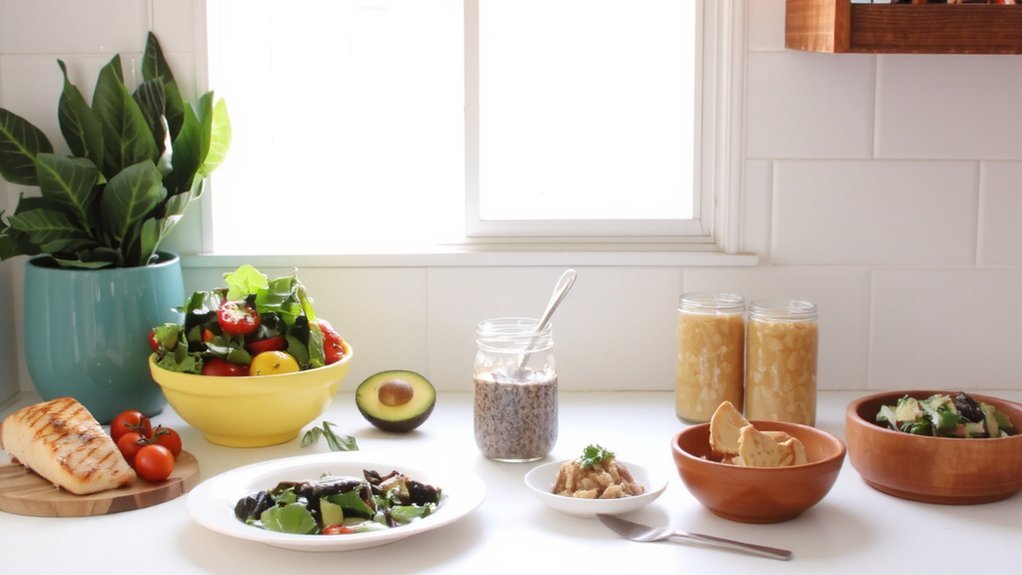
Because it emphasizes soluble fiber, unsaturated fats, and whole foods, this plan helps lower LDL cholesterol and cut heart‑disease risk.
You’ll eat oats, legumes, nuts, fatty fish, and plenty of vegetables to boost cholesterol clearance and improve lipid metabolism.
You’ll favor mono- and polyunsaturated oils over saturated fats, which helps shift your lipid profile toward healthier lipoproteins.
Antioxidant-rich produce and omega-3s support inflammation reduction, stabilize plaques, and improve endothelial function.
Portion control and fiber slow glucose absorption, reducing postprandial spikes that worsen lipids and inflammation.
You’ll also limit processed foods and added sugars, cutting sources of trans fats and excess calories.
You’ll feel measurable improvements in cardiovascular markers soon.
7‑Day Meal Plan: Breakfasts, Lunches, Dinners, and Snacks
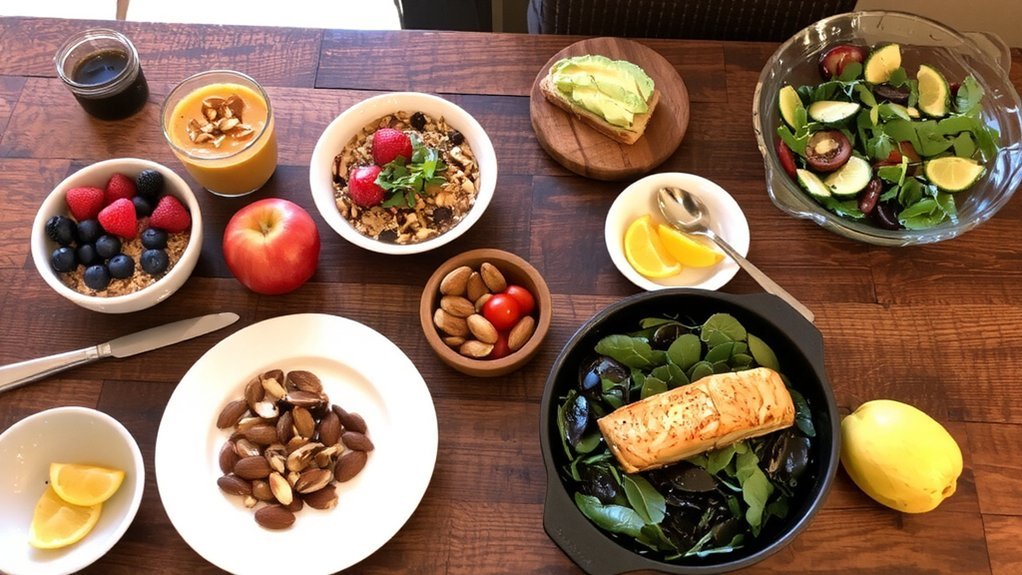
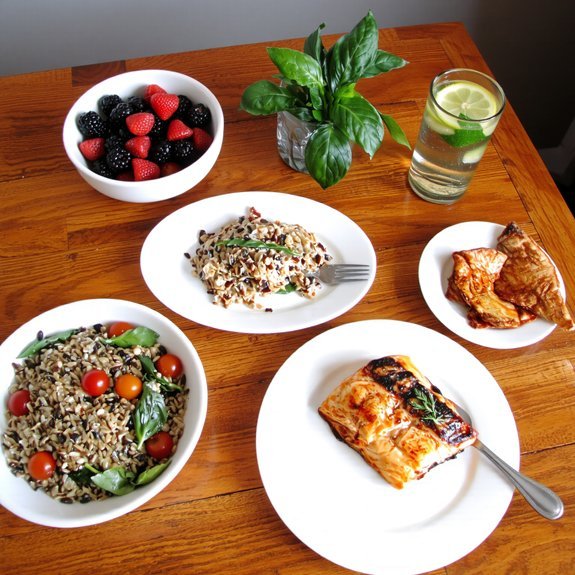
Typically, you’ll eat three balanced meals and one or two snacks that emphasize soluble fiber, unsaturated fats, lean protein, and plenty of vegetables.
For breakfast, choose oats with fruit and a spoon of nut butter or a veggie omelet with whole-grain toast — both stabilize blood sugar and add soluble fiber.
At lunch, build a salad or grain bowl with beans, greens, avocado, and a vinaigrette; rotate bases weekly for flavor rotation.
Dinners pair grilled fish or tofu with steamed vegetables and a whole grain.
Snacks can be fruit with yogurt, hummus with raw veg, or a small handful of nuts.
Mind portion timing: eat every three to four hours to prevent overeating and support steady energy throughout the day and protect heart health daily.
Heart‑Healthy Shopping List and Pantry Staples
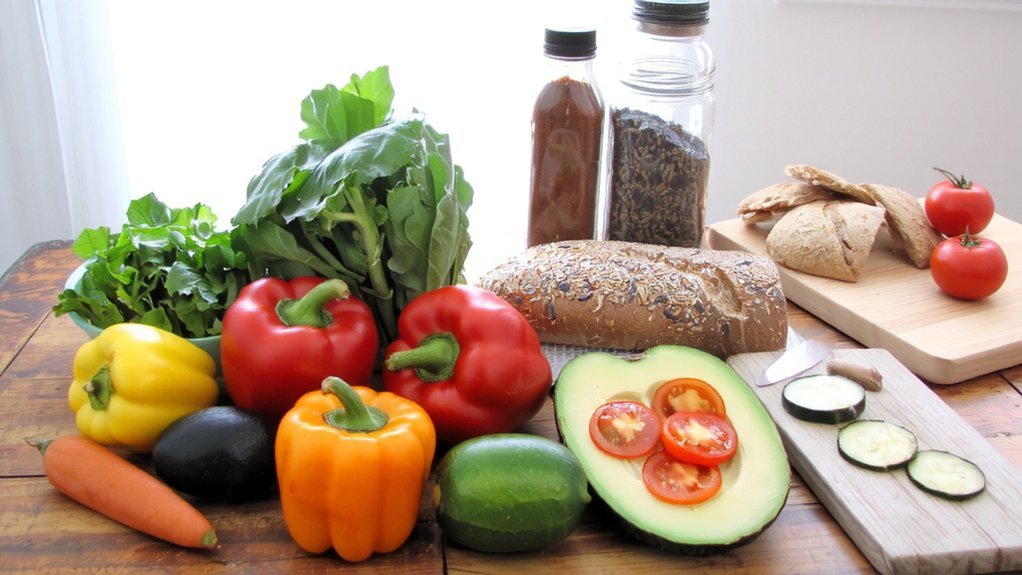
A few key staples will make heart‑healthy cooking simple and reliable: stock whole grains (oats, brown rice, quinoa), canned or dried beans and lentils, canned low‑sodium tuna or salmon, extra‑virgin olive oil, nuts and seeds, and a variety of dried herbs and spices.
Add fresh produce—leafy greens, berries, citrus—and low‑fat dairy or fortified plant milks.
When shopping, practice label reading to choose lower sodium, saturated fat, and added sugar; compare serving sizes. Pick whole‑grain breads and high‑fiber cereals. Buy unsalted nuts and plain yogurt to control sodium and sugar.
Use airtight containers, freeze portions, and rotate older items forward as simple storage tips to keep food safe and reduce waste. Keep a running list so you’ll shop efficiently and stick to heart‑healthy choices daily.
Batch‑Cooking, Meal‑Prep Strategies, and Time‑Saving Tips
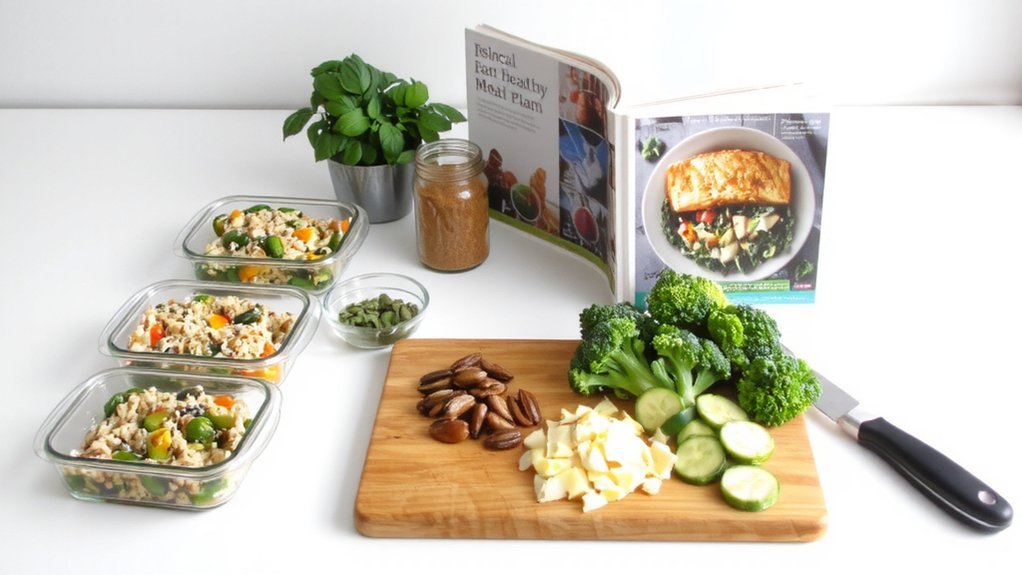
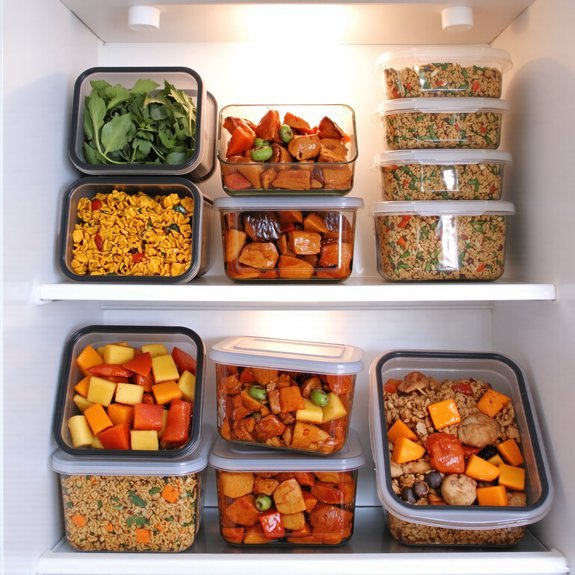
Prepping key components once a week lets you assemble healthy meals in minutes, so plan a short block of time to cook grains, roast vegetables, and portion proteins into ready-to-use containers. Set up Prep Stations—grain, protein, veg, and sauce—so you move efficiently and use one sheet pan or pot at a time.
Label containers with dates and portion sizes to simplify reheating. Use batch sauces and vinaigrettes to change flavors without extra cooking.
Freeze single-meal portions and track them with a simple Freezer Rotation list so nothing gets forgotten. On busy days, reheat, add a salad or steamed greens, and you have a balanced, cholesterol-conscious meal.
Keep tools handy: sharp knives, timers, and stackable containers. Rotate staples weekly to maintain freshness and avoid waste.
Swaps for Vegetarian, Vegan, and Gluten‑Free Adaptations
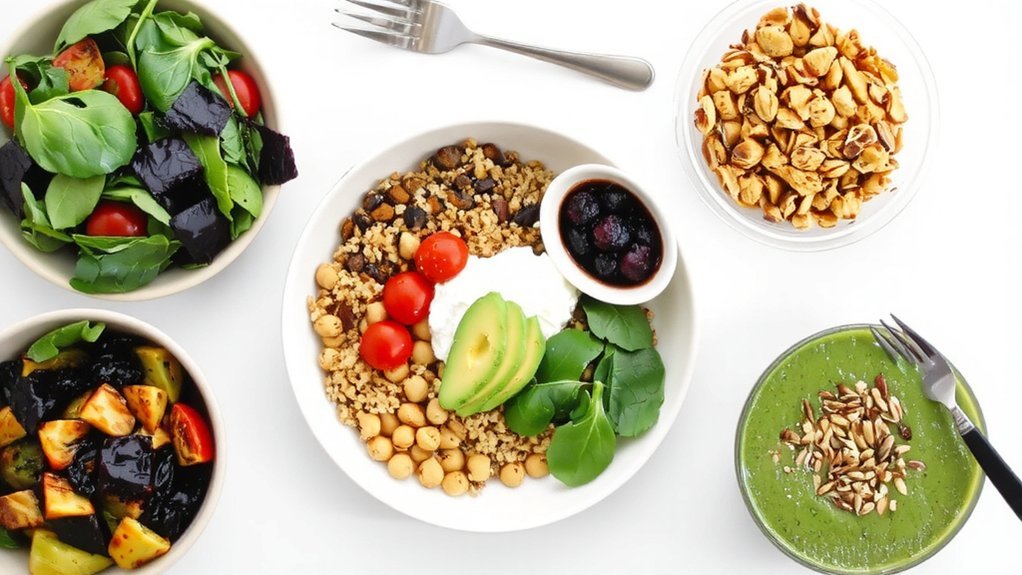
Once you’ve prepped grains, roasted veg, and portioned proteins, you can swap ingredients to suit vegetarian, vegan, or gluten-free needs without adding time. Choose Protein alternatives like lentils, tempeh, and chickpeas for satiety; add nuts or seeds for crunch. Use Flour substitutes such as almond, oat, or chickpea flour in pancakes and coatings.
| Swap | Example |
|---|---|
| Protein | Lentils, tempeh |
| Flour | Almond, chickpea |
For dairy, swap yogurt for plant-based unsweetened versions. For egg replacements, use flax or chia mixes. Toasted quinoa, wild rice, and gluten-free pasta replace wheat bowls. Keep seasonings, dressings, and cooking methods the same so meals stay heart-healthy. Mix and match swaps per meal prep batch so everyone gets balanced fiber, healthy fats, and plant protein. Rotate swaps weekly to keep variety and support long-term heart health, consistently daily.
Conclusion
You’ve got a practical, flexible plan that helps lower cholesterol and protect your heart while still tasting great. Use the shopping list, batch‑cook options, and swaps to make it fit your life—mix and match breakfasts, lunches, dinners, and snacks. Stick with whole grains, legumes, fatty fish or plant proteins, nuts, fruits, vegetables, and healthy fats. Keep portions sensible and stay consistent; small daily choices add up to big heart benefits over time every single day.