
You’ll get a practical weekly high‑protein plan that builds muscle without taking over your life. It targets 1.6–2.2 g/kg, spreads protein evenly across meals, and offers plant and animal swaps. Meals, shakes, and batch‑cook templates cut prep time. Keep going to see how to set your targets, time fuel around workouts, and tweak calories and protein for steady progress.
Key Takeaways
- Aim for 1.6–2.2 g/kg daily protein (1.0–1.2 g/lb for intermediates), adjusted by training phase and body composition goals.
- Spread protein evenly across 3–5 meals, targeting ~20–40 g and a 20–40 g postworkout bolus to stimulate muscle synthesis.
- Use a modest +250–500 kcal surplus for hypertrophy, reduce to -300–500 kcal with higher protein (1.8–2.2 g/kg) when cutting.
- Match protein grams and amino-acid completeness when swapping: use concentrated plant forms or complementary pairings (tofu/tempeh, beans+rice).
- Batch-cook proteins and bases, schedule periworkout carbs/protein on heavy days, and reassess every 2–4 weeks.
Why High Protein Matters for Muscle Growth
When you lift or challenge your muscles, protein supplies the amino acids they need to repair and grow stronger. You depend on adequate protein to support positive Nitrogen Balance, which tells you that synthesis exceeds breakdown and that tissue is rebuilding.
Essential amino acids, especially leucine, trigger Muscle Signaling pathways that initiate protein synthesis so fibers thicken and contractile proteins accumulate. You’ll recover faster, maintain strength during caloric changes, and reduce muscle loss with consistent protein at meals and after workouts.
Timing and quality matter: prioritize complete sources and spread intake across the day to keep signaling active. In short, protein isn’t optional for growth — it’s the biochemical signal and substrate that lets your training translate into bigger, stronger muscles. Aim for consistency.
Setting Your Daily Protein and Calorie Targets
Now that you’ve seen how protein drives repair and growth, you need concrete daily targets for protein and calories so your training actually produces muscle. Aim for 1.6–2.2 g/kg protein and a caloric surplus of 250–500 kcal when building; use lower end if fat gain is a concern. Adjust targets for genetic variability and hormonal profiles—some people recover better or need more energy. Track body composition and performance, then tweak intake weekly. Use the quick guide below to estimate starting points.
| Goal | Protein (g/kg) | Calories |
|---|---|---|
| Maintain | 1.2–1.6 | Maintenance |
| Build | 1.6–2.2 | +250–500 kcal |
| Cut | 1.8–2.2 | -300–500 kcal |
Reassess every 2–4 weeks and adjust based on progress. If you’re unsure, consult a registered dietitian or sports nutritionist to personalize targets and monitor recovery and adjust regularly.
Weekly Macronutrient Breakdown and Meal Timing
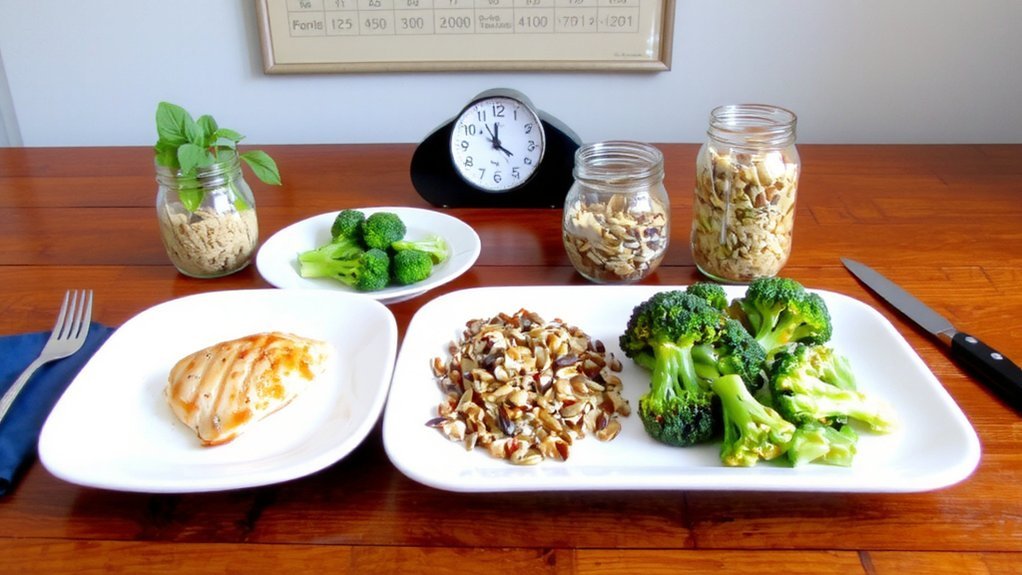
Because weekly totals drive results, map your weekly macronutrient distribution to your daily protein and calorie targets, hitting protein consistently across meals and shifting carbs toward higher-volume training days to fuel performance and recovery.
Plan protein so you reach your weekly protein gram target with even portions—aim for 20–40 g per meal depending on needs—and prioritize protein at breakfast and postworkout.
Use carb cycling to concentrate carbs on intense training days and lower them on rest days, which helps body composition while maintaining training quality.
Time meals to support Circadian nutrition: bigger carbs earlier if you train morning, or postworkout when insulin sensitivity is higher.
Keep meal frequency simple, track totals, and adjust weekly based on progress. You’ll refine timing as your workload changes.
Sample 7-Day High-Protein Menu for Muscle Gain
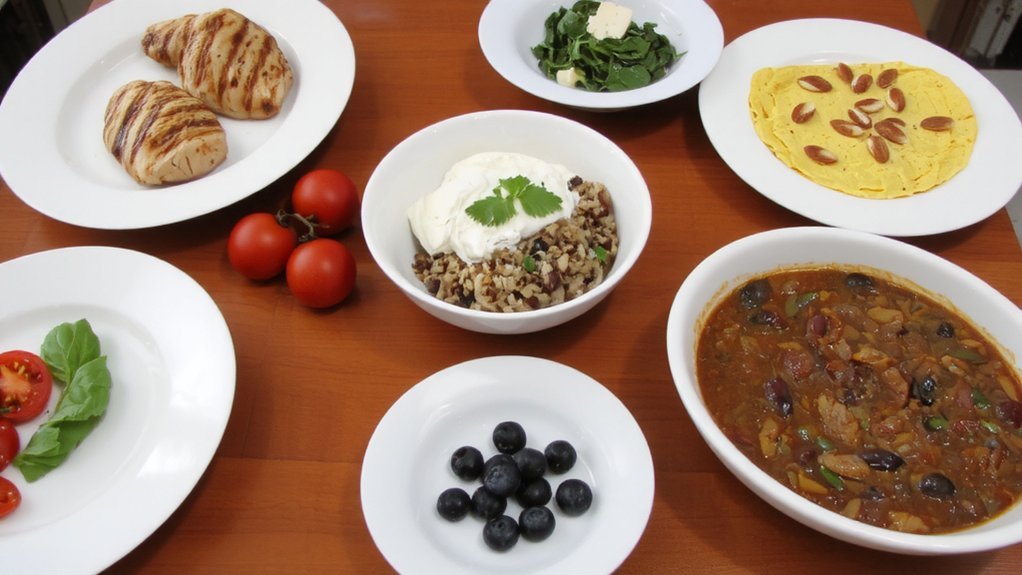
You’ll get clear daily protein targets to hit for muscle gain.
You’ll follow a practical 7-day meal schedule that maps meals and portions to those targets.
I’ll also outline easy snack choices and post-workout recovery options to keep you fueled and repairing.
Daily Protein Targets
Several factors determine how much protein to target each day on this 7‑day high‑protein menu for muscle gain: body weight, training intensity, and whether you’re in a caloric surplus or deficit. Aim for 1.6–2.2 g/kg body weight if you’re focused on hypertrophy, adjusting toward the upper end during intense training or calorie deficit.
Spread intake across 3–5 meals to maximize synthesis; include a 20–40 g bolus post-workout.
Factor in plant vs animal choices—plants lower environmental footprint but may require more total grams to match bioavailability; balance that with your budget and economic accessibility.
Track weekly totals, tweak based on progress, and prioritize consistency over perfection so your muscles get steady building blocks. Reassess every 2–4 weeks and adjust protein targets as needed, with metrics.
7-Day Meal Schedule
Scheduling meals around training and sleep helps you hit daily protein targets and keep muscle protein synthesis consistent across a 7‑day plan. Plan three main meals and two timed smaller meals: breakfast after morning workouts, lunch mid-day, dinner post-evening sessions. Adjust times for cultural rituals and social obligations without dropping protein. Use portioned protein servings (lean meat, dairy, legumes) to stay on target.
| Time | Focus |
|---|---|
| 7:00–8:00 | Breakfast (post-workout) |
| 12:00–13:00 | Lunch (protein-focused) |
| 17:00–19:00 | Dinner (main protein) |
Track intake, prep meals ahead, and shift windows when events interfere so you remain consistent all week. Prioritize quick-cook proteins on busy days, batch-cook on rest days, and communicate timing with family or friends so cultural rituals and social obligations mesh with your training schedule without derailing progress effectively.
Snack and Recovery Options
When should you reach for a snack versus a recovery meal? Choose a snack when you need quick protein and carbs within an hour of light exercise or between meals — Greek yogurt with berries, a protein shake, or a turkey roll-up.
Opt for a recovery meal after intense or long workouts: a balanced plate with lean protein, starch, and vegetables to restore glycogen and support muscle repair.
Pair recovery meals with electrolyte replenishment if you sweat heavily.
Use foam rolling routines post-meal or later to reduce soreness and improve mobility.
Plan snacks to prevent overeating and recovery meals to support adaptation.
Keep portions sensible, time intake around training, and listen to hunger and performance cues for best results.
Adjust based on progress weekly.
Easy High-Protein Recipes and Prep Tips
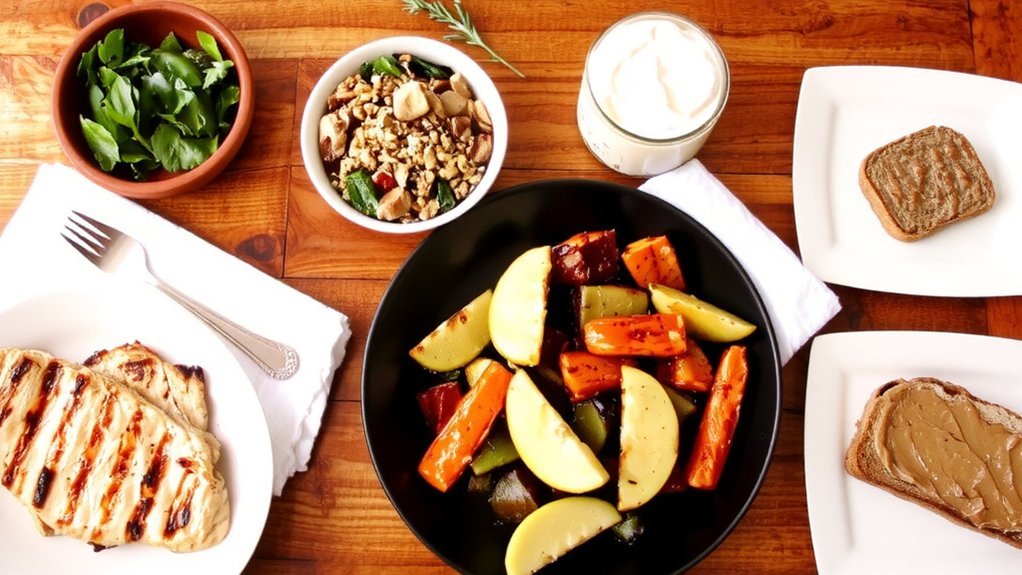
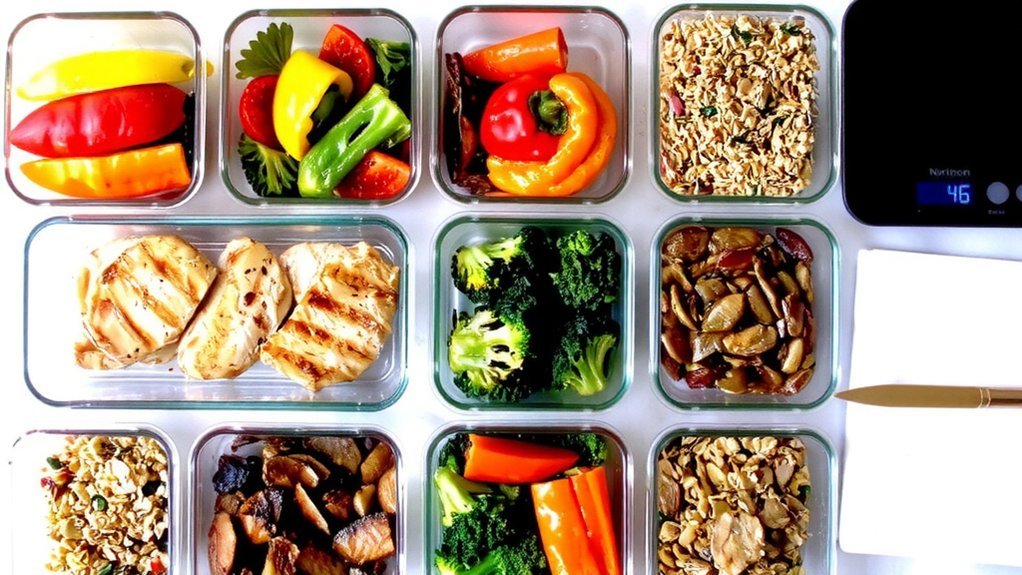
Batch-cooking proteins and prepping a few versatile bases will keep you fed all week without fuss: roast a tray of chicken thighs, pan-sear salmon or tofu, and cook a big pot of quinoa or lentils so you can assemble salads, bowls, or wraps in minutes, each meal delivering a solid protein hit. Use simple recipes: lemon-garlic chicken and black bean quinoa salad.
| Protein | Prep Time | Use |
|---|---|---|
| Chicken | 30 min | Salads |
| Quinoa | 20 min | Bowls |
Rely on Kitchen gadgets like a sheet pan, rice cooker, and blender to speed prep. For Kid friendly adaptations, chop bites small, mild spices. Store portions in containers; label protein and date. Quick reheating instructions make weekday meals reliable. Try a 15-minute stir-fry template to change flavors without extra planning.
Shopping List and Batch-Cooking Strategy
Plan a shopping list that mirrors the proteins and bases you prepped—chicken, quinoa, salmon or tofu—then add versatile staples for quick sauces and fresh produce.
Buy portions for the week, list proteins, grains, legumes, oils, spices, and a few snack items.
Schedule one big batch-cooking day: roast protein, steam grains, prep vegetables, and portion into containers.
Use a Labeling System on lids with date, meal, and reheating notes so nothing gets forgotten.
Implement Pantry Rotation for canned goods, grains, and sauces: move older items forward and note expiration dates.
Pack meals in balanced portions (protein, carb, veg), freeze extras, and keep one fresh meal for day one.
Reassess quantities weekly to refine efficiency regularly.
Plant and Animal Protein Swaps for Flexibility
You can swap animal for plant proteins by matching quantity equivalents so you still hit the same grams of protein.
Pair complementary plants (like rice and beans or hummus with whole-grain pita) to create complete proteins.
You’ll also want to match flavor and texture—marinated tofu, tempeh, and umami-rich ingredients help mimic savory, meaty profiles.
Protein Quantity Equivalents
How much plant protein equals a serving of animal protein depends on grams of protein and bioavailability, so match sources by protein content rather than volume or weight.
You’ll read labels and use label decoding to find per-serving protein grams; focus on the protein number, not calories.
If a plant source shows less protein per cup, increase serving size or swap in concentrated forms like tofu, tempeh, seitan, or pea isolate.
For powders, apply scoop conversions to get exact grams—measure scoops to protein grams, not tablespoons.
Aim for equivalent protein grams per meal and adjust for digestibility (animal proteins often higher).
Track totals across the day so swaps meet your target without over- or under-shooting.
You can tweak portions weekly to optimize muscle building progress.
Complete Protein Pairings
When you’re swapping between plant and animal proteins, match by protein grams and amino-acid profile so each meal gives a complete mix of essential amino acids.
You can replace chicken with Greek yogurt or cottage cheese when you need dairy-based complete proteins, or pair beans with quinoa to form a plant-based equivalent.
Use Global traditions to guide combos—think lentils with rice, or fish with legumes in coastal cuisines.
Consider Seasonal pairings for freshness and nutrient timing.
Aim for portion swaps that maintain protein totals and balance leucine for muscle synthesis.
Practical swaps:
- 100 g cooked chicken → 170 g Greek yogurt
- 1 cup cooked beans + 1/2 cup quinoa → complete plant protein
- 3 oz salmon → 1 cup cottage cheese now
Flavor and Texture Matches
Often, matching flavor and texture makes swaps feel intentional rather than like an afterthought; focus on mouthfeel, moisture, fat, and seasoning so your replacement sits naturally in the dish.
When you swap chicken for tempeh or salmon for seared tofu, mimic crispness with a quick sear, add moisture with a sauce or glaze, and match richness with a drizzle of oil or nut butter.
Use sensory layering—herbs, acid, and crunch—to preserve the dish’s profile.
Think contrast pairing: pair creamy legumes with bright citrus or toasted seeds to recreate balance.
Taste as you go, adjust salt and heat, and treat swaps as recipes of parts: texture, fat, and flavor, staged so each bite feels cohesive and satisfying.
You’ll keep protein goals while enjoying variety daily.
Adjusting the Plan for Different Training Levels
Because your training intensity and experience change your needs, you’ll adjust calories, protein targets, meal timing, and food volume as you move from beginner to advanced. Start with a modest calorie surplus and about 0.8 to 1.0g per pound protein for beginners, increase to 1.0–1.2g for intermediates, and prioritize higher protein plus extra carbs and fats as an advanced lifter.
Use Periodization Strategies and Intensity Scaling to align nutrition with training phases. Focus on nutrient-dense meals, flexible portion swaps, and simplified prep as you progress.
Practical adjustments include:
- Longer peri-workout carbs and whey for high-intensity days.
- Extra meal or shake on heavy training weeks.
- Lighter volume and maintenance calories during deloads.
These tweaks keep recovery robust and feed muscle growth without overcomplicating your plan.
Monitoring Progress and Making Smart Tweaks
How do you know the plan’s working? Track objective measures: weekly body weight, tape measurements, and real lifts (squat, deadlift, bench).
Log protein intake and energy levels.
Use Sleep Tracking to promote recovery—aim for consistent duration and quality; poor sleep undermines gains.
Monitor mood and appetite; they signal insufficient calories or protein.
Adjust smartly: increase calories by 5–10% or add 10–20 g protein if stalls persist, and reduce cardio if recovery suffers.
Change meal timing only if performance or digestion calls for it.
Prioritize Stress Management—chronic stress raises cortisol and impairs muscle growth; add breathing, brief walks, or reduced evening stimulation.
Reassess every two weeks, keep changes small, and record outcomes so you can repeat what works.
Stay consistent and track trends, not daily.
Conclusion
You now have a practical, high‑protein weekly plan that helps you hit 1.6–2.2 g/kg, spread protein evenly, and adjust calories to training. Use batch cooking, swaps, and simple postworkout shakes to keep meals doable. Track strength, body composition, and recovery, then tweak calories or protein by small increments. Stick with the plan, be consistent, and you’ll build muscle steadily while keeping your nutrition flexible and sustainable. Adjust weekly based on progress and how you feel.