
You’re about to try a practical 16:8 plan that fits a busy week and keeps meals simple. It shows eating windows, balanced recipes, and batch‑prep shortcuts so you won’t guess what to cook. Follow along to see how to tailor calories, hit protein targets, and handle travel or social events—then pick the tweaks that suit your goals.
Key Takeaways
- 16:8 fasting means eating during an eight-hour window (commonly 12:00–20:00) and fasting for the remaining 16 hours daily.
- Use a weekly meal calendar with theme nights (Mediterranean, Mexican, vegetarian) and seasonal produce for variety and easier shopping.
- Build each meal around lean protein, whole grains/legumes, vegetables, and healthy fats; batch-cook components and freeze portions for convenience.
- Estimate calories with activity-adjusted BMR, target 0.7–1.0 g/lb protein (1.6–2.2 g/kg), and apply a 10–20% deficit for fat loss.
- Prioritize sleep, hydration and consistency; avoid 16:8 during pregnancy, eating disorders, or certain medical conditions—consult a clinician if concerns arise.
How 16:8 Works and Who It Helps
How does 16:8 work and who benefits from it?
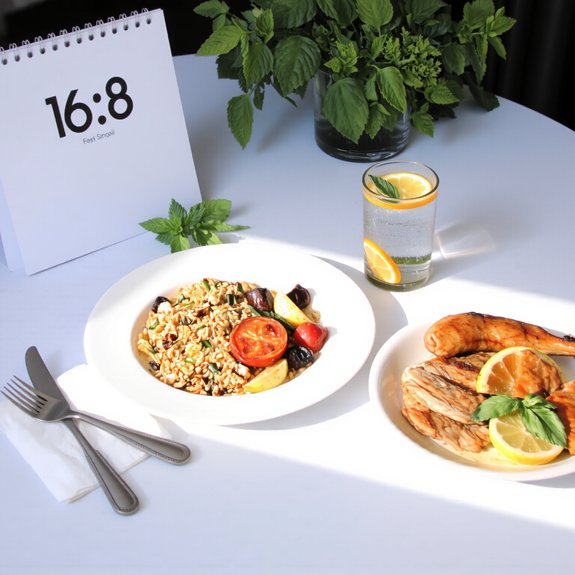
You restrict eating to an eight-hour window and fast for 16 hours, which shifts energy use, improves insulin sensitivity, and triggers hormonal mechanisms like lowered insulin and increased growth hormone that support fat mobilization.
You’ll notice simplified meal timing reduces snacking and can lower calorie intake without meticulous tracking.
It’s often appropriate for adults who tolerate fasting, including busy professionals and people seeking weight or metabolic improvements, but population suitability varies: pregnant people, children, those with eating disorders, or certain medical conditions shouldn’t use it without guidance.
You should consult a clinician to adapt timing and confirm nutrition is balanced while monitoring effects.
You can track progress and adjust based on energy, hunger, and results.
Weekly Meal Calendar Overview
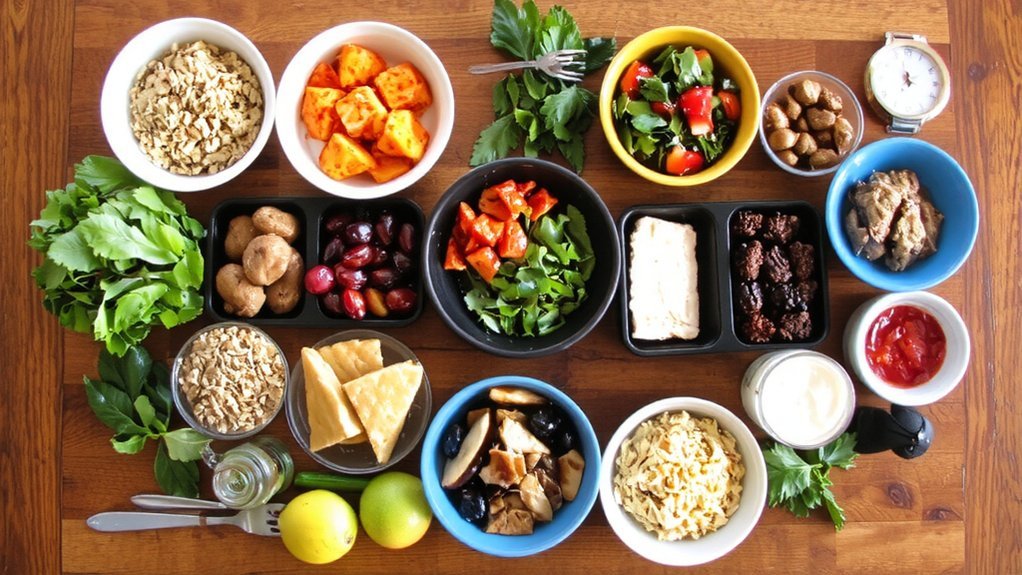
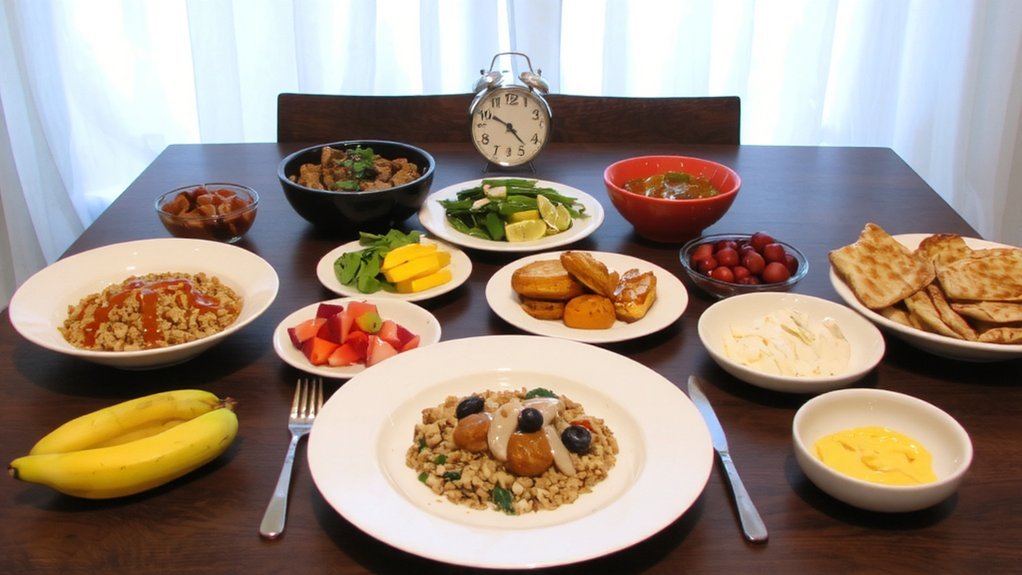
Now that you understand the basics and benefits of a 16:8 schedule, a weekly meal calendar helps you put it into practice: it maps your eight-hour eating window across seven days, balances protein, carbs, and fats, and builds variety so you don’t rely on the same few meals.
Use a simple grid to plan breakfasts, lunches, and dinners for the week, prioritizing lean proteins, whole grains, healthy fats, and plenty of vegetables. Rotate recipes and designate Theme nights—Mexican, Mediterranean, vegetarian—to simplify shopping and prep.
Let Seasonal produce guide choices to maximize flavor and nutrition while keeping costs down. Prep components in advance, note leftovers, and adjust portions so meals stay satisfying and sustainable for your routine. Check progress weekly and tweak as needed regularly.
Sample Daily Schedule and Timing Tips

During a typical 16:8 day (for example, a 12:00–20:00 eating window), you’ll usually break your fast with a balanced meal, have a larger lunch, fit in a light snack or protein-rich mini-meal mid-afternoon, and finish with dinner at least an hour or two before bedtime.
Plan hydration timing by sipping water regularly during fasting and eating hours, and add electrolytes during workouts. Manage Caffeine scheduling by limiting coffee to early in the eating window or mid-afternoon so sleep isn’t disturbed. Keep consistent wake and sleep times so hunger signals align.
- 11:45–12:15 first meal, gentle water and movement.
- 15:00–16:00 snack or mini-meal, optional caffeine.
- 19:00–19:30 dinner, reduce fluids after to protect sleep.
Adjust times to suit work, workouts, family commitments, and travel flexibly.
Balanced Recipes for Your Eating Window
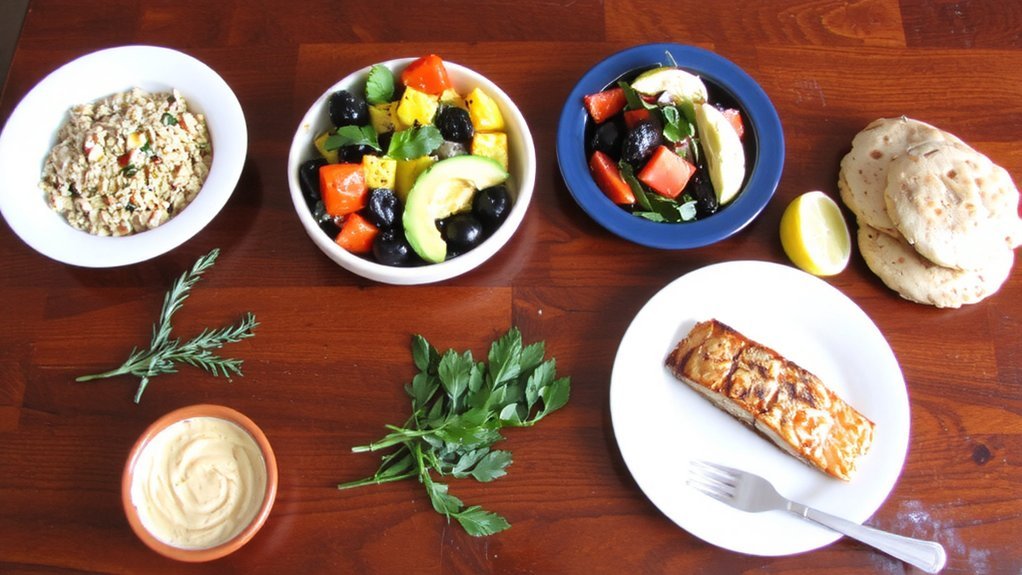
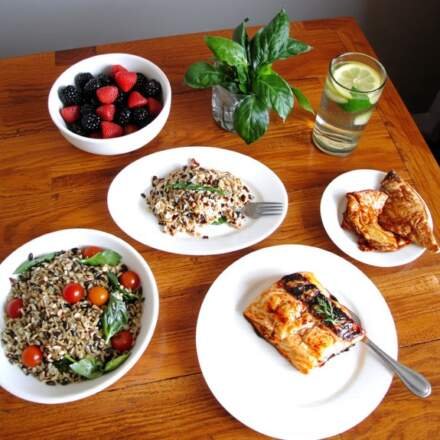
While you eat in an 8-hour window, choose recipes that pair lean protein, fiber-rich carbs, healthy fats, and plenty of vegetables so meals keep you full and fuel your day.
Build meals around a protein — grilled chicken, tofu, fish — plus whole grains or legumes and colorful greens.
Use simple flavor pairings like citrus with herbs, smoked paprika with roasted veggies, or sesame and soy for umami. Include healthy fats such as avocado, olive oil, or nuts to enhance satiety and nutrient absorption.
Pay attention to meal aesthetics: varied colors, contrasting textures, and tidy plating make eating more satisfying and it’ll help you pace your intake. Rotate components for balance and to prevent boredom. Try seasonal produce and modest portions to support long-term success consistently.
Grocery List and Meal Prep Shortcuts
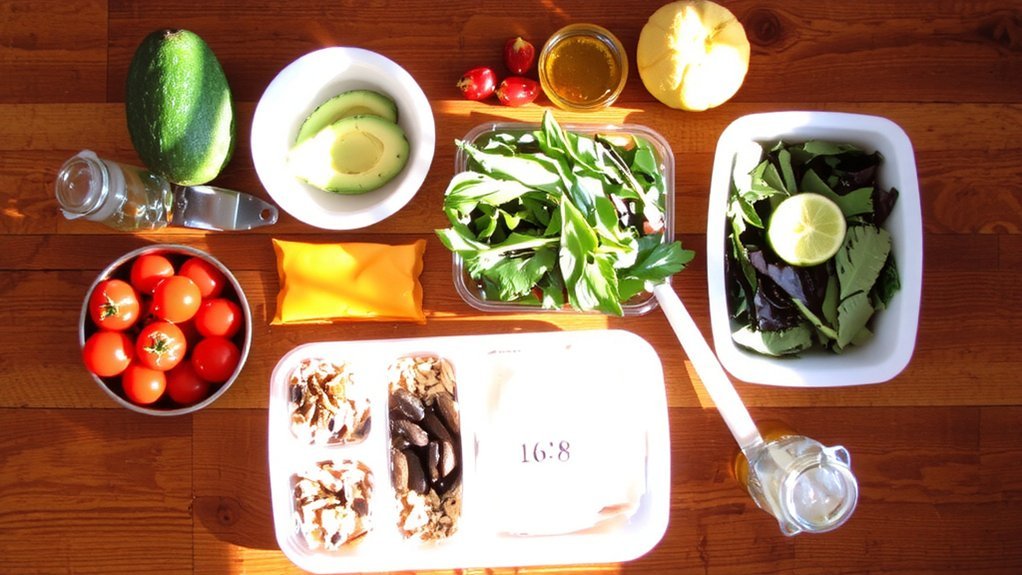
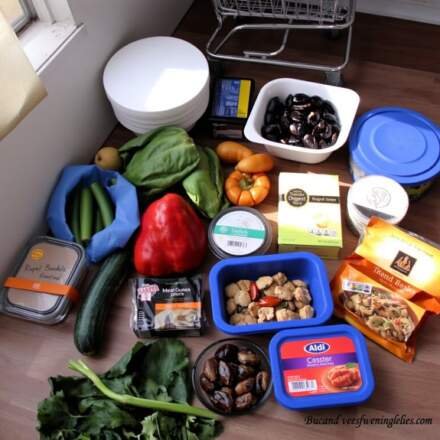
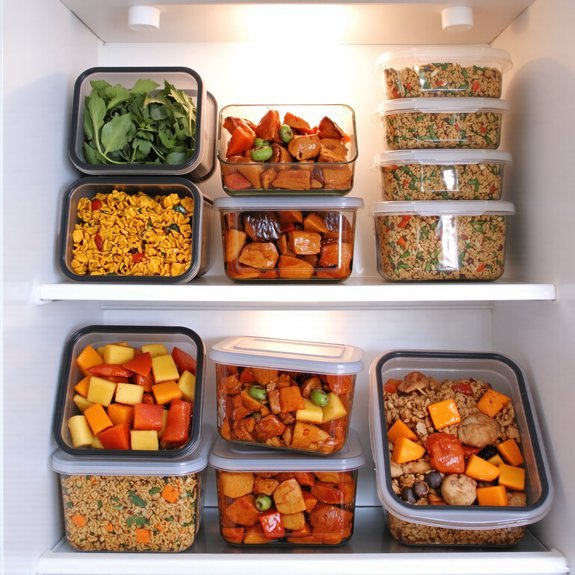
Stocking a concise, versatile grocery list and adopting a few meal-prep shortcuts will keep your eating window simple and satisfying: pick staples like lean proteins (chicken, tofu, canned tuna), whole grains (brown rice, quinoa), legumes, a mix of fresh and frozen vegetables, healthy fats (olive oil, avocado, nuts), and flavor bases (herbs, citrus, soy sauce), then batch-cook grains and proteins, wash and chop greens ahead, portion meals into containers, and rely on frozen produce and canned beans to save time without sacrificing nutrition.
Keep shelf stable staples handy. Use Batch labeling.
- Batch-cook grains/proteins.
- Wash/chop greens, portion meals.
- Freeze portions, separate dressings.
These steps cut daily prep and let you focus on your eating window while maintaining variety and easy flavor swaps throughout the week.
Adjusting Calories and Macros for Your Goals
Start by calculating your daily caloric needs based on activity, age, and goals so you know whether to maintain, lose, or gain weight.
Set a protein target—typically 0.7–1.0 grams per pound of bodyweight—to support muscle and satiety during fasting. Adjust your macro ratios gradually based on progress and how you feel, tracking weight, energy, and performance to refine them.
Calculate Caloric Needs
If you want to change your weight or body composition, you need to know your daily calorie needs so you can create a targeted deficit or surplus. Start by estimating your basal metabolic rate using a reliable BMR Estimation formula, then adjust for activity.
Track non-exercise activity thermogenesis with NEAT Tracking to capture daily movement that adds up.
Use a simple three-step approach to set calories:
- Calculate BMR and multiply by activity factor.
- Add calories from planned workouts; include NEAT adjustments.
- Apply a 10–20% deficit for fat loss or a 5–10% surplus for lean gain.
Reassess every 2–4 weeks and tweak based on progress and hunger, consistent tracking.
Set Protein Targets
Because protein preserves lean mass and fuels recovery, set your target from body composition and goals instead of guessing: aim for about 1.6–2.2 g per kg of body weight (0.7–1.0 g/lb) for most active people, nudge toward 2.2–2.4 g/kg when cutting aggressively or when you’re older, and stay near the lower end if you’re sedentary or on a strict calorie ceiling.
Then determine protein per meal by dividing your daily target across your eating window; prioritize high-quality sources—fish, poultry, eggs, dairy, legumes—and use protein-rich snacks.
Track amino balance by combining fast and slow proteins and including leucine-containing options around workouts.
Account for individual variability: start with a midpoint, monitor strength, recovery, and satiety, and pick the value that supports your performance and body-composition aims.
Adjust Macros Over Time
As you progress through your intermittent fasting plan, regularly reassess calories and macros against measurable results—weight, strength, energy, and how your clothes fit—and make small, evidence-based tweaks rather than big swings.
Track progress for two to four weeks, you’ll adjust calories by five to ten percent and shift macros toward more protein or fat depending on satiety and performance.
Account for seasonal variation in activity and food availability, and let evolving culinary trends inspire balanced swaps without breaking targets.
Use simple rules:
- If weight stalls, reduce calories modestly and increase protein.
- If performance drops, raise carbs around workouts.
- If energy wanes, tweak fat and meal timing.
Review monthly and document changes to stay objective and consult a qualified professional when uncertain.
Managing Social Events and Travel
When you’re heading to a gathering or hitting the road, plan practical moves so your fasting stays doable and you still enjoy yourself.
Tell friends your eating window and use Boundary Setting to skip pressure; suggest timings that fit the group.
Pack portable meals or identify restaurants with simple protein-and-veg options so you don’t break fast unintentionally.
For evenings, consider Alcohol Alternatives like sparkling water with citrus or nonalcoholic beer to socialize without extra calories or disrupted sleep.
If travel shifts time zones, adjust your window gradually by an hour per day.
Prioritize sleep, hydrate, and be flexible: missing a fast once won’t derail progress, but consistency helps.
Return to your usual schedule when you can.
Use checkpoints to reassess and tweak as needed.
Monitoring Progress and When to See a Pro
After outings or travel, take a moment to assess how your eating window, energy, sleep, and hunger cues settled—that quick check helps you judge whether your plan is working.
- Weight, body composition, trends
- Sleep, energy, performance
- Emotional checkpoints, cravings, mood
Use those signals weekly, focusing on trends rather than day-to-day swings.
If progress stalls for 6–8 weeks or you’re dizzy, faint, overly fatigued, or your cycle changes, consult a pro.
A clinician, registered dietitian, or trainer can run tests, adjust macros, or rule out medical causes.
Keep a simple log of meals, sleep, exercise, and mood; review monthly and adjust your 16:8 window or food choices based on outcomes.
Celebrate small wins and consistency.
Seek professional care for serious symptoms.
Conclusion
You’ll find the 16:8 weekly menu practical, flexible, and designed to fit real life. Use the timing tips, batch‑prep shortcuts, and macro targets to make steady progress toward fat loss or lean gain while keeping energy and recovery a priority. Adjust calories for your goals, plan for travel or events, and track results. If you’re pregnant, have a medical condition, or experience concerning symptoms, consult a clinician before continuing and reassess as you progress regularly.