
You want consistent muscle gains without endless meal prep or guesswork. This plan shows how to structure a 250–500 kcal surplus, hit 1.6–2.2 g/kg protein, and spread intake across practical, batch‑cookable meals. It also gives simple swaps, timing tips, and supplements to speed progress — and a few tradeoffs you’ll want to keep in mind…
Key Takeaways
- Aim for 1.6–2.2 g protein/kg daily and spread 20–40 g of high‑quality protein across 3–5 meals to maximize hypertrophy.
- Start with a controlled 250–500 kcal daily surplus above maintenance and adjust weekly based on weight and body‑composition trends.
- Build each meal around a protein source (chicken, fish, eggs, dairy, legumes), a starchy carb, vegetables, and a healthy fat for hormones.
- Batch‑cook proteins, grains, and veg, portion meals for convenience, and rotate sauces/seasonings to maintain adherence and variety.
- Prioritize creatine monohydrate, sufficient omega‑3s, hydration, and 7–9 hours sleep; supplements support but do not replace training and nutrition.
Why a High-Protein Bulking Menu Works
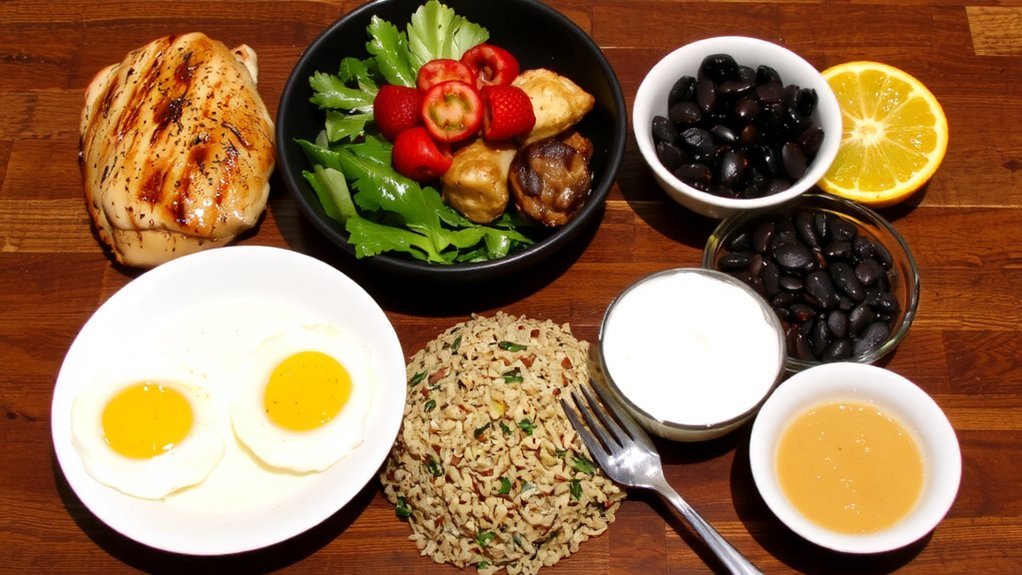
Because muscle growth depends on a steady supply of amino acids, a high-protein bulking menu gives your body the building blocks it needs to repair and grow muscle tissue while you’re training hard.
You maximize anabolic signaling by providing frequent protein doses that trigger muscle protein synthesis, and you preserve positive nitrogen balance so tissue gains outpace breakdown.
Choose varied protein sources—whey, lean meats, dairy, legumes—to cover essential amino acids and digestion rates, and time intake around workouts and sleep to support recovery.
You won’t need extremes; consistency and quality matter more than gimmicks. With a practical high-protein plan, you’ll recover faster, train harder, and convert nutrients into muscle rather than wasted tissue. You’ll feel steadier energy and better workout quality overall daily too.
Setting Calorie and Macro Targets
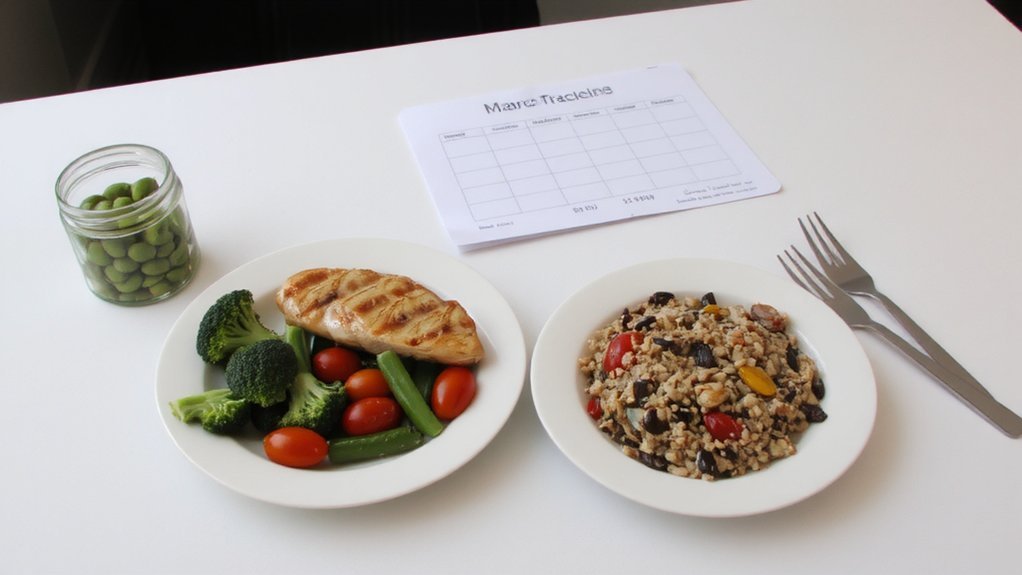
Precision matters when you’re aiming to gain muscle: start by estimating your maintenance calories and add a controlled surplus so you build tissue, not excess fat.
Calculate your resting metabolism using an established equation (Mifflin‑St Jeor or Harris‑Benedict), then multiply by an activity multiplier that reflects training and daily movement.
That gives total daily energy expenditure; add 250–500 kcal for a sensible bulk—smaller if you gain fat easily, larger if you struggle to add mass.
Set macros from that total: prioritize protein to support synthesis, assign fats for hormones, and fill remaining calories with carbs to fuel performance.
Track weight and adjust weekly: if you’re gaining too fast, cut the surplus; if not gaining, increase slightly.
Keep changes systematic and measured and review monthly.
Protein Timing and Distribution for Growth
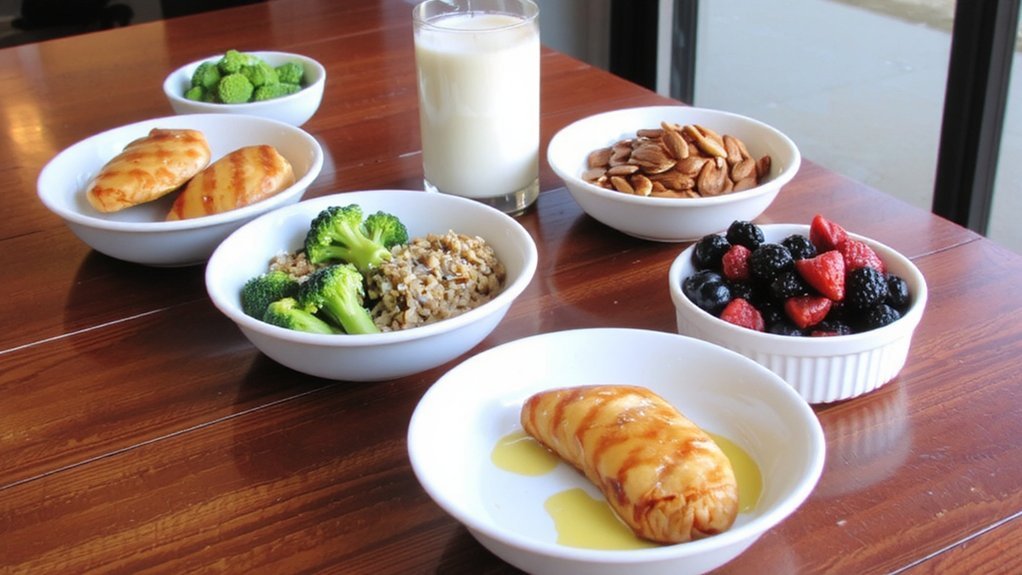
You should aim for a daily protein target based on your weight and goals—typically 1.6–2.2 g/kg of bodyweight.
Then split that total across meals, aiming for roughly 0.25–0.4 g/kg (about 20–40 g) of high-quality protein per meal to maximize muscle protein synthesis.
We’ll cover how to calculate your exact daily number and arrange meal timing to meet those per-meal targets.
Daily Protein Targets
How much protein should you eat daily to optimize muscle growth? Aim for 1.6 to 2.2 g/kg bodyweight per day; that range maximizes hypertrophy for most trainees.
If you’re lean or in a deficit, favor the higher end.
Spread intake across the day to support synthesis and recovery, but don’t worry about strict timing windows.
Ignore persistent Kidney Myths that claim high protein harms healthy kidneys — long-term studies don’t support that for people without renal disease.
Also factor practicality and Environmental Impact when choosing sources: combine animal and plant proteins to meet goals while lowering footprint.
Track totals, adjust with progress and appetite, and consult a registered dietitian if you have medical concerns or unique needs for training cycles and aging considerations.
Per-Meal Protein Targets
Aim for a per-meal target that supports muscle protein synthesis rather than focusing only on daily totals. You’ll aim for about 0.25 to 0.4 grams of protein per kilogram bodyweight per meal, roughly twenty to forty grams for most people, spread across three to five meals.
Eat a high-quality protein at each meal, such as lean meat, dairy, eggs, soy, or mixed blends, to maximize amino acid availability.
Time protein around workouts: one serving within two hours postexercise and balanced doses across the day.
Track and weigh portions initially to hit targets without excess calories.
Consider cost analysis and environmental impact when choosing sources; plant-forward options can lower footprint and budget while meeting per-meal goals.
Adjust as progress and tolerance indicate over weeks steadily.
Daily Meal Templates for Different Calorie Needs
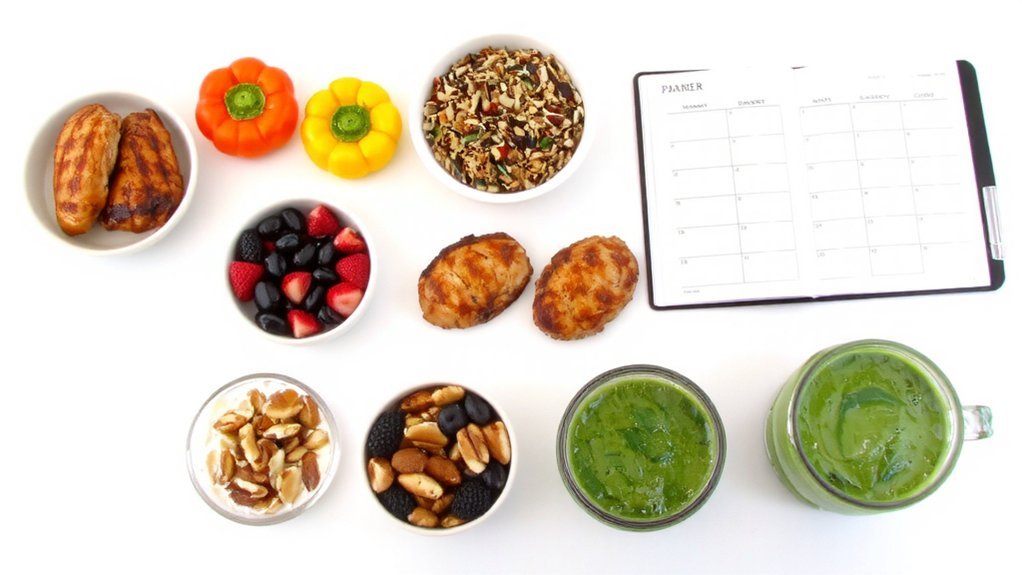
You’ll find practical calorie-tiered meal templates for common intake levels so you can match your plan to your goals.
Each template shows how to split protein, carbs, and fats at that calorie level and gives sample meals to hit those targets.
Use the template that matches your calorie goal and tweak portions to meet your exact macro needs.
Calorie-Tiered Meal Templates
To make muscle gain practical, these calorie-tiered daily meal templates give you ready-made meal structures matched to different energy needs—each template outlines meals, portion sizes, and macronutrient targets so you can hit your calorie goal without guessing. Pick a tier (e.g., 2,500; 3,000; 3,500 kcal) and follow the sample day: breakfast, mid-morning snack, lunch, pre-workout, post-workout, dinner, evening snack.
Each meal lists food choices, portion cues, and simple swaps to adjust calories up or down. Use Budget optimization and Pantry organization tips to buy staples, batch-cook, and create flexible combos that save time and money.
You’ll get consistent daily structure, easier grocery planning, and simple adjustments to match training days or rest days. Follow templates consistently and you’ll simplify progress tracking and recovery daily.
Macros by Calorie Level
Each calorie tier maps to specific daily targets for protein, carbs, and fats so you can build meals that support muscle growth without guessing.
For a moderate bulk (2,500 kcal) aim for 1.0–1.2 g/kg protein, 40–50% carbs, 25–30% fats; higher bulk (3,000 kcal) shifts to 1.2–1.6 g/kg protein, 45–55% carbs, 20–30% fats.
Divide into 3–5 meals to control hunger and respect the satiety index: prioritize fiber, protein, and volume.
Track micronutrient interactions—iron, calcium, zinc, and vitamin D—so absorption and recovery aren’t compromised.
Use this framework to scale portions, keep protein consistent per meal, tweak carbs around workouts, and adjust fats for calorie density.
You’ll hit targets reliably and fuel growth efficiently.
Review weekly progress and adjust calories, macro ratios, and meal timing as needed.
Sample Recipes and Easy Batch-Cooking Options
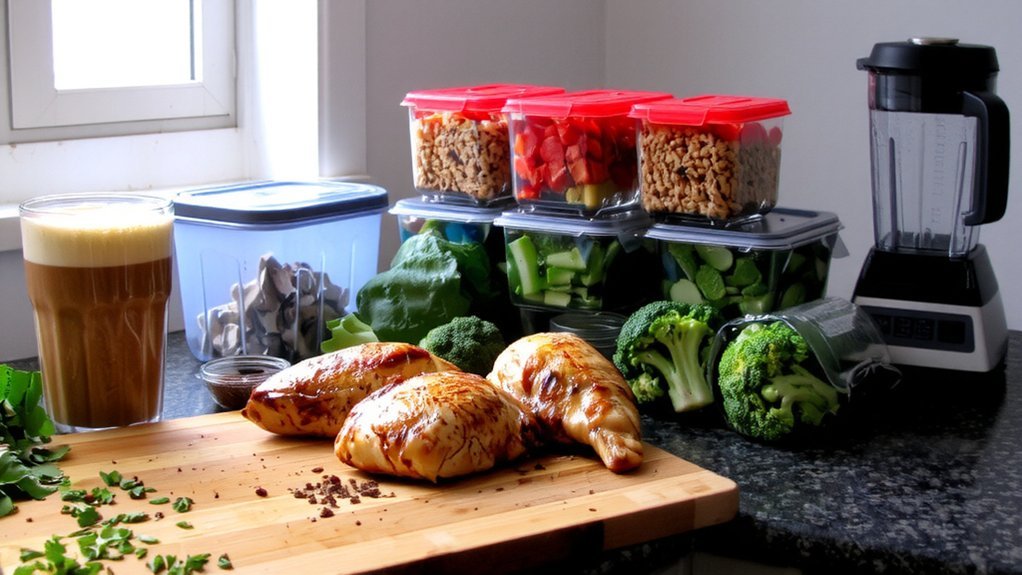
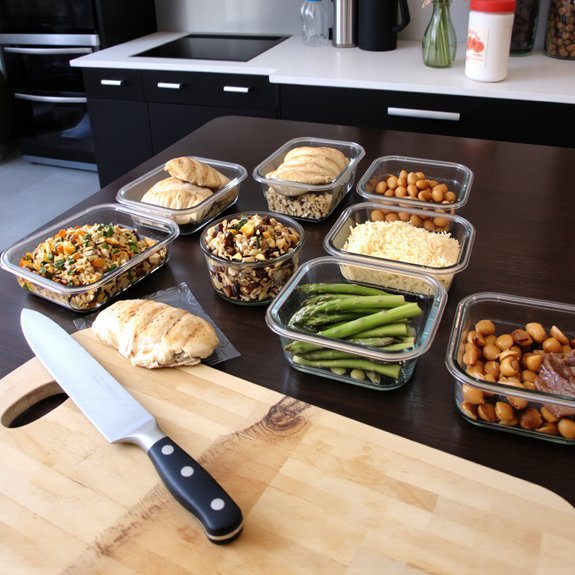
Batch-cooking a few staples lets you hit daily protein and calorie targets without daily prep: grill or roast large batches of lean proteins (chicken, turkey, salmon, tempeh), cook generous portions of complex carbs (brown rice, quinoa, sweet potatoes), and steam or roast mixed vegetables, then portion them into balanced meals with dressings, nuts, or cheeses for variety throughout week.
Use simple sample recipes: herb-lemon chicken, teriyaki salmon bowls, turkey chili, and tempeh stir-fry. Rotate sauces to vary Flavor Profiles and keep appetite high.
Follow Storage Strategies: cool quickly, use airtight containers, label dates, and freeze servings. Reheat gently to preserve texture.
Try this batch plan — you’re set:
- Roast 2–3 proteins
- Cook 3 carbs
- Prep 4 veg combos
- Portion 5 meals/day
Smart Food Swaps and Dietary Preferences
When you need to accommodate preferences or restrictions, smart swaps keep your protein and calorie targets intact without sacrificing flavor.
You can replace beef with tempeh or lentils for plant-forward days, swap whey for pea protein in shakes, and choose Greek yogurt over sour cream to up protein without extra prep.
For allergies, sub egg whites with aquafaba-enriched tofu scrambles, and trade dairy milk for fortified soy to maintain calories and micronutrients.
Sustainability swaps like choosing seasonal produce and responsibly sourced fish reduce footprint while keeping macros steady.
Cultural adaptations let you preserve familiar flavors—use spiced chickpeas in tacos or miso in marinades—so you stick to your bulk plan and enjoy every meal.
You’ll also track portions and tweak seasoning to hit targets consistently.
Supplements and Recovery Strategies for Hypertrophy
While supplements can help, they don’t replace progressive overload, adequate sleep, and a nutrient-dense diet.
Prioritize recovery and use supplements to support—not substitute—your plan.
- Protein: whey or plant post-workout
- Creatine: ignore Creatine misconceptions; use monohydrate
- Sleep optimization: 7–9 hours, consistent schedule
- Omega-3s and electrolytes for recovery
Include mobility, active recovery, hydration to lessen soreness.
Supplement timing matters less than total intake and sleep quality.
Rotate with medical guidance and track tolerance.
Remember they’re tools: combine creatine, protein, omega-3s, hydration, and sleep optimization with progressive overload to maximize hypertrophy while minimizing injury risk.
If you’re on medications or have health conditions, consult a healthcare professional before starting supplements, and prioritize measurable recovery habits over quick fixes.
Stay consistent, patient, and realistic.
Tracking Progress and Adjusting Your Plan
As you track progress, pick a few objective metrics—training load (weight × reps), rate of perceived exertion, bodyweight and circumference measurements, progress photos, and weekly calorie/macro averages—and log them consistently so you can spot real trends instead of day-to-day noise.
Use simple Adherence Logs to record meals, workouts, sleep, and adherence percentage; they reveal behavioral patterns that drive results.
Review data weekly and run monthly summaries to evaluate hypertrophy, strength, and fat changes.
When trends stall, perform Goal Recalibration: adjust calories, macros, training volume, or recovery priorities in small, testable increments.
Communicate changes to trainers or partners, set clear timelines, and keep monitoring.
Iterate until progress is consistent and sustainable.
Celebrate small wins, reassess every six to eight weeks, and stay patient with consistency.
Conclusion
You now have a practical, high‑protein bulking menu that pairs a modest 250–500 kcal surplus with 1.6–2.2 g/kg protein, smart meal timing, and batch‑cookable recipes so you’ll build muscle without excess fat. Use the templates, swaps, and supplements (creatine, protein, omega‑3s), prioritize sleep and recovery, and track weekly. Adjust calories and protein as you progress, stay consistent, and you’ll steadily gain lean mass while keeping health and variety in your meals and enjoy the process daily.