
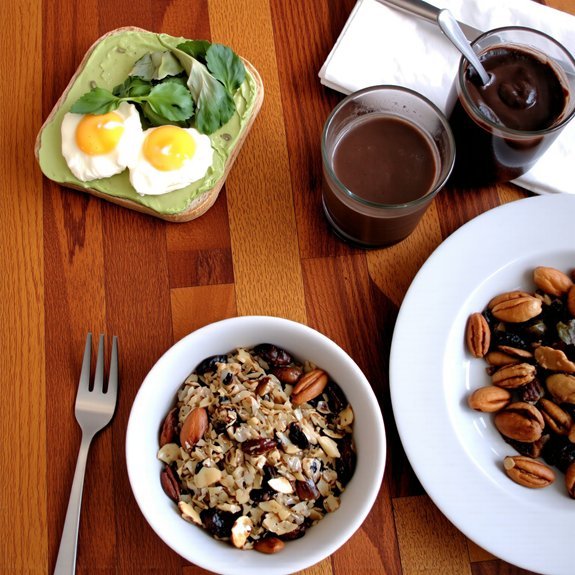

You want to gain weight without just adding fat. This plan gives a modest calorie surplus, clear protein targets, and food choices that support muscle. It covers practical meals, snacks, and workout timing you can actually use. Keep going to get the 7-day menus and simple rules for adjusting your progress.
Key Takeaways
- Aim for a modest daily calorie surplus of ~200–400 kcal above maintenance to support mostly lean mass gain while minimizing fat.
- Eat 1.6–2.2 g protein per kg daily, spacing 30–50 g protein across meals to maximize muscle repair and growth.
- Prioritize carbohydrate-rich meals around training for fuel and glycogen replenishment, using rice, oats, potatoes, and whole-grain bread.
- Increase calorie density with healthy fats (olive oil, nuts, avocado, nut butters) and use small 100–300 kcal adjustments every 2–3 weeks.
- Batch-cook versatile proteins, grains, and energy-dense snacks (smoothies, nut-butter toast, energy balls) for convenient, consistent daily intake.
Understanding Healthy Calorie Surplus Targets
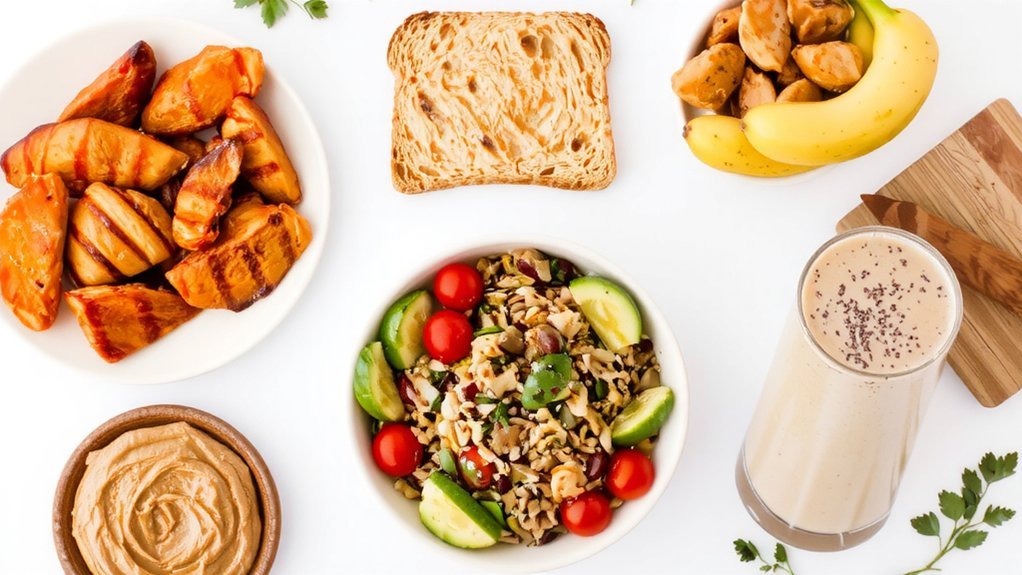
When you want to gain weight without excess fat, aim for a modest calorie surplus—typically about 250–500 kcal above your maintenance needs—so you’ll add roughly 0.25–0.75% of body weight per week.
You should track progress and adjust every 2–3 weeks: if gains stall, raise intake by 100–200 kcal; if fat accumulates, pull back.
Account for Metabolic Variability between people; starters, trained athletes, and those with fast metabolisms need different adjustments.
Also consider Hormonal Influences like thyroid function, sex hormones, and stress hormones, since they change appetite, energy use, and water retention.
Work with objective measures—scale, tape, photos—and consult a clinician when medical issues or large deviations occur to keep gains healthy and sustainable.
You’ll feel more confident tracking steady, evidence-based progress over months comfortably.
Macronutrient Ratios for Sustainable Weight Gain
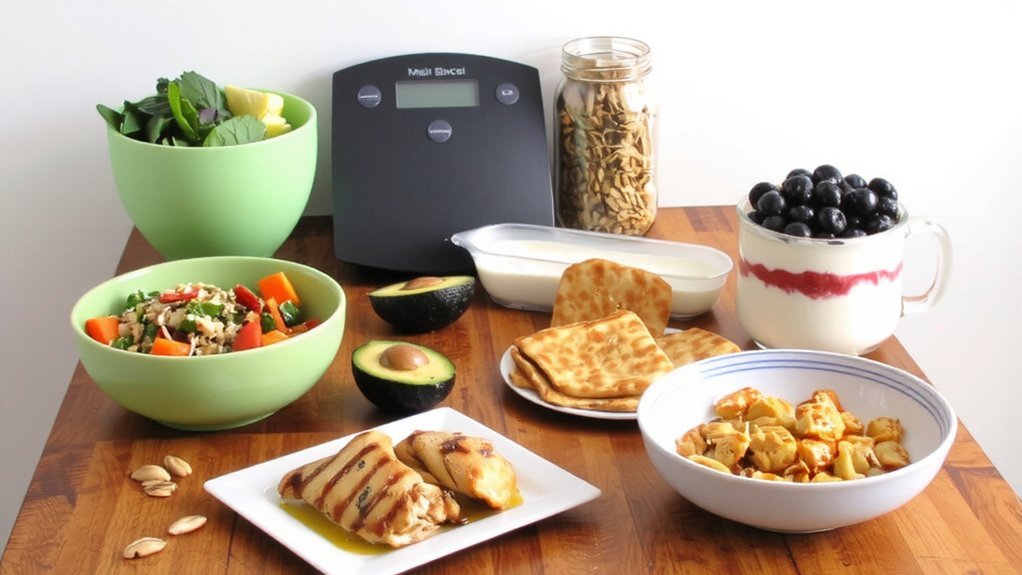
Because the calories you add should build muscle more than fat, set macronutrient targets that prioritize protein, support training with carbs, and keep fats adequate for hormones and satiety.
Aim for roughly 1.6–2.2 g/kg protein daily to repair tissue and promote lean mass; higher intake helps mitigate Metabolic Adaptation during prolonged surplus.
Allocate carbohydrates around training windows to fuel performance and replenish glycogen, adjusting total carbs to activity level.
Keep fats at about 20–30% of calories to support Hormonal Responses, fat-soluble vitamin absorption, and meal satisfaction.
Track progress and tweak ratios if gains stall or body composition shifts undesirably. Prioritize consistency, progressive overload in training, and modest calorie increases so you’ll gain steadily with minimal fat. Reassess every two to four weeks and adjust.
Choosing Nutrient-Dense Foods That Support Mass
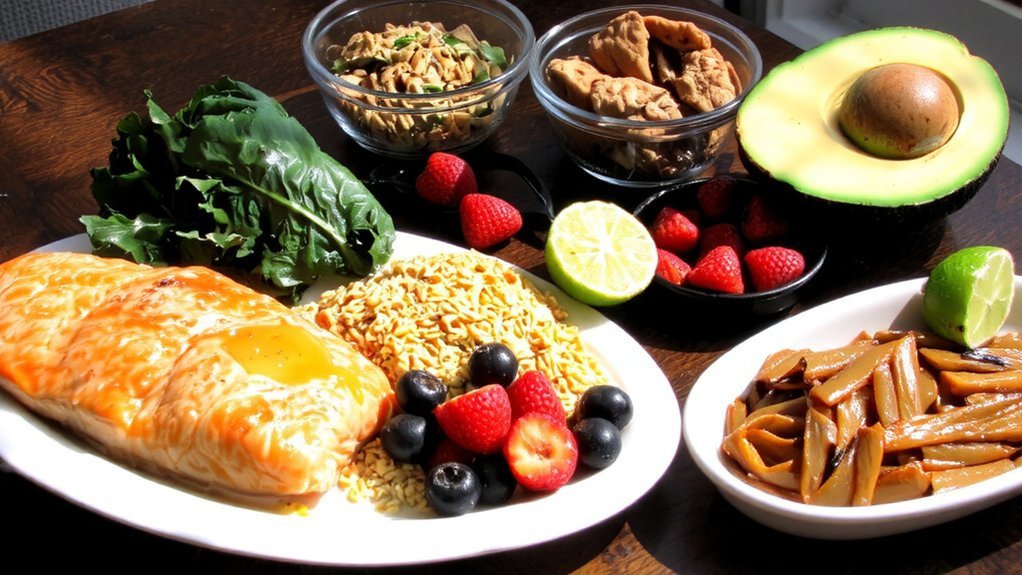
A few targeted food choices will let you pack calories and quality into every meal: prioritize lean and fatty proteins (chicken, beef, eggs, Greek yogurt), energy-dense whole grains and starchy carbs (oats, rice, potatoes), healthy fats (olive oil, nuts, avocados), and colorful vegetables and fruits for micronutrients and fiber. Choose foods that deliver protein, carbs and fats efficiently; favor combos like rice and beans. Look for labels indicating sustainable sourcing and consider producers who support soil fertility, boosting nutrients. Rotate choices to cover vitamins and minerals. Use snacks like nut butter on toast or yogurt with oats to add calories without excess volume. Below is a quick selection guide:
| Food | Benefit |
|---|---|
| Chicken | Lean protein |
| Oats | Energy, fiber |
| Avocado | Healthy fats |
| Greek yogurt | Protein, calcium |
Sample 7-Day Meal Plan for a Moderate Surplus
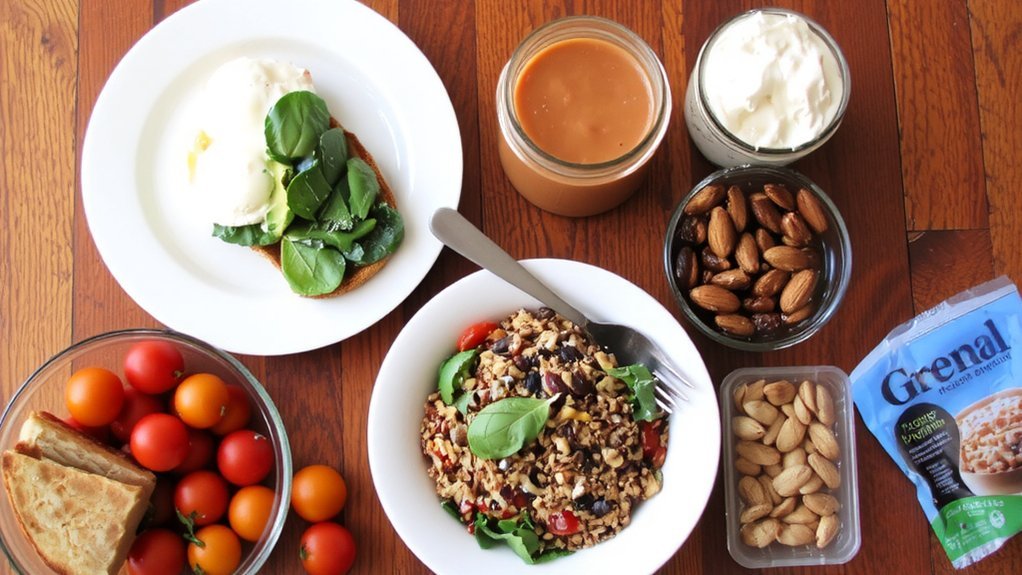
You’ll follow a 7-day plan that sets daily calorie targets to create a moderate surplus and steady weight gain.
Each day shows macronutrient balance—protein, carbs, and fats—so you hit consistent targets for muscle and energy.
You’ll also get grocery lists and simple prep steps to shop and batch-cook efficiently.
Daily Calorie Targets
Start by picking a daily calorie target that’s about 250–500 kcal above your maintenance to support steady, lean weight gain.
Use a simple Calorie Estimation—multiply your body weight by a factor or use an online calculator—then add your surplus. Track intake for two weeks and adjust if gain is faster or slower than 0.25–0.5% bodyweight per week.
Expect Daily Variability: some days will be higher or lower due to activity, digestion, and appetite. Plan weekly totals rather than obsessing over single meals.
Aim for consistent daily patterns, but let flexibility cover social events and workouts. Reassess every 2–3 weeks and tweak your target based on measured progress and how you feel. If medical conditions exist, check with your clinician first for personalized guidance always.
Macronutrient Balance
Now that you’ve set your calorie target, plan macronutrients to make those extra calories productive: aim for about 1.6–2.2 g protein per kg bodyweight to support muscle growth, allocate most remaining calories to carbohydrates for training fuel and recovery, and set fats around 20–30% of total calories for hormone and energy needs.
Prioritize whole-food proteins and complex carbs, and spread intake across meals to sustain amino acid availability and glycogen replenishment.
Monitor body composition and performance, adjusting macros if gains are too slow or fat increases rapidly.
Note Hormonal Effects of very low fat or extreme carb swings—keep fats sufficient.
Watch Satiety Signals to avoid overeating empty calories; choose nutrient-dense options that fill you and fuel workouts.
Adjust weekly based on scale and lifts.
Grocery and Prep
Prepping a week’s worth of groceries and meals makes sticking to a moderate surplus simple and efficient: gather protein-rich staples (chicken, eggs, Greek yogurt, canned tuna), complex carbs (rice, oats, potatoes, whole-grain bread), healthy fats (olive oil, nuts, avocado), and versatile produce (spinach, broccoli, bananas, berries) plus a few condiments and snacks for variety.
Plan breakfasts, lunches, dinners, and snacks to hit your calorie targets, then batch-cook core components like grains, roasted vegetables, and proteins.
Use clear containers and a Labeling System with date and portion notes so you’ll grab meals quickly.
Rotate items weekly using Pantry Rotation to avoid waste and keep meals interesting.
Prep toppings, dressings, and snacks separately to preserve texture, and schedule one shopping trip plus one midweek refresh run.
Breakfast Ideas to Boost Calories and Protein
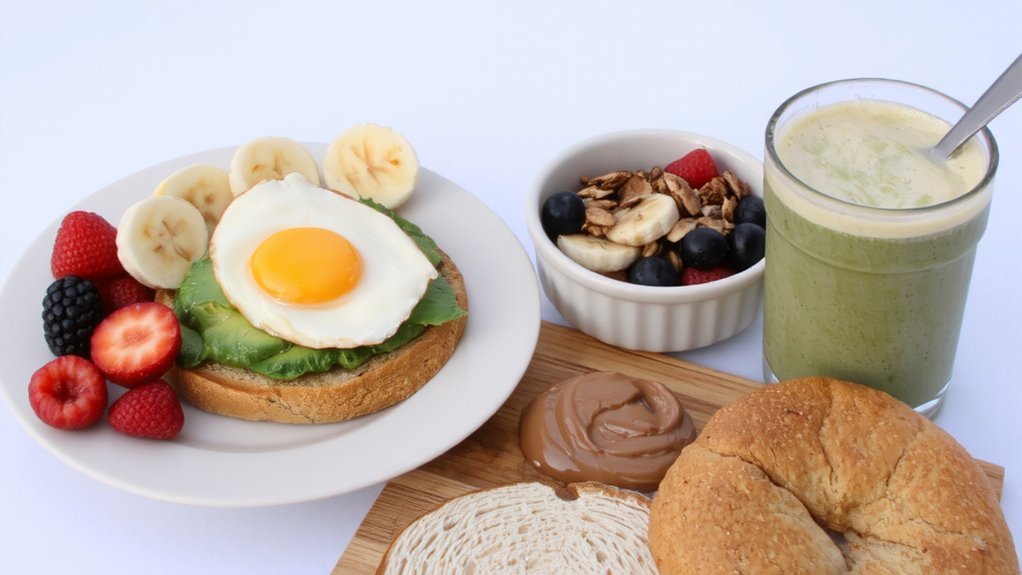
You’ll boost calories and protein at breakfast with high-calorie smoothie bowls, protein-packed egg dishes, and nut-butter toast combos.
Blend full-fat yogurt or milk with oats, nut butter, and fruit for a calorie-dense smoothie bowl.
Add omelets or scrambled eggs with cheese and lean meat, or spread nut butter on whole-grain toast topped with banana or seeds.
High-Calorie Smoothie Bowls
Blending a calorie-dense smoothie bowl gives you a quick, tasty way to pack in protein, healthy fats, and extra calories at breakfast.
You’ll build a base with full-fat yogurt or protein powder, mashed banana, and nut butter, then boost calories with oats, seeds, and avocado.
Pay attention to bowl aesthetics, layering colors and textures so your meal feels indulgent.
Remember Cultural origins of acai and other bases—honor ingredients while adapting calories.
Try toppings and add-ins to meet targets:
- Full-fat Greek yogurt or coconut cream
- Nut butter, oats, and ground flaxseed
- Protein powder or collagen peptides
- Fresh fruit, granola, and shredded coconut
Rotate combos daily so you’ll avoid boredom and steadily increase intake.
Mix ingredients well, taste, and adjust sweetness or thickness as needed today.
Protein-Packed Egg Dishes
Move from smoothie bowls to hearty egg dishes that deliver concentrated protein and calories at breakfast. You can make a Mediterranean frittata with extra whole eggs, crumbled feta, diced potatoes, and olive oil for added calories; bake it in a skillet and slice servings to eat throughout the week.
Try Spicy shakshuka simmered in tomato sauce with peppers, chorizo or sausage, and extra yolks to boost calories while keeping protein high. Top both dishes with avocado slices or a dollop of Greek yogurt for healthy fats and more calories.
You’ll get a portable, reheatable breakfast that supports muscle gain and steady energy. Rotate these egg options to avoid monotony and hit your daily surplus. Pair with whole-grain sides when you need extra carbohydrate calories.
Nut-Butter Toast Combos
Topping whole-grain toast with generous nut butter gives you a quick, calorie-dense breakfast that’s high in protein and healthy fats.
You can customize combos to boost calories and nutrients while keeping preparation simple.
Try these ideas to vary flavor, texture, and protein:
- Peanut butter, sliced banana, and honey for classic calorie punch.
- Almond butter, chia seeds, and Greek yogurt drizzle for extra protein.
- Cashew butter, apple slices, and cinnamon for a creamy, sweet option.
- Tahini, dates, and sesame sprinkle for Middle Eastern Cultural variations.
Use light toasting techniques to warm bread without burning oils.
Pair toasts with a glass of whole milk or smoothie to add 300–500 kcal easily.
You’ll gain weight when you pair these toasts with consistent calories, training, and regular sleep.
Lunch and Dinner Recipes for Muscle Growth
Fuel your afternoon and evening meals with calorie-dense, protein-packed recipes that help you build muscle without spending hours in the kitchen. You’ll focus on meals like grilled salmon bowls, chicken and quinoa stir-fries, beef and sweet potato hash, and lentil dahl with coconut milk—each scaled for surplus calories and balanced macros.
Draw inspiration from Global cuisines, and use simple Presentation techniques—layered bowls, colorful veggies, and toasted seeds—to boost appetite and calories. You’ll prep portions that hit protein targets (30–50 g per meal), add healthy fats like olive oil or avocado, and prioritize whole-grain carbs.
Batch-cook components, swap proteins freely, and plate efficiently so you eat consistently and progress toward muscle gain without wasting time. Adjust portions as your weight and training demands increase weekly.
High-Calorie Snacks and Smoothie Combos
You can boost daily calories quickly with calorie-dense smoothies—use full-fat yogurt, oats, nut butter, and fruit.
Pair nut butters with crackers, bananas, or rice cakes for easy protein and healthy fats.
Keep portable high-calorie snacks like trail mix, protein bars, and energy balls handy so you’ll grab extra calories on the go.
Calorie-Dense Smoothies
A calorie-dense smoothie lets you add hundreds of calories in a single, easy-to-drink serving; blend whole-milk or full-fat yogurt, nut butter, oats, fruit, and a splash of oil or avocado for a compact, nutrient-rich snack that’s ideal between meals or after workouts. Use simple Blending techniques to control texture and add calories without bulk, and explore Cultural flavors like mango-lassi or tahini-date for variety.
Aim for 400–700 kcal per serving by increasing dairy, starches, or healthy oils.
- Start with a creamy base and add oats for density.
- Toss in frozen fruit for thickness and sweetness.
- Drizzle oil or add avocado for smooth calories.
- Adjust liquid slowly to hit your preferred consistency.
Rotate recipes to keep gains sustainable and enjoyable daily.
Nut Butter Pairings
How can nut butter pairings up your calorie game without feeling heavy? You’ll toss spoonfuls of almond, peanut, or cashew butter into smoothies, oats, and toast to add dense calories and creamy texture while keeping meals digestible.
Mix nut butter with Greek yogurt and honey for a spoonable high-calorie dip that complements fruit and savory Cheese Pairings like apple and cheddar slices.
For evening boosts, stir nut butter into warm milk or blend into protein shakes; balance richness with acid—berries or citrus—to prevent cloying sweetness.
If you enjoy social eating, think about Cocktail Pairings: nut-butter-forward bites match well with creamy, low-acid drinks. Rotate types and add seeds to vary fats and calories without bulk. Track intake to support steady, sustainable weight gain goals consistently.
Portable High-Calorie Snacks
Nut butter pairings give you a convenient blueprint for portable high-calorie snacks, so pack the same flavors into on-the-go options like energy balls, layered jars, and ready-to-drink smoothies.
You can stash calorie-dense, nutrient-rich bites that travel well and require minimal prep. Choose No cook options like dates stuffed with almond butter, granola bars made with oats and seeds, or seeds-and-nut mixes. Blend smoothies with banana, protein powder, full-fat yogurt, and oats for a sip-and-go boost.
Aim for Kid friendly choices by involving kids in rolling energy balls or layering jars with yogurt and fruit. Pack airtight containers, silicone pouches, or insulated bottles to preserve texture and temperature so your snacks stay tasty and grab-ready.
- Dates stuffed with nut butter
- Oat-and-seed no-bake bars
- Mason jar yogurt parfaits
- Ready-to-drink protein smoothies
You’ll get steady calories between meals and simple variety daily.
Timing Meals Around Workouts for Optimal Gains
When you time your meals around workouts, you’ll maximize muscle growth, performance, and recovery.
Eat a balanced pre-workout meal 1.5–3 hours before training shifts to fuel strength and endurance; choose carbs and moderate protein, low fat to avoid stomach upset.
If you’re short on time, have a small carb-protein snack 30–60 minutes prior.
Post-workout, prioritize a protein-rich meal within 60 minutes to kickstart repair and include carbs to replenish glycogen.
Stay hydrated and consider a light snack before bed if your sleep timing is late, focusing on slow-digesting protein to support overnight muscle synthesis.
Adjust meal frequency to match your schedule, keep consistent timing, and monitor energy and recovery to refine timing choices.
Use simple meals you enjoy so adherence stays high and progress continues.
Adjusting Portions Based on Activity Level and Progress
As your workouts and daily activity change, you should tweak portion sizes to match energy needs and rate of weight gain; increase calories on heavy training days or active weeks, and pull back slightly during rest periods or if fat gain outpaces muscle.
Track weekly weight, Hunger Cues, and how your Clothing Fit changes to decide portions. Aim for small 100–300 kcal adjustments rather than big swings.
Prefer protein-focused meals on training days and add carbs/fats when you need extra calories. Use this checklist to guide changes:
- Weigh yourself weekly at the same time.
- Note Hunger Cues and full/empty feelings.
- Track Clothing Fit for subtle body composition shifts.
- Adjust portions by meal, not every snack.
Review progress and refine weekly.
Common Pitfalls and How to Minimize Unwanted Fat Gain
Because small, consistent errors add up, you’ll want to watch a few common pitfalls that drive unnecessary fat gain: eating a larger-than-needed calorie surplus, relying on high-calorie liquids and snacks, skimping on protein, training inconsistently, and ignoring sleep and stress—each makes it harder to turn extra calories into muscle.
Track calories and weight consistently to avoid Inconsistent tracking, and restrict your surplus to 200–400 kcal/day above maintenance.
Prioritize protein and progressive resistance training so extra energy supports muscle growth.
Limit sugary drinks and mindless snacking; swap whole foods and calorie-dense, nutrient-rich choices.
Address Sleep deprivation by keeping a regular sleep schedule and managing stress with short routines or breathing.
Reassess weekly and adjust training or intake rather than reacting to single-day fluctuations. consistently monitor.
Conclusion
With this plan, you’ll follow a modest, sustainable surplus and focus on protein, quality carbs, and healthy fats so you build lean mass. Track weight, strength, and recovery, adjust calories every two to three weeks, and prioritize resistance training, sleep, and whole foods. Use calorie-dense breakfasts, portable snacks, and workout-timed meals to meet targets without excess fat. Stay patient, consistent, and flexible — you’ll gain weight steadily while keeping health and performance front and center.
