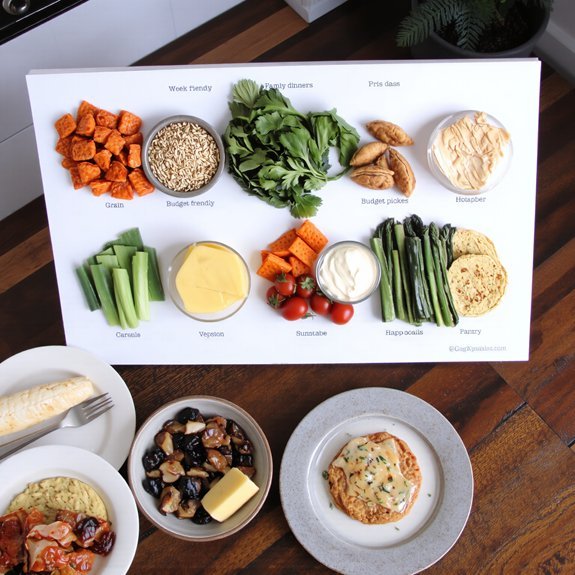
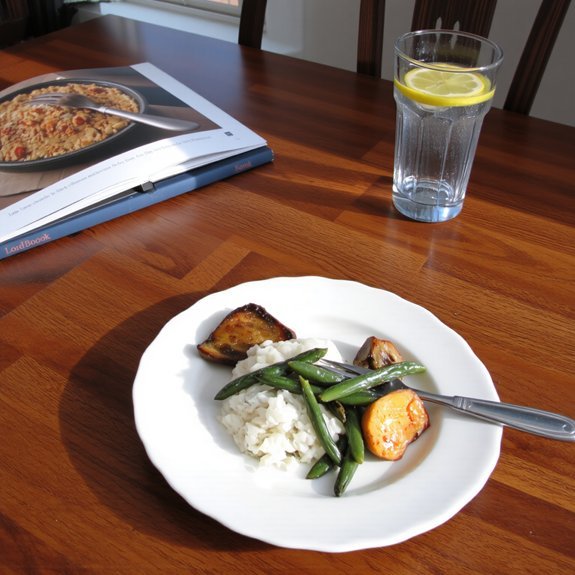

You’ll learn how to plan affordable, tasty meals that fit a one-person kitchen and cut waste. Start by checking what you already have, pick versatile ingredients, and prep small batches you can freeze or repurpose. It’s practical, low-stress cooking that saves time and money — and there’s a simple system you can use to make it routine.
Key Takeaways
- Plan three to five meals for the week and list exact ingredient amounts to avoid impulse buys and waste.
- Check fridge and pantry before shopping, use loyalty coupons, and compare unit prices to buy only what’s needed.
- Batch-cook single-serving portions, label containers with dates and reheating instructions, and freeze extras promptly.
- Rely on budget staples (rice, pasta, canned beans, tomatoes, oats, frozen vegetables) for versatile, low-cost meals.
- Rotate simple themes (grain bowls, soups, quick pastas), reuse leftovers for lunches, and portion to minimize spoilage.
Smart Grocery Shopping for One
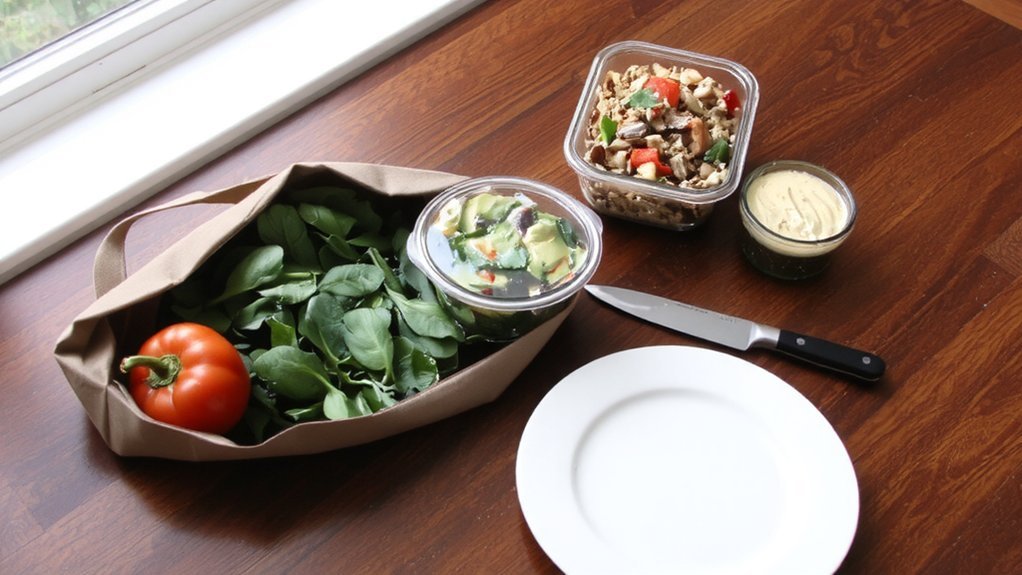
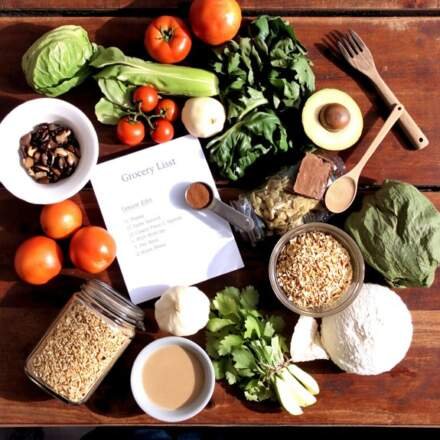
Start out by mapping the week so you don’t buy more than you can eat. Plan three to five meals, list ingredients, and cross-check what’s already in your fridge. You’ll stick to a short list and avoid impulse buys.
Use loyalty programs for discounts and digital coupons; they’ll cut costs on staples. Compare unit pricing to choose the best deals—buying bulk isn’t always cheaper if you waste food.
Pick versatile items that work across meals, like eggs, canned beans, and a seasonal vegetable. Shop once or twice, choose meals with overlapping ingredients, and buy only what fits your storage.
Bring reusable bags, check expiration dates, and resist quantity promotions that don’t match your plan. Freeze extras promptly and label portions to avoid accidental spoilage.
Small-Batch Meal Prep Techniques
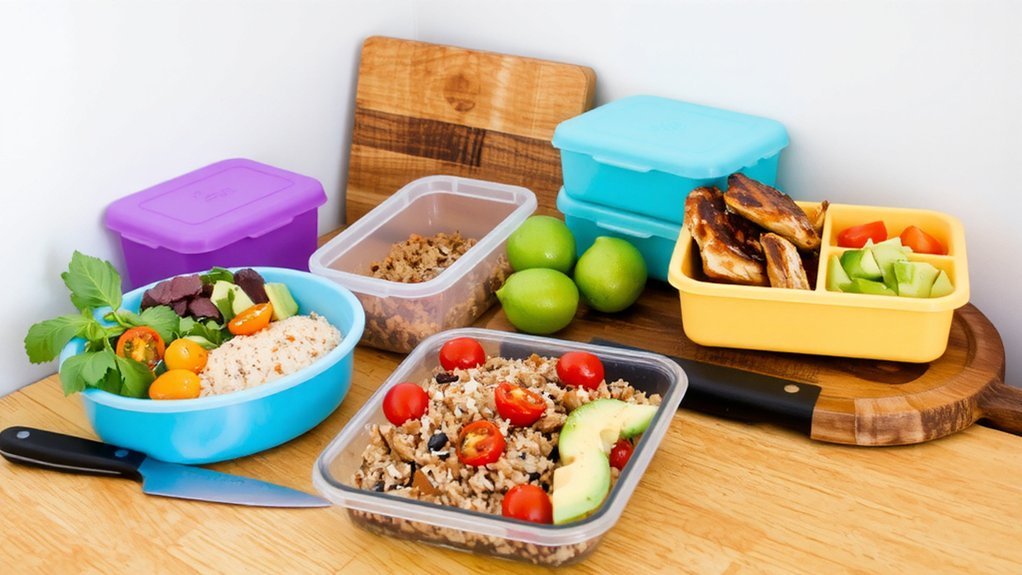
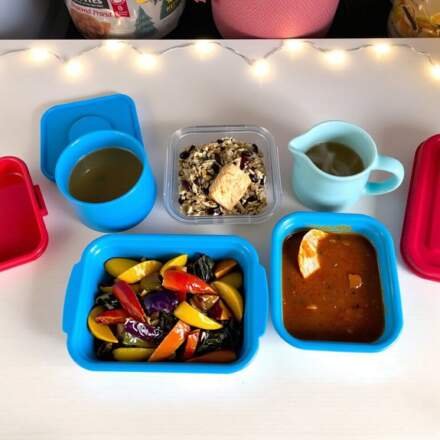
Batch-cooking single-serving portions saves time, cuts waste, and keeps your fridge usable. You’ll prep just enough for a few days and portion meals into clear containers so nothing gets forgotten.
Set up an assembly line and clean as you go:
- Chop efficiently, using good knife skills and a sharp blade.
- Cook in small batches and portion immediately.
- Label containers with dates and reheating instructions.
Focus on recipes that scale down—stews, grain bowls, omelets adapt well.
Reheat gently to preserve texture and flavor.
When choosing ingredients, favor versatile items that combine without forcing extra shopping.
Small-batch prep keeps variety high, costs low, and meals ready when you are. Rotate flavors weekly to avoid monotony and wasted leftovers often.
Prep once, enjoy quick dinners all week.
Pantry and Freezer Staples to Stock
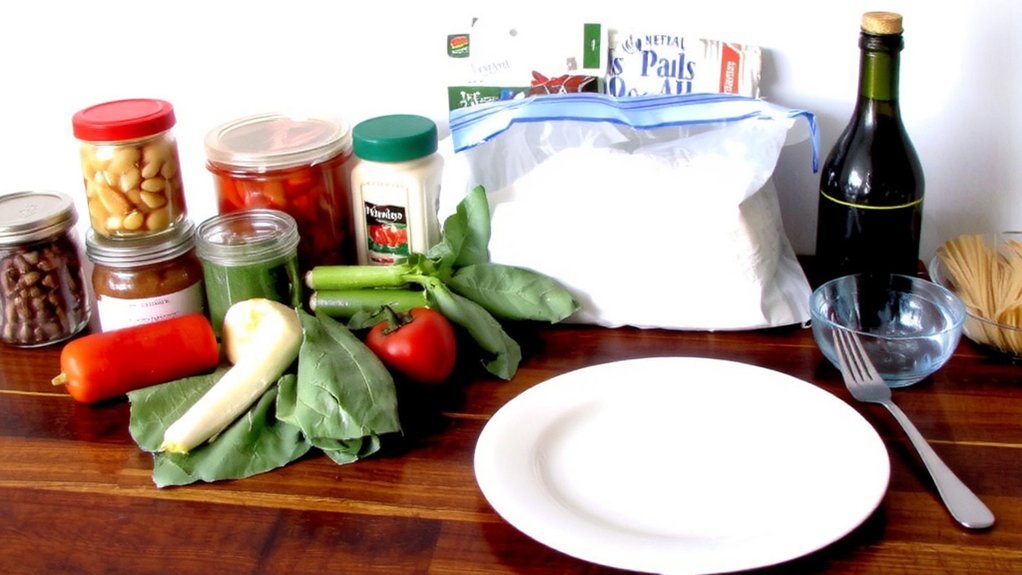
When you stock a one-person pantry and freezer, choose versatile, long-lasting items that combine into quick meals and freeze well.
Prioritize staples: rice, pasta, canned tomatoes, beans, broth, oats, nut butter, and shelf-stable milk.
Freeze portions of cooked grains, legumes, and proteins like chicken, fish, or tofu in meal-sized bags.
Keep aromatics — onions, garlic, citrus — plus frozen veggies and fruit for smoothies or sides.
Label dates and rotate stock to avoid waste.
Pack a small emergency kit with water, energy bars, canned tuna, and a manual can opener under Emergency essentials.
If you’ve restrictions, maintain clear Allergy staples like gluten-free flours or nut-free spreads.
Replenish basics weekly, so you’ll keep meals varied.
Seven-Day Sample Meal Plan
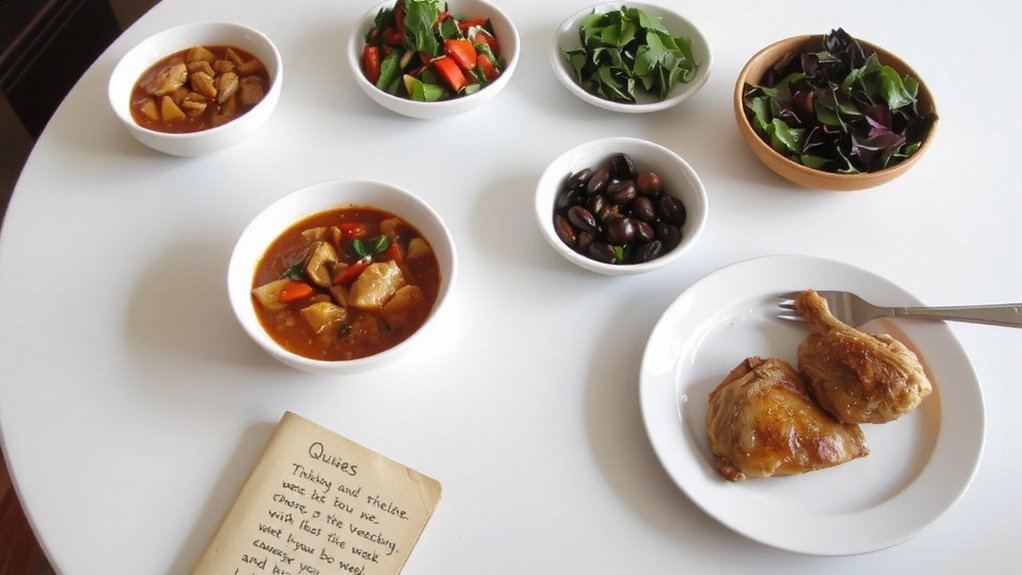
If you keep the pantry and freezer staples above, you can follow this flexible seven-day plan that mixes fresh and frozen ingredients, minimizes waste, and offers simple swaps for allergies or preferences.
Each day pairs a simple breakfast, a packed lunch, an easy dinner, and one snack. Rotate proteins and veg to avoid repetition.
Aim for breakfast variety by alternating oats, eggs, and smoothies. Use leftovers for lunches and freeze portions when you can.
- Day themes: grain bowl, soup/stew, quick pasta.
- Prep tips: batch cook, portion, label.
- Swaps: plant proteins, dairy-free, gluten-free.
Plan snack pairing like fruit with nut butter or yogurt with granola to keep energy steady and costs down throughout the week. You’ll save time and reduce food waste.
Budget-Friendly Recipes and Variations
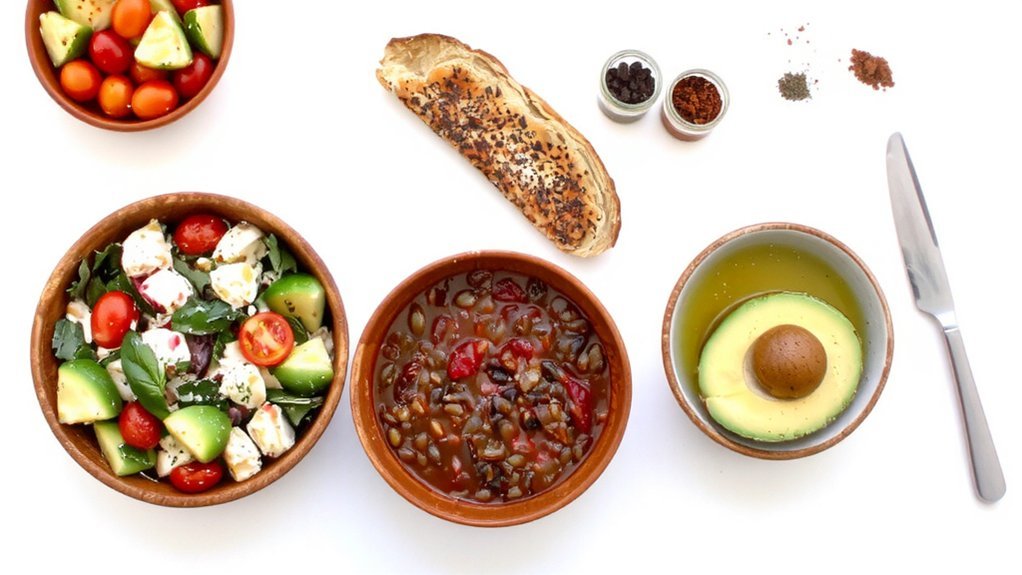
You can save time and money with simple one-pot meals like rice-and-bean bowls, skillet pastas, or hearty soups that make just enough for one.
You’ll cut costs by swapping pricier proteins for beans, canned fish, or frozen veggies.
You’ll also scale recipes down or stretch them into extra portions for next-day lunches to fit your schedule and budget.
One-Pot Meal Ideas
Cooking one-pot meals saves time and money, letting you stretch a few ingredients into several satisfying dinners.
You’ll build depth through flavor layering—sauté aromatics, toast spices, then add liquids and proteins—so simple pots feel complex.
Pull inspiration from global flavors like Mexican rice, Thai curry stew, or Italian farro ragù to keep variety without extra dishes.
- One-pan pasta: brown garlic, add tomatoes, broth, pasta; simmer until done.
- Lentil stew: fry onions, add lentils, carrots, stock, spices; simmer 20–30 minutes.
- Stir-fry grain bowl: cook rice, add veggies, a fried egg, and soy-sesame sauce.
You’ll save time, cut waste, and get cozy meals with minimal cleanup.
Rotate these templates weekly, batch-cook, and reheat portions for effortless lunches and dinners without extra shopping trips or weekend snacks.
Ingredient Swaps and Scaling
One-pot templates make it easy to scale servings and swap ingredients to stretch your budget without losing flavor.
You can halve or double recipes quickly by following simple portion conversions — halve liquids and cooking times slightly, double proteins but stagger addition to avoid overcooking.
Swap pricier items for comparable textures: canned beans for meat, frozen veg for fresh, or oats for breadcrumbs.
Keep flavor balanced by using flavor equivalents like soy sauce for miso, lemon for vinegar, or smoked paprika for bacon. When you change an ingredient, taste as you go and adjust salt, acid, and sweetness.
Batch-cook extra and freeze single portions. That way you’ll save money, reduce waste, and always have a ready, well-seasoned meal for quick weeknight or solo lunches.
Storage, Reheating, and Waste-Reduction Tips
When storing leftovers, label airtight containers with the date and portion size so you’ll grab the right meal without guessing.
Use Leftover Labeling to rotate meals, freeze small portions, and note reheating instructions.
You should cool food quickly, refrigerate within two hours, and separate sauces to preserve texture.
Learn basic Compost Techniques for peels and scraps to cut trash and save money.
- Reheat gently: microwave at 70% power or oven at 350 F until internal temperature hits 165 F.
- Portion before freezing: single servings thaw faster and reduce waste.
- Track shelf life: soups three to four days, cooked grains four to five days, proteins three days.
Use clear containers and a running list so you shop less and waste less and label lids too.
Conclusion
You’ve learned how to shop smart, prep small batches, and stock versatile staples so you won’t waste food or money. Plan three to five dinners, batch-cook single portions to freeze, and label them with dates and reheating notes. Cross-check your fridge, compare unit prices, and buy only what fits. Use leftovers in bowls, salads, or soups to stretch meals. Stick with these habits, and you’ll save time, reduce waste, and eat well on a shoestring.