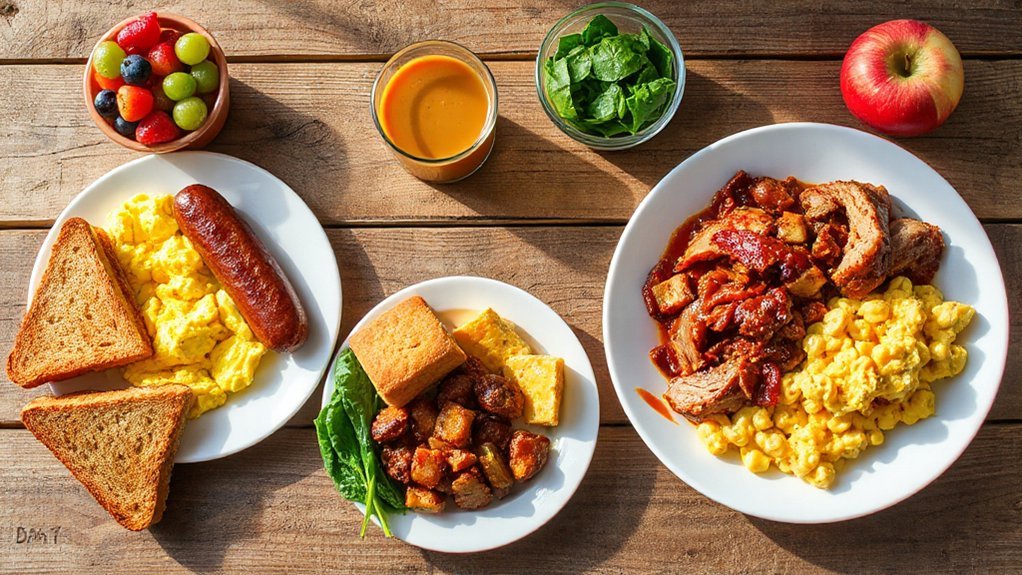
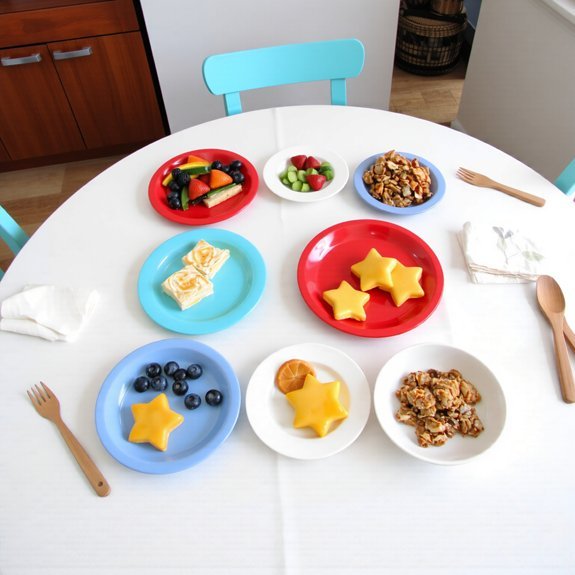

You’ll find a simple weekly menu that balances fruits, vegetables, whole grains, lean protein, and healthy fats for toddlers, with quick recipes, batch-cooking tips, and allergy swaps. It helps you save time, reduce mealtime stress, and support picky eaters while teaching healthy habits. Keep going — the shopping lists and time-saving strategies that follow will change your routine.
Key Takeaways
- Provide a seven-day template with breakfasts, lunches, snacks, and dinners emphasizing fruits, vegetables, whole grains, protein, and healthy fats.
- Include age-based portion cues and simple prep times to guide appropriate serving sizes and caregiver planning.
- Rotate staple recipes (two breakfasts, three lunches, varied dinners) and use seasonal produce for flavor and nutrient variety.
- Offer allergy-friendly swaps, strict cross-contact precautions, and consult a clinician before eliminating major food groups.
- Use picky-eater tactics: small portions, one new food with familiar favorites, predictable routines, neutral responses, and repeated exposures.
Why Balanced Meals Matter for Toddlers
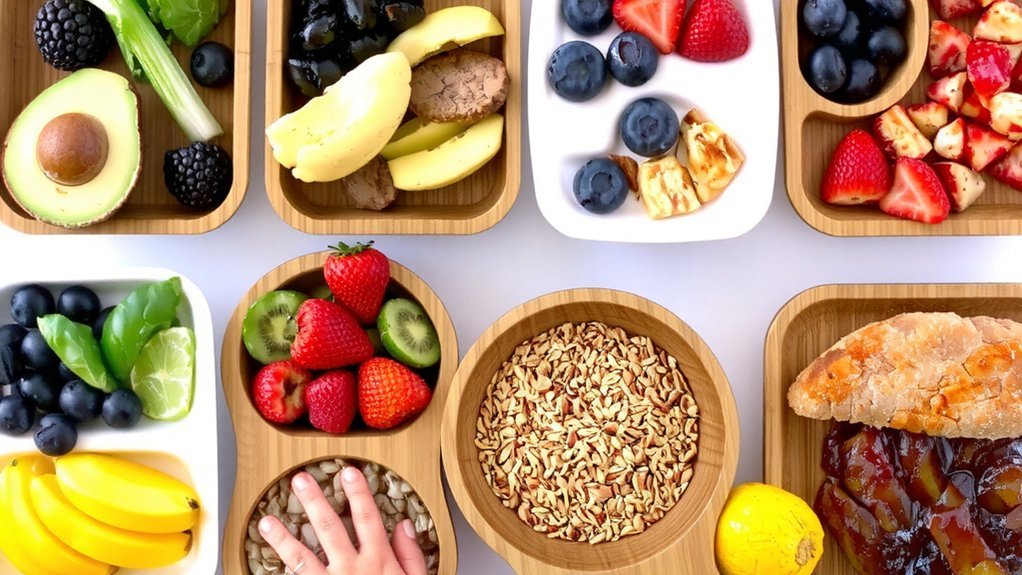
Nutrition shapes more than appetite—it shapes growth, behavior, and lifelong habits.
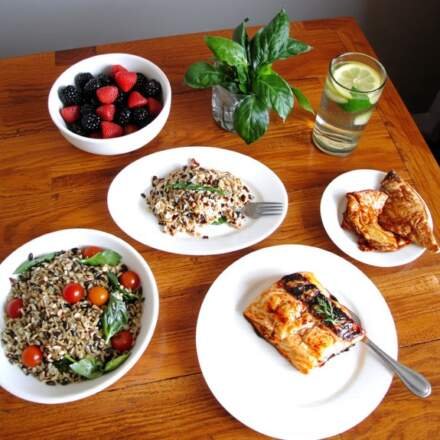
When you plan balanced meals for your toddler, you give steady fuel for Brain Development and steady building blocks for immune cells. You’ll prioritize varied fruits, vegetables, whole grains, proteins, and healthy fats so your child gets iron, zinc, DHA, vitamins, and fiber without relying on sweets.
That steady variety stabilizes energy, reduces picky-eating episodes, and supports mood and attention. You also strengthen Immune Support by including vitamin C–rich foods, probiotic sources, and adequate protein to repair tissues.
Portion control and predictable meal routines teach self-regulation and prevent overfeeding. Small, consistent changes are practical: aim for color, texture, and nutrient balance at each meal to promote long-term health. You’ll notice steady developmental gains.
Weekly Meal Plan Overview With Recipes
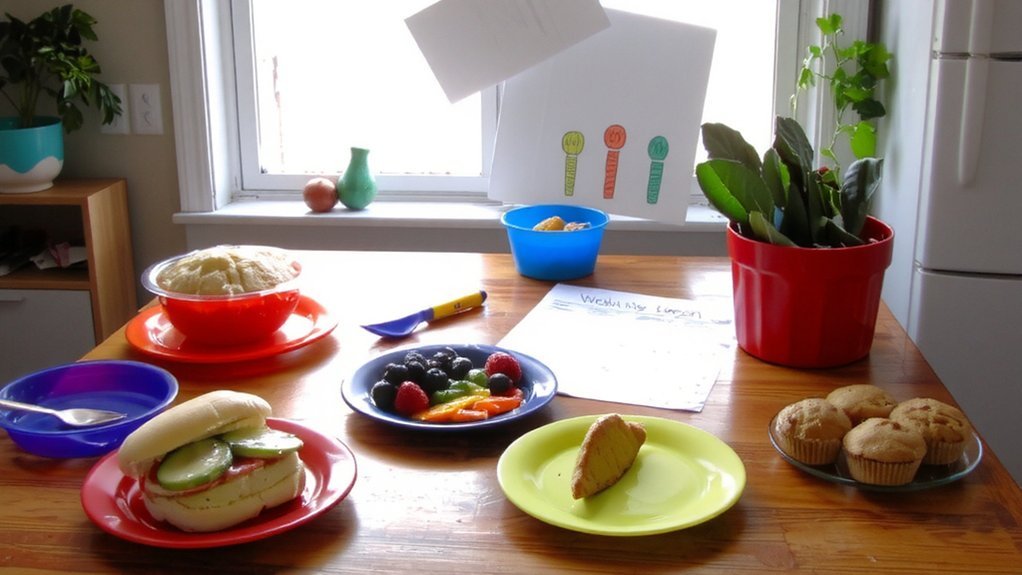
This weekly meal plan gives you seven days of balanced, toddler-friendly breakfasts, lunches, snacks, and dinners with simple recipes, portion cues, and easy swap options.
You’ll find concise recipes that fit short prep times, clear portion guidance by age, and snack ideas that mix protein, whole grains, and fruit.
Use Recipe Rotation to prevent boredom: rotate two breakfasts, three lunches, and varied dinners across weeks.
Emphasize Seasonal Produce to maximize flavor and nutrients—swap berries, apples, squash, or leafy greens depending on availability.
Each recipe lists substitutions, storage tips, and reheating notes so you can batch cook or assemble fast.
Follow the plan flexibly, adjusting portions to your child’s appetite while keeping meals varied and nutrient-dense.
You’ll build confidence feeding them new flavors quickly safely.
Allergy-Friendly Swaps and Dietary Modifications
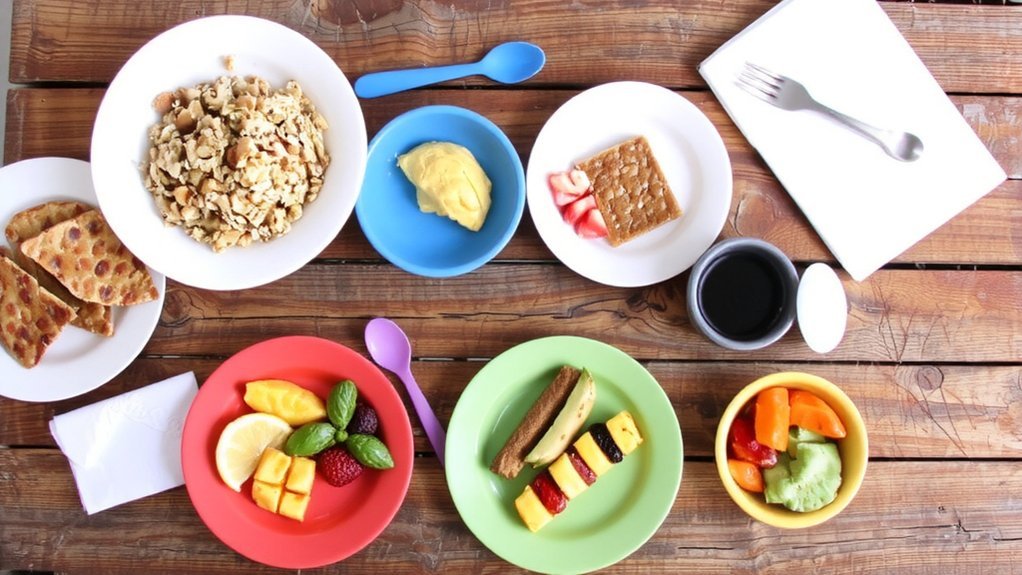
Now that you’ve got a simple rotation and seasonal basis for meals, you can adapt recipes to avoid common allergens while keeping them nutrient-dense and toddler-friendly. Swap cow’s milk for fortified oat or soy milk if dairy is an issue, use mashed avocado or pureed beans for egg or mayo-based spreads, and replace wheat with gluten-free oats or quinoa.
Practice strict Label Reading for processed foods to spot hidden ingredients and cross-contact risks. Keep separate utensils, cutting boards, and storage when preparing allergen-free items, and wash surfaces thoroughly.
Talk with your pediatrician or a registered dietitian before eliminating food groups to make sure adequate iron, calcium, vitamin D, and protein for growth. Keep emergency meds accessible and educate all caregivers about symptoms, response, and documentation.
Picky-Eater Strategies and Mealtime Tips
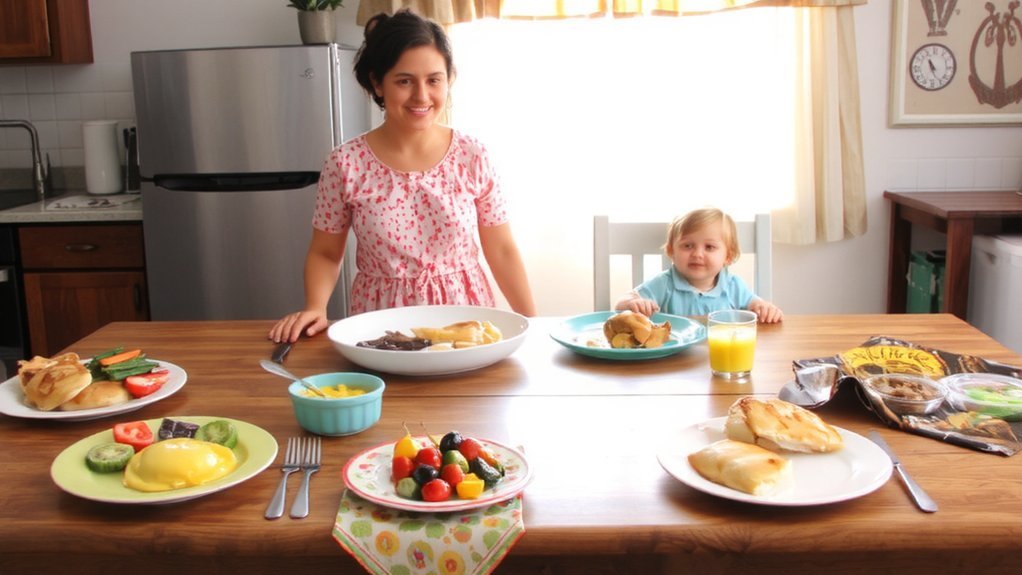
How you handle meals shapes your toddler’s willingness to try new foods, so keep routines calm, predictable, and brief.
Offer small portions and one new item with familiar favorites; you won’t rush acceptance.
Let them explore textures with Sensory Play—soft, crunchy, warm—so food becomes curiosity, not pressure.
Use Positive Reinforcement: praise attempts, not results, and celebrate tiny victories without sweets as bribes.
Model eating without lecturing, share family meals when possible, and avoid power struggles by setting mealtime limits and clear snack rules.
Rotate choices rather than force variety; toddlers often need many exposures.
When refusal happens, stay neutral, clear the plate without drama, and try again later—consistent, patient rhythms win more reliable progress than coercion.
Track tiny wins and adjust expectations as needed.
Batch-Cooking, Shopping Lists, and Pantry Staples
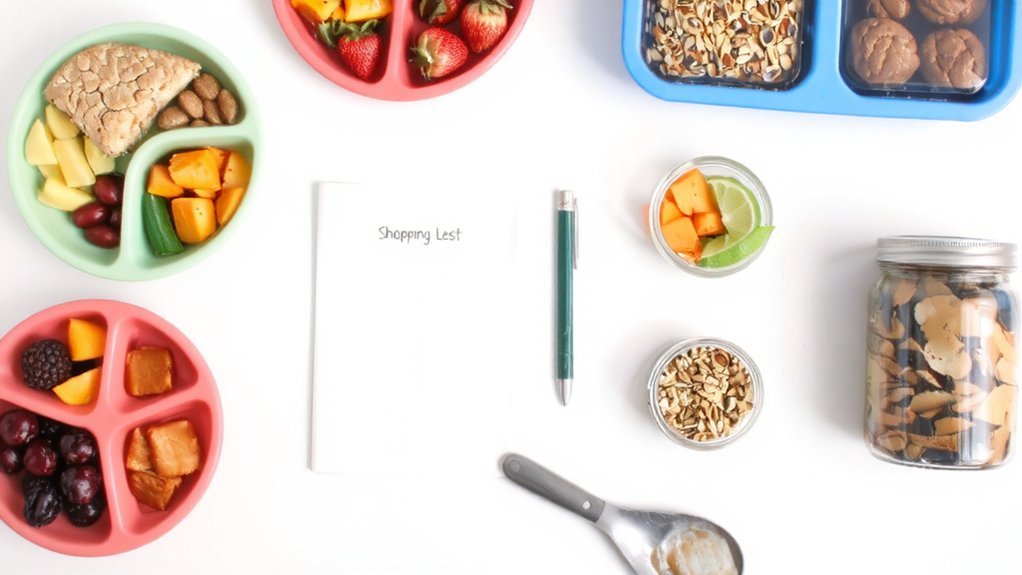
Good mealtime habits make planning and prepping much easier, so you can use the same calm routines when setting up batch-cooking, shopping lists, and a toddler-friendly pantry.
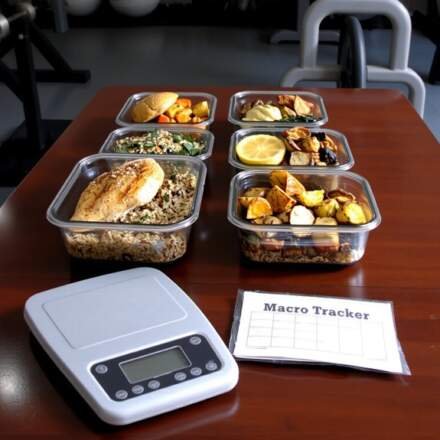
Plan one cook day for staples — grains, beans, shredded chicken and veggie mixes — portioning into toddler-size servings.
Use a consistent labeling system with date and contents so you rotate items safely.
Create a master shopping list grouped by store section; note quantities to avoid midweek runs.
Embrace bulk buying for long-lasting basics like oats, canned tomatoes and frozen fruit, then repack into smaller, accessible containers.
Keep snacks visible at toddler height and reserve a small shelf for allergy-safe staples.
Review weekly inventory before shopping to reduce waste and simplify mealtime choices.
Adjust portions as your toddler grows.
Conclusion
You’ve got a practical, balanced weekly plan that makes feeding toddlers easier and less stressful. Use the recipes, swaps, and batch-cooking tips to fit your family’s needs, and adapt portions and textures for safety and preferences. Keep predictable routines, offer repeated exposure, and rotate seasonal produce to build healthy habits. With pantry staples on hand and simple swaps ready, you’ll feel confident serving varied, nutrient-dense meals your little one will accept and enjoy every day.