
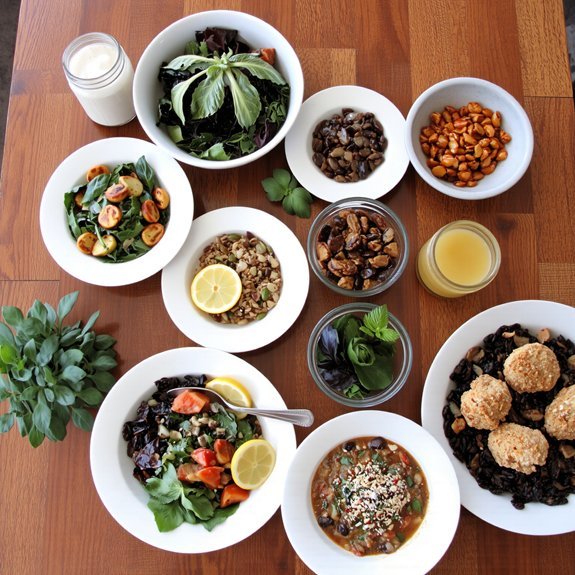

You’ll get a practical, season-forward vegan meal plan that saves time, cuts waste, and balances protein and fiber. It uses batch-cooked staples, flexible sauces, and simple swaps for different goals. You’ll see weekly menus, prep strategies, and pantry lists — plus tips to tweak for budget or performance…
Key Takeaways
- Build a weekly template: rotating breakfasts, two grain-bowl lunches, three dinners, and snacks to simplify shopping and prep.
- Prioritize seasonal produce, legumes, whole grains, and fortified foods for balanced protein, iron, B12, fiber, and micronutrients.
- Batch-cook grains, beans, roasted veg, and sauces once weekly to save time, reduce waste, and enable fast assembly.
- Track portions, calories, and sustainability metrics monthly; adjust protein timing for training and sodium for health goals.
- Use a short shopping checklist: staple pantry, fresh produce by color, versatile proteins, and bulk/loose purchases to cut cost and packaging.
Weekly Meal Overview and Goals
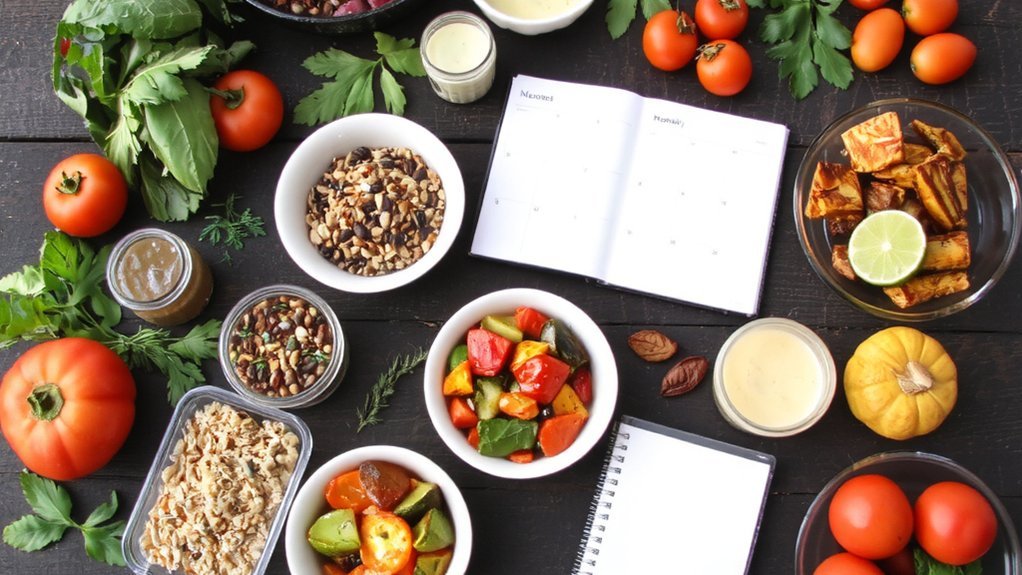
Why plan your week? You’ll set clear goals for balanced nutrition, reduce food waste, and streamline grocery shopping.
When you map meals, you’re able to track sustainability metrics like ingredient origin, packaging, and food miles, and make choices that lower environmental impact.
You’ll prioritize seasonal alignment to boost flavor, nutrition, and cost-effectiveness by choosing produce at peak freshness.
Set measurable targets—protein variety, fiber, sodium limits, and a waste-reduction percentage—and review them midweek to adjust portions or swaps.
Plan for batch cooking, versatile staples, and easy repurposes so you save time without sacrificing variety.
With concise weekly planning, you’ll eat better, spend smarter, and support sustainable food choices.
Track costs weekly, note favorites, and swap recipes to meet goals while minimizing single-use packaging every season.
Breakfasts, Smoothies, and Quick Starts
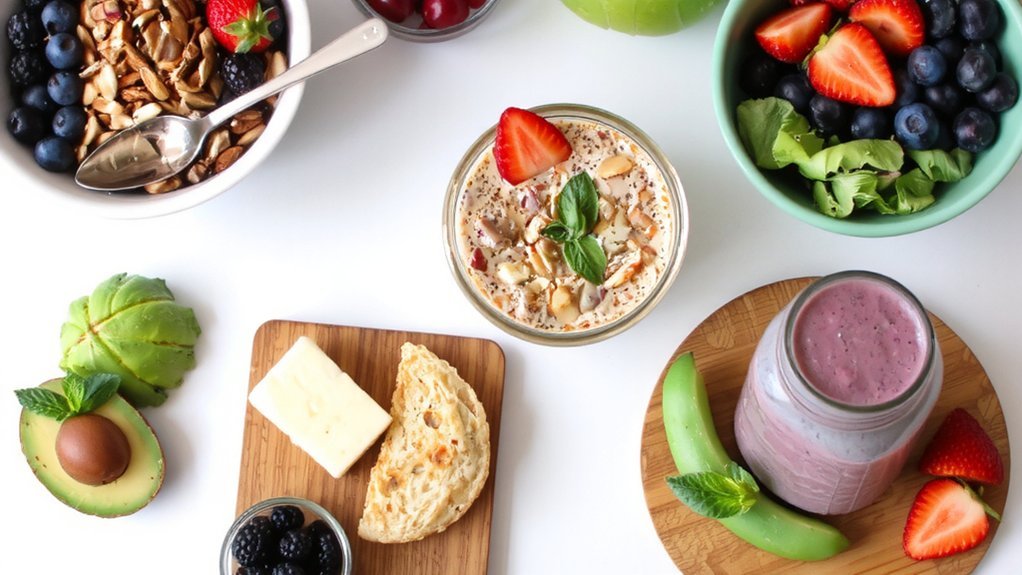
How do you build breakfasts that’re fast, nourishing, and easy to repeat? Start with a template: base (overnight oats, tofu scramble, or whole-grain toast), protein (nuts, seeds, or legumes), fat (avocado, tahini), and fruit or veg.
Rotate seasonal flavors—pumpkin in autumn, citrus in winter—to keep interest without extra effort.
Blend quick smoothies using frozen fruit, spinach, plant milk, and a scoop of protein powder; portion and freeze for grab-and-go mornings.
Embrace cultural breakfasts for variety: congee, chilaquiles-inspired bowls, or Mediterranean mezze plates with simple swaps to stay plant-based.
Prep components once weekly: cooked grains, roasted veg, and dressings.
You’ll save time, minimize decisions, and enjoy balanced starts every day. Adjust portions to match appetite, and experiment with spices for fast, satisfying morning routines daily.
Lunches, Salads, and Grain Bowls
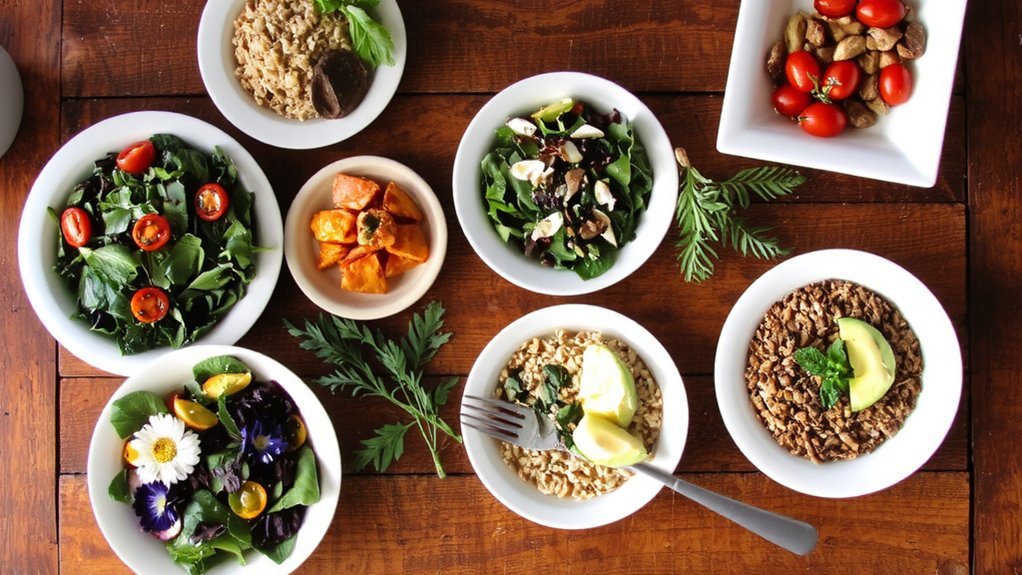
Building lunches around salads and grain bowls keeps your midday meals satisfying, portable, and easy to vary. You’ll mix leafy greens, roasted veg, grains, and beans, focusing on Dressing Pairings that brighten flavors and Texture Contrast like crunchy seeds versus creamy avocado. Prep components ahead, then assemble midday: warm grains, chilled greens, and sauces. Use bold vinaigrettes, tahini blends, or citrus dressings to tie ingredients. Rotate bases—quinoa, farro, brown rice—and swap proteins like chickpeas, tempeh, or lentils for variety, fuss-free. For portability, pack dressings separately and layer sturdier items below delicate greens. The quick reference helps you plan combos and stay efficient.
| Base | Toppings |
|---|---|
| Quinoa | Roasted carrots, pumpkin seeds |
| Farro | Kale, marinated mushrooms |
| Brown rice | Edamame, pickled red onion |
| Mixed greens | Avocado, toasted nuts |
Dinners, Protein Sources, and Comfort Plates
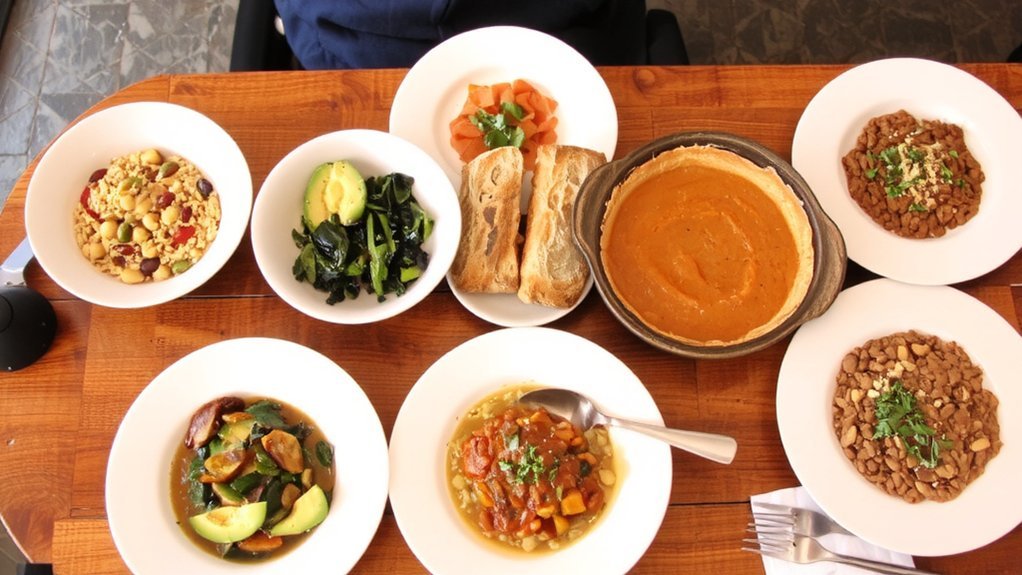
When evening rolls around, choose dinners that center hearty plant proteins—tofu, tempeh, seitan, legumes, and lentils—paired with comforting textures like mashed potatoes, creamy polenta, or braised greens.
You’ll build meals around Umami Proteins by using miso, nutritional yeast, soy sauce, roasted mushrooms, and caramelized onions to deepen flavor.
Rotate Cultural Comforts: Jamaican stews, Korean bibimbap with gochujang-glazed tofu, Italian ragù with lentil bolognese, and Ethiopian stews served with injera.
Aim for balanced plates: protein, a starchy element, and plenty of vegetables.
Finish with simple sauces or pickles for brightness.
Cook simply, season boldly, and trust repeatable templates so you can enjoy satisfying, nourishing dinners without extra fuss or complicated techniques. Swap ingredients seasonally and adjust heat levels to match your household preferences, easily done.
Snacks, Batch Prep, and Make-Ahead Tips
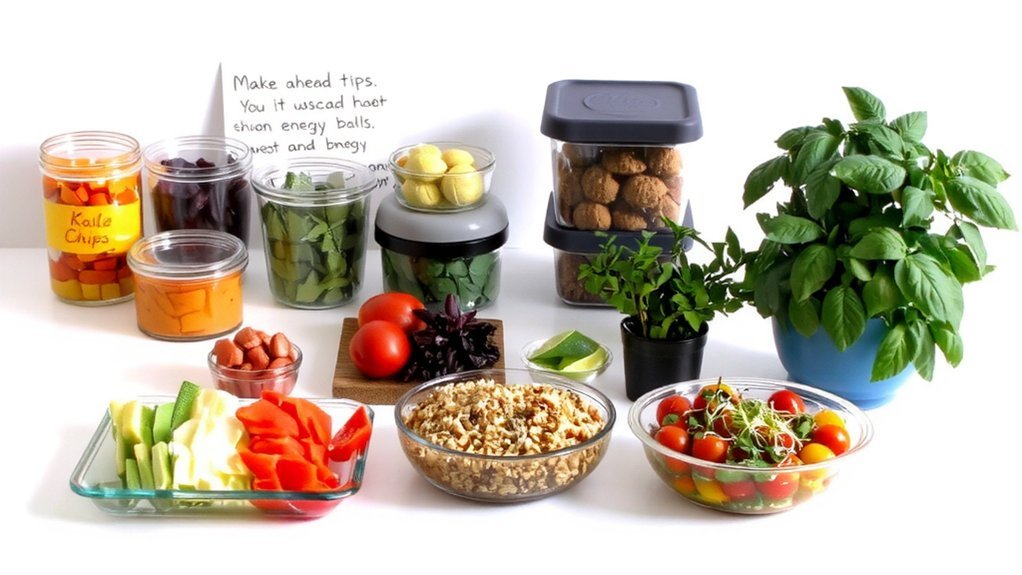
You’ll find quick high-protein snack ideas—think roasted chickpeas, edamame, and nut butter with fruit—to keep you fueled between meals.
Batch-cook staples like grains, beans, and roasted vegetables on a weekend to simplify weekday cooking.
Use airtight containers, follow fridge/freezer timelines, and reheat gently so your make-ahead meals stay fresh and tasty.
High-Protein Snack Ideas
Roast a big tray of spiced chickpeas, bake tempeh strips, or roll energy balls so you have high-protein snacks ready all week—think roasted chickpeas, edamame, marinated tempeh, tofu dip with veggie sticks, nut‑and‑seed bars, and soy yogurt topped with hemp and pumpkin seeds.
You’ll pack portions in clear containers, grab them on the go.
Focus on combos that boost protein bioavailability, like legumes with grains or vitamin C salsa with tofu dips.
Make nut‑and‑seed bars with protein powder, marinated tempeh strips and roast edamame or chickpeas.
Keep soy yogurt jars topped with hemp and pumpkin seeds.
Label dates, thaw frozen portions, and rotate flavors so you don’t get bored.
These habits reduce waste and lower your environmental impact while keeping snacks filling and convenient.
Batch-Cooking Staples
A few sturdy staples will keep snacks and meals effortless all week: spiced chickpeas, marinated tempeh or tofu, energy balls, and cooked grains like quinoa or brown rice.
You’ll batch-cook components that plug into breakfasts, lunches, and snacks so you’ll mix bowls, wraps, and toast without fuss.
Build Flavor Foundations with toasted spices, citrus zest, and a simple vinaigrette you can tweak.
Lean on Herb Infusions—big batches of chimichurri, pesto, or cilantro-lime salsa—to brighten bowls and snacks.
Portion proteins into single-serving containers for grab-and-go fueling, and pre-portion energy balls into snack packs.
Batch-roast veggies and make a versatile bean salad for quick sides.
Prep timelines stay short if you prioritize versatile items and consistent seasoning templates and dressings that you can vary all week.
Storage and Reheating
Now that you’ve built flavor foundations and portioned staples, focus on storing and reheating so meals stay vibrant and safe all week. Label containers with dates and contents; rotate older items first.
Use airtight jars for snacks, breathable produce bags for greens, and vacuum sealing for grains, legumes, and marinated tofu to extend freshness. Cool cooked food quickly to prevent bacteria growth, then refrigerate or freeze in meal-sized portions.
Reheat gently: steam grains, warm sauces on low, and crisp roasted vegetables under a hot oven or skillet to restore texture. For transport, pack hot dishes in containers with thermal insulation and cold items with ice packs.
Defrost in the fridge overnight, not on the counter, and discard anything with off smells or mold safely.
Pantry Staples, Staples Shopping List, and Kitchen Tools
You’ll keep your vegan meal plan running smoothly by stocking core dry pantry essentials like grains, legumes, nuts, seeds, canned tomatoes, and nutritional yeast.
Use a weekly shopping checklist to replace staples, plan meals, and avoid impulse buys.
Equip your kitchen with must-have tools — a good knife, cutting board, blender, saucepan, and reliable storage — so cooking stays fast and simple.
Dry Pantry Essentials
Often you can build a versatile vegan pantry with a handful of staples that save time and let you cook from scratch any night.
Keep dried beans, lentils, whole grains, nuts, seeds, and shelf-stable plant milks.
Learn basic spice pairings to transform dishes—cumin with coriander, smoked paprika with garlic, cinnamon with cardamom.
Explore flour varieties for different textures: chickpea, oat, whole wheat.
Store staples airtight, label dates, rotate stock.
Maintain a small toolkit for ease.
- A reliable chef’s knife that feels empowering
- Airtight jars that calm kitchen clutter
- Measuring cups to build confident recipes
- A sturdy can opener that rescues dinner
These choices let you improvise meals that comfort, excite, and nourish without stress.
Stock basics once monthly to keep your kitchen ready today.
Weekly Shopping Checklist
With your dry pantry organized, plan a weekly shopping checklist to keep staples, fresh produce, and any missing kitchen tools on hand so meals stay simple and inspiring.
Each week, review planned recipes, note quantities, and prioritize versatile staples—grains, legumes, canned tomatoes, and shelf-stable plant milks—so you avoid waste.
Add a short fresh produce list and rotate colors for nutrients.
Include a reminder to check expiration dates and compostables; use sustainability tips like buying bulk, choosing loose produce, and bringing reusable bags.
Track purchases with a simple app or envelope system for receipt organization and returns.
Keep lists consistent, shop with a meal-first mindset, and adjust items after leftovers to streamline prep and save money.
You’ll build rhythm and reduce impulse buys quickly consistently
Must-Have Kitchen Tools
A sturdy cutting board and a basic tool set let you turn pantry staples into satisfying meals fast.
Keep a chef’s knife, paring knife, and a honing rod; prioritize Knife sharpening so blades stay safe and efficient.
You’ll want a heavy-duty saucepan, a nonstick skillet, and a sturdy blender for sauces and smoothies.
Store basic measuring cups, a sifter, and mixing bowls within reach.
Always keep a Fire extinguisher accessible and know how to use it.
You’ll save time and reduce stress while cooking every week easily today.
- Sharp, trusted knives that slice confidently
- A roomy pot that comforts you on chilly nights
- A reliable blender that brightens your mornings
- Safety gear that protects your cooking and peace of mind
Customizing the Plan: Budget, Performance, and Weight Goals
Because your budget, activity level, and weight targets differ, you’ll tweak portions, food choices, and meal timing to meet nutrient needs without overspending.
Prioritize affordable staples—beans, oats, seasonal produce.
If you’re training hard, shift calories toward extra carbs and plant protein; for fat loss, reduce refined carbs and keep protein high to protect muscle.
Use Progress Tracking: log meals, weigh yourself weekly, and adjust calories based on trends.
Schedule protein-rich meals around workouts for Recovery Optimization and faster muscle repair.
Swap ingredients to control cost and macros, and preset meals to avoid impulse buys.
Reassess monthly; small, consistent tweaks beat big swings.
Track micronutrients like iron and B12 via apps and adjust fortified foods or supplements when gaps appear to stay healthy for longevity.
Conclusion
You’ve got a flexible, seasonal plan that saves time, cuts waste, and boosts plant protein and fiber without sacrificing flavor. Use batch-cooked staples, versatile sauces, and smart swaps to hit your nutrition and budget goals, and adjust portions for performance or weight targets. Keep reusable packaging and local produce in rotation to lower costs and environmental impact. Stick with this framework and you’ll make plant-based eating simple, satisfying, and sustainable for every season ahead.
