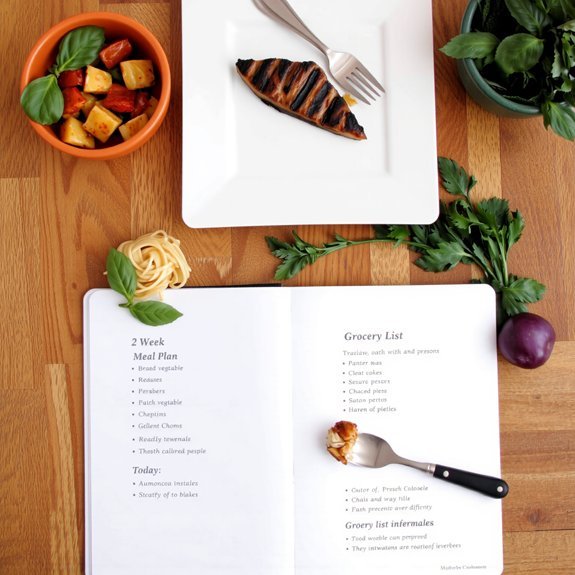

You’ll get a practical 2‑week plan of 14 dinners plus a consolidated grocery list, make‑ahead tips, and batch‑cook strategies to save time, reduce waste, and keep meals flavorful. The mix includes quick weeknights and weekend projects, vegetarian options, and flexible swaps, so you can cook confidently all week — and I’ll show you how.
Key Takeaways
- Provide 14 balanced dinner recipes with variety (poultry, beef, seafood, vegetarian, legumes, pasta) to cover two weeks.
- Include a categorized grocery list (produce, proteins, pantry, dairy, spices) with pantry staples and quantities for two people.
- Offer meal-prep tips: batch-chop, double sauces, and freeze portions to save weeknight cooking time.
- Note per-recipe cook times and one-pan or sheet-pan options for quick dinners and minimal cleanup.
- Supply simple dietary swaps and allergy alternatives (dairy-free, gluten-free, vegetarian) and storage/reheat guidance.
Week 1 — Day 1: Lemon Garlic Roast Chicken With Roasted Root Vegetables
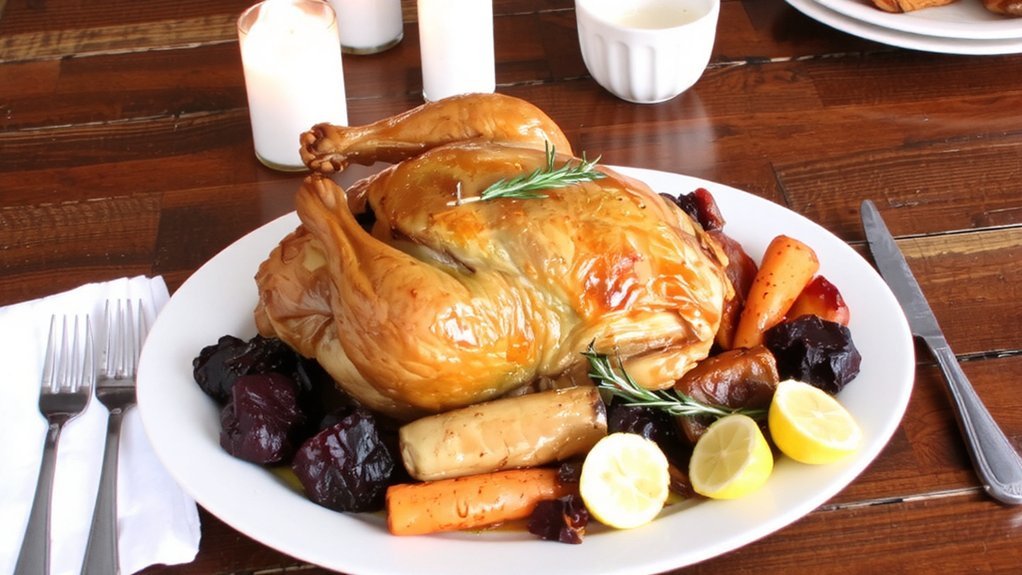
Start by patting a whole chicken dry, rub it with lemon, garlic, and herbs, and roast it alongside a mix of carrots, parsnips, and potatoes until the skin’s crisp and the vegetables are caramelized.
Let it rest ten minutes so juices redistribute, then use a steady carving technique to slice breasts, remove thighs, and portion legs without tearing.
You’ll baste vegetables with pan juices and finish with a squeeze of lemon to lift flavors; focus on citrus balancing so acidity brightens but doesn’t overpower herbs.
Serve family-style, spooning roasted vegetables next to golden chicken, and reserve scraps for stock.
You’ll note crisp skin, tender meat, and confident slices when you follow timing and a single sharp knife.
Enjoy rustic comfort with minimal fuss today.
Week 1 — Day 2: One-Pan Salmon With Asparagus and Herbed Quinoa
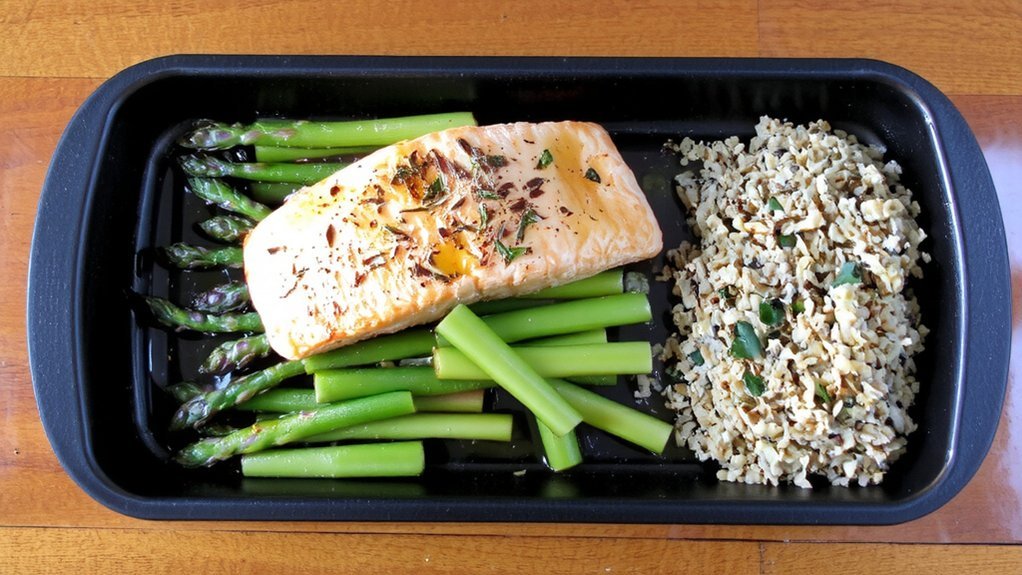
Once the quinoa’s rinsed and the salmon’s seasoned, you’ll cook everything in one pan so the flavors meld and cleanup stays easy.
Start quinoa with broth and herbs at the pan’s edge, then sear salmon skin-side down until golden.
Add trimmed asparagus during the last 6–8 minutes so it roasts but stays crisp.
Finish with lemon, chopped parsley, and a drizzle of olive oil.
Choose salmon from sustainable sourcing and buy firm, fresh asparagus to support flavor and ethics.
For families, use portion scaling: adjust quinoa and fillet amounts per person, keeping a 3:1 quinoa-to-liquid ratio and 4–6 ounce salmon portions.
Plate quickly and serve warm.
If you prefer, swap herbs seasonally and freeze extra quinoa for quick reheats later in the week, always.
Week 1 — Day 3: Turkey and Black Bean Taco Bowls With Avocado Salsa
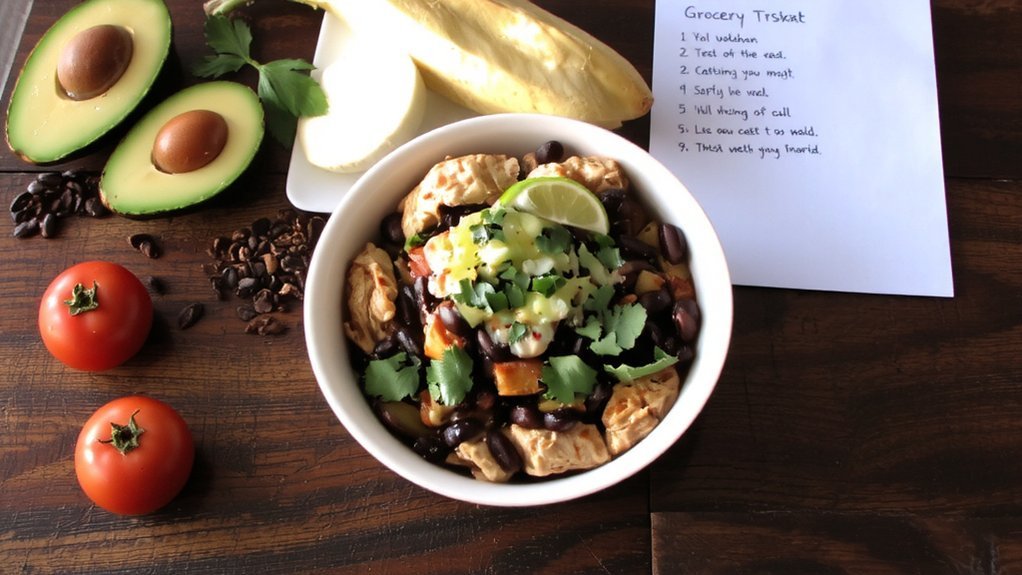
When you brown lean ground turkey with cumin, smoked paprika, and garlic, it becomes a quick, flavorful base for taco bowls; toss in black beans, corn, and a squeeze of lime for brightness.
You’ll build bowls with fluffy rice or greens, shredded lettuce, chopped tomatoes, and a dollop of yogurt or cheese.
For Avocado Preservation, pit halves with onion and lemon, wrap tightly, and store in airtight container to keep salsa-ready. Make the avocado salsa just before serving for peak texture.
Save extra turkey-bean mix for lunches; with simple tweaks—adding salsa or roasted veggies—you’ll use Leftover Reinvention to turn dinner into a new meal. These bowls are fast, flexible, and fridge-friendly for weekday routines. Prep components ahead to speed weekday assembly and cleanup daily.
Week 1 — Day 4: Veggie-Packed Stir-Fry With Tofu and Brown Rice
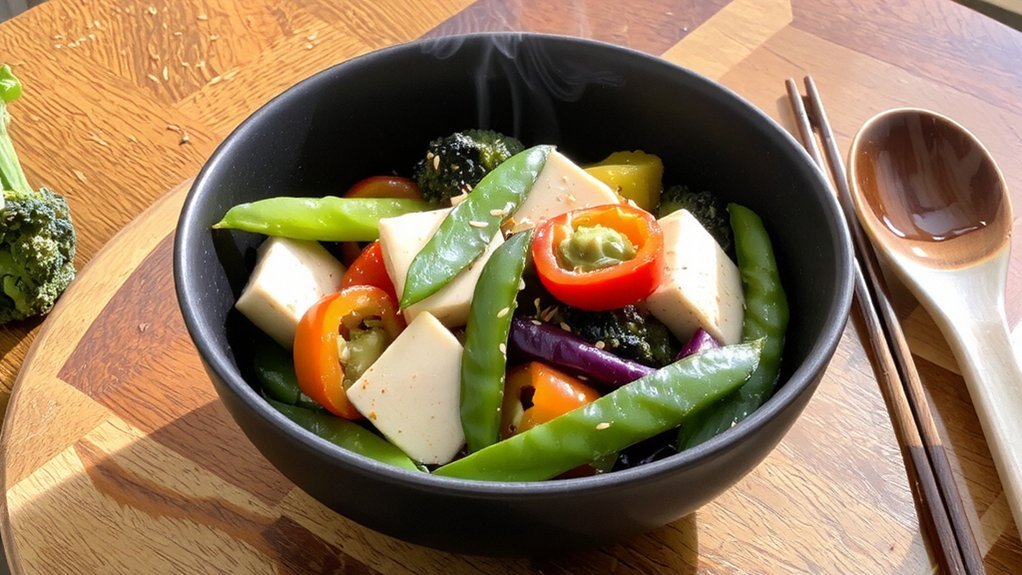
Sautéing extra-firm tofu until golden gives the stir-fry a satisfying, meaty bite while nutty brown rice keeps the meal filling and whole-grain.
You’ll press the tofu to remove water; proper Tofu pressing improves texture and helps it crisp.
Toss colorful vegetables and aromatics in a hot wok, then add tofu and a simple sauce.
Try Sauce variations like ginger-sesame, chili-garlic, or peanut-lime to change the mood without extra effort.
- Press tofu 15–30 minutes
- Preheat wok until smoking
- Cook rice to nutty chew
- Add sauce at end, toss quickly
You’ll serve immediately for best texture and flavor.
Batch-cook rice and marinate tofu ahead to speed weeknight dinners, save time, and minimize cleanup so you can eat sooner and feel more satisfied.
Week 1 — Day 5: Creamy Tuscan Shrimp With Spinach and Pasta
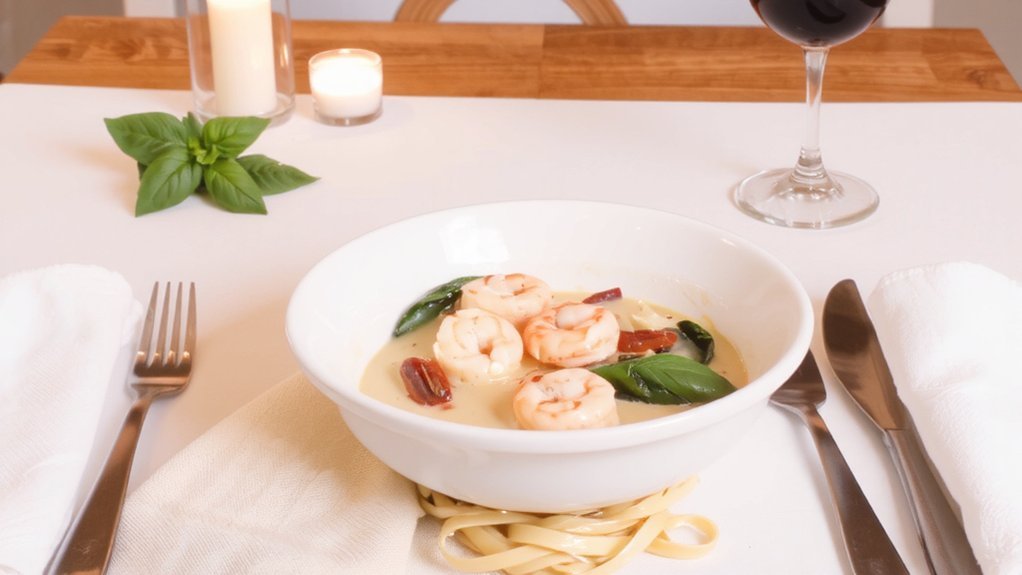
Start by gathering the shrimp, spinach, pasta, cream, garlic, and seasonings and prepping them so you’re ready.
Sear the shrimp quickly over high heat until they’re just pink, then set them aside.
Finish by making the creamy sauce, tossing in spinach and cooked pasta, and returning the shrimp to coat before serving.
Ingredients and Prep
A handful of staple ingredients will get you through this dish: 8 oz pasta, 1 lb peeled and deveined shrimp, 2 cups baby spinach, 1 cup heavy cream, 1/2 cup grated Parmesan, 1 small shallot (or 2 garlic cloves), 1 tbsp olive oil, 2 tbsp butter, 1/2 cup chopped sun‑dried tomatoes, and salt, pepper, and red pepper flakes to taste.
Keep pantry rotation in mind: use older jars first and note expiry dates.
For allergen substitutes, swap cream for coconut milk and Parmesan for nutritional yeast if needed.
Prep so you can move quickly:
- Rinse and pat shrimp dry.
- Finely chop shallot and sun‑dried tomatoes.
- Measure cream and grate cheese.
- Wash and roughly chop spinach.
Store prepped items separately in the fridge until assembly.
Cooking the Shrimp
While the pasta finishes, heat the olive oil and butter in a large skillet over medium-high; once the butter foams, add shrimp seasoned with salt, pepper, and red pepper flakes in a single layer and cook 1–2 minutes per side until opaque and just pink.
Turn only once, don’t overcrowd the pan, and use tongs to flip delicately so you don’t tear the flesh.
If shrimp vary in size, adjust time slightly.
Remove shrimp to a plate when done to prevent carryover overcooking.
Taste one for seasoning before combining later.
Note labeling for allergies and follow any Allergy labeling guidance on your packaging.
Choose shrimp with Sustainable sourcing certifications to support responsible fisheries and reduce environmental impact.
Store leftovers and cool before refrigerating within two hours.
Finishing With Pasta
When the pasta’s al dente and the shrimp’s rested, drain but reserve a cup of the cooking water so you can loosen the sauce as needed.
You’ll finish the dish by returning pasta to the pan, folding in shrimp, spinach, cream, and a splash of pasta water, using gentle tosses to marry flavors.
Focus on Finishing Techniques that build shine and cohesion without breaking shrimp.
Aim for Texture Contrast: tender pasta, silky sauce, crisped shrimp edges, and wilted-but-not-mushy spinach.
Serve immediately, tasting for salt and acid.
- toss gently to coat
- add water gradually
- finish with lemon or vinegar
- garnish with herbs and pepper
Plate immediately and serve while warm so contrasts stay vivid and the sauce stays silky and fresh.
Week 1 — Day 6: Sheet-Pan Sausage, Peppers, and Potatoes
Toss sausage, peppers, and potatoes on a sheet pan for an easy, one-pan dinner you’ll have on the table with minimal hands-on time. You pick your favorite sausage varieties — sweet, spicy, or chicken — and slice them into even pieces so they cook uniformly.
Quarter the potatoes and toss with oil, salt, pepper, and a pinch of smoked paprika. Add peppers and red onion for color.
Use high heat and simple roasting techniques: preheat the oven, spread ingredients in a single layer, and flip once halfway through to brown evenly. Total cook time is about thirty to forty minutes.
Finish with chopped parsley or a squeeze of lemon, and serve straight from the pan for quick cleanup and enjoy weeknight simplicity every time.
Week 1 — Day 7: Homemade Margherita Pizza With Mixed Greens
Finish the week with a classic Margherita pizza you’ll make at home in under an hour: a crisp crust, tangy tomato sauce, fresh mozzarella, and basil, served with a bright mixed-greens salad to keep the meal light.
You’ll roll a single dough ball, respecting a short dough fermentation for flavor without long wait.
Heat a pizza stone or heavy sheet until blistering, stretch dough thin, add sauce, tear fresh mozzarella, and scatter basil just before baking.
Dress mixed greens with lemon, olive oil, salt, and a pinch of red pepper.
Quick tips:
- Use high-protein flour for a crisp crust.
- Don’t overload with sauce or cheese.
- Cheese selection: fresh mozzarella, maybe grated Parmesan.
- Bake at highest oven temperature for 8–12 minutes.
Week 2 — Day 8: Beef and Broccoli With Cauliflower Rice
You can have beef and broccoli on the table in under 30 minutes with a few smart shortcuts for weeknight prep.
You’ll learn cauliflower rice basics—how to pulse, drain, and briefly sauté it so it stays fluffy.
You’ll also get a simple sauce and seasoning plan to tie the dish together without slowing you down.
Quick Weeknight Prep
When time’s tight, this beef and broccoli with cauliflower rice comes together in about 20 minutes: you’ll sear thinly sliced beef, quickly steam or blanch broccoli, toss both in a simple savory sauce, and stir-fry riced cauliflower until just tender.
You can speed things further by prepping ingredients before the week. Time Saving Tools like a sharp chef’s knife, mandoline, or food processor cut prep time; Batch Chopping vegetables on one day saves evenings.
Use a hot wok or skillet so protein and veg brown. Keep sauce ingredients mixed in jar for a quick splash.
Follow these steps to finish fast and cleanly:
- Heat pan, season beef
- Cook beef, set aside
- Stir-fry broccoli, add sauce
- Toss beef back, serve immediately
Cauliflower Rice Basics
Pulse cauliflower florets in a food processor (or grate them on a box grater) until they resemble coarse rice, then pat any excess moisture with a clean towel. You’ll want even pieces so they cook uniformly; press out water to avoid sogginess and to control Texture Modification when steaming or sautéing.
For cooking, spread the riced cauliflower in a hot pan briefly—don’t overcook or it turns mushy. If you prefer a firmer bite, flash-cook and finish off heat.
Cool leftovers quickly and store in airtight containers; properly handled cauliflower rice lasts several days in the fridge.
Note that freezing extends Shelf Life but can change the texture, so thaw and drain before reheating for best results. You’ll avoid watery, limp rice by doing so.
Sauce and Seasoning
Balancing salty, sweet, and umami is key, so build a sauce with low‑sodium soy sauce, oyster sauce, a touch of brown sugar or honey, minced garlic and ginger, and a splash of rice vinegar.
Taste as you go, adjust acidity and sweetness, and finish with toasted sesame oil for depth.
Use Global condiments sparingly to broaden flavor without overpowering the dish. Rely on Umami boosters like mushroom powder or a spoonful of miso to enrich the sauce if desired.
- Whisk soy, oyster, sugar, garlic.
- Add vinegar, ginger, sesame.
- Thicken with cornstarch slurry.
- Finish with scallions and toasted seeds.
You can make extra sauce and refrigerate it for up to three days, or freeze portions for quick meals for meal prep.
Week 2 — Day 9: Baked Falafel With Tzatziki and Greek Salad
Although they often get fried, these baked falafel stay crisp and light, and you’ll love how they pair with cool tzatziki and a bright Greek salad for a satisfying, weeknight-friendly meal.
You’ll mix canned or soaked chickpeas with herbs, garlic, and spices; consider chickpea variations—adding fava beans or roasted chickpeas—for texture.
Form patties, chill briefly, and bake until golden.
Make a quick dairy free tzatziki with grated cucumber, dairy-free yogurt, lemon, garlic, and dill so everyone can enjoy it.
Toss tomatoes, cucumber, red onion, olives, and feta or a plant-based alternative with oregano and olive oil for the salad.
Serve falafel on greens or in pita, drizzle with sauce, and enjoy a balanced, make-ahead dinner.
You can reheat leftovers for quick lunches or snacks.
Week 2 — Day 10: Slow-Cooker Chicken Chili With Cornbread
After a light Mediterranean night, you’ll welcome a hearty slow-cooker chicken chili that simmers while you go about your day.
You toss boneless chicken, beans, tomatoes, onions, and broth into the cooker, then set low and relax.
Check seasoning midday and shred chicken before serving with warm cornbread.
- Prep: chop onions, measure spices, drain beans.
- Cook: combine ingredients, cook 6–8 hours on low.
- Serve: top with cilantro, cheese, lime.
- Store: cool, refrigerate or freeze for later.
Try Spice Variations like smoked paprika or chipotle to adjust heat.
For Leftover Ideas, turn chili into nachos or stuffed peppers.
Reheat on the stove, adding a splash of broth if it thickens, and serve with lime wedges.
Week 2 — Day 11: Pesto Pasta With Cherry Tomatoes and Grilled Chicken
You’ll toss al dente pasta with bright basil pesto and juicy halved cherry tomatoes, then top it with thinly sliced grilled chicken for a fast, flavorful weeknight meal. You’ll use leftover pesto or make a quick batch, thinking about basil preservation by freezing an extra portion. Keep chicken simple: a short chicken marinating time with lemon, garlic, and olive oil brightens flavor without fuss. Serve with a sprinkle of Parmesan and cracked pepper. The dish reheats well and stays vibrant when you store sauce separately.
| Prep | Tip |
|---|---|
| Pesto | Freeze portions |
| Chicken | Marinate briefly |
Enjoy a balanced, 20–30 minute dinner that’s satisfying and fresh. Pair it with a simple green salad and crusty bread to round out the meal and please picky eaters at once.
Week 2 — Day 12: Coconut Curry Lentils With Basmati Rice
Simmer red lentils in a fragrant coconut-curry sauce until creamy, then spoon them over fluffy basmati rice for a comforting, protein-packed weeknight meal.
You’ll sauté onion, garlic, and ginger, toast spices, then add tomatoes, coconut milk and rinsed lentils; simmer until tender.
Choose lentil varieties based on texture—masoor for quick creaminess or split reds for mashability.
Check coconut sourcing and pick full-fat canned coconut milk for richness or light for fewer calories.
Serve with fresh cilantro and a squeeze of lime, and you’ll have leftovers that reheat well.
Quick tips:
- Rinse lentils.
- Use warm broth.
- Stir to prevent sticking.
- Adjust heat to taste.
You can layer with crunchy shallots or toasted coconut to add texture and bright flavor for depth.
Week 2 — Day 13: Pan-Seared Pork Chops With Apple-Onion Compote
You’ll want to get the pan and pork chops very hot to achieve a brown, crispy crust without overcooking the interior.
Use a heavy skillet, pat the meat dry, and don’t move the chops until a golden crust releases.
For the apple-onion compote, balance sweet-tart apples with caramelized onions and a splash of cider or mustard to complement the pork.
Searing Technique Tips
When you heat the pan until it’s just smoking, you lock in flavor and get a golden crust that stands up to the sweet-tart apple-onion compote.
Focus on High heat timing, Oil selection and dry chops: pat them thoroughly and let them reach room temperature before searing.
Don’t crowd the pan; work in batches for even browning.
Use a heavy skillet and a thermometer to hit 140–145°F internal after resting.
- Preheat skillet until shimmering.
- Season chops just before searing.
- Sear 3–4 minutes per side for medium-thick cuts.
- Rest 5 minutes tented after cooking.
You’ll get a crisp exterior and juicy interior every time. Adjust times for thicker chops and use neutral oil with high smoke point for best results consistently.
Compote Flavor Pairings
If you want to balance the pork’s richness, choose compote elements that add brightness, acidity, herbaceous lift, or a warm spice note. You’ll pair apple-onion compote with contrasting flavors: a berry lime reduction brightens, while a peach ginger mash lends warmth. Add fresh herbs like thyme or rosemary for an herbal lift, or a splash of cider vinegar for acidity. For texture, fold in sautéed shallots or toasted nuts. Use the table below to match profiles and proportions.
| Flavor | Purpose |
|---|---|
| Berry lime | Bright acidity and fruit |
| Peach ginger | Warm spice and sweetness |
| Thyme & vinegar | Herbaceous lift and tang |
Taste as you go and adjust sugar, acid, or herbs to keep the pork lively. Serve warm, spooning compote over chops and garnish with fresh microgreens.
Week 2 — Day 14: Vegetable Lasagna With Garlic Bread and Caesar Salad
A hearty vegetable lasagna pairs perfectly with crisp garlic bread and a tangy Caesar salad, giving you a comforting, balanced meal you’ll want to make again.
You’ll assemble roasted vegetables, ricotta, spinach, and a marinara base, paying attention to cheese layering, oven timing so each layer melts and sets.
Toss the romaine with dressing, fresh lemon, and shaved Parmesan; warm the bread with garlic butter until golden.
- Prep vegetables and sauce.
- Layer noodles, filling, and cheese precisely.
- Bake with foil, then brown top.
- Serve with salad and garlic bread.
You’ll enjoy leftovers for lunch, and you can tweak herbs or add red pepper flakes for a mild kick.
Start it on a weekend evening when you have time to prep.
Conclusion
You’ve got two weeks of simple, flavorful dinners that save time, cut waste, and keep meals interesting. Use the grocery list and batch‑cook tips to prep proteins, sauces, and grains on weekend afternoons, then assemble or reheat quickly on busy nights. Rotate leftovers into lunches, freeze extras, and adapt vegetables to what’s in season. Stick to the plan, tweak flavors to your family’s taste, and enjoy more relaxed evenings around the table every week easily.